Tag: Symbiose

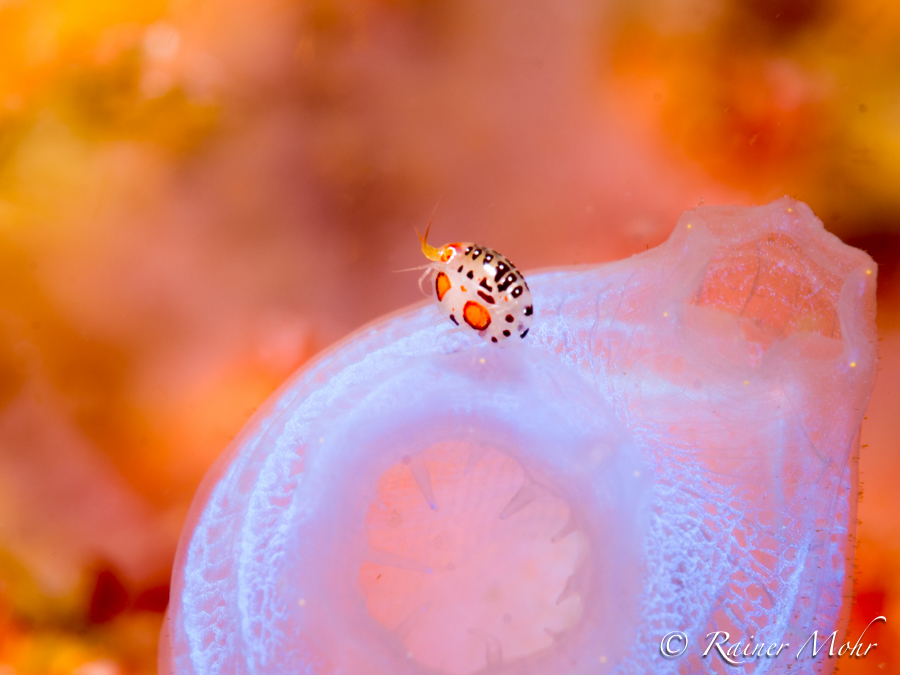
A small Ladybug amphipod with characteristic white base colouration and black and yellow-orange spots sits on a translucent sea squirt. The delicate structure of the host animal shows a glassy, almost transparent surface in pink-violet tones.
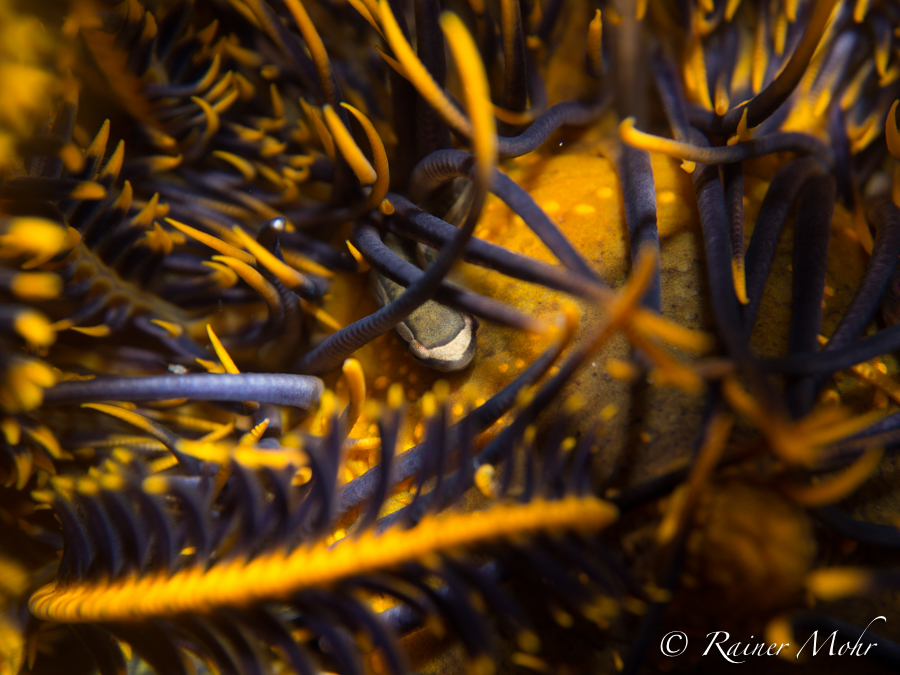
A tiny fish hides among the arms of a feather star.
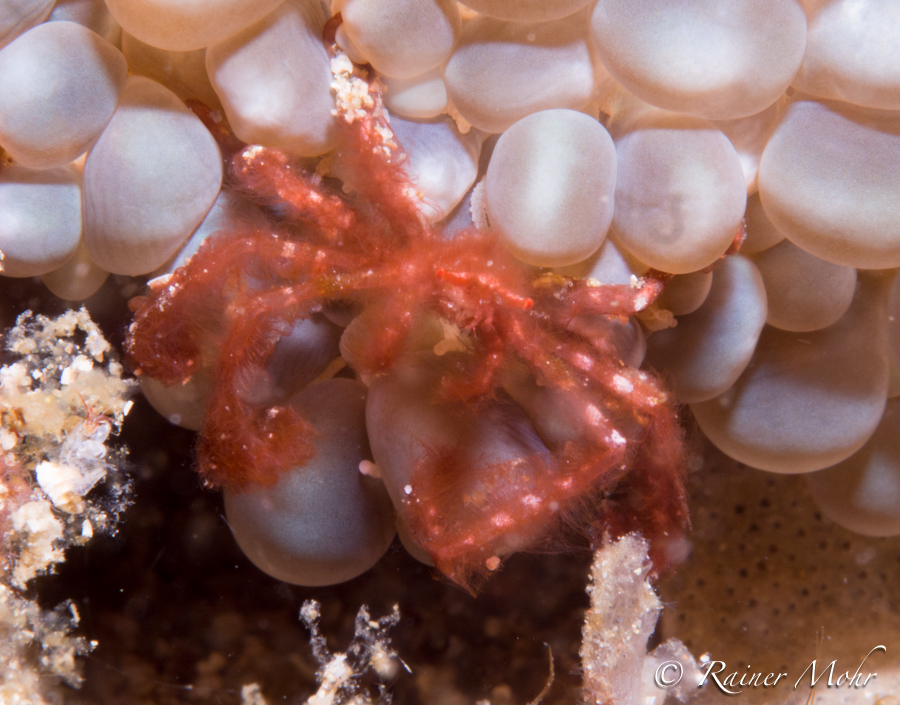
An orangutan crab sits on an anemone.
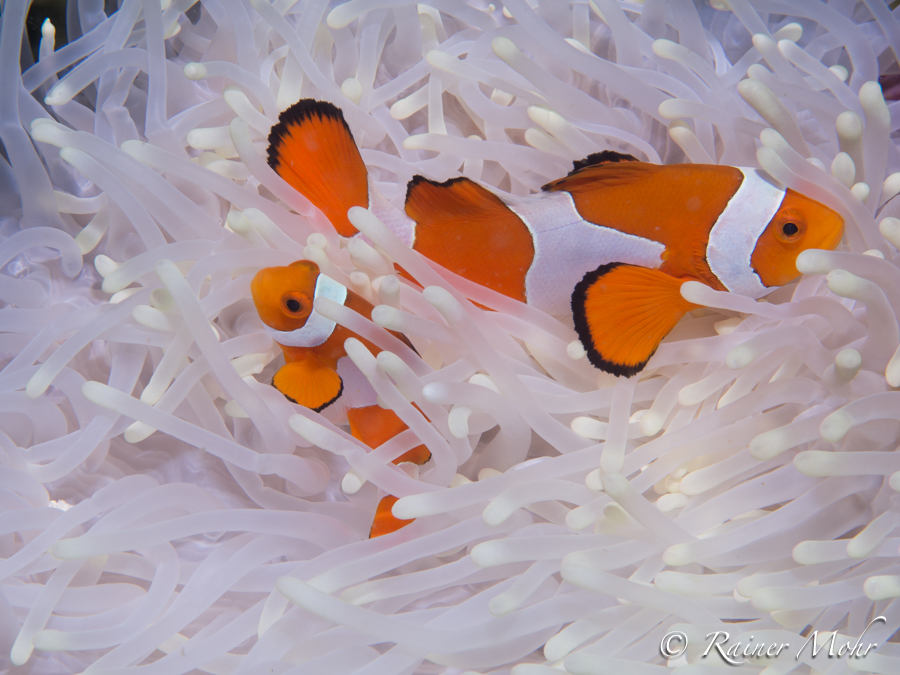
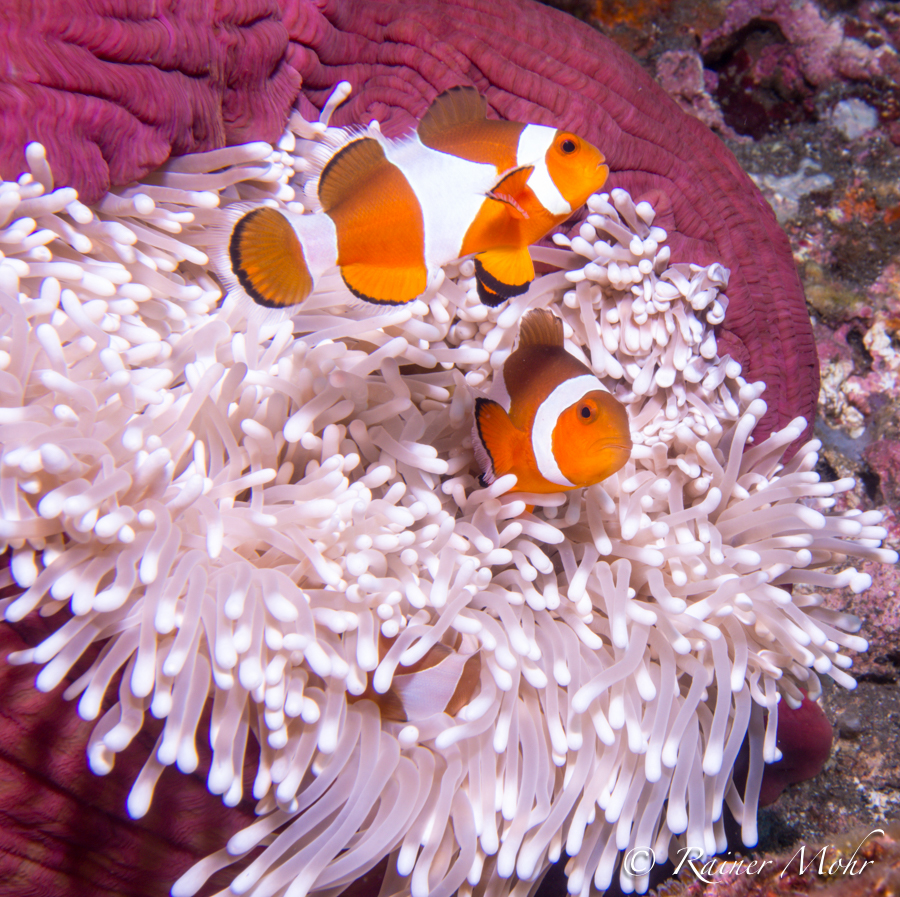
Two clownfish live in symbiotic community in a white sea anemone. The characteristically orange-and-white striped anemonefish are perfectly visible among the protective tentacles of their host anemone.
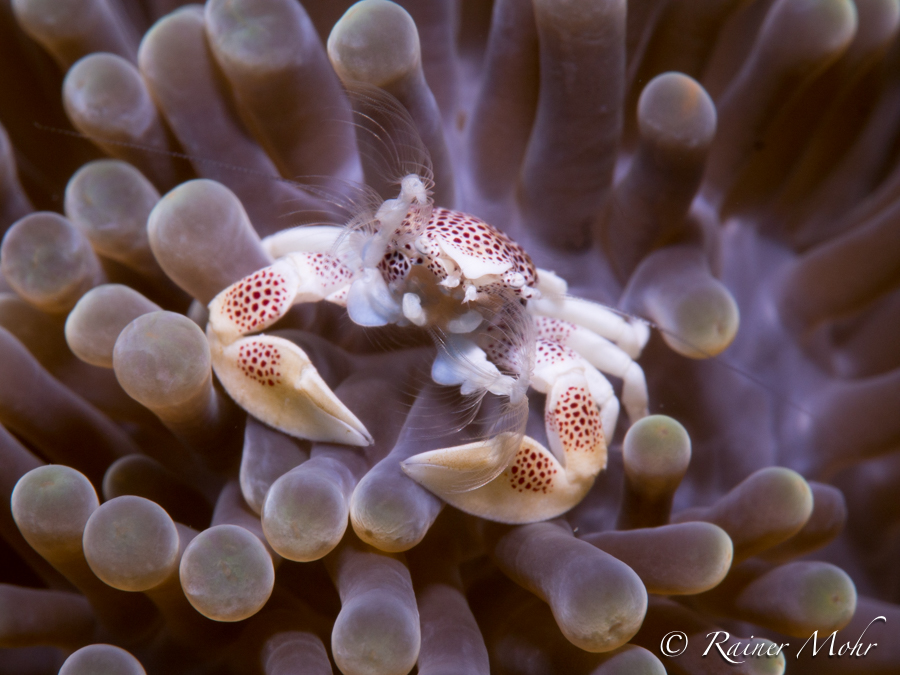
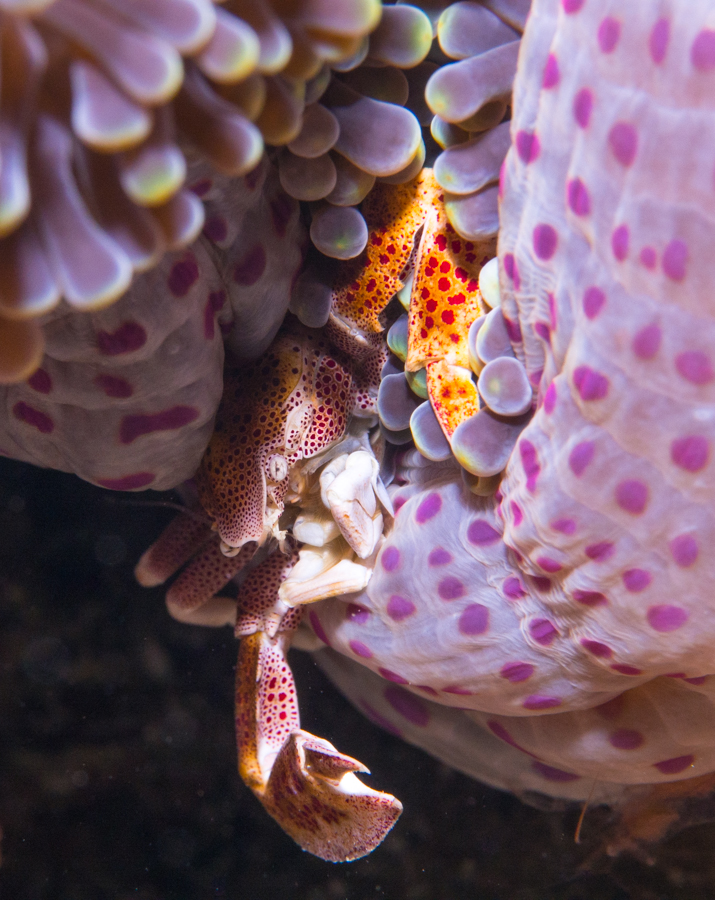
A porcelain crab with characteristic red spots on a white body lives in symbiosis among the tentacles of a sea anemone. The small crab uses the protective tentacles as its habitat and filters plankton from the water.
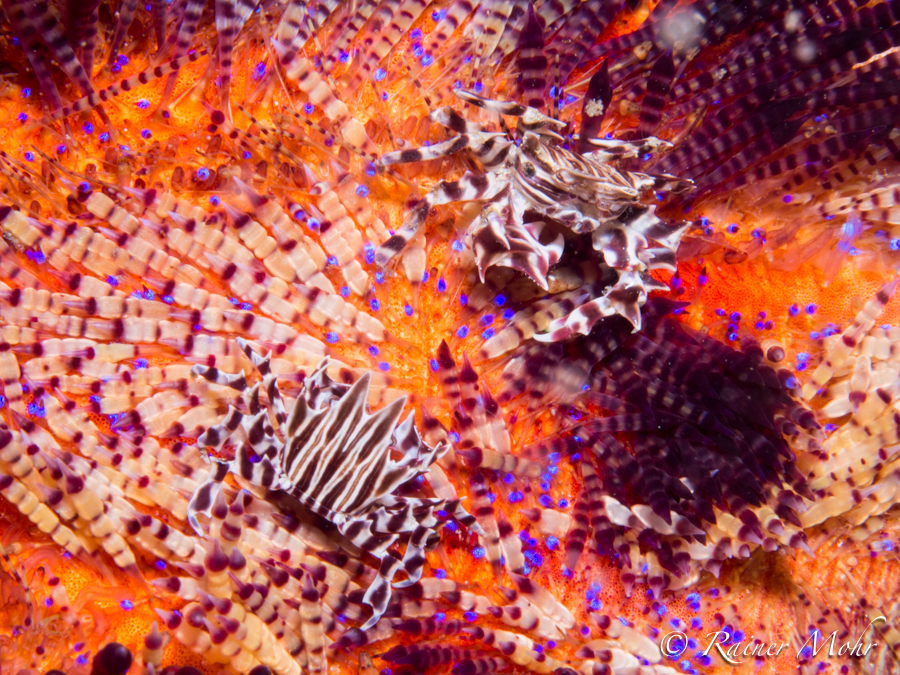
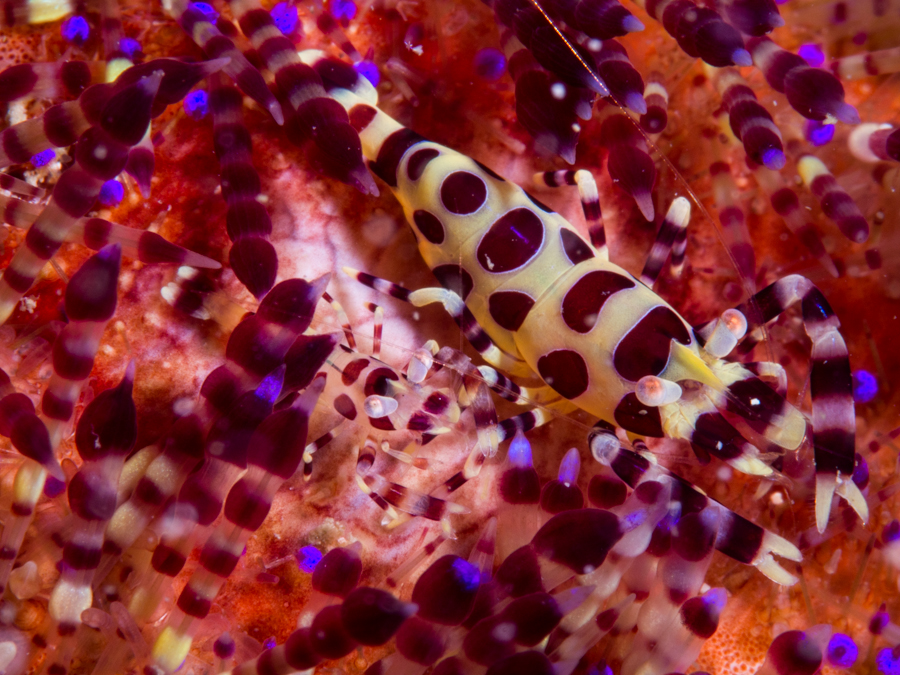
Two zebra crabs ride on a fire urchin. The red skin with the striking, vivid and highly varied spines of the sea urchin form the habitat of this crab species.
Two clownfish live in a symbiotic relationship in a large sea anemone with whitish-pink tentacles. The larger fish above is likely the dominant female while the smaller one below is the male — a typical example of the fascinating symbiosis between anemonefish and their host anemones.
A family of true clownfish lives in perfect symbiosis with their white host anemone. The vivid orange-and-white anemonefish swim protected among the stinging tentacles, while the colourful coral reef with various hard and soft corals is visible in the background.
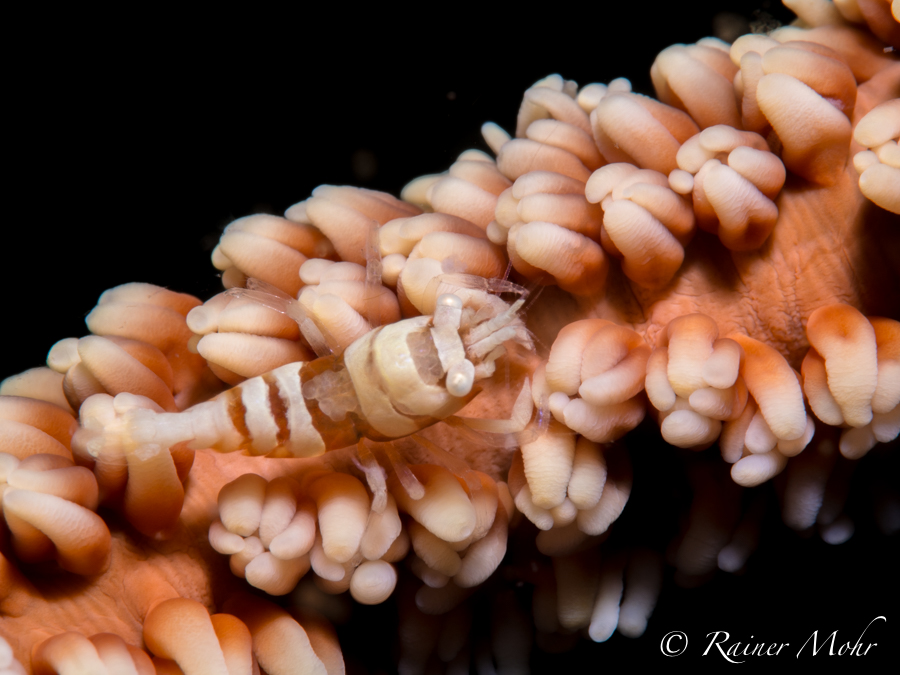
The image shows a whip coral shrimp (Pontonides ankeri or similar species) on a whip coral. It is a small shrimp that lives in a commensal relationship with whip corals.
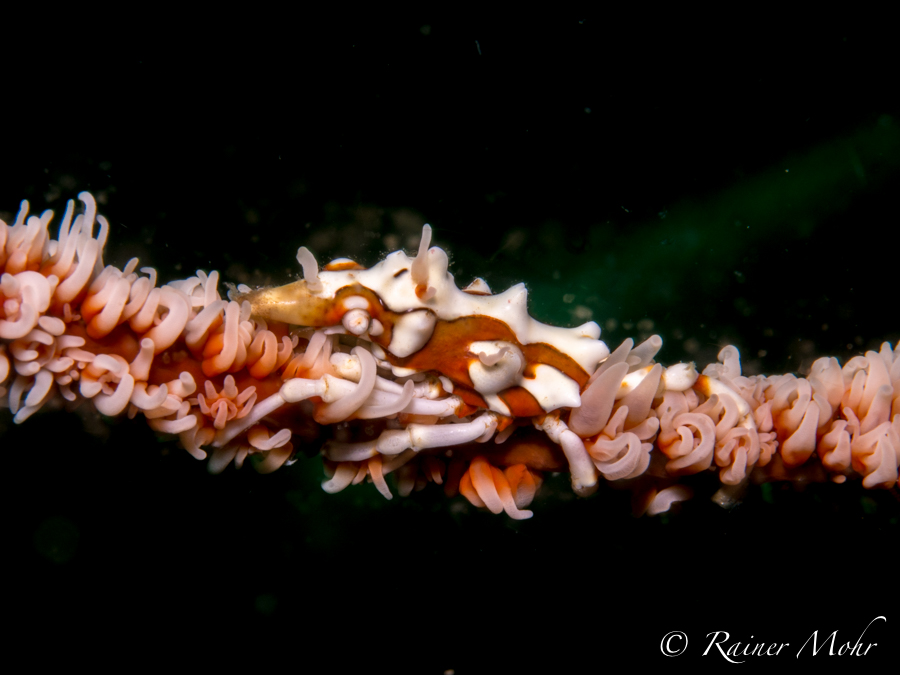
An orange-and-white striped wire coral crab hides among the tentacles of a whip coral. The symbiotic relationship shows the small crab seeking shelter in the coral while simultaneously feeding on plankton.
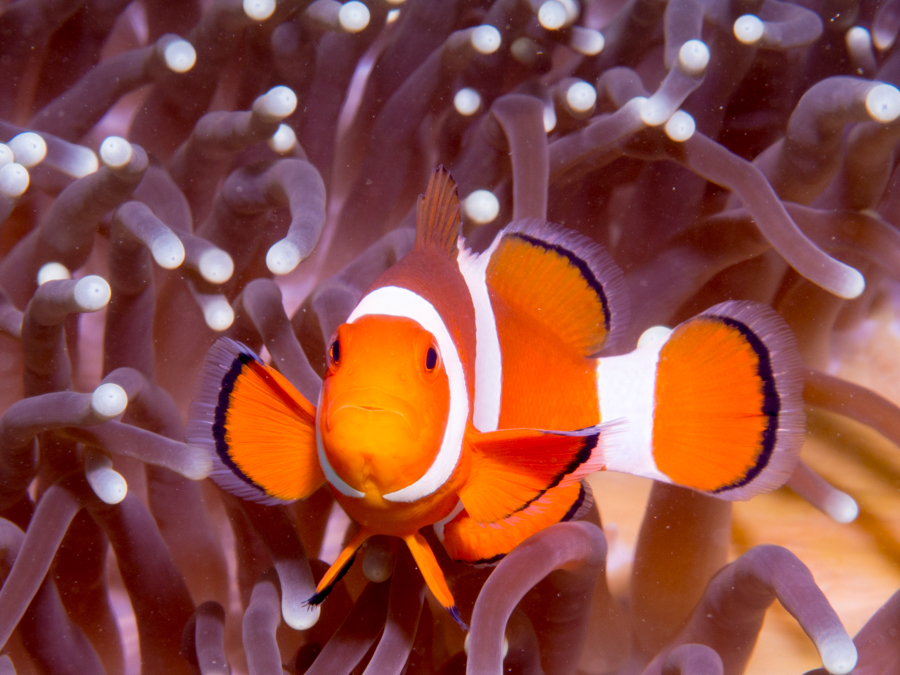
A false clownfish lives in perfect symbiosis with its host anemone, whose cream-coloured tentacles with characteristic thickened tips are visible. The orange-and-white striped fish displays the typical behaviour of its species, safely nestled among the stinging tentacles.
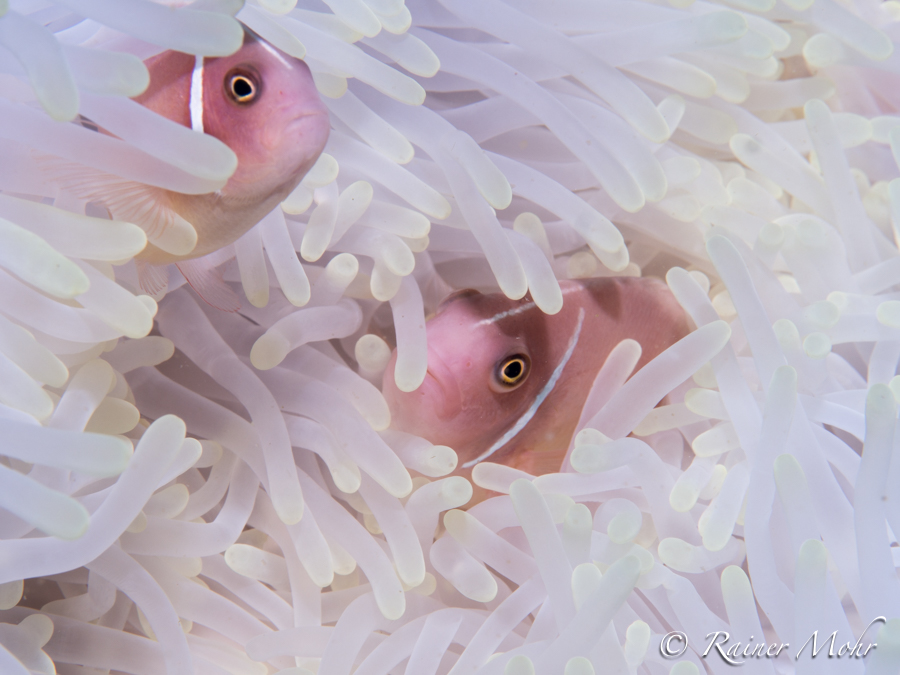
Two pink anemonefish hide among the white tentacles of their host anemone. The fish display the typical symbiosis with the anemone, which offers them protection while they in turn clean it of parasites.
A small reddish shrimp sits on an orange sponge or coral. The shrimp displays the characteristic long antennae and transparent body parts typical of many cleaner shrimps.
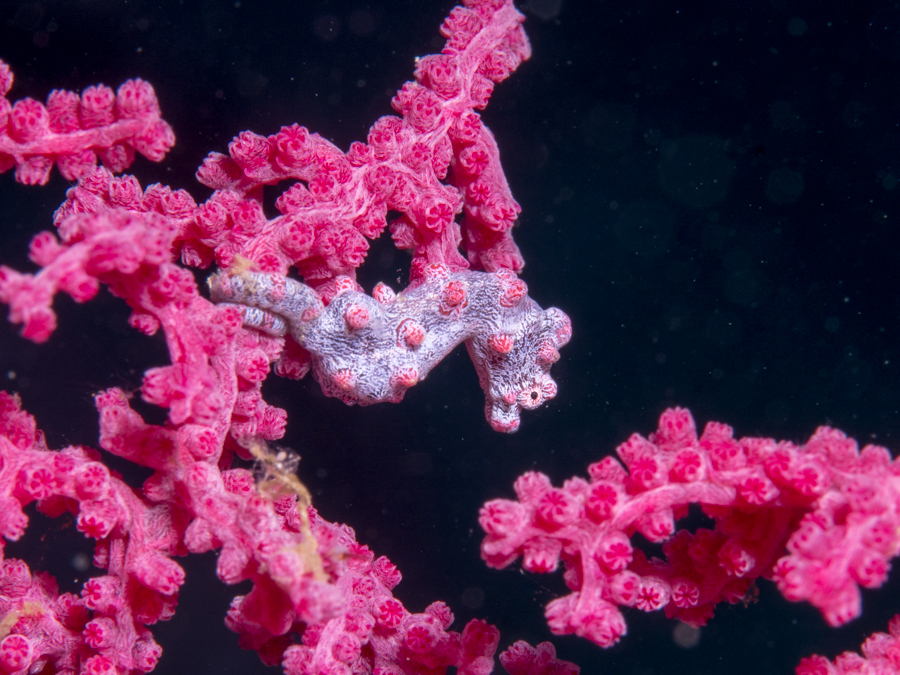
A dwarf seahorse hides perfectly camouflaged among the pink polyps of a soft coral. The tiny seahorse shows a remarkable adaptation to its surroundings and demonstrates its ability to blend into the coral structure.
A perfectly camouflaged Coleman shrimp sits on a fire urchin.
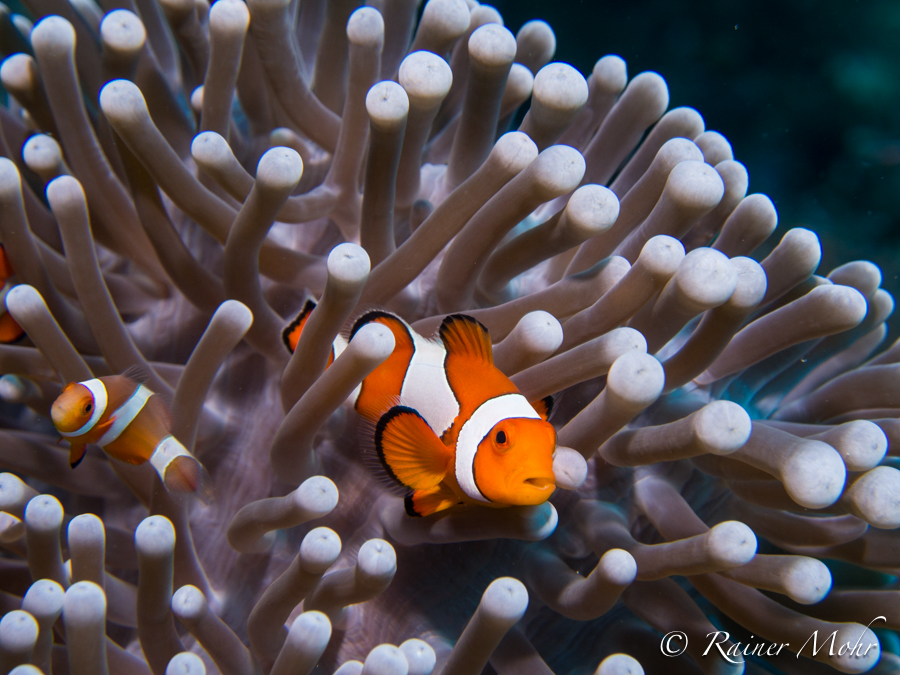
A vivid orange-and-white false clownfish rests among the tentacles of its host anemone. The characteristic symbiosis shows the fish safely protected among the normally stinging tentacles, which cannot harm it thanks to a special mucus coating.
A porcelain crab hides among the tentacles of a large anemone. The delicate, spotted tentacles of the anemone envelop the small crab, which has entered a perfect symbiosis with its host, gaining protection from predators.
A beautiful symbiosis between an emperor shrimp and a Risbecia nudibranch. The small crustacean with its characteristic red-and-white body and striking white claws has chosen the nudibranch as its habitat — a frequently observed behaviour.
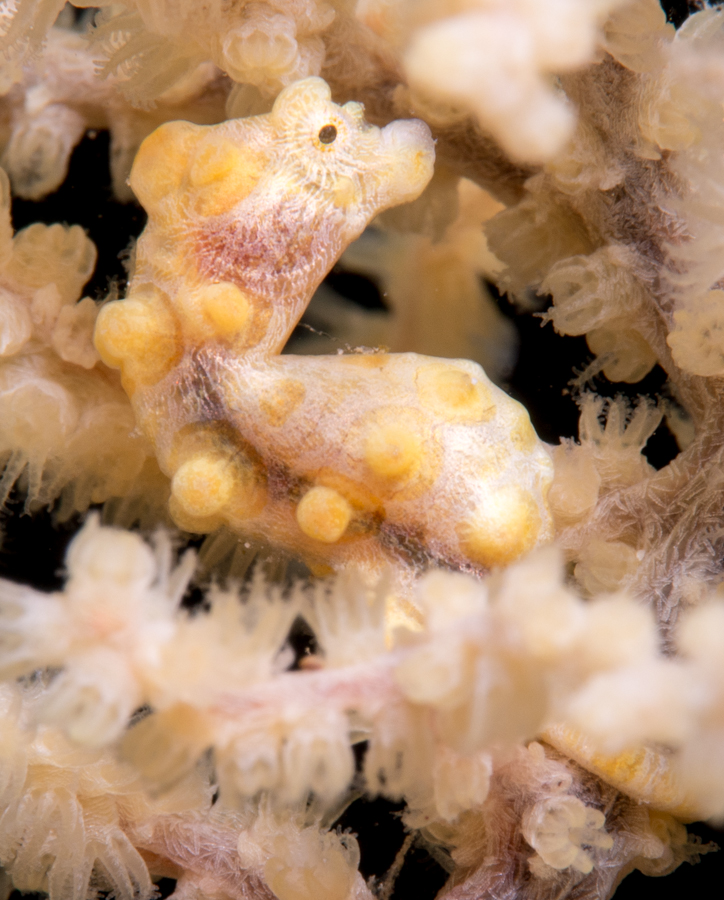
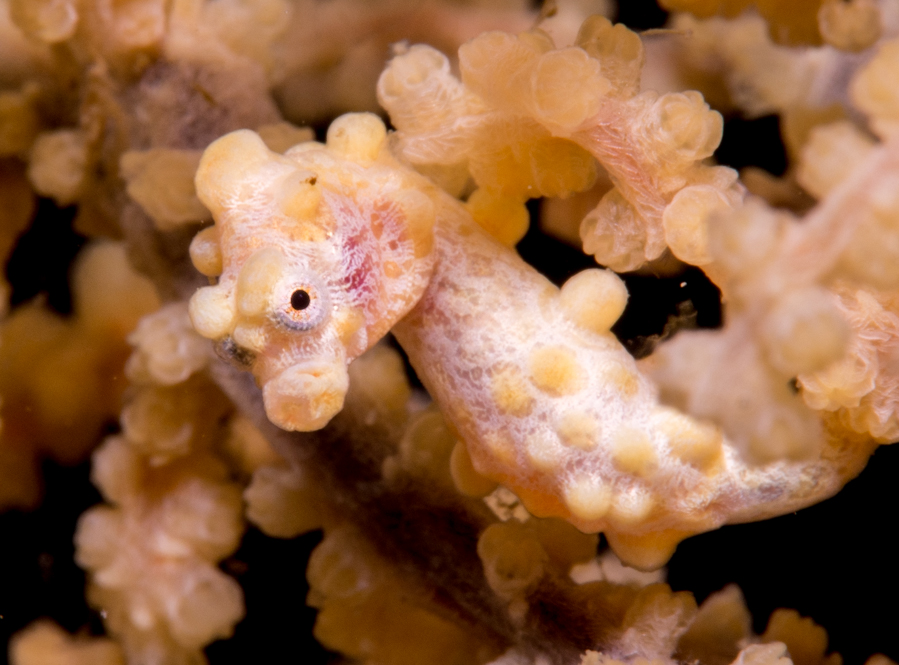
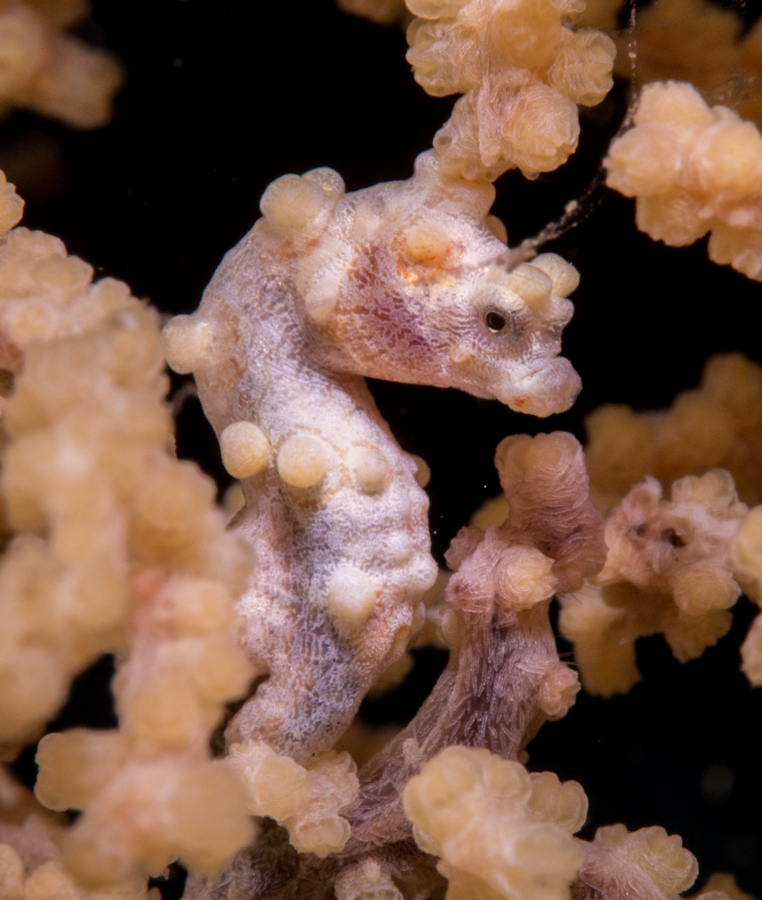
A pygmy seahorse hides perfectly camouflaged among the polyps of a gorgonian. The tiny animal displays the same yellowish-orange tones and knobbly skin projections as its host coral, demonstrating a remarkable adaptation to its habitat.
A porcelain crab sits among the tentacles of a sea anemone, displaying its characteristic red spot patterns on a whitish body. The symbiosis between crab and anemone is clearly visible, with the crab finding shelter among the tentacles.
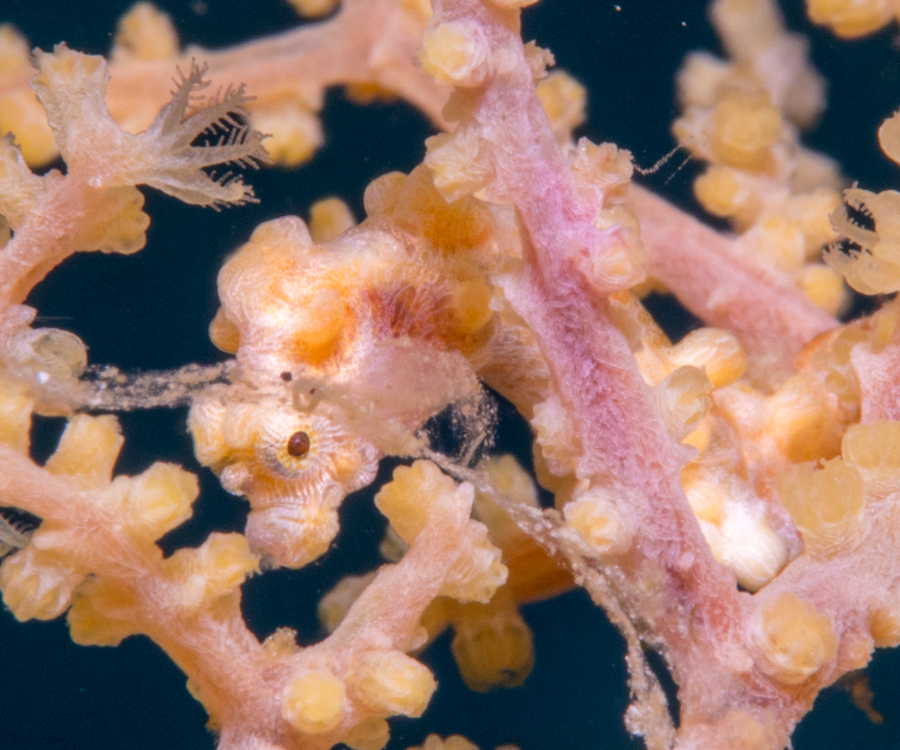
A perfectly camouflaged pygmy seahorse hides among yellow host corals. The tiny animal uses its extraordinary camouflage ability, mimicking the colour and structure of the corals to become nearly invisible.
Two perfectly camouflaged pygmy seahorses hide among the yellow branches of their host corals. The tiny animals use their extraordinary camouflage ability, mimicking the colour and structure of the corals to become nearly invisible.
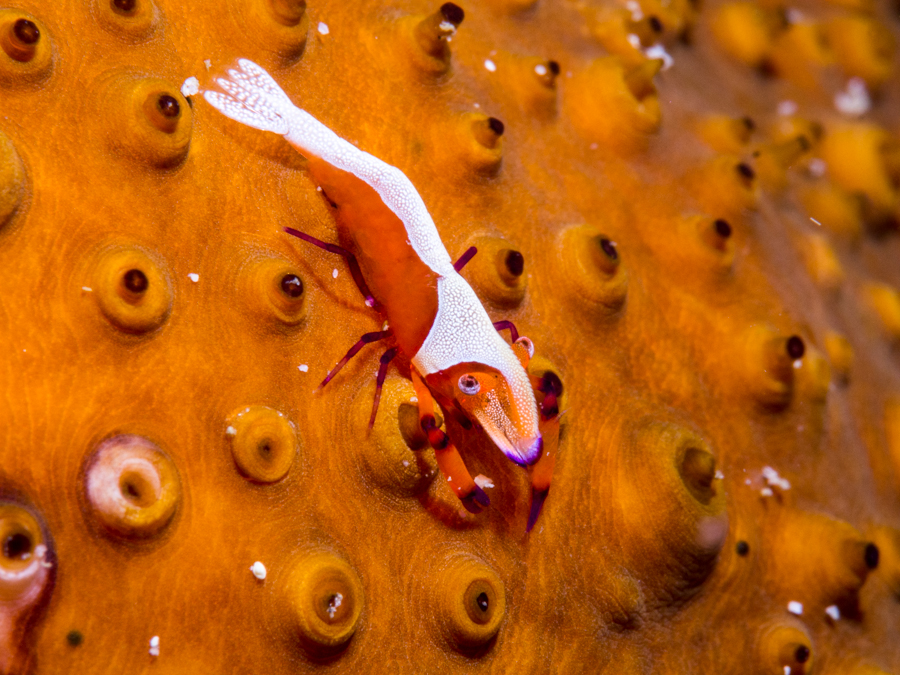
Emperor shrimp on an orange sea cucumber. The small white shrimp with red legs sits on the textured surface of the sea cucumber. Macro shot.
A tiny dwarf seahorse sits perfectly camouflaged among the pink polyps of a soft coral. The reddish skin appendages of the seahorse imitate the shape and colour of the coral polyps, providing nearly perfect concealment.
A pygmy seahorse hides perfectly camouflaged among the polyps of a soft coral. The pink-orange colouration and warty skin protrusions of the tiny seahorse adapt ideally to its coral habitat, making it nearly invisible.
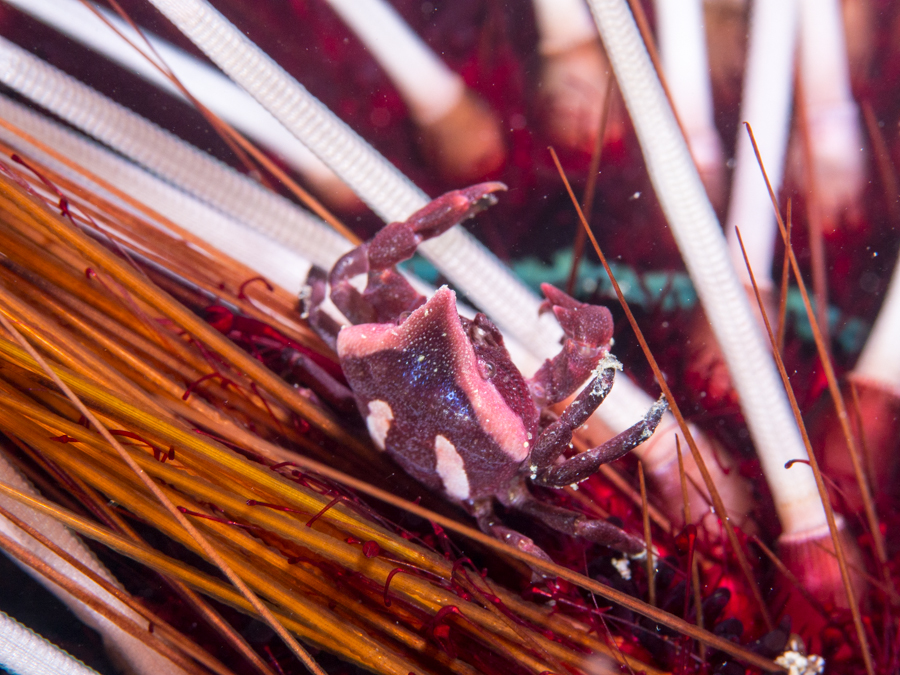
A small crab with characteristic claws sits among the long spines of a sea urchin. The reddish-brown colouration of the crab harmonises perfectly with the warm tones of the urchin spines, providing excellent camouflage.
A dwarf seahorse hides perfectly camouflaged among the polyps of a soft coral. The pink-orange colouration of the seahorse matches the surrounding coral polyps almost perfectly, creating impressive camouflage.
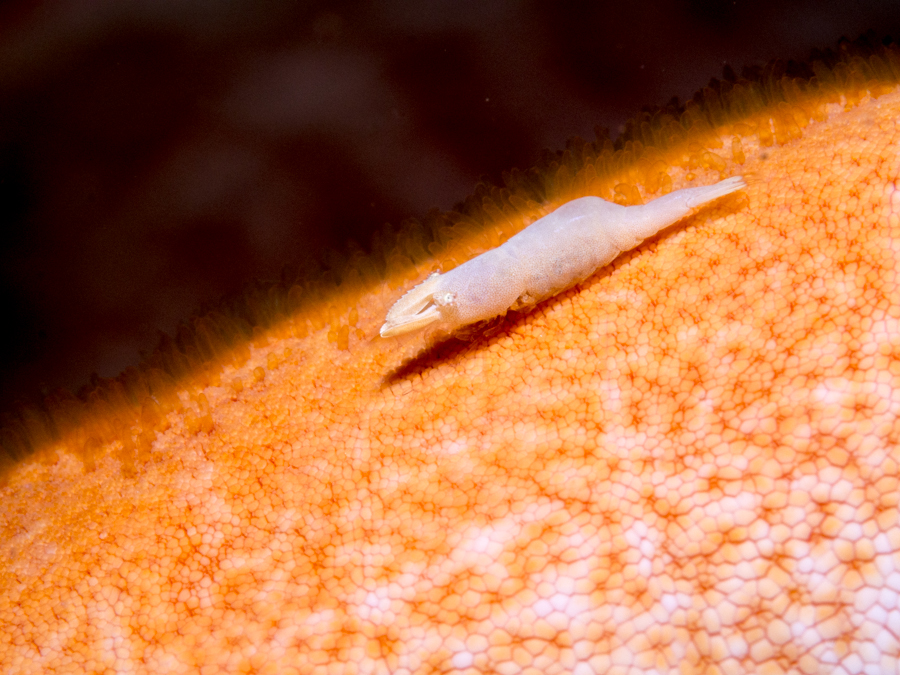
A small white emperor shrimp crawls across the orange-reddish skin of a sea star. The macro shot shows the characteristic body shape of the shrimp and the typical granular surface texture of the sea star skin in detail.
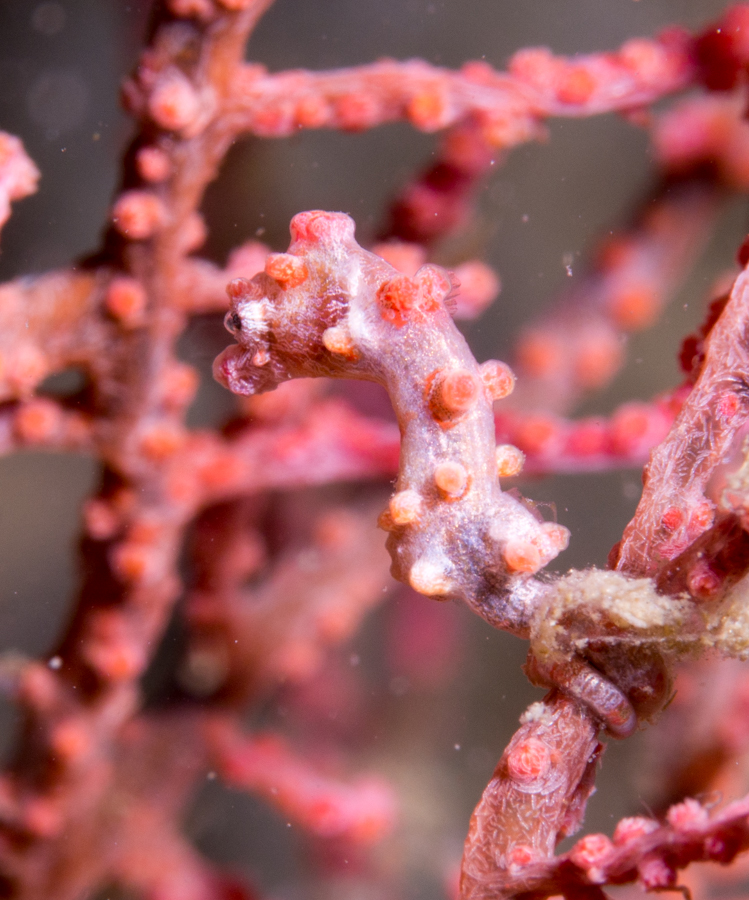
A tiny pygmy seahorse sits perfectly camouflaged on a red coral branch. The animal, only a few centimetres long, shows an impressive adaptation to its surroundings with skin-like protrusions and a reddish colouration that makes it nearly invisible.
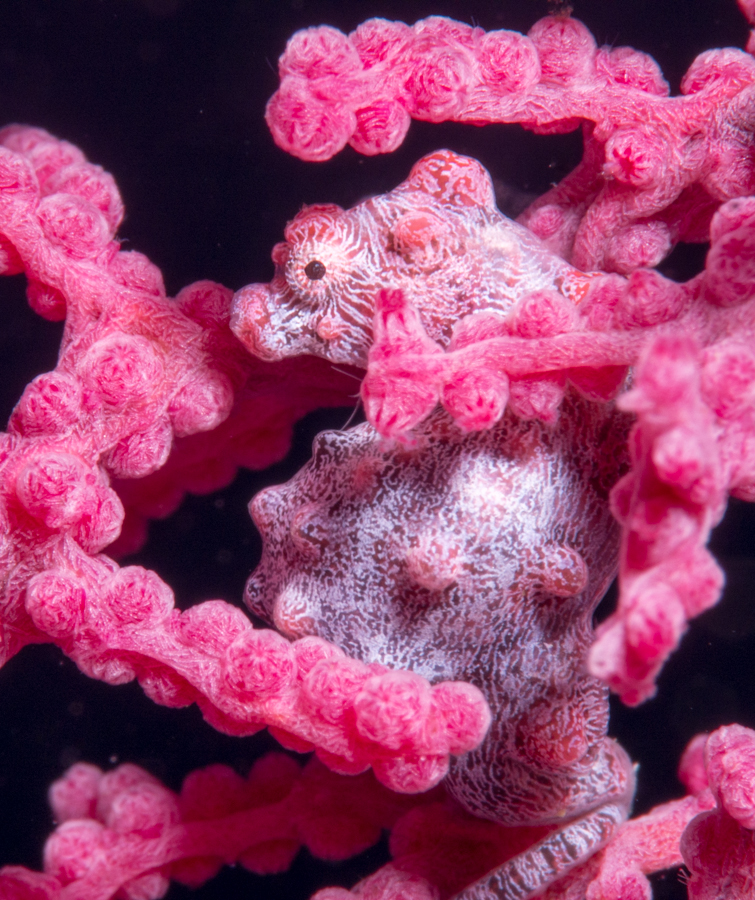
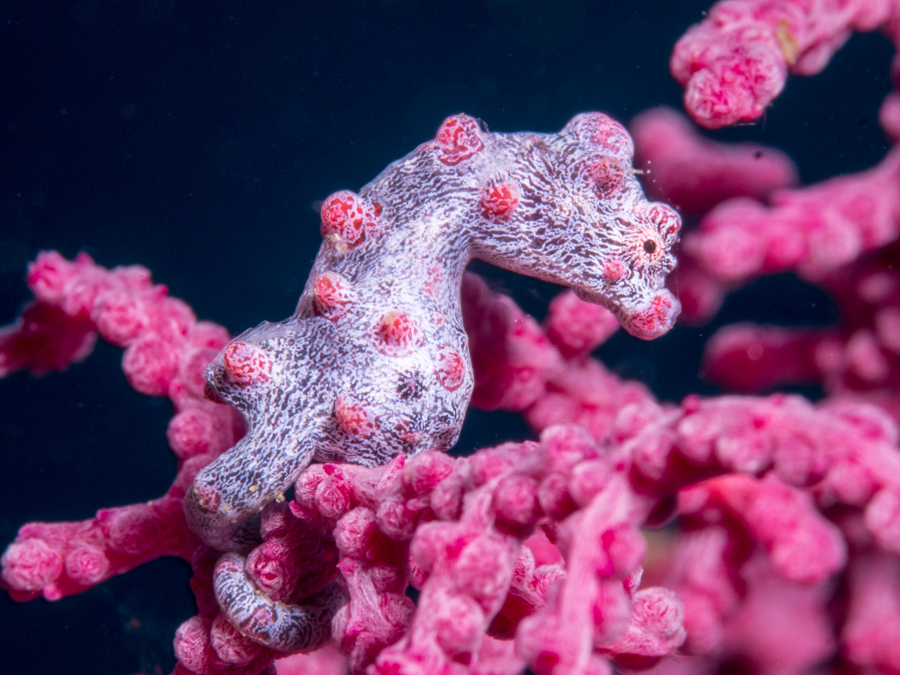
A pygmy seahorse camouflages itself perfectly among the vivid pink branches of its host coral. The elongated fish with its characteristic short snout and skin-like appendages blends almost completely with its coral surroundings.
PAGES:  1   2