Wrecks
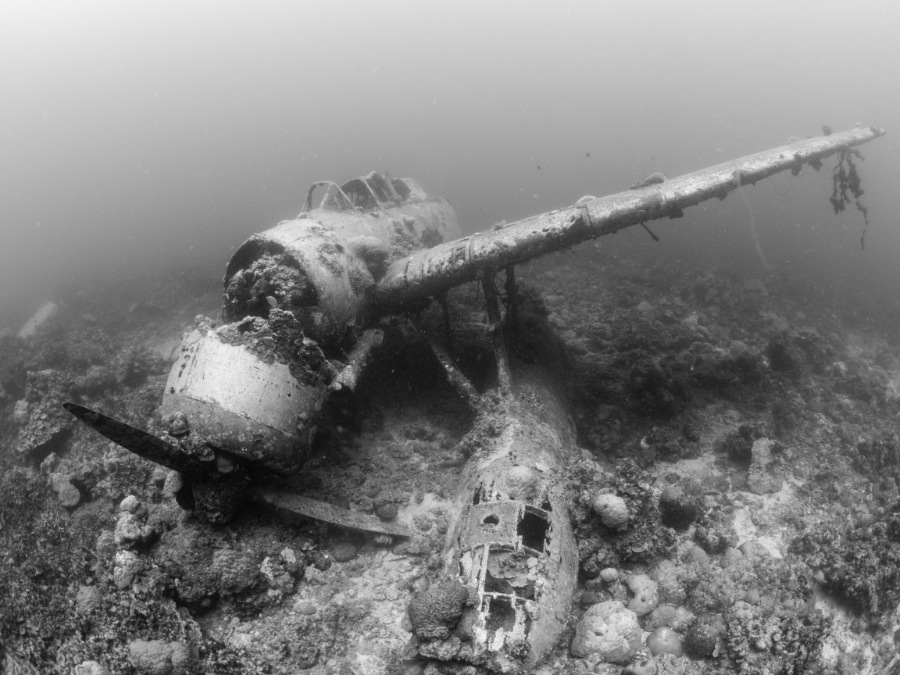
A historic aircraft wreck lies on the seabed, presumably from the Second World War. The wreck is heavily colonised by corals and marine organisms and shows clear signs of corrosion and decay over the decades.
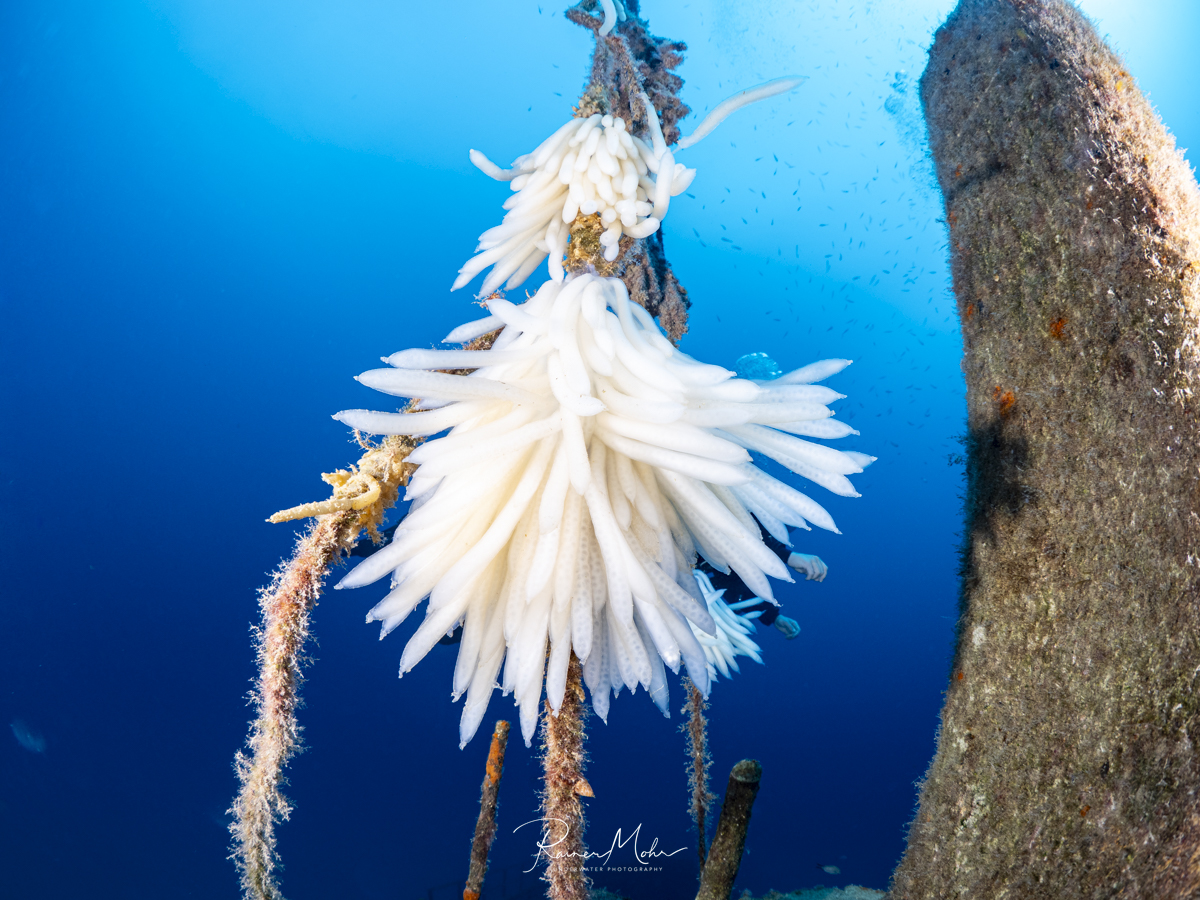
Cuttlefish eggs on the mast of the Karwella wreck on Gozo. Cuttlefish deposit their eggs in elongated capsules, which they attach to reef structures or wrecks to ensure a good supply of oxygen-rich water from the current.
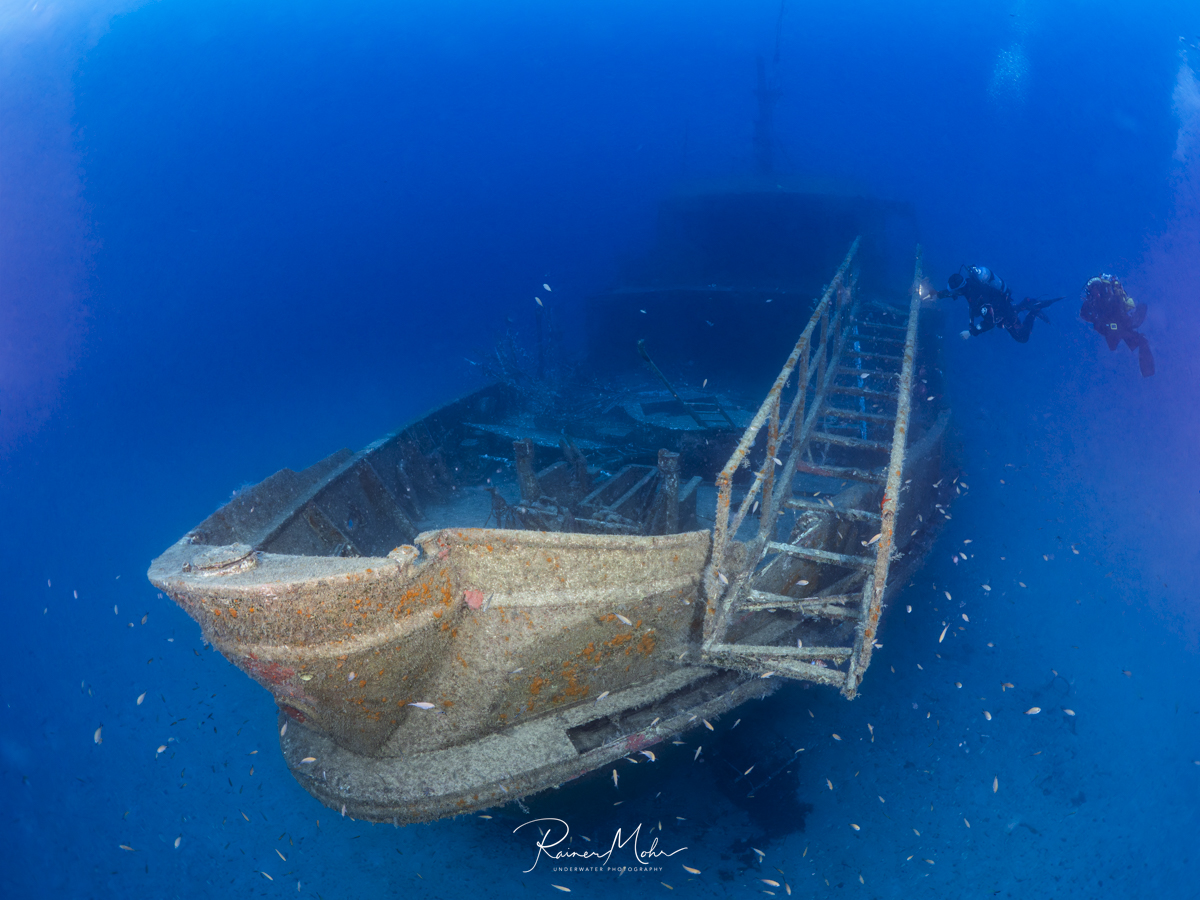
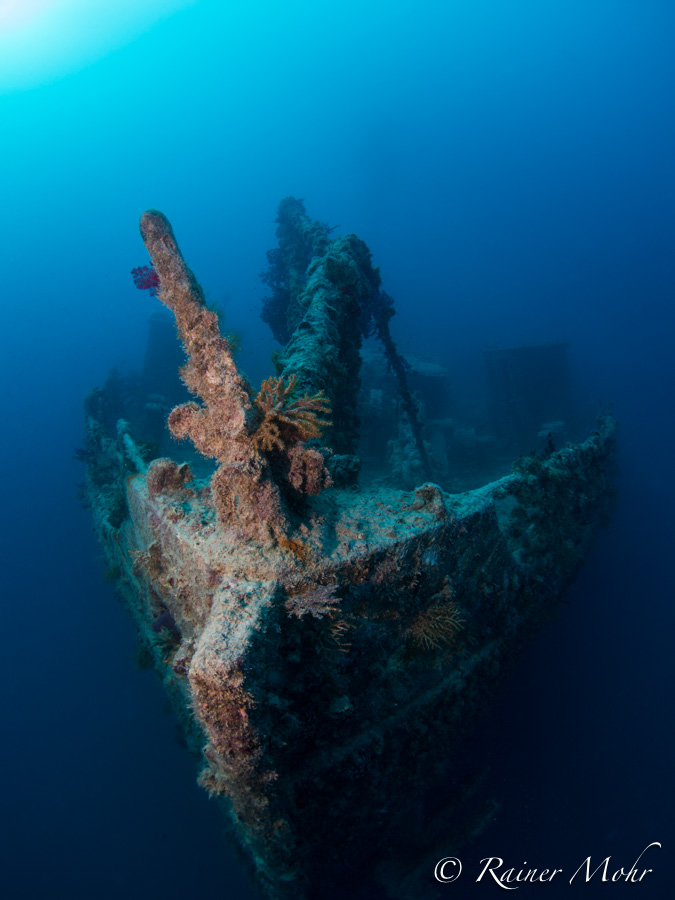
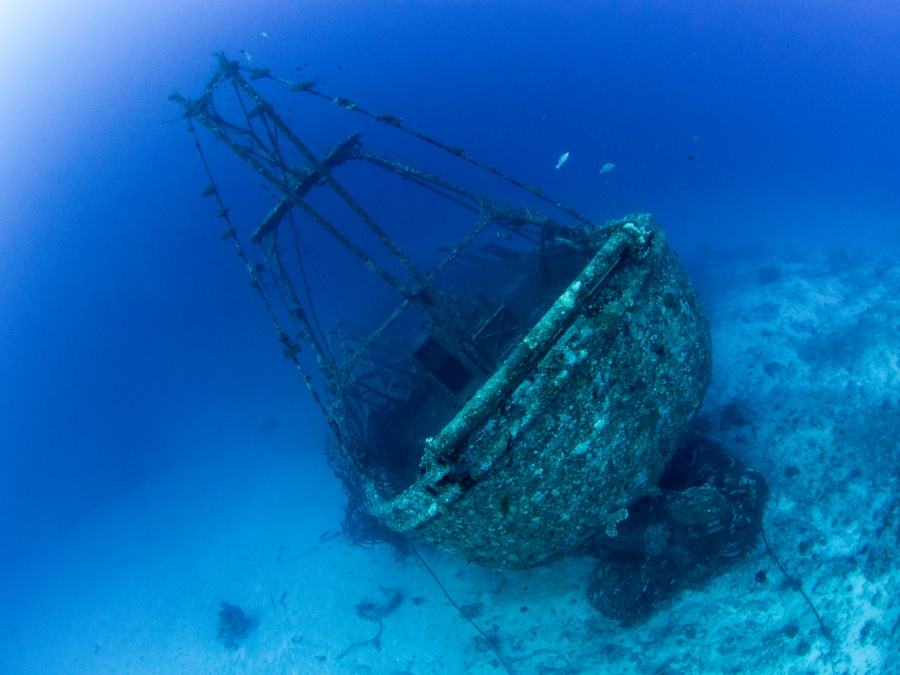
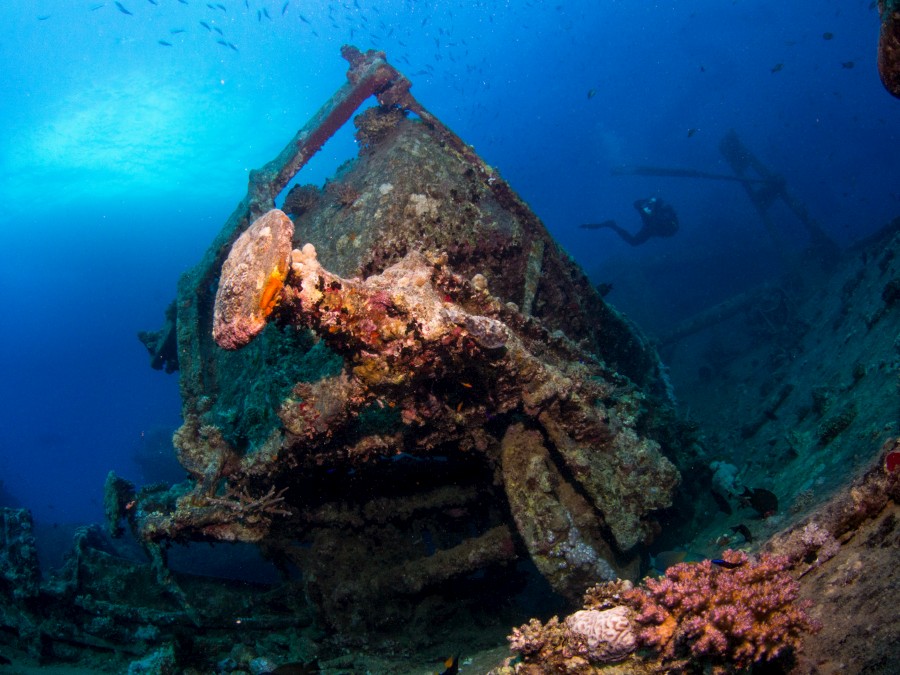
The bow of the wreck of the Karwella on Gozo. Two divers explore the wreck; in front of the bow is a school of small fish seeking shelter from predators at the wreck.
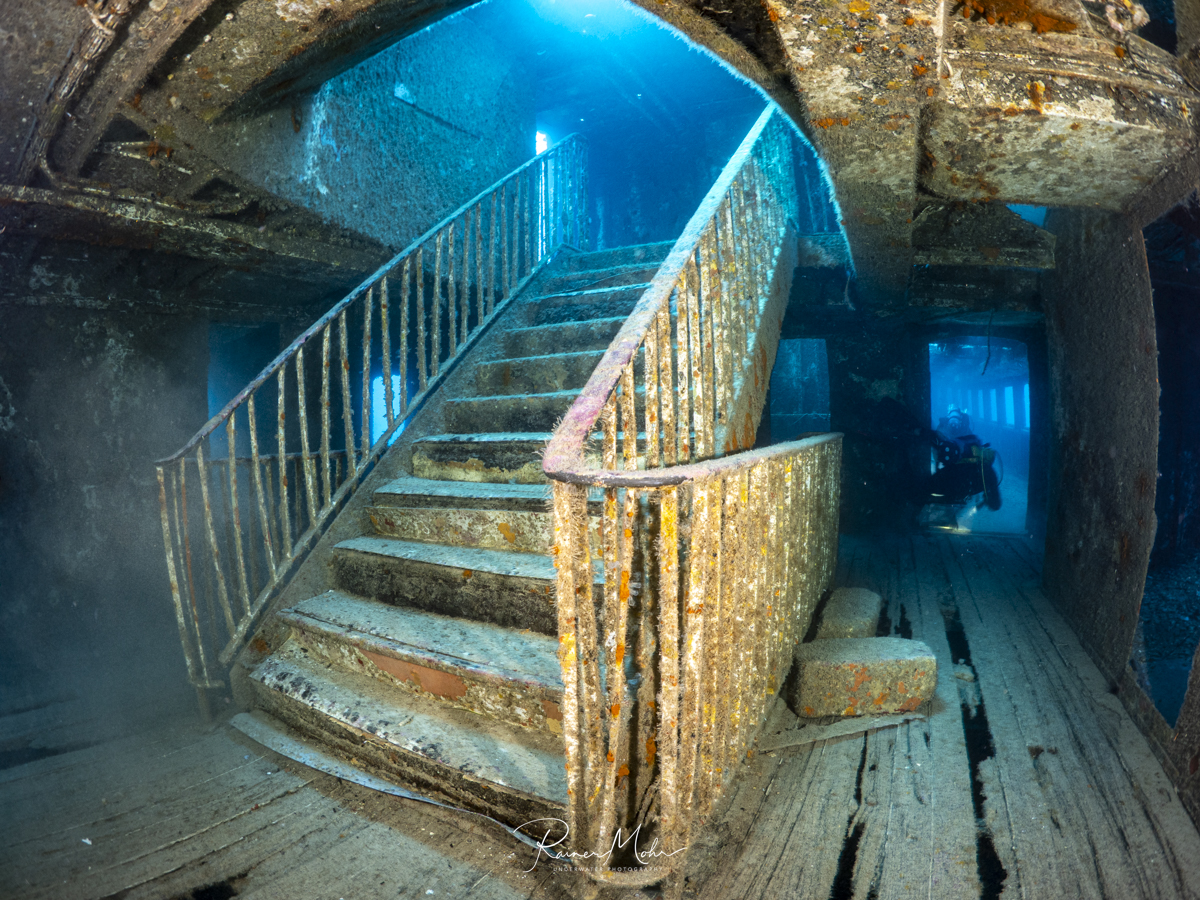
A staircase inside the wreck of the Karwella on Gozo.
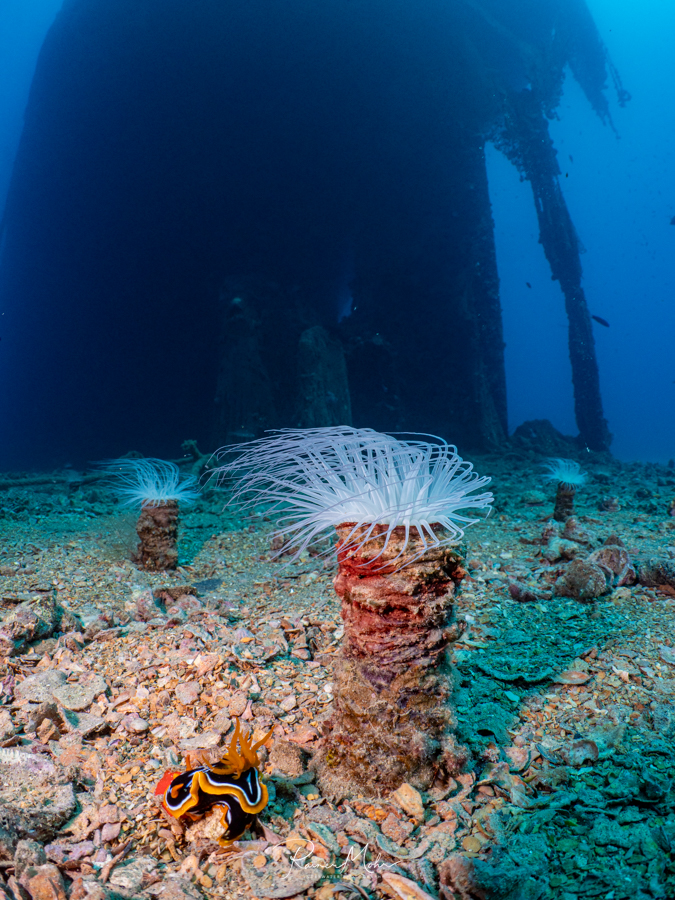
A colourful Chromodoris nudibranch crawls across the seafloor beside a delicate tube anemone with spread tentacles. In the background the wreck of the SS Turkia, with several ghost nets hanging from it.
A spectacular underwater scene shows the wingtip of an aircraft wreck with vivid red and orange soft corals hanging like a natural curtain into the deep blue water. The intense colour of the corals forms a dramatic contrast against the clear blue background of the open water.
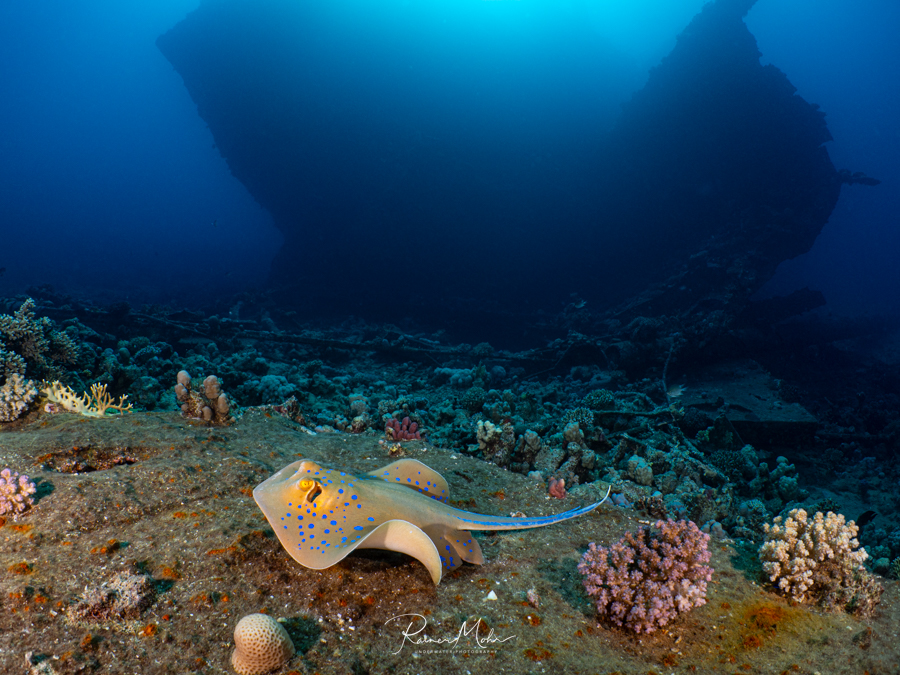
A bluespotted stingray glides across the seafloor, with the imposing silhouette of a wreck rising in the background.
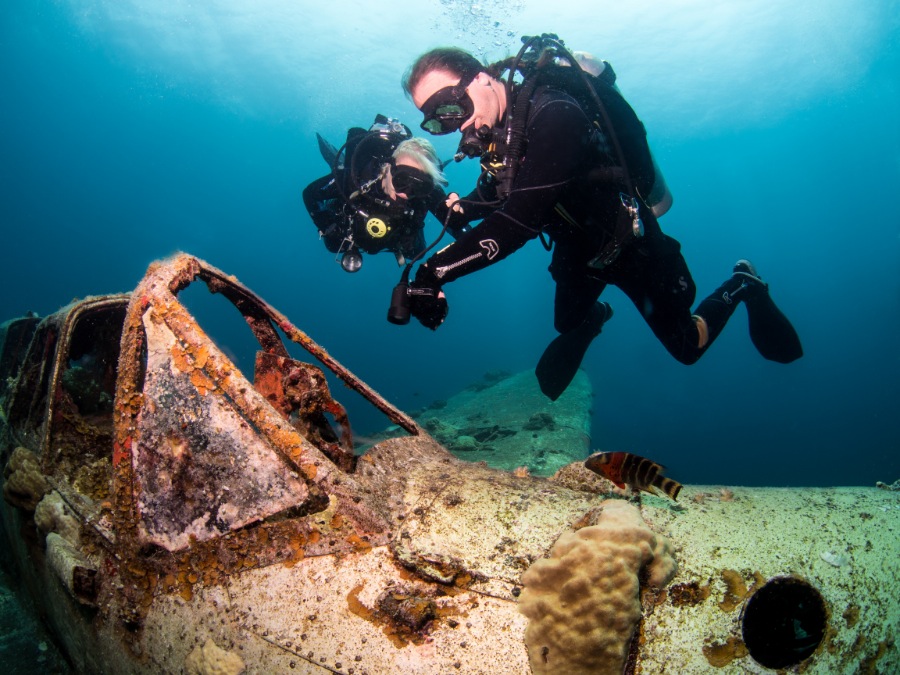
Two divers with cameras explore a heavily colonised wreck on the seabed. The aircraft wreck is covered with corals and other marine organisms and provides habitat for various reef animals visible among the rusty structures.
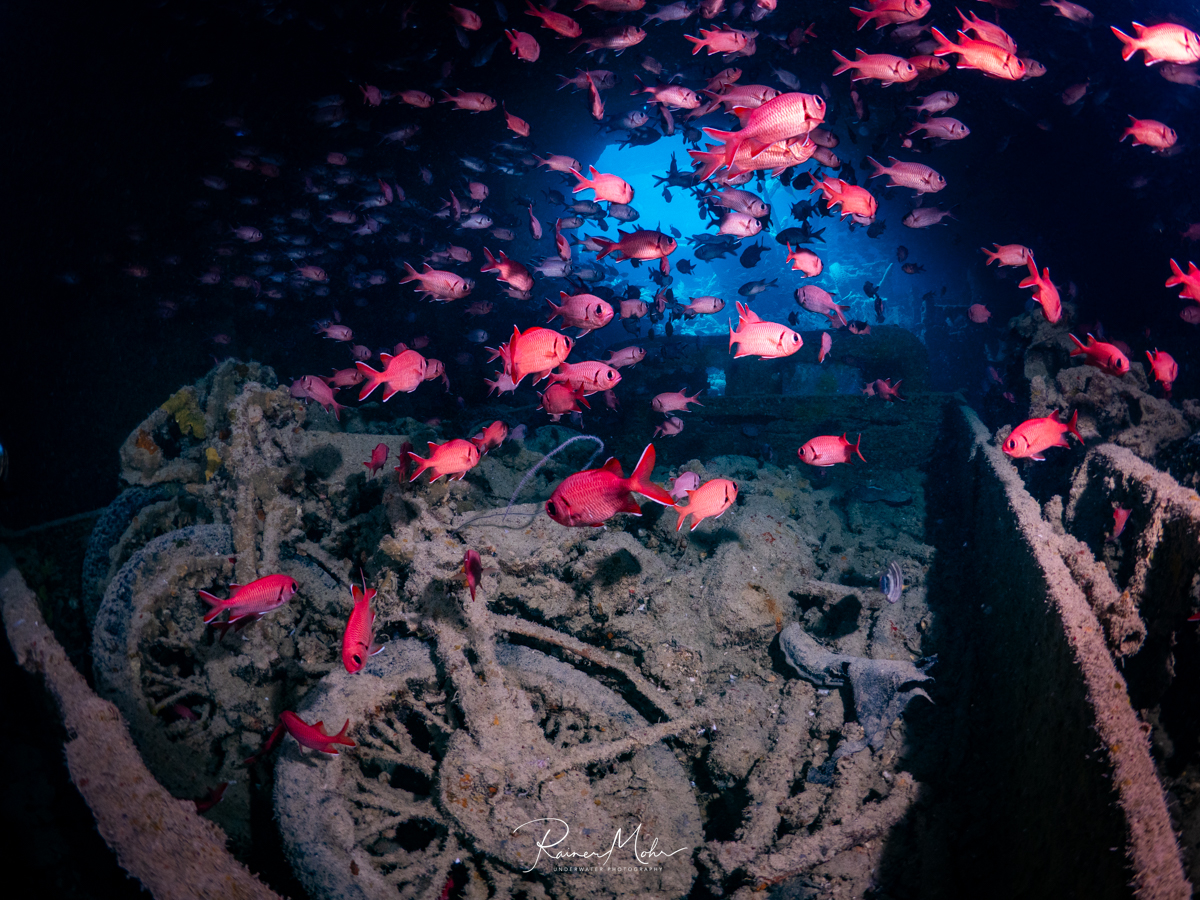
A school of red soldierfish above the sunken motorcycles in the cargo hold of the SS Thistlegorm, illuminated by shafts of incoming light.
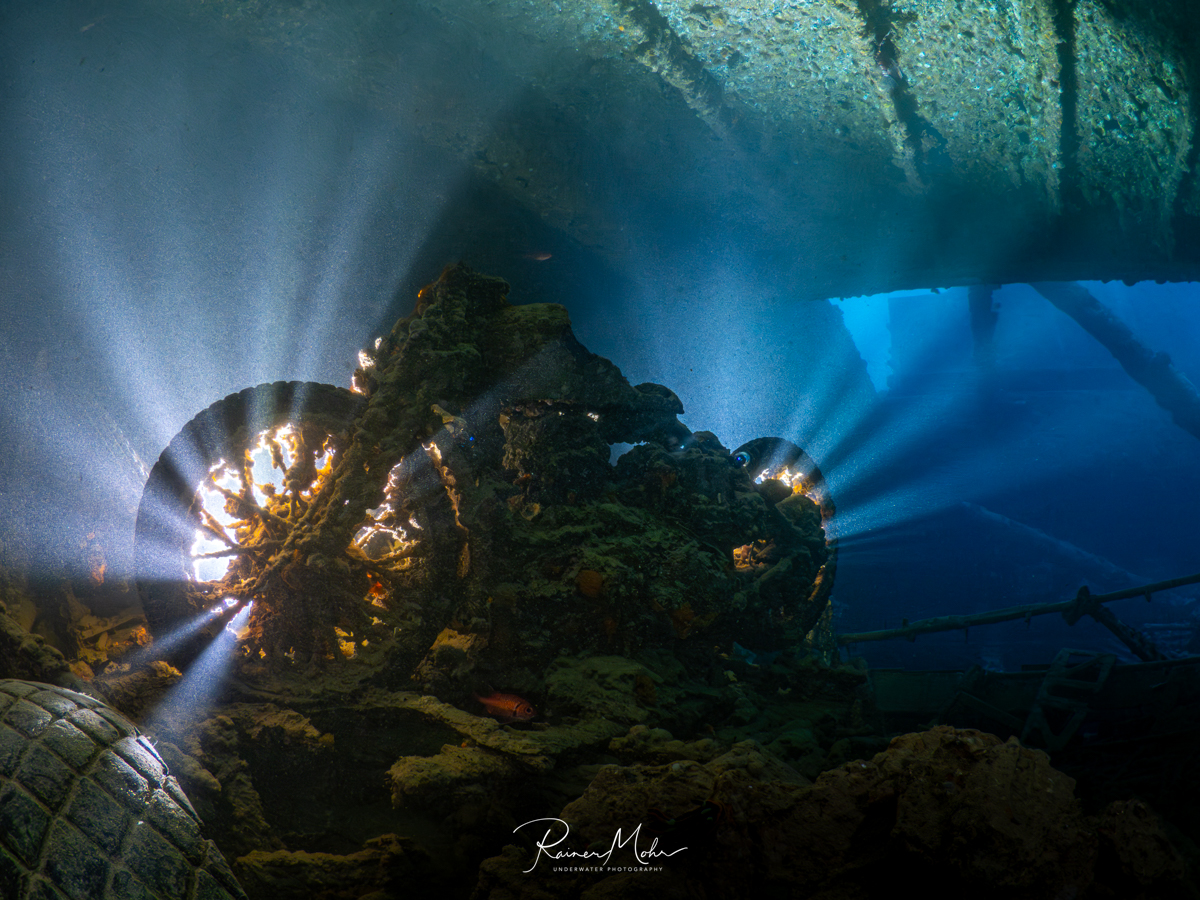
A motorcycle inside the wreck of the SS Thistlegorm, flooded with dramatic rays of light. The wheel is densely covered with marine organisms.
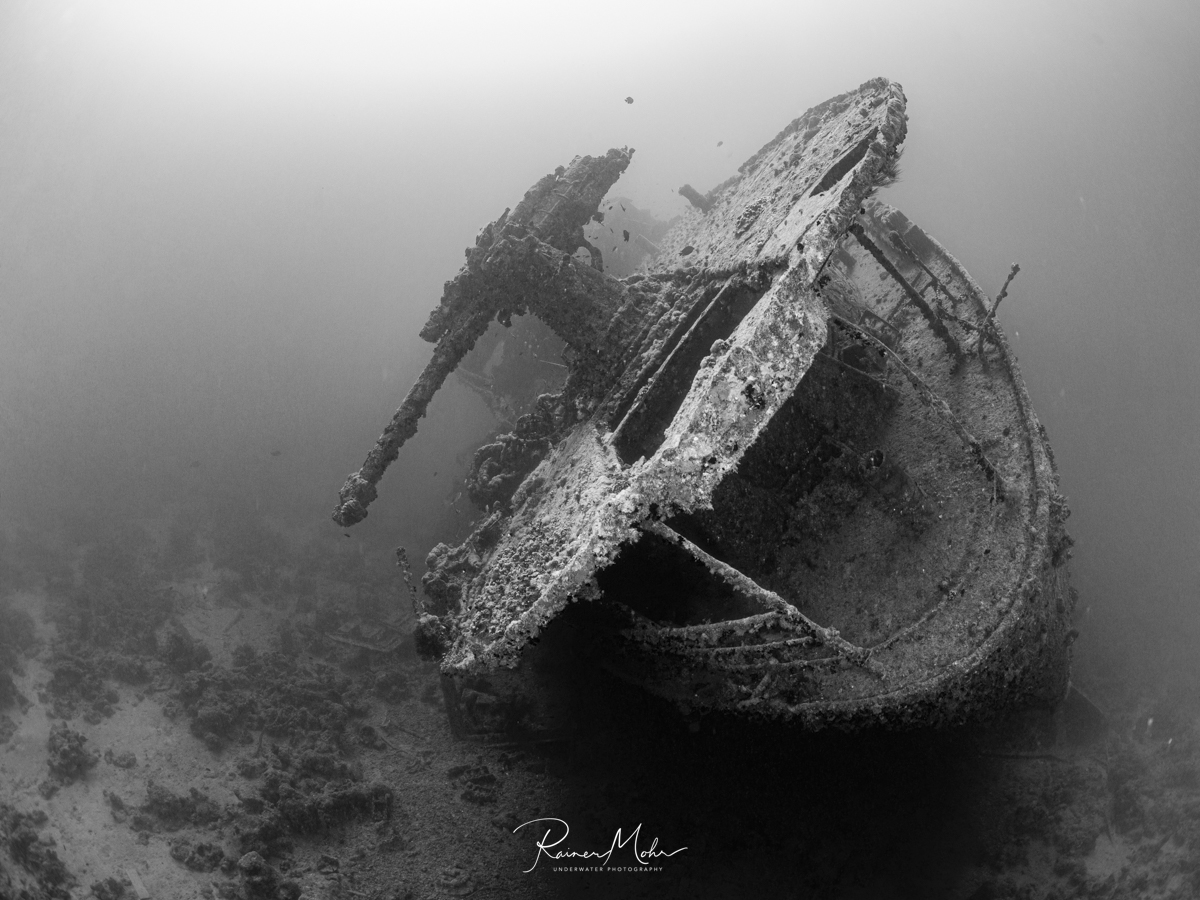
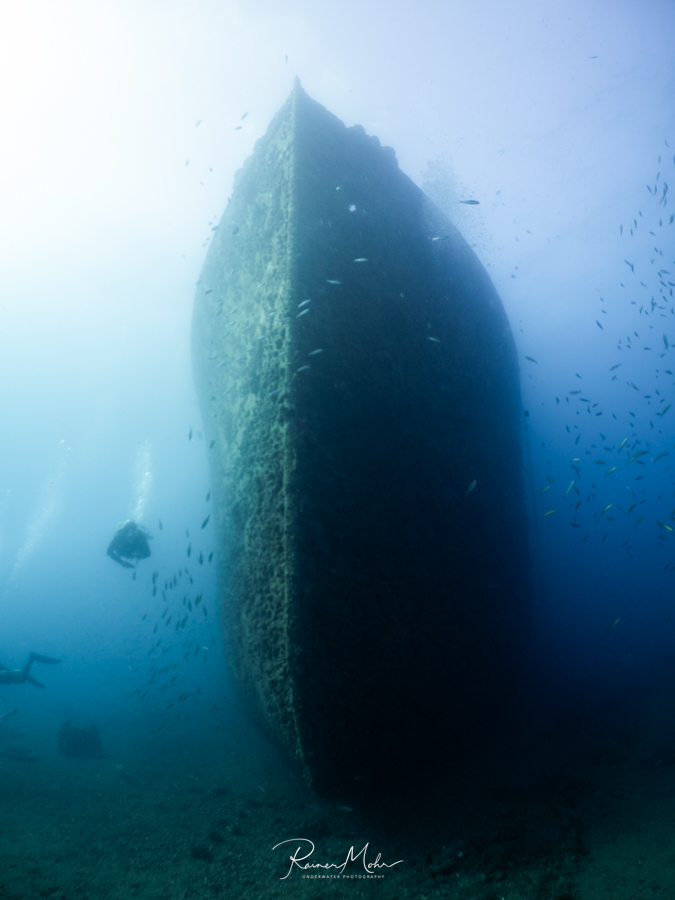
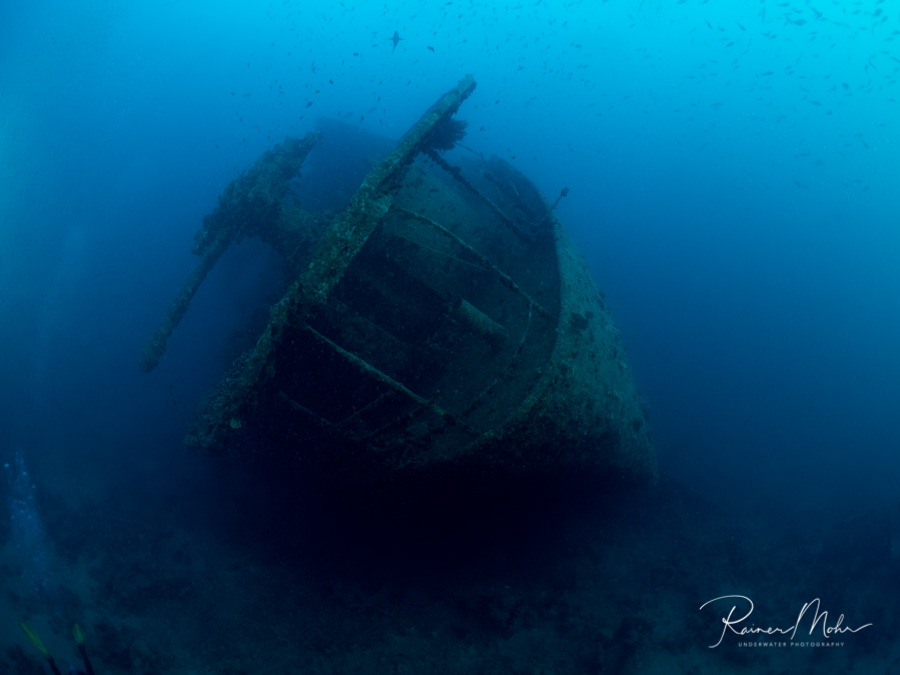
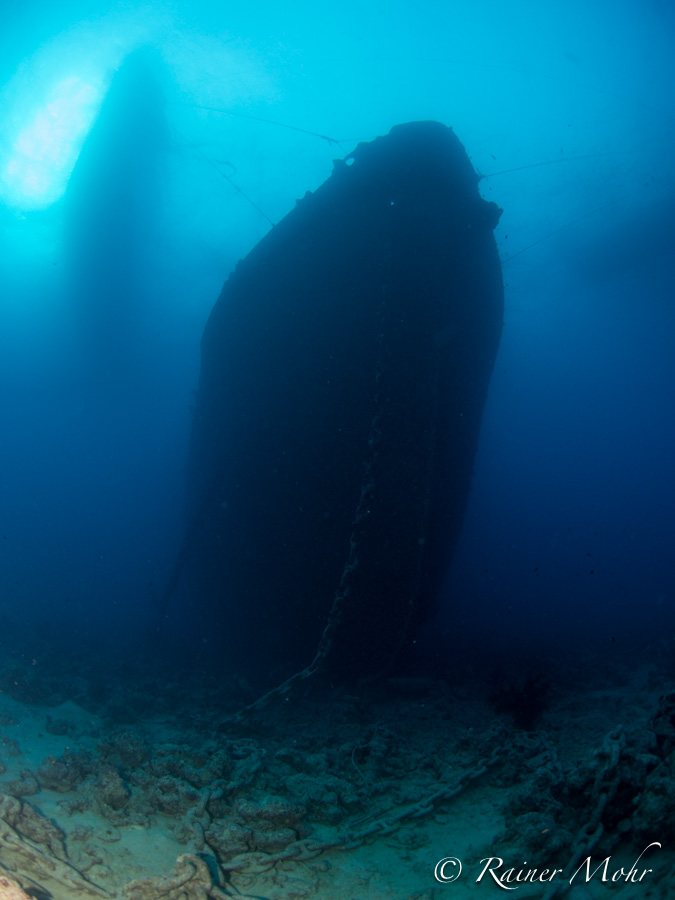
The mighty bow of the SS Turkia rises from the blue. A diver illustrates the enormous dimensions of the wreck.
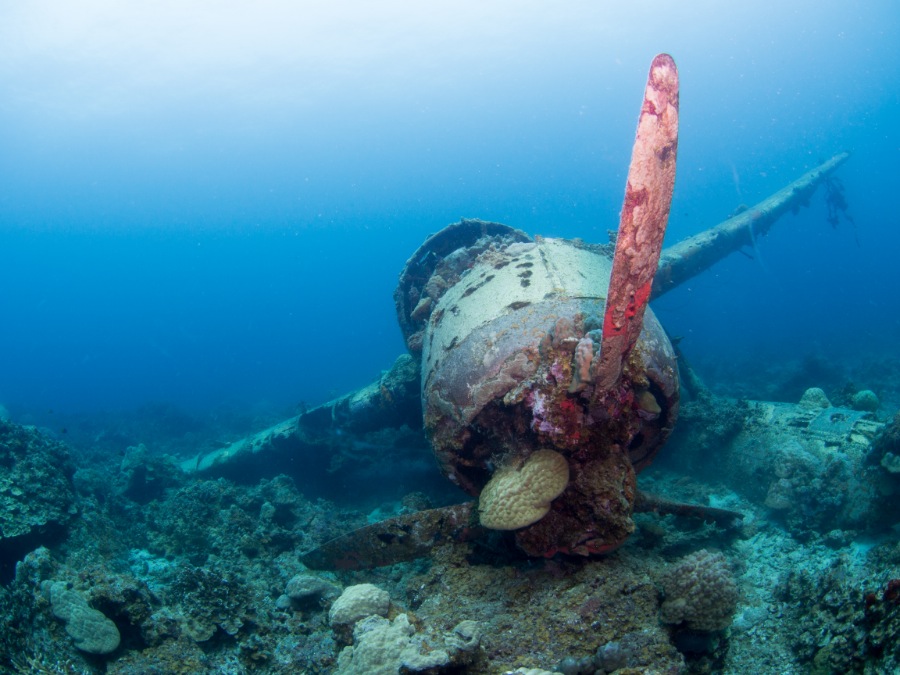
Sunken Japanese WWII aircraft wreck with propeller and engine visible from the front, encrusted with corals. Diver in the background.
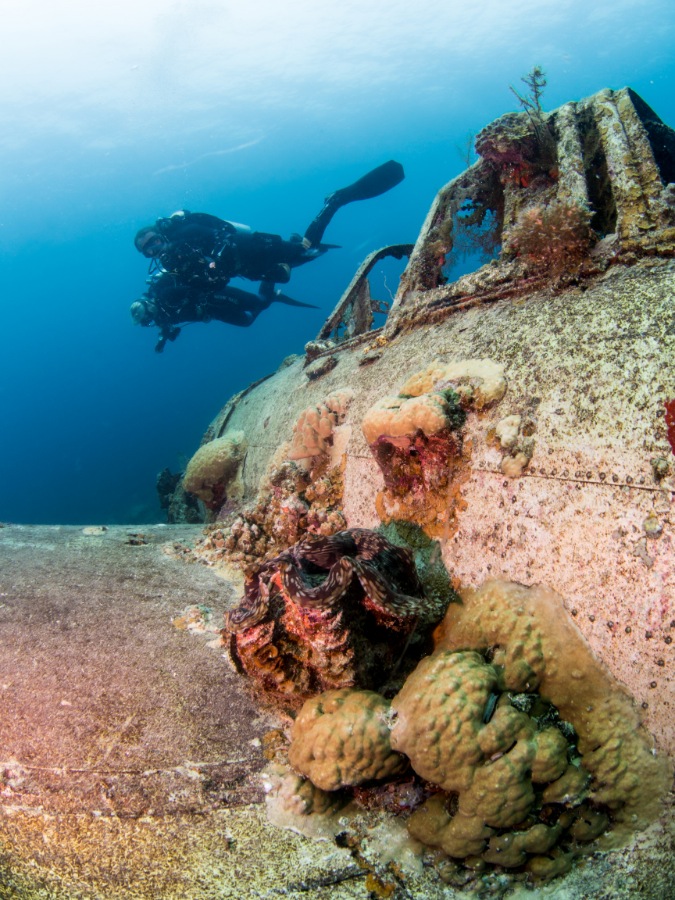
Diver hovers above a sunken Japanese aircraft wreck from World War II. Giant clams and corals colonise the wreck. Wide-angle shot.
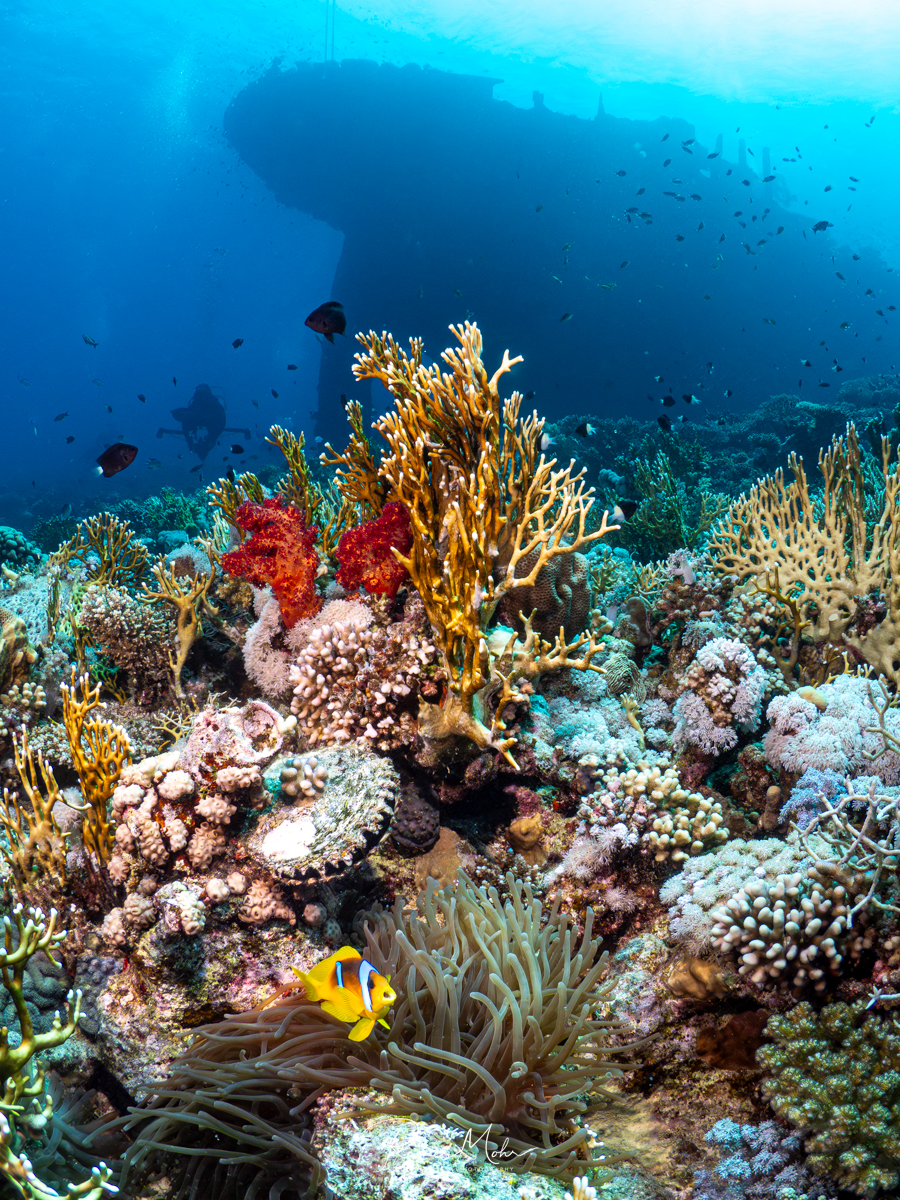
A colourful coral garden with a Red Sea anemonefish in its anemone in the foreground. The silhouette of the Kingston wreck is visible in the background.
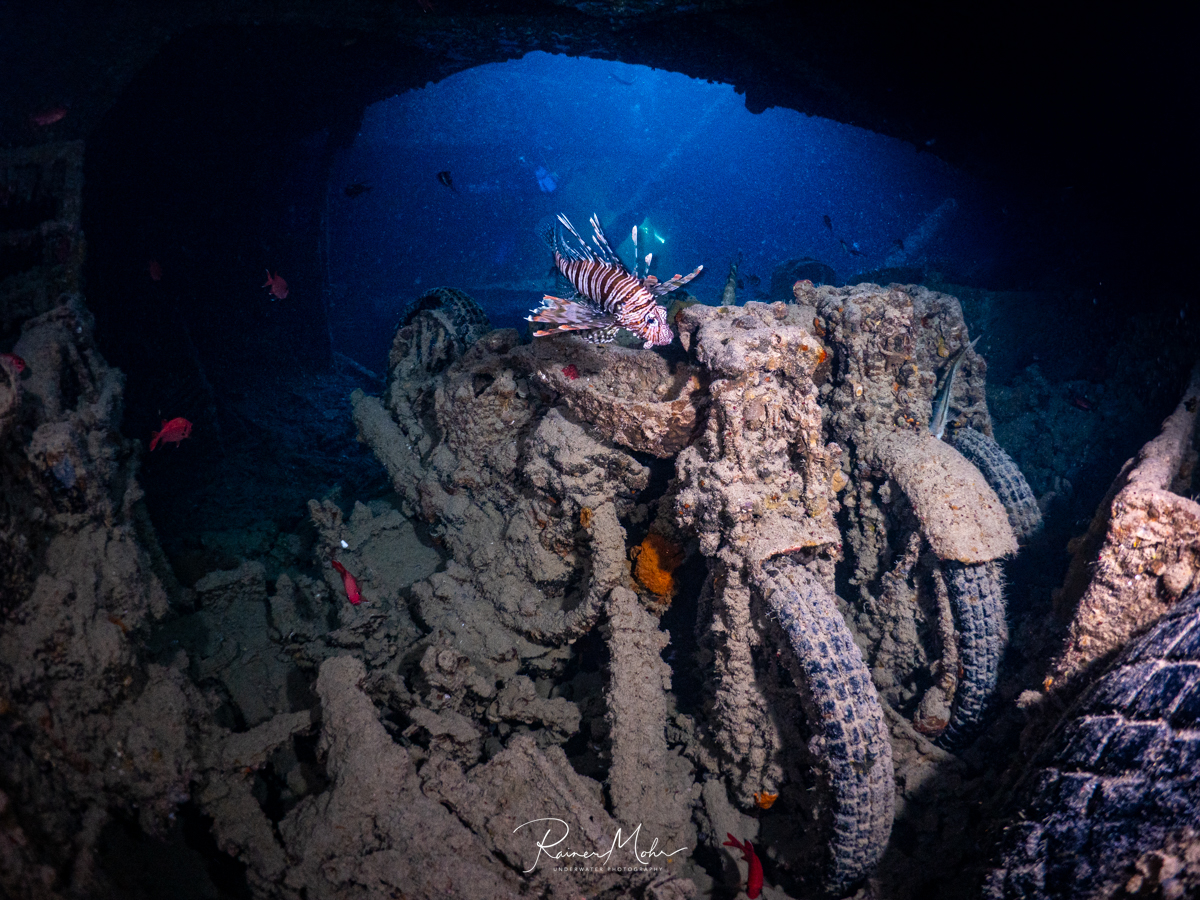
A red lionfish hovers above the encrusted motorcycles in the cargo hold of the SS Thistlegorm. A diver with a torch is visible in the background.
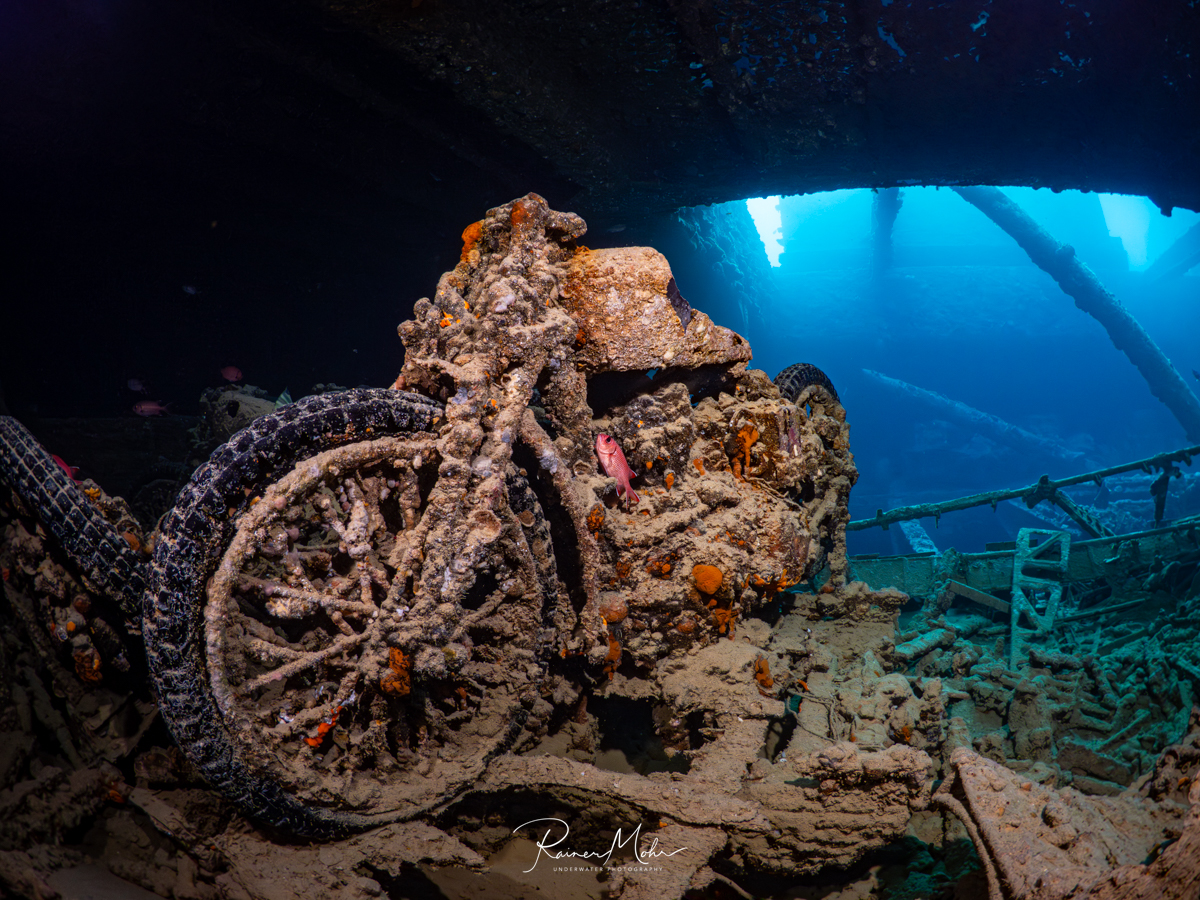
A growth-covered motorcycle in the cargo hold of the SS Thistlegorm, with bluish light from the wreck openings in the background.
A red lionfish (Pterois volitans) spreads its imposing fin rays before the backdrop of the Kingston wreck.
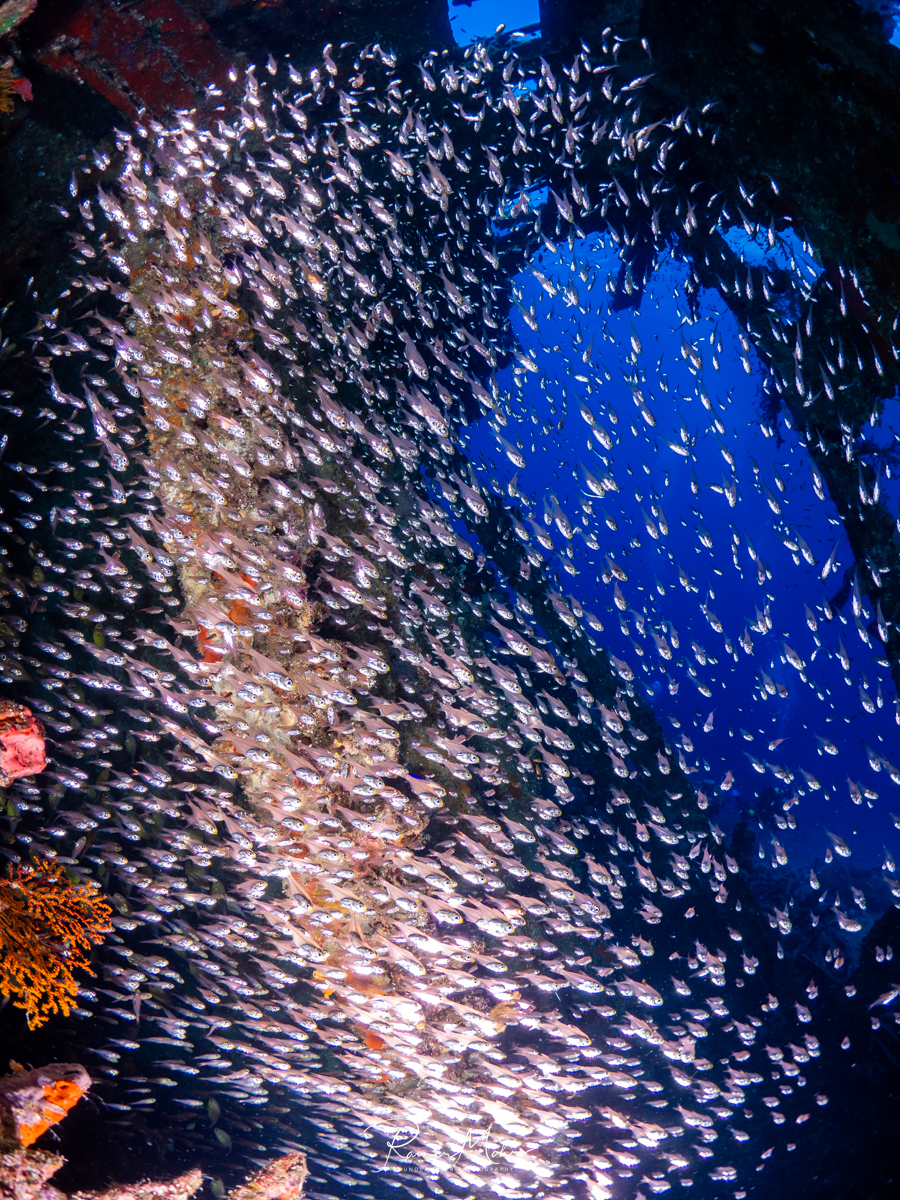
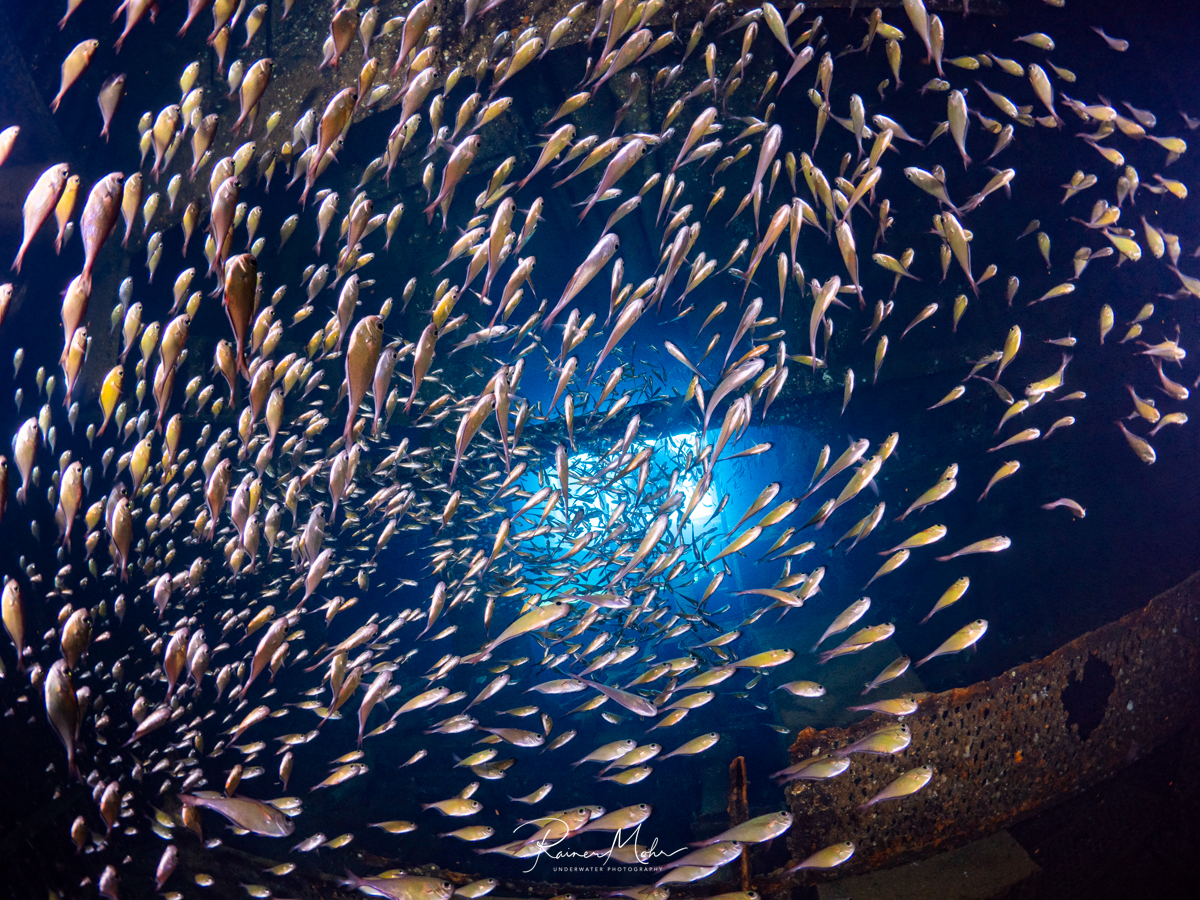
A dense school of small glassfish fills the interior of a wreck, illuminated by incoming sunlight. Wreck of the Carnatic.
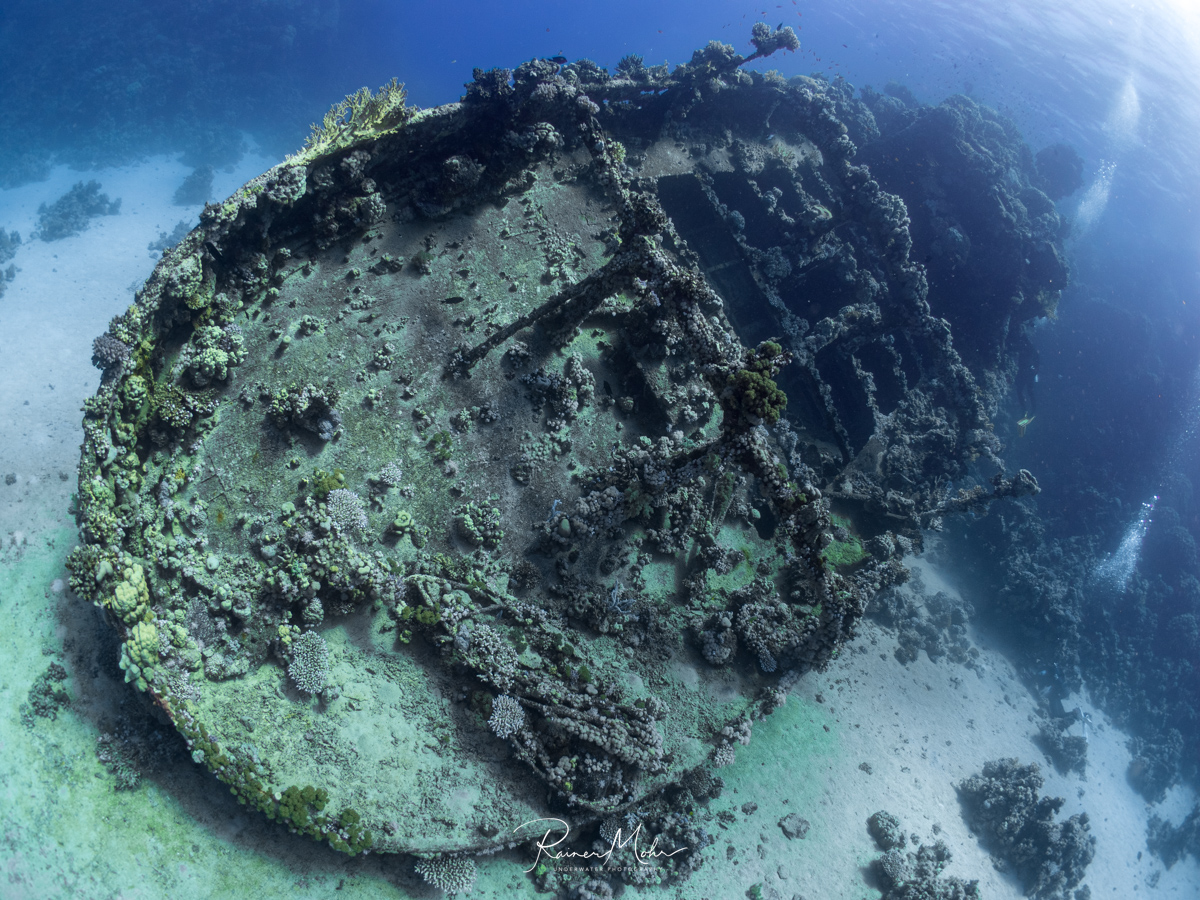
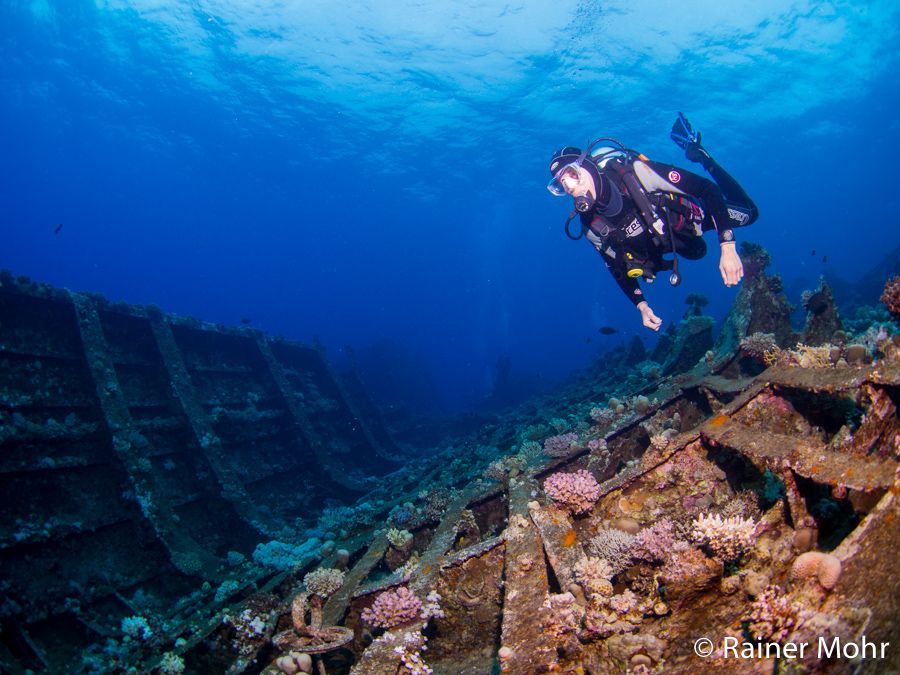
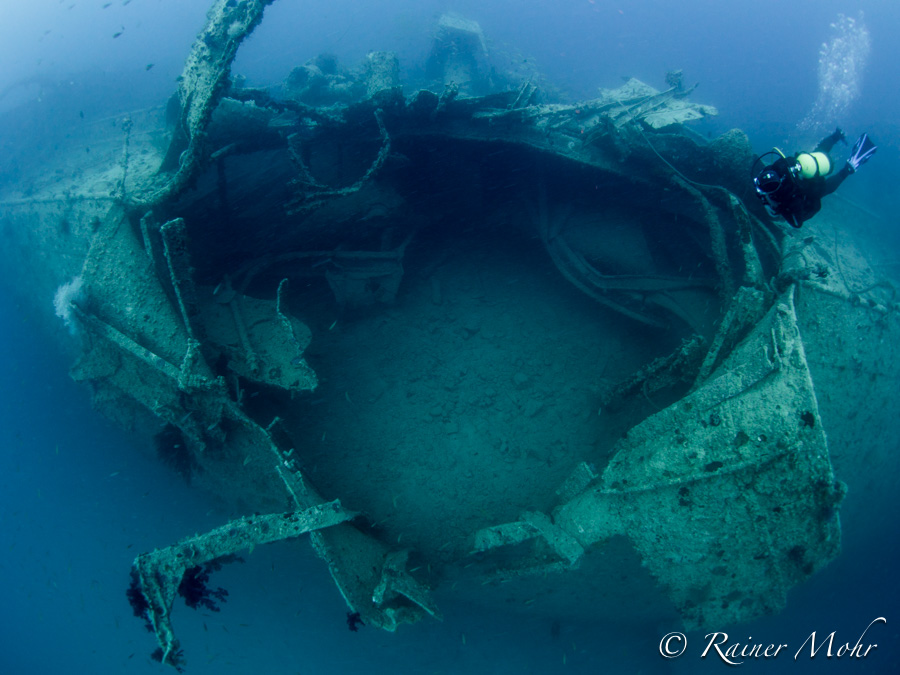
Wide-angle shot of a large coral-covered wreck on the seafloor of the Red Sea. The structure of the hull is still recognisable beneath the growth; a diver hovers alongside.
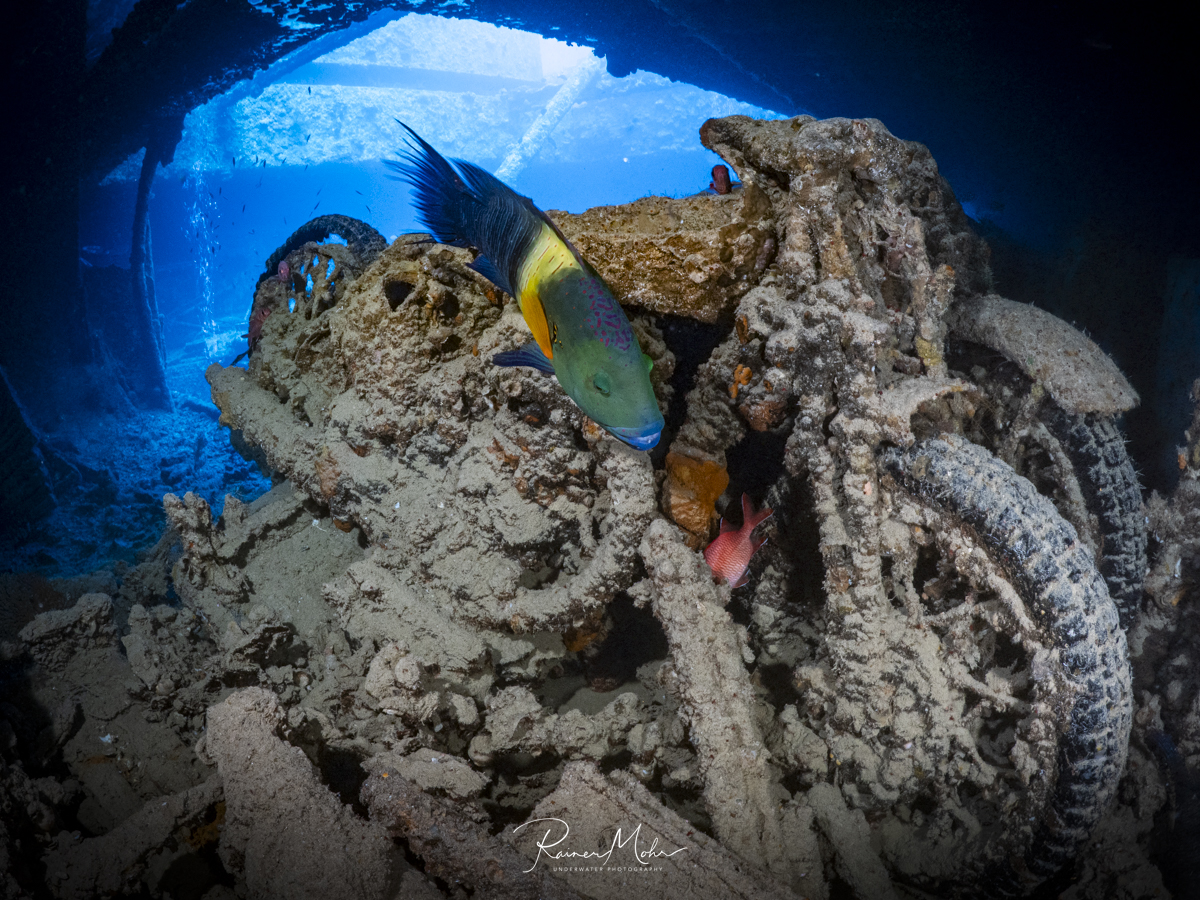
BSA motorcycles in the cargo hold of the wreck of the SS Thistlegorm in the Red Sea. Red soldierfish swim among the cargo.
An enormous school of glassfish swirls inside a wreck, forming fascinating patterns in the incoming light.
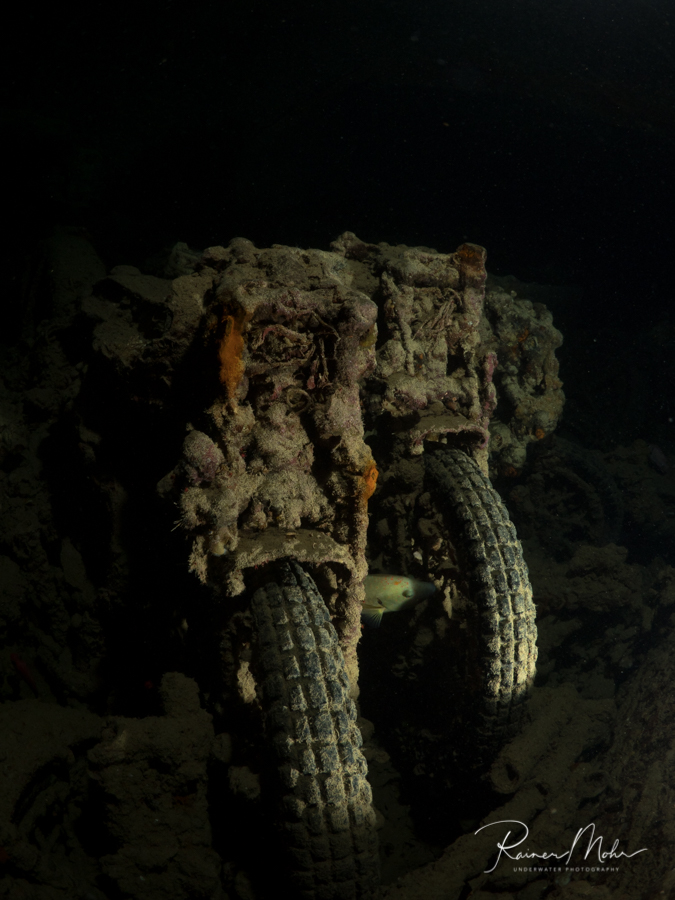
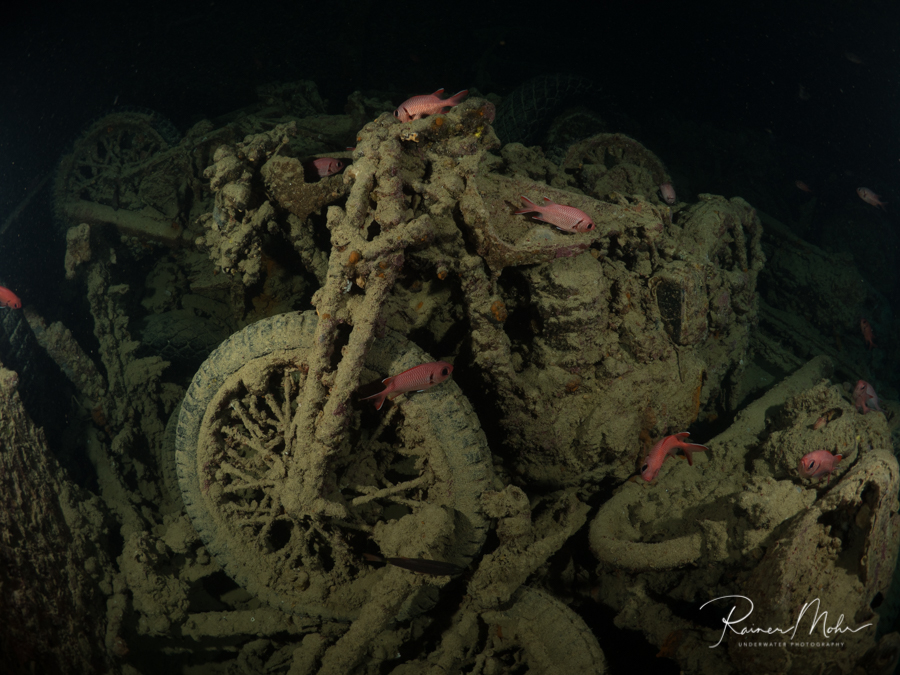
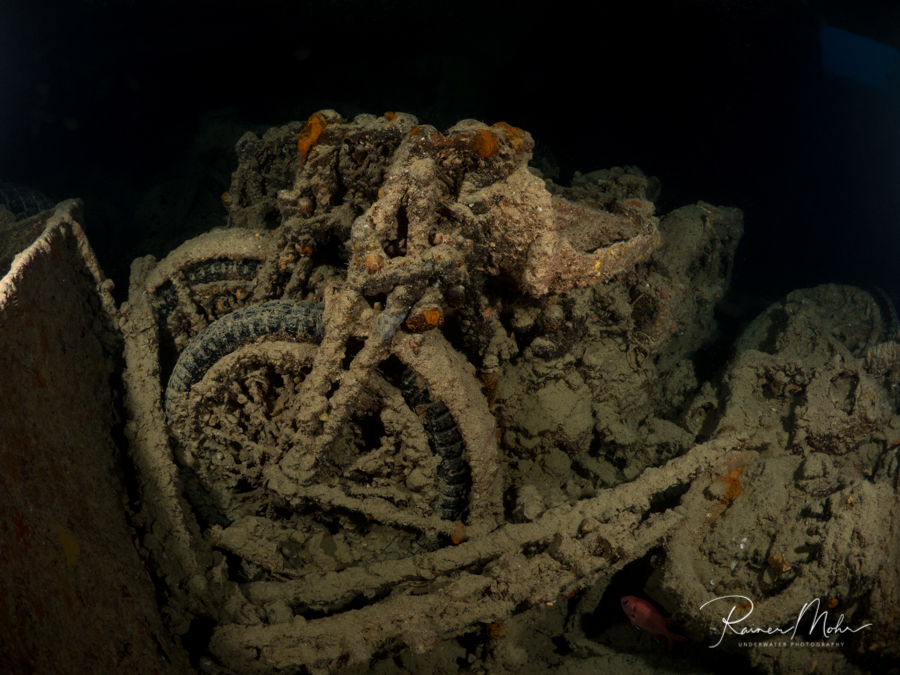
A motorcycle covered in sediment and growth inside the wreck of the SS Thistlegorm. A small fish has hidden between the wheels. A fascinating testimony of this underwater time capsule.
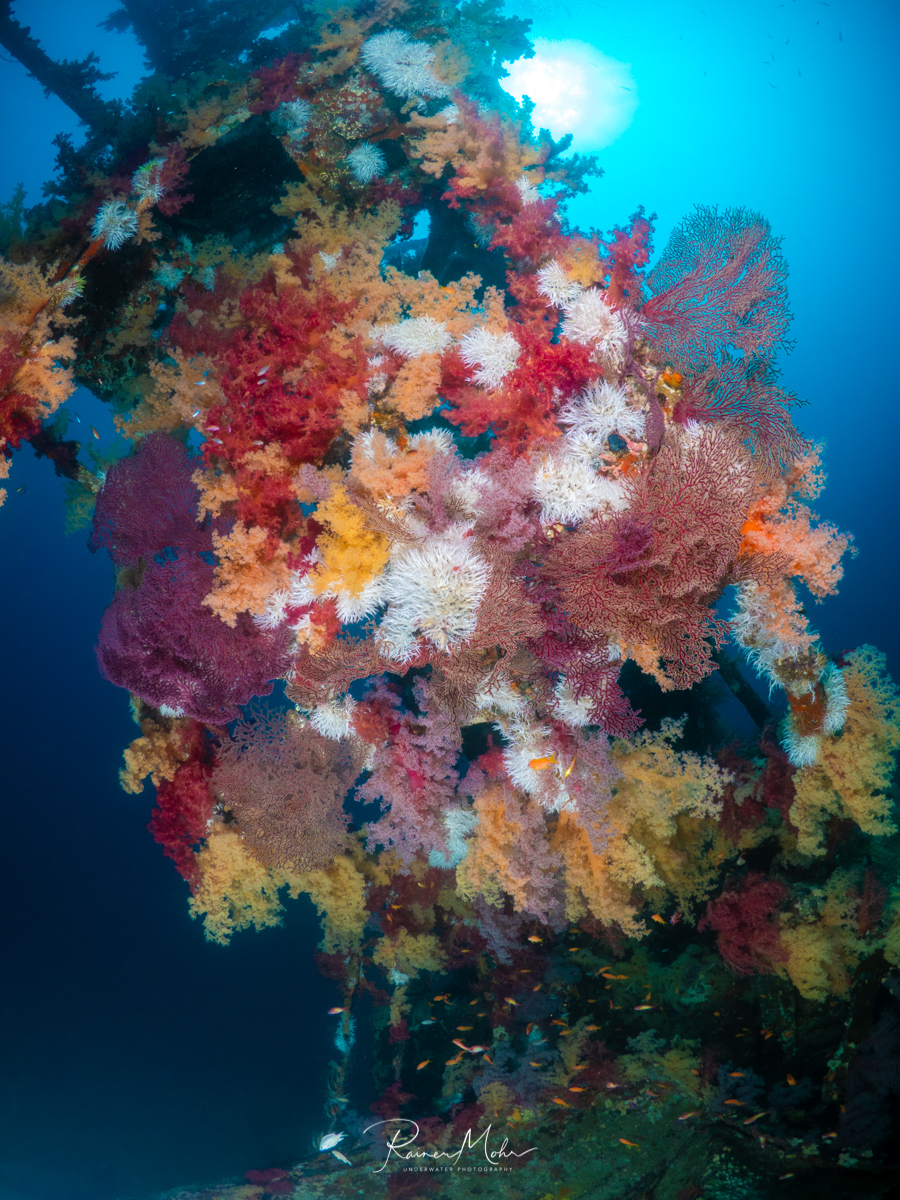
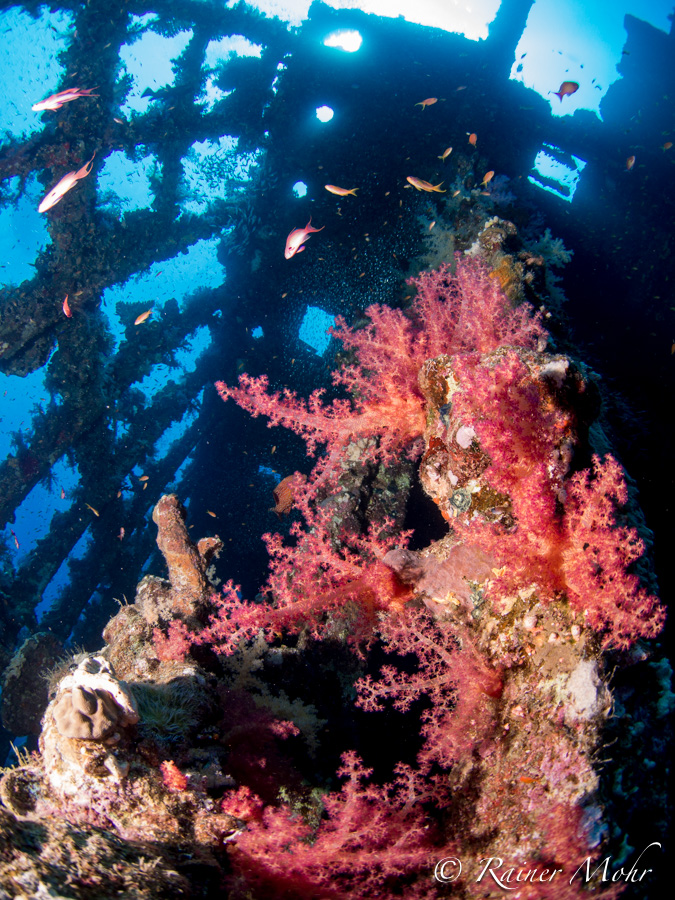
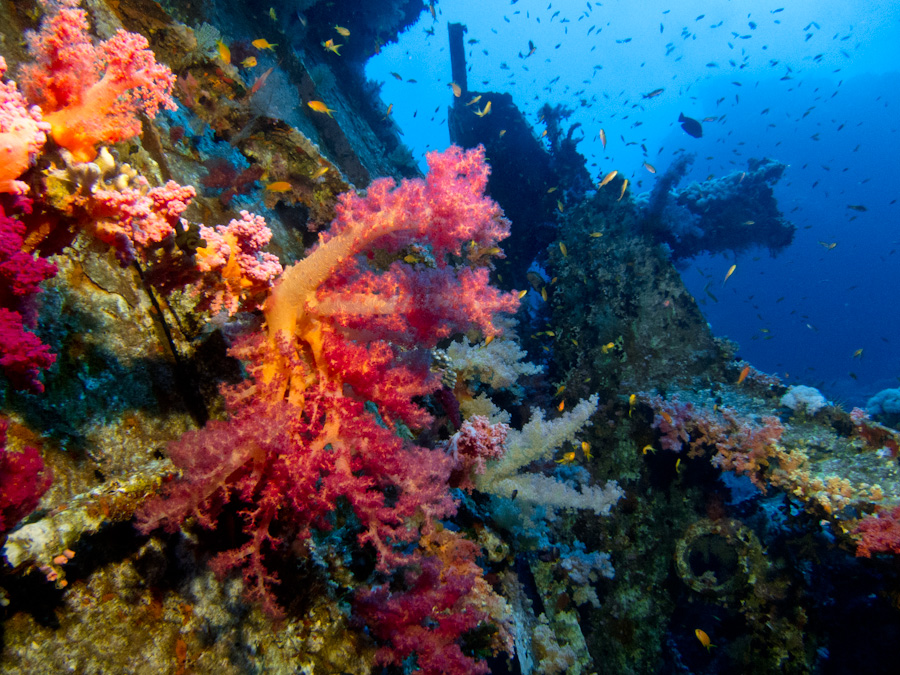
Wreck structure in the Red Sea, lushly covered with colourful soft corals (Dendronephthya) and gorgonians in red, orange, yellow and white. The sun shines through the water from above.
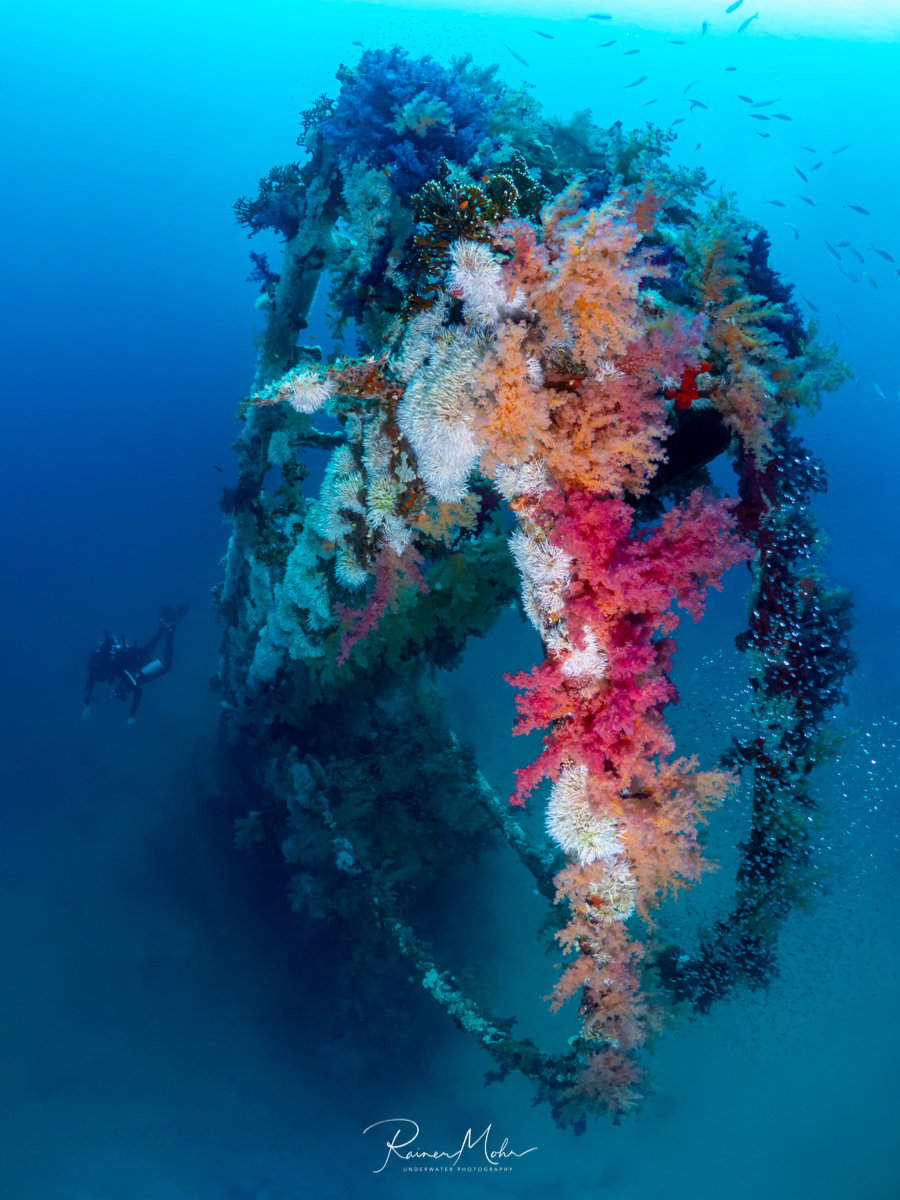
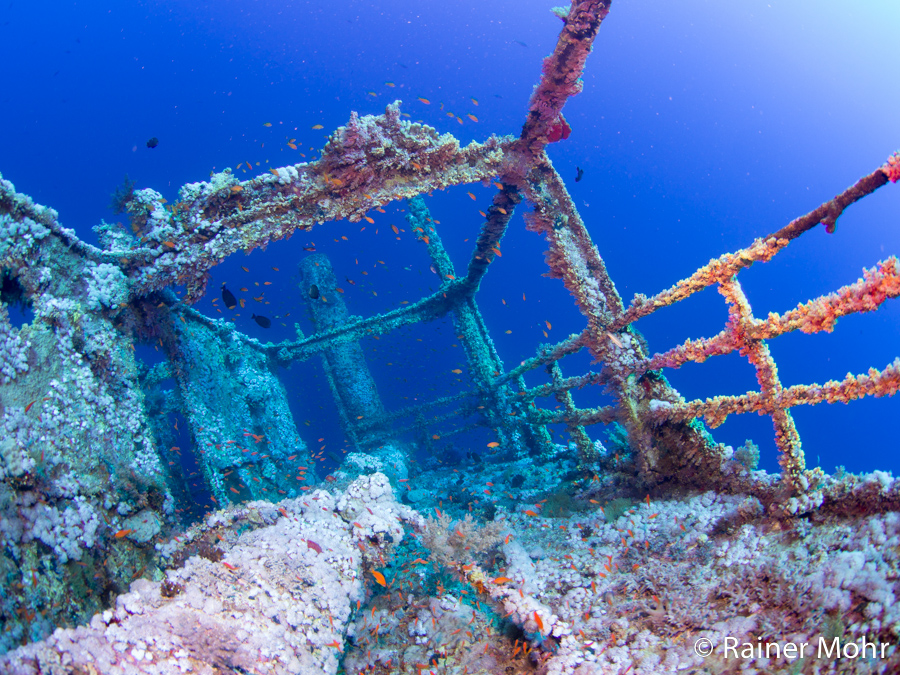
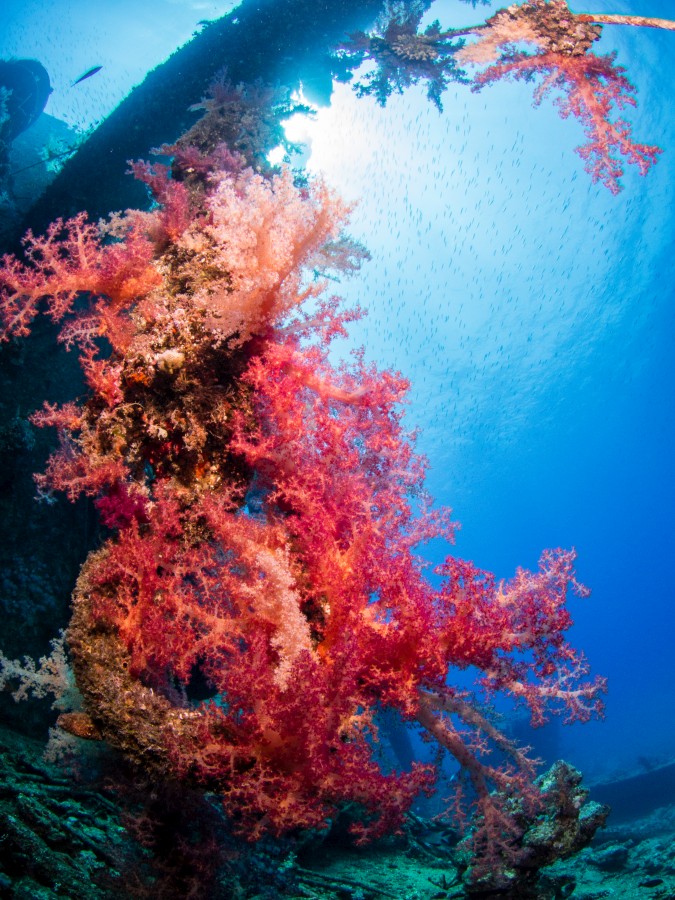
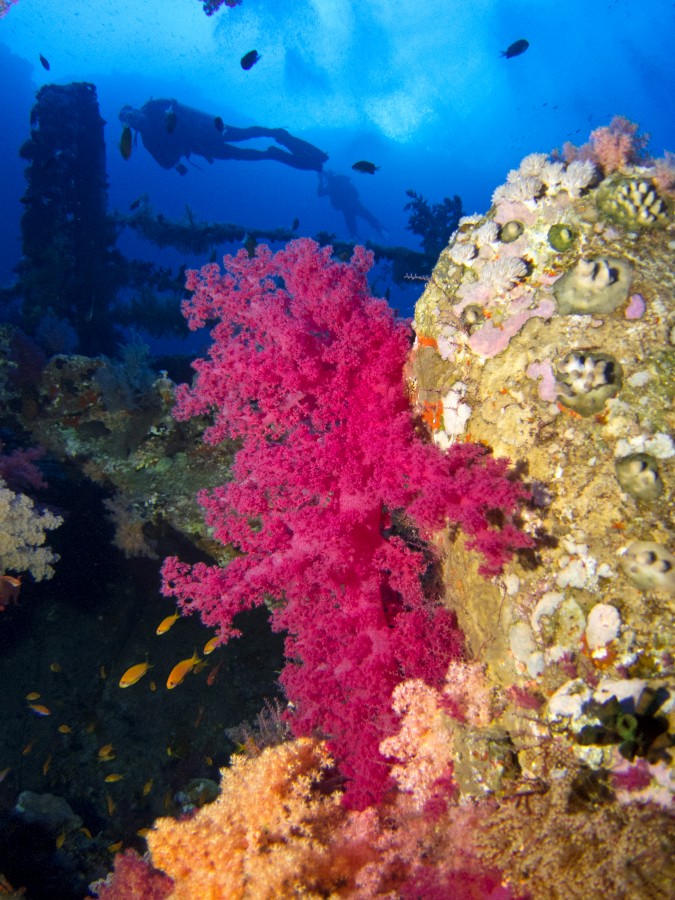
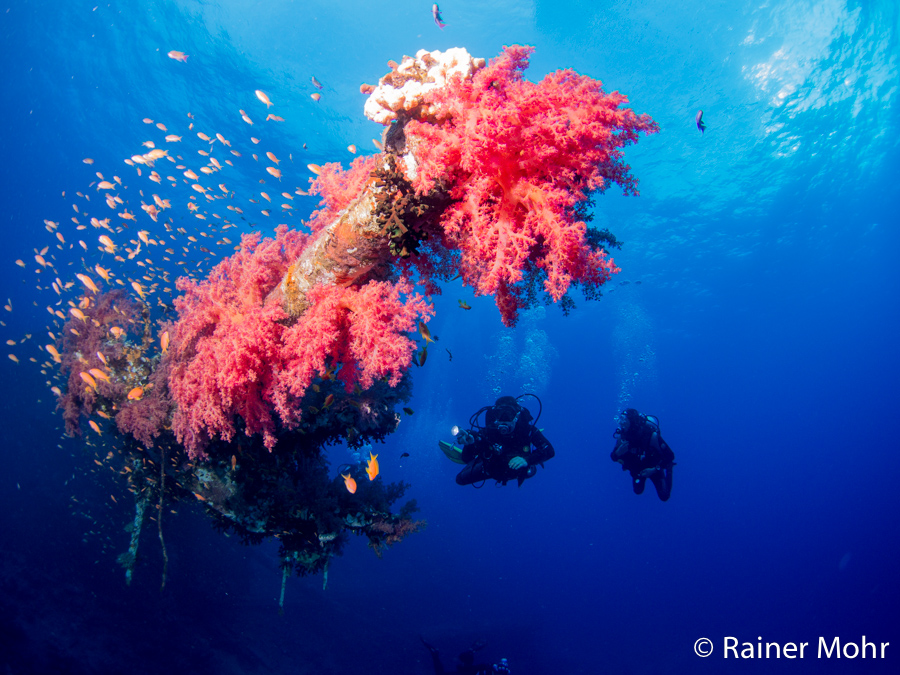
The mast of a sunken crane in the Red Sea, completely covered with colourful soft corals in pink, orange and white. A diver hovers beside the wreck; a school of small fish surrounds the structure.
The wreck of the Rosalie Moller lies on the seabed, its bow and superstructure heavily encrusted with corals and other marine organisms. The metal structures are still clearly recognisable and have developed into an artificial reef providing habitat for various species.
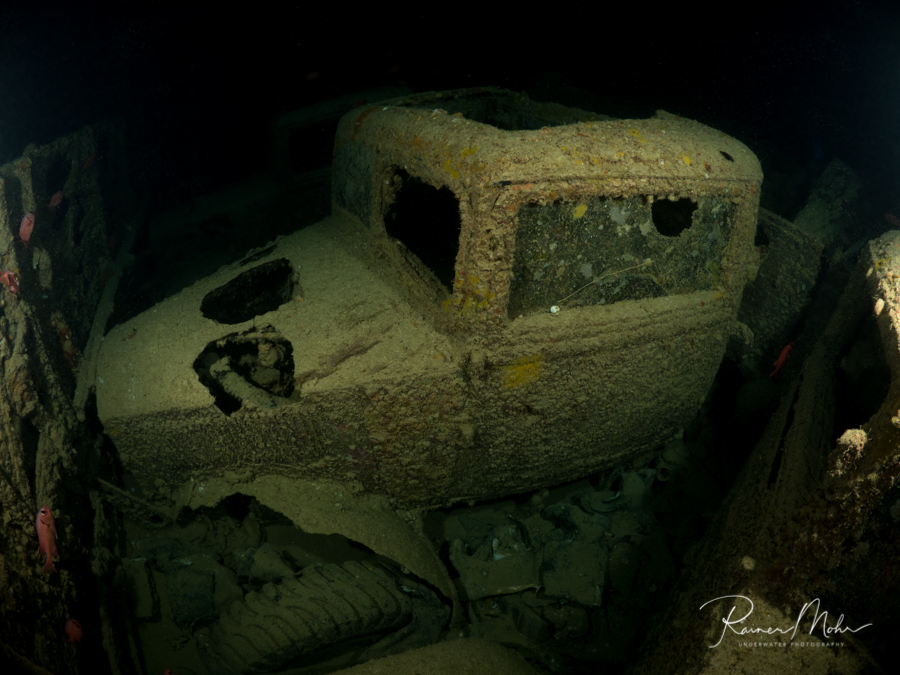
Interior of a truck in the wreck of the SS Thistlegorm. The cab is overgrown with corals and marine organisms.
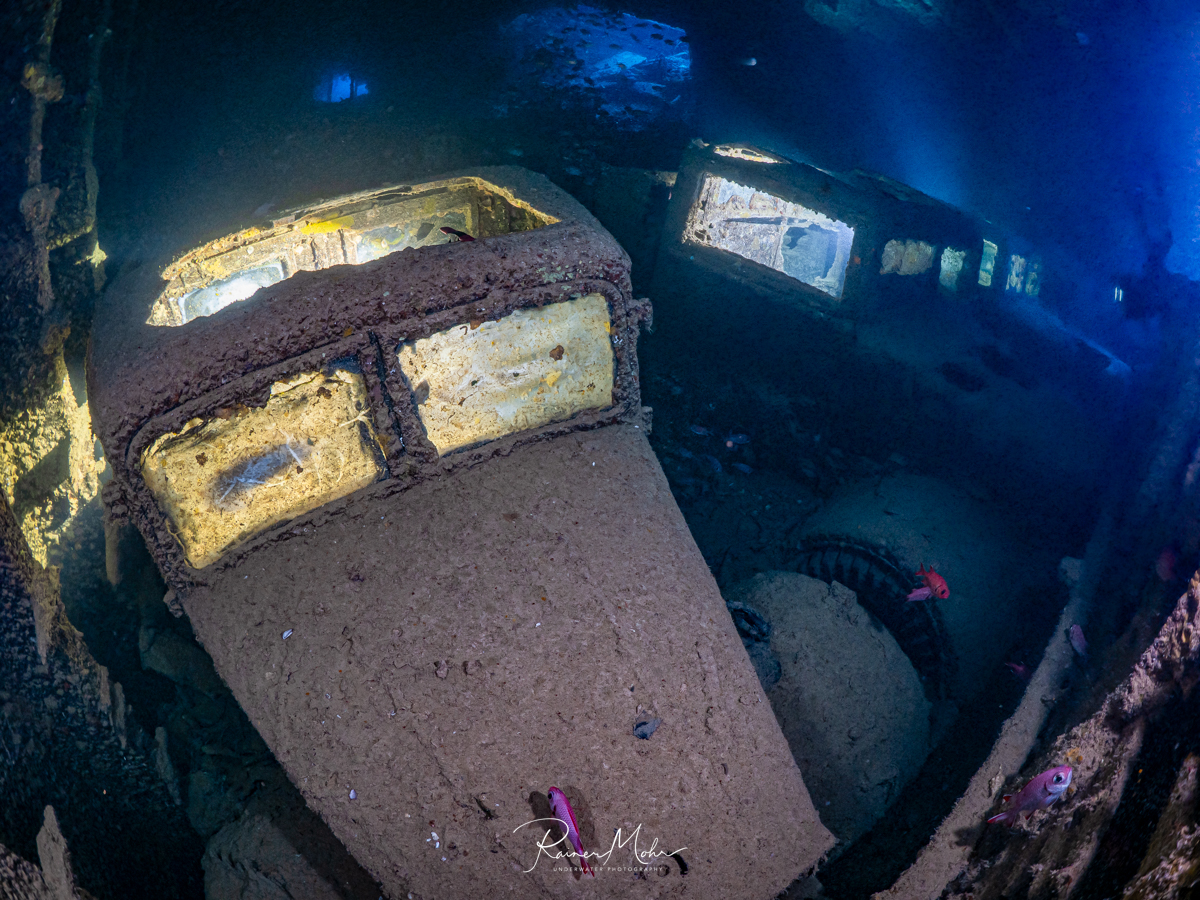
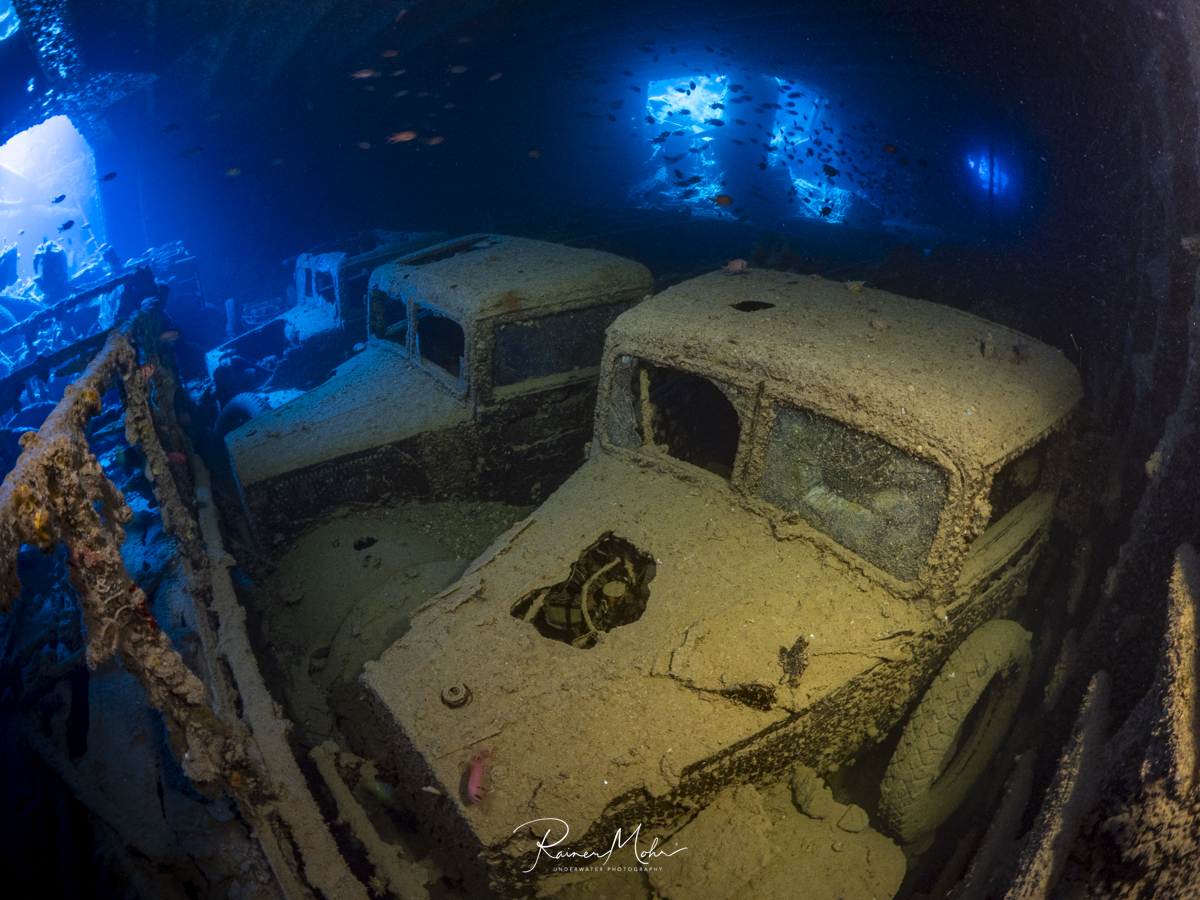
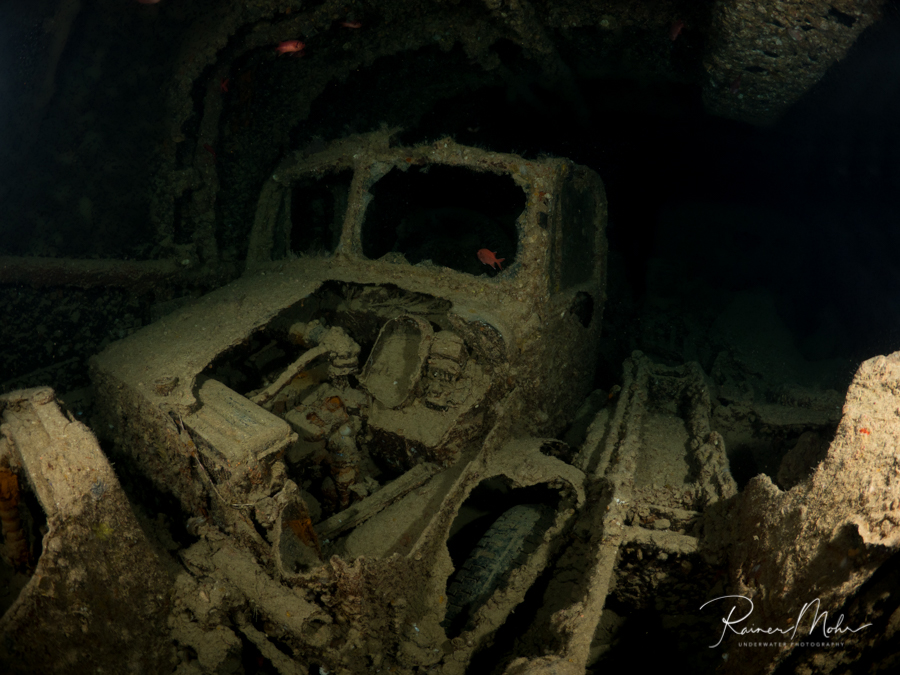
An old vehicle inside the wreck of the SS Thistlegorm, thickly coated with sediment and corrosion. The cab and wheels are still clearly recognisable; the atmosphere is mysterious.
More stacked motorcycles in the cargo hold of the wreck of the SS Thistlegorm. The vehicles are covered with corals and sponges.
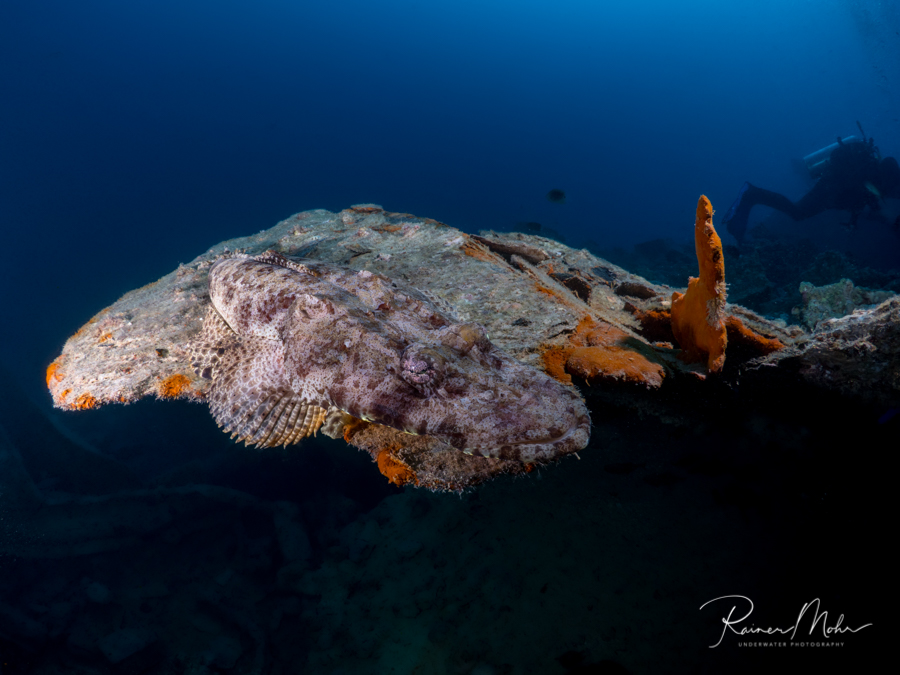
A crocodilefish (Papilloculiceps longiceps) lies well camouflaged on the encrusted wreck. A diver hovers in the background; orange sponges cover the wreck.
A wreck section densely covered with hard and soft corals forms a colourful artificial reef. A diver hovers above it in the blue water.
Close-up of the stacked motorcycles in the wreck of the SS Thistlegorm. Soldierfish swim among the rusting vehicles.
Exterior view of the wreck of the SS Thistlegorm in the Red Sea. The stern of the sunken cargo ship rises in the blue water. The anti-aircraft gun is clearly visible.
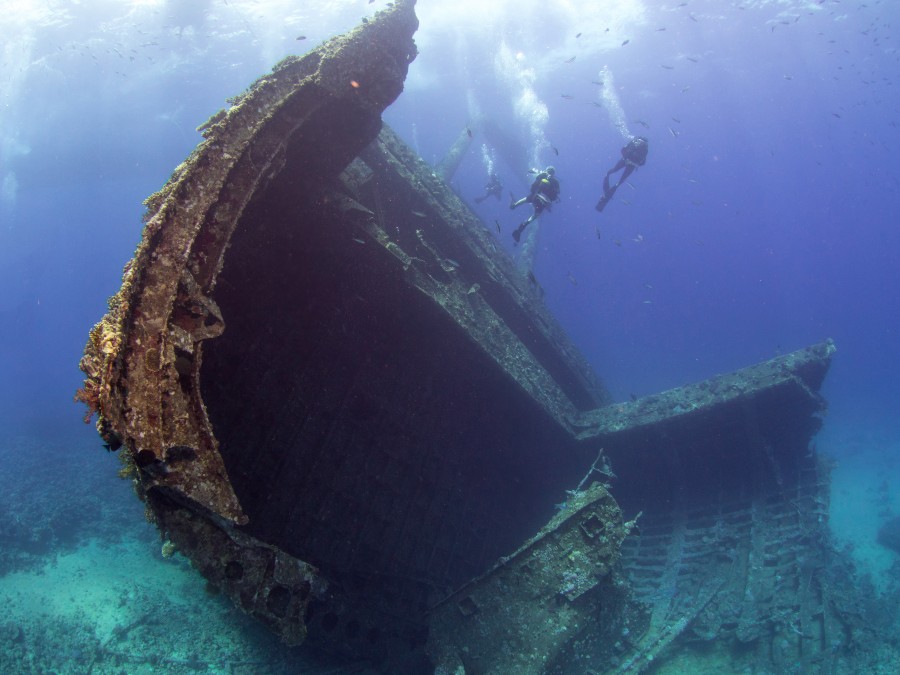
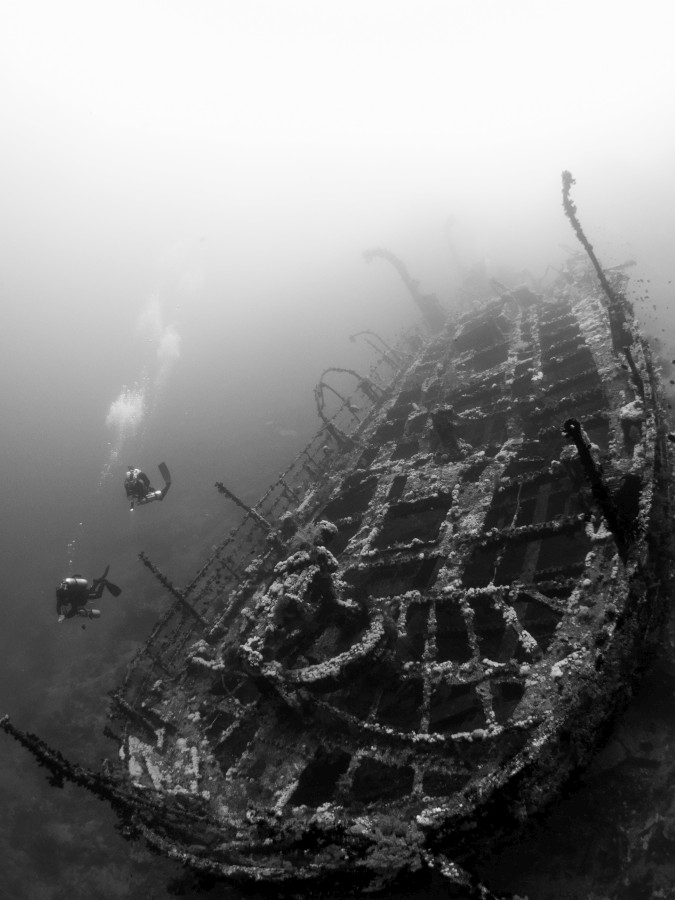
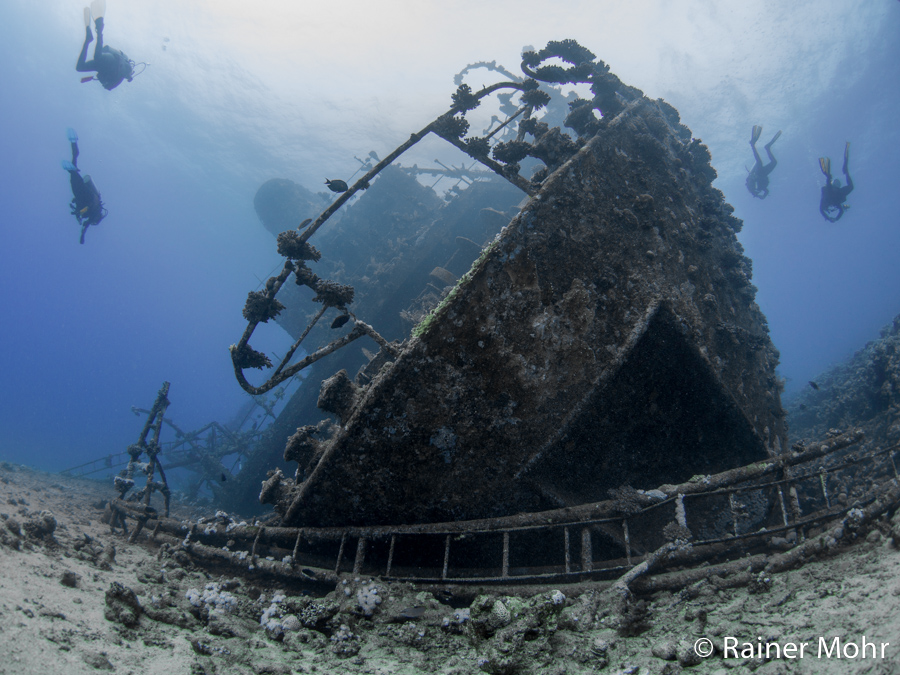
The wreck of the Giannis D at the Abu Nuhas reef in the Red Sea lies tilted on the seabed while several divers explore the imposing wreck. The ship is already heavily colonised by marine organisms and shows clear signs of corrosion, though the superstructure and railings remain recognisable.
A diver explores the remains of a shipwreck already heavily encrusted with corals and marine organisms. The metal structures of the wreck are clearly recognisable and form an artificial reef colonised by colourful soft corals and other marine life.
An imposing shipwreck lies on a sandy seabed, its bow dramatically pointing towards the water surface. Two divers explore the wreck encrusted with corals and marine organisms, which has become an artificial reef.
A diver explores the anchor of the SS Thistlegorm wreck, encrusted with colourful corals and sponges. The metal structures are completely covered with marine growth, giving the wreck new colours in pink, orange and red.
A magnificent red lionfish hovers majestically in front of the remains of a shipwreck. Its characteristic fan-shaped pectoral fins are fully extended as the fish patrols between the coral-encrusted wreck sections.
A sunken shipwreck completely encrusted with colourful corals and marine organisms. The metal structures of the former ship are still clearly recognisable while small colourful reef fish swim around the artificial reef.
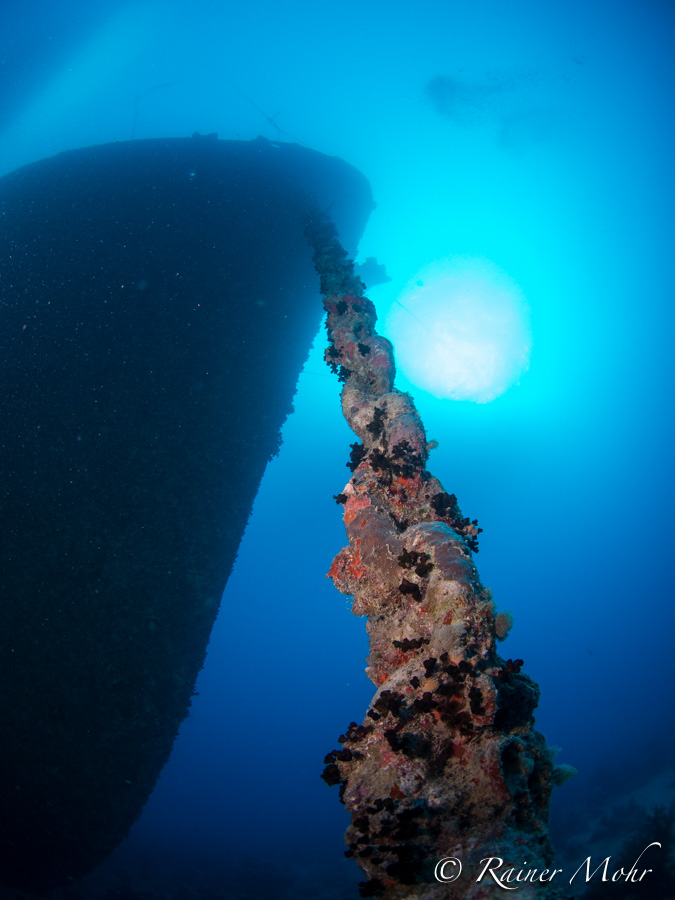
The anchor chain of the SS Thistlegorm descends from the bow into the depths, densely encrusted with colourful soft corals, sponges and other sessile organisms. The sun shines through the deep blue water, creating dramatic lighting around the coral-covered ship structure.
The wreck of the Giannis D lies on a sandy seabed at the Abu Nuhas reef, heavily encrusted with corals and marine organisms. Several divers explore the wreck in the blue depths while colourful corals in the foreground complete the underwater landscape.
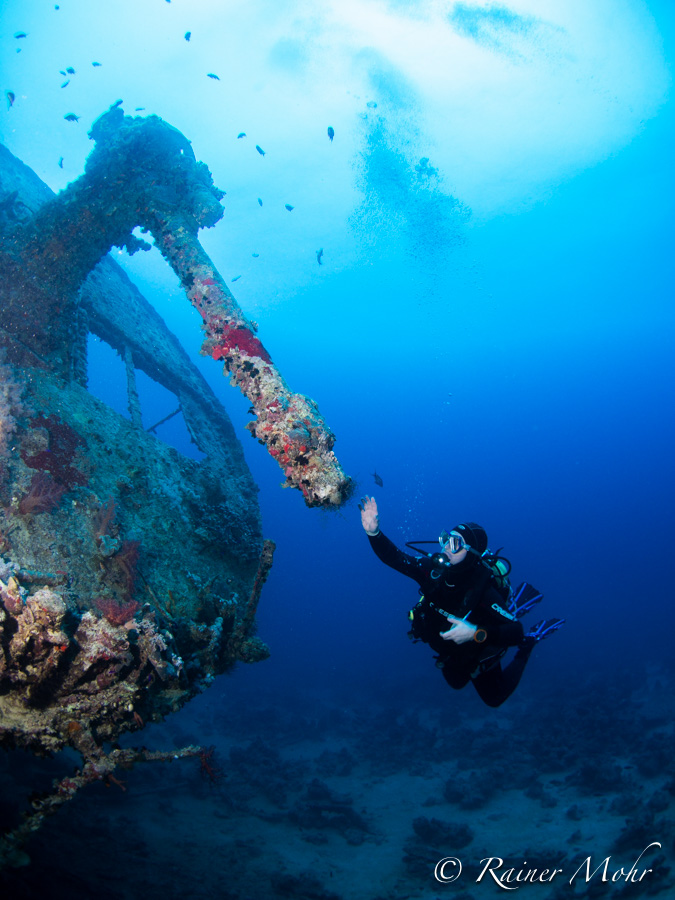
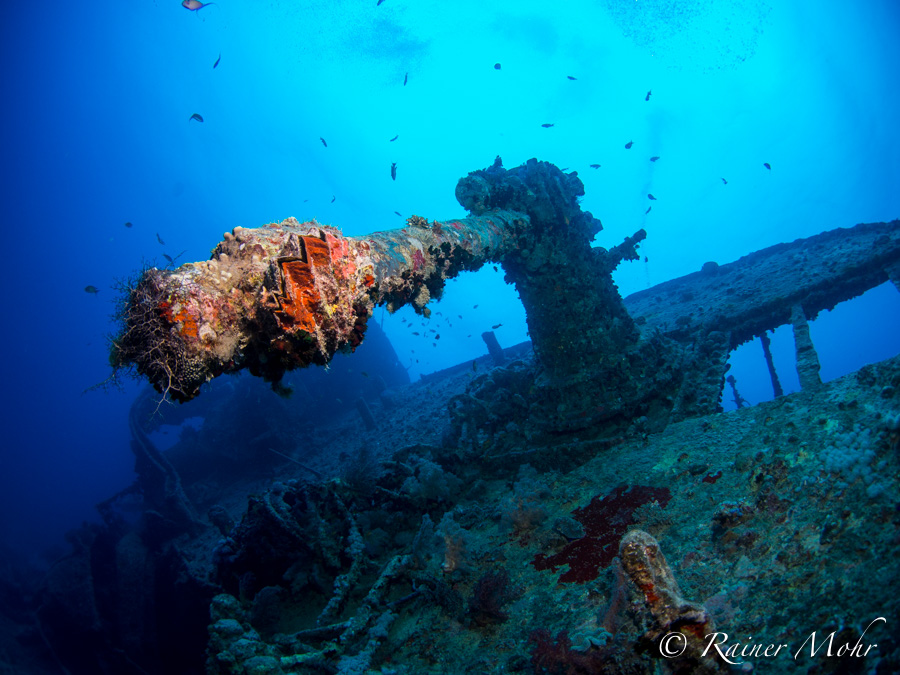
A diver explores the anti-aircraft gun of the SS Thistlegorm wreck in deep blue water. The metal structure is densely encrusted with corals, sponges and other marine organisms, while small reef fish swim around the wreck.
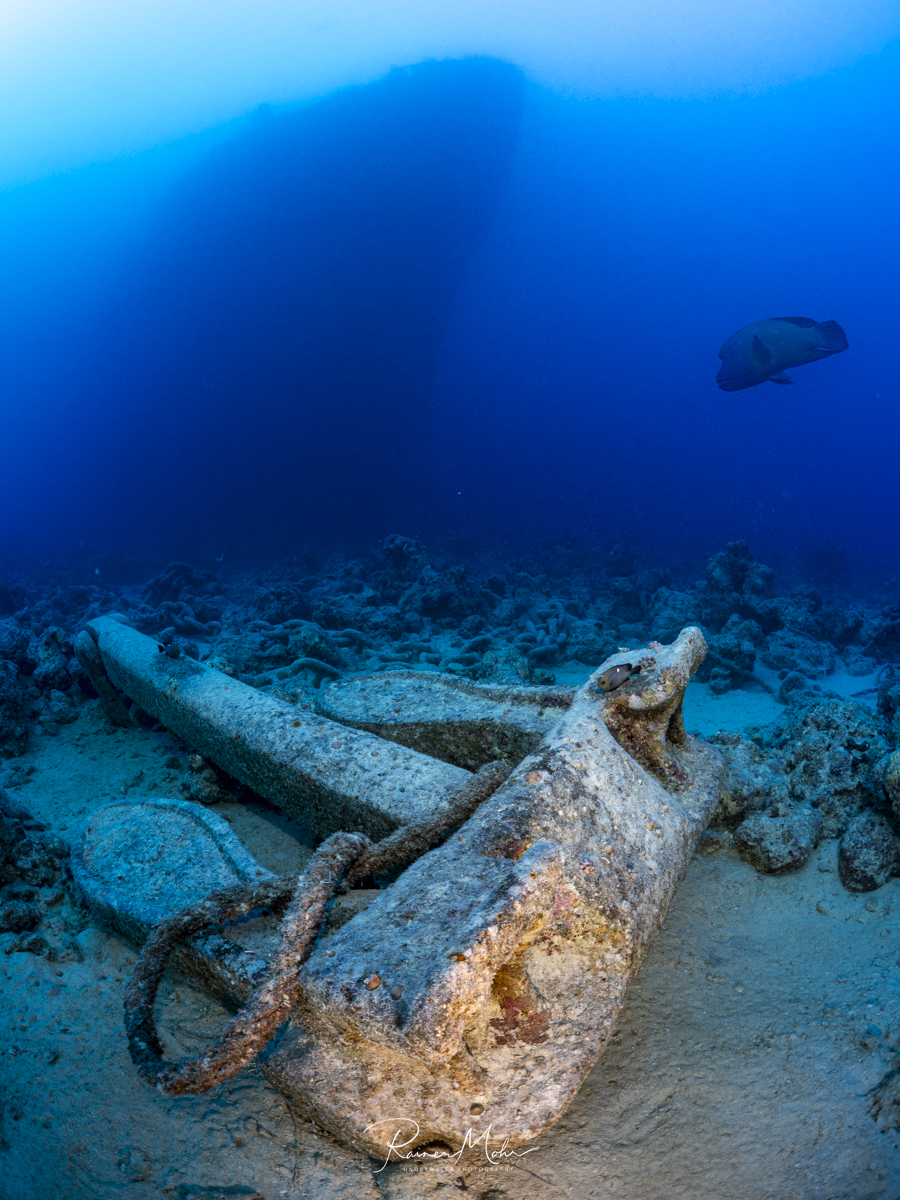
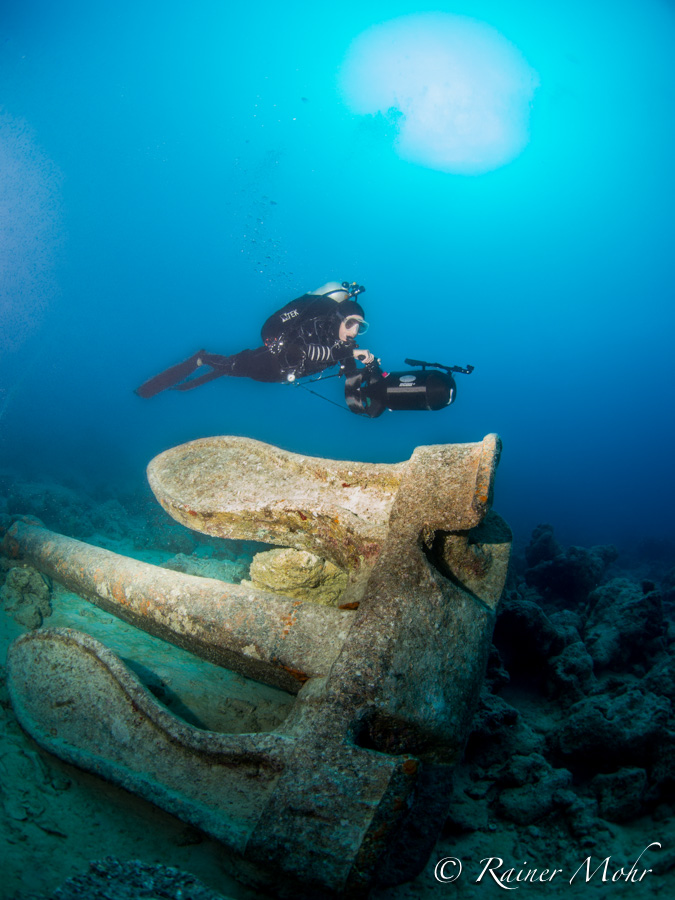
A female diver with a scooter explores the forward anchor of the SS Thistlegorm, lying about 25 metres in front of the wreck.
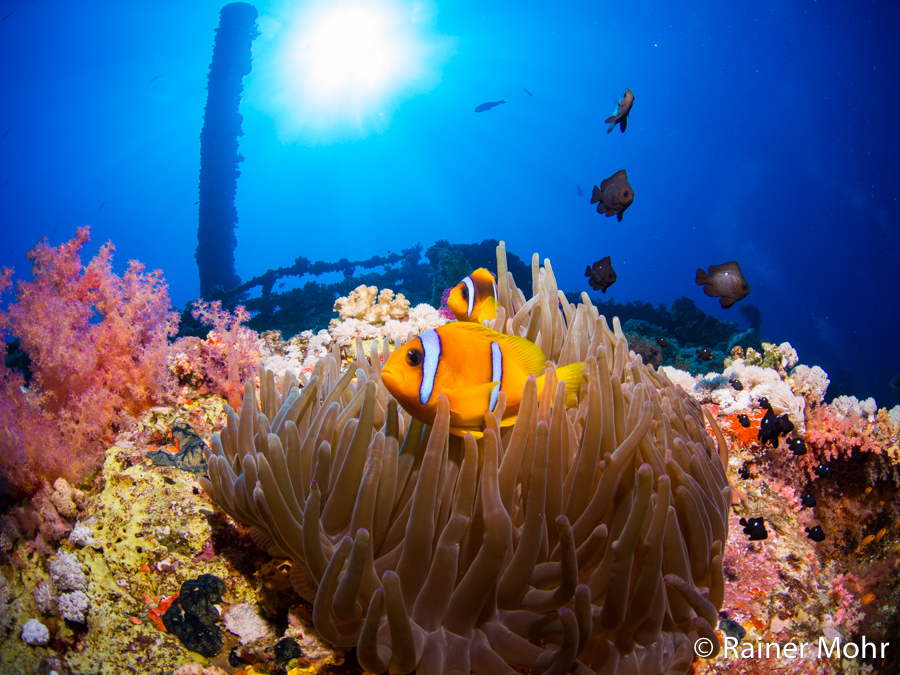
A vivid orange clownfish lives in symbiosis with its host anemone on the wreck, surrounded by colourful soft corals and other reef fish in the blue water. The scene shows the classic symbiosis between anemonefish and anemone in a vibrant wreck community.
A spectacular wreck is densely encrusted with vivid pink soft corals while small reef fish swim around the metal struts. The dramatic silhouette of the sunken ship stands out against the deep blue water, showing how nature has colonised an artificial reef.
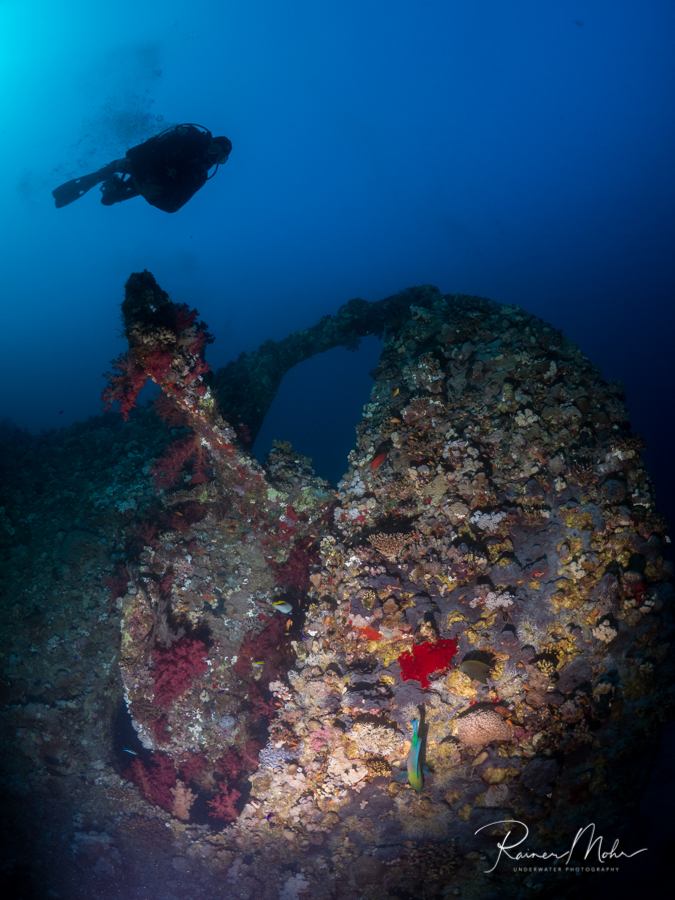
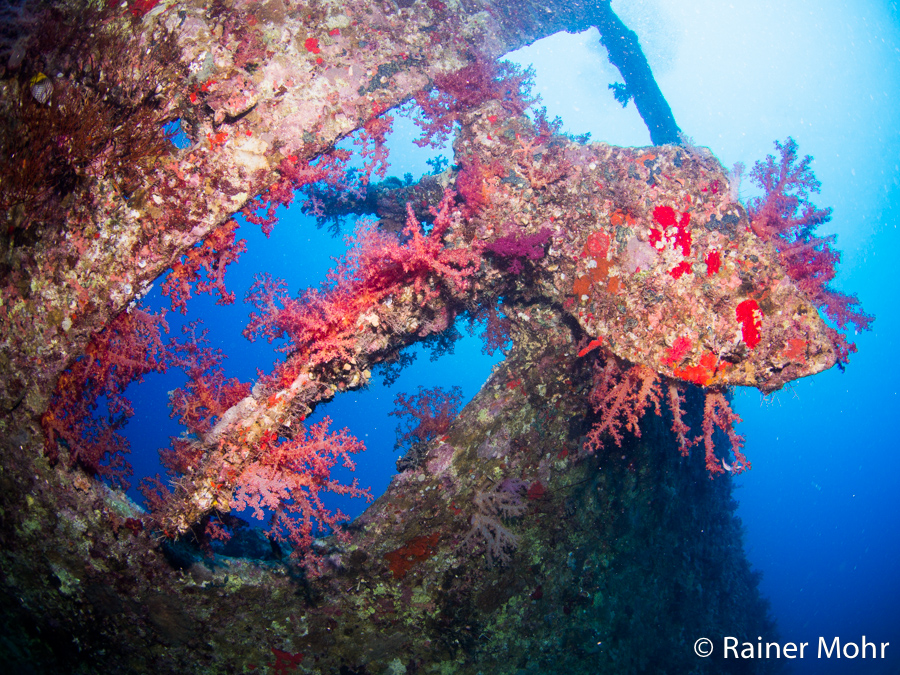
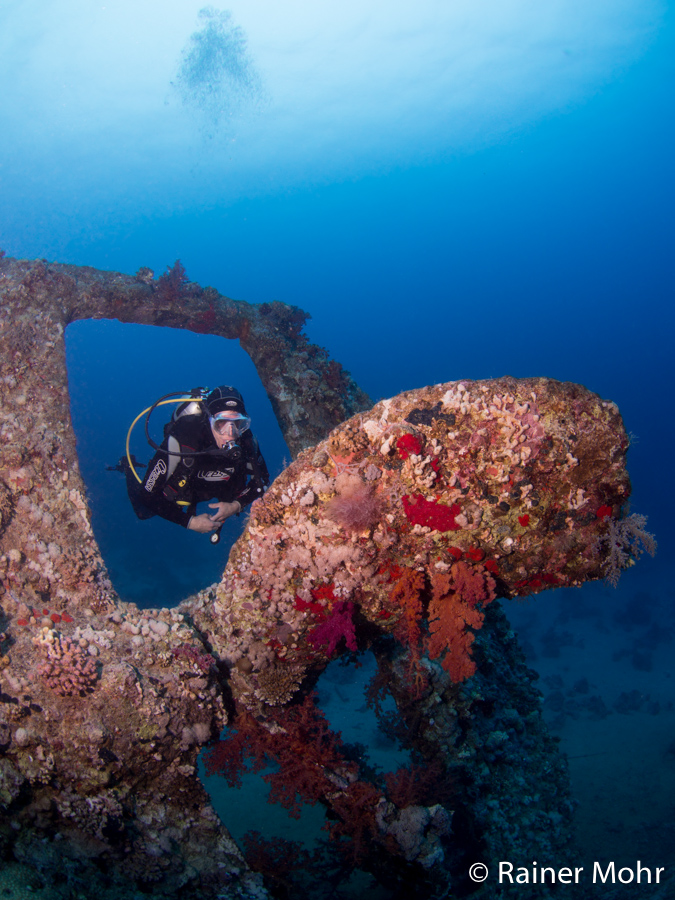
Wreck structure densely encrusted with red and pink soft corals. View through the propeller shaft into blue water.
A spectacular reef overhang with magnificent violet-pink soft corals in full bloom, surrounded by numerous small reef fish. The vivid colours of the corals form a beautiful contrast against the deep blue water in the background.
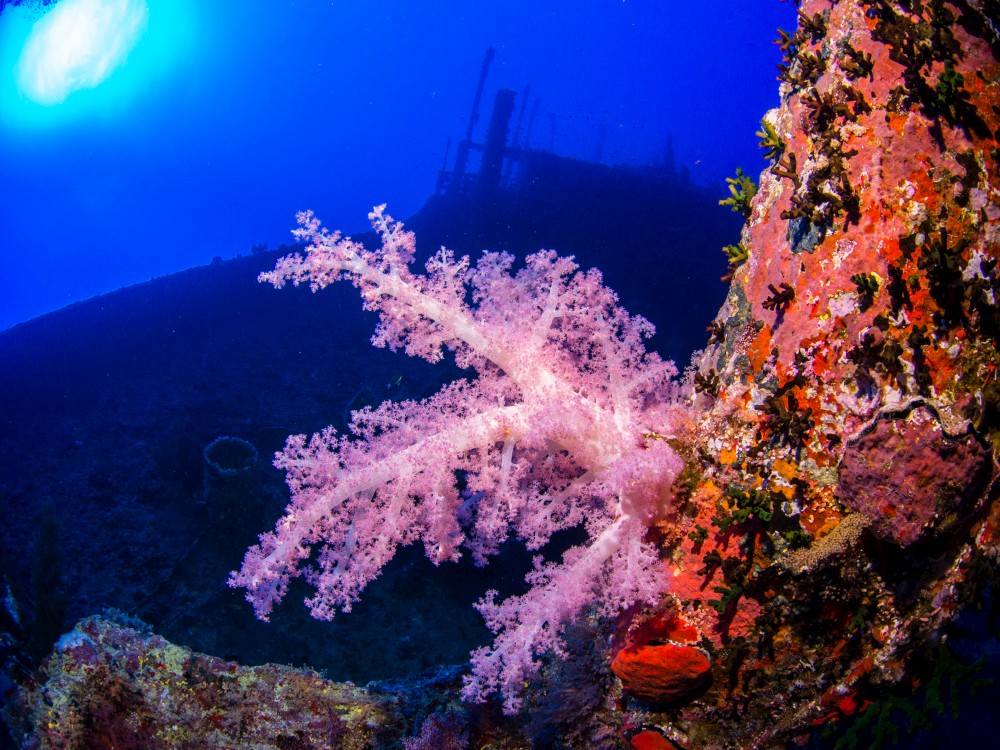
A colourful wreck section overgrown with magnificent soft corals in pink and violet hues. The wreck structure is densely colonised by various corals, including red sponges and other marine organisms, while blue water and sun rays illuminate the dramatic underwater scene.
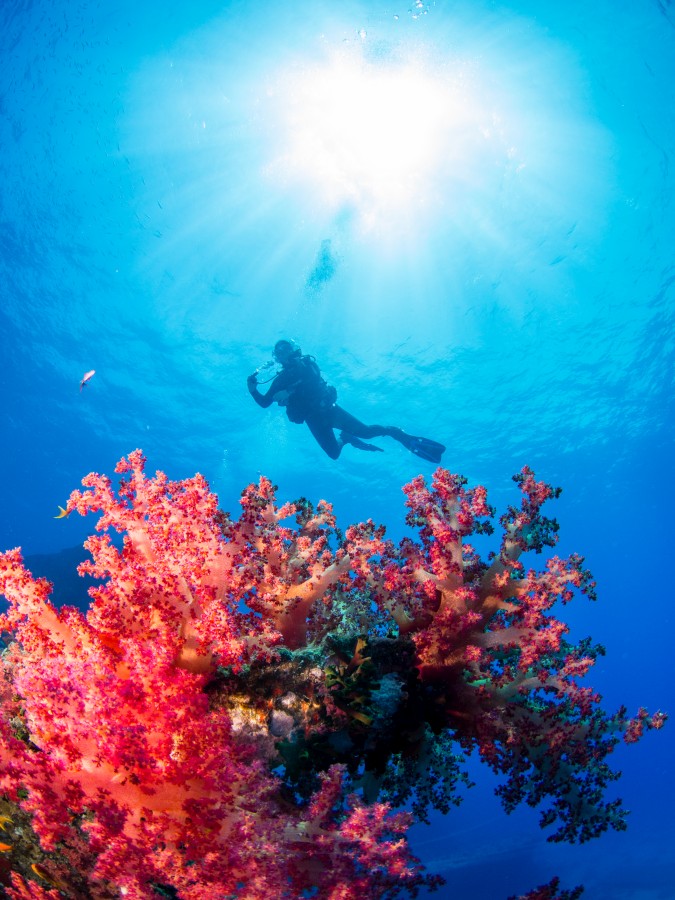
A diver hovers above a magnificent soft coral formation in deep blue water. The vivid pink and red soft corals form a colour-intense contrast against the brilliant blue water, while sun rays penetrate from the surface.
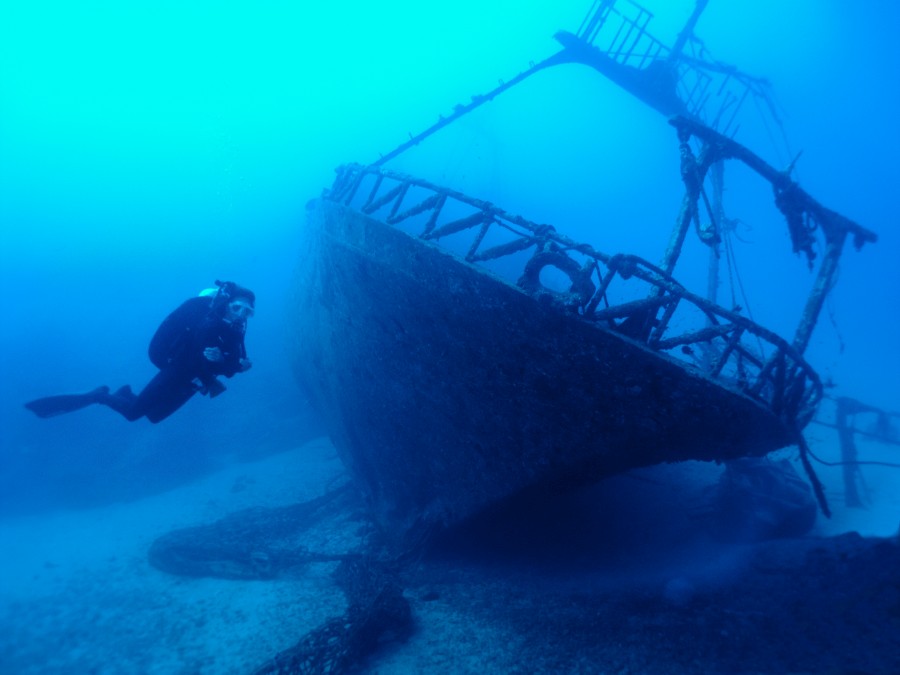
An impressive wreck lies on the seabed, heavily covered with corals and marine growth. Two divers explore the historic shipwreck in the hazy underwater landscape, with the silhouette of the wreck clearly recognisable with its characteristic superstructure and railing.
A sunken shipwreck has become an artificial reef inhabited by vivid red soft corals and various reef fish. Particularly striking are the pink anthias swimming around the coral-encrusted wreck sections, creating a vibrant underwater landscape against deep blue water. The structure shown is the anti-aircraft gun of the SS Thistlegorm.
A spectacular view of a wreck superstructure with lushly colonised pink and red soft corals swaying in the current. The intense sunlight penetrates the crystal-clear blue water, creating a dramatic contrast to the vivid coral gardens that have completely overrun the metal structure.
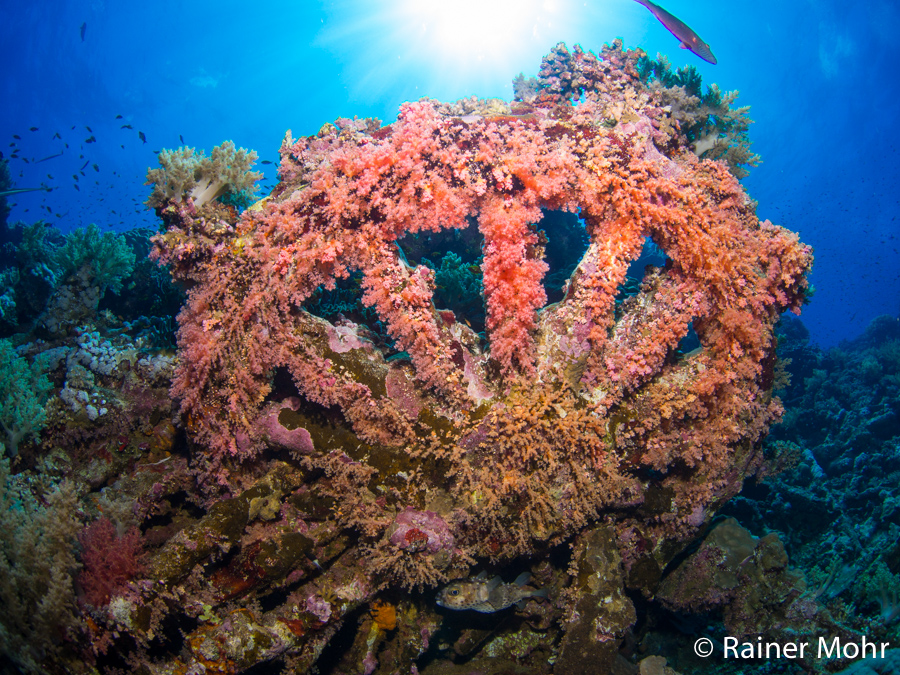
A spectacular railway wheel on a wreck is completely overgrown with vivid orange and pink soft corals, creating a colourful underwater landscape. In the background a blue reef fish swims through the crystal-clear water, while sunlight from above illuminates the vibrant coral coverage of the sunken ship.
The image shows an impressive shipwreck on the seabed, whose gun barrel or cannon is heavily encrusted with colourful marine organisms. Red sponges and other sessile organisms have colonised the metal, creating a colourful contrast against the deep blue water.
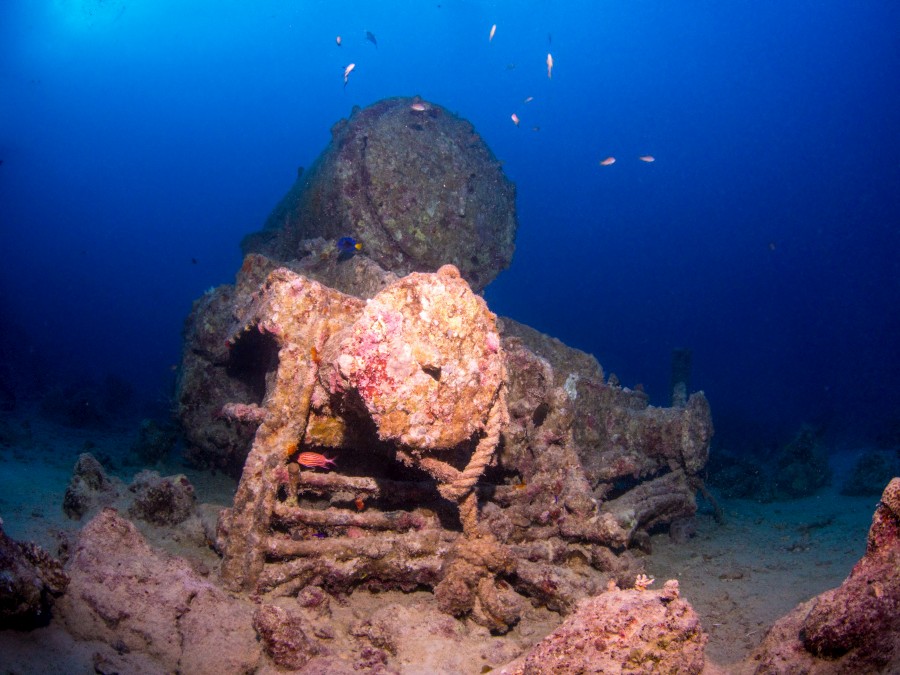
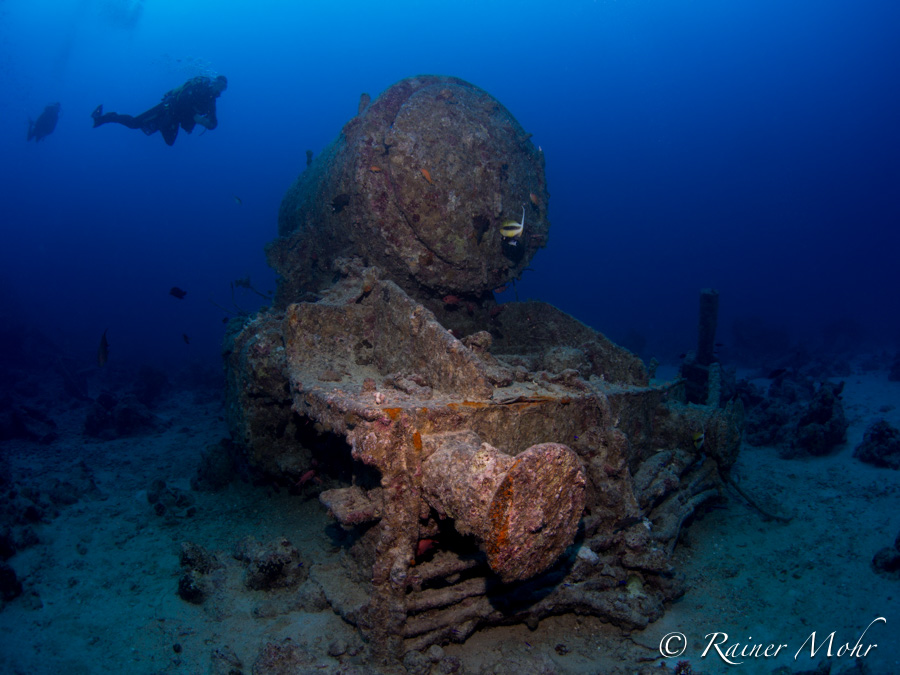
A sunken locomotive wreck lies on a sandy seabed, its metal structures heavily colonised by corals and marine organisms. The rusty remains have become an artificial reef populated by various marine life, while small fish hover in the blue water above.
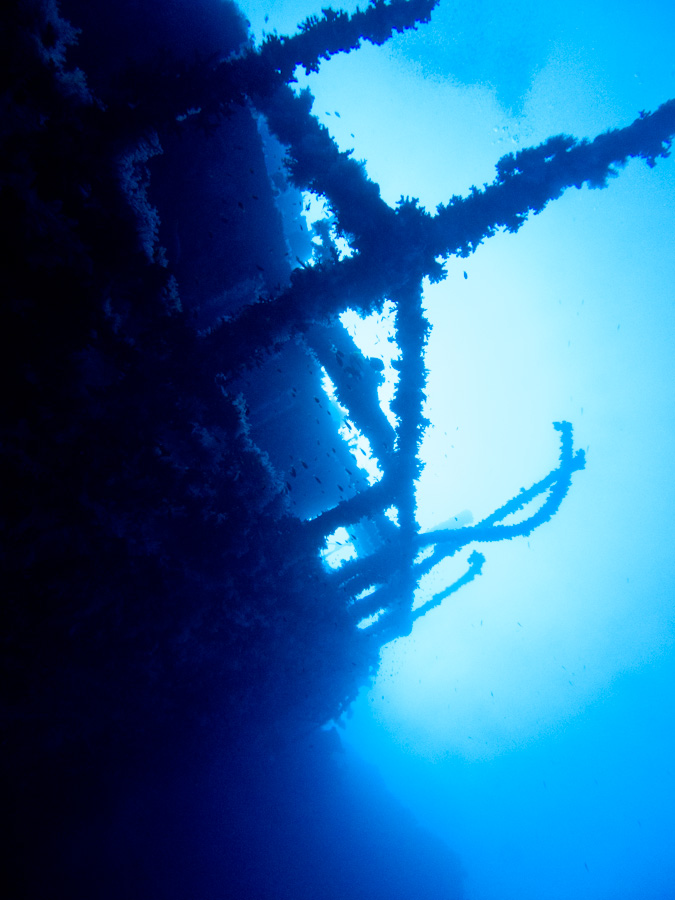
The dramatic silhouette of an encrusted shipwreck against blue water shows the superstructure and masts, completely overgrown with corals and other marine organisms.
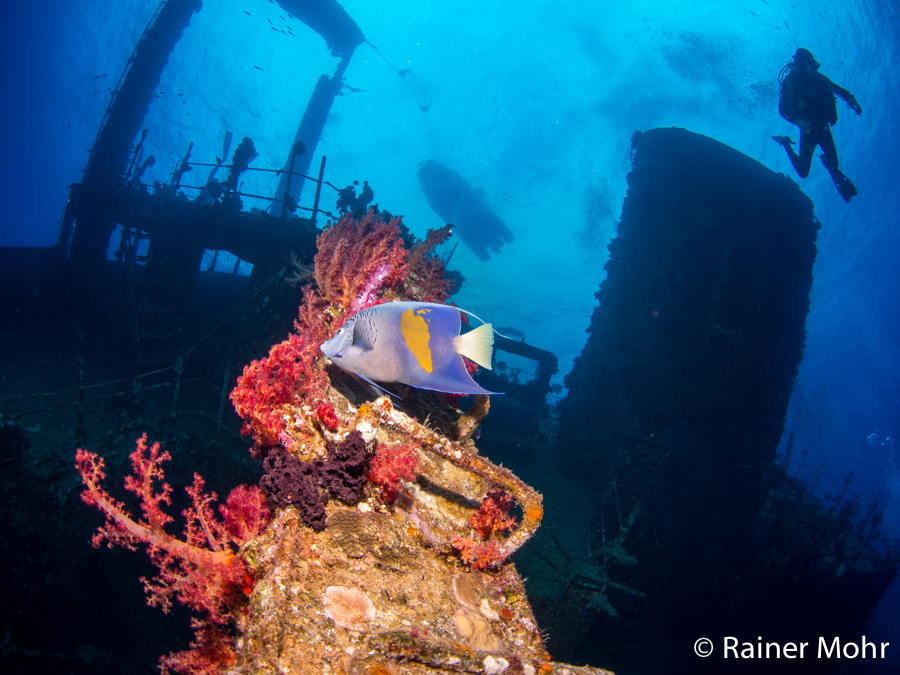
A diver explores a colourfully encrusted shipwreck on which a large Arabian angelfish swims among vivid red soft corals. Over the years the wreck has become an artificial reef providing habitat for many marine creatures.
A colourfully encrusted wreck section covered with vivid red and pink soft corals that have overrun the metal structures. Numerous small reef fish swim through the blue water while the wreck has become an artificial reef.
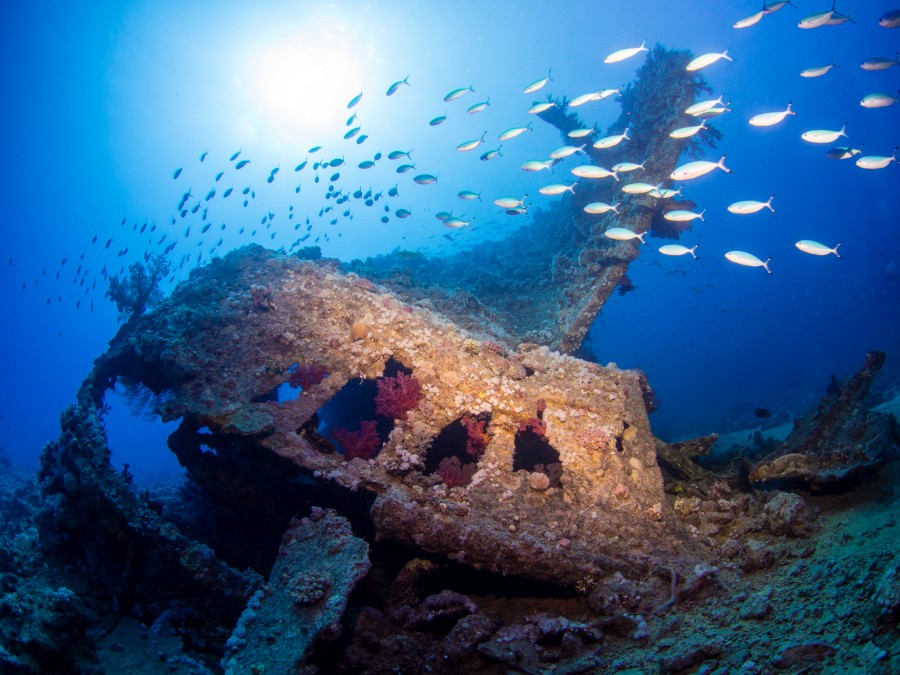
A heavily colonised wreck lies on the seabed, covered with corals and sponges in warm red and orange tones. Schools of small reef fish, including white and bluish species, swim around the wreck while the blue water is flooded with sunlight.
A locomotive lies on the seabed, colonised by marine organisms and covered with a patina. The locomotive was blasted from the deck of the SS Thistlegorm by the explosion following a bomb hit. In the blue water a diver hovers, exploring this majestic scene and capturing the peaceful atmosphere of this sunken locomotive.
A magnificent pink-red soft coral dominates the scene, surrounded by a lively school of small reef fish in vivid yellow and orange colours. The shot shows the typical symbiosis between corals and the fish that inhabit them in clear blue water.
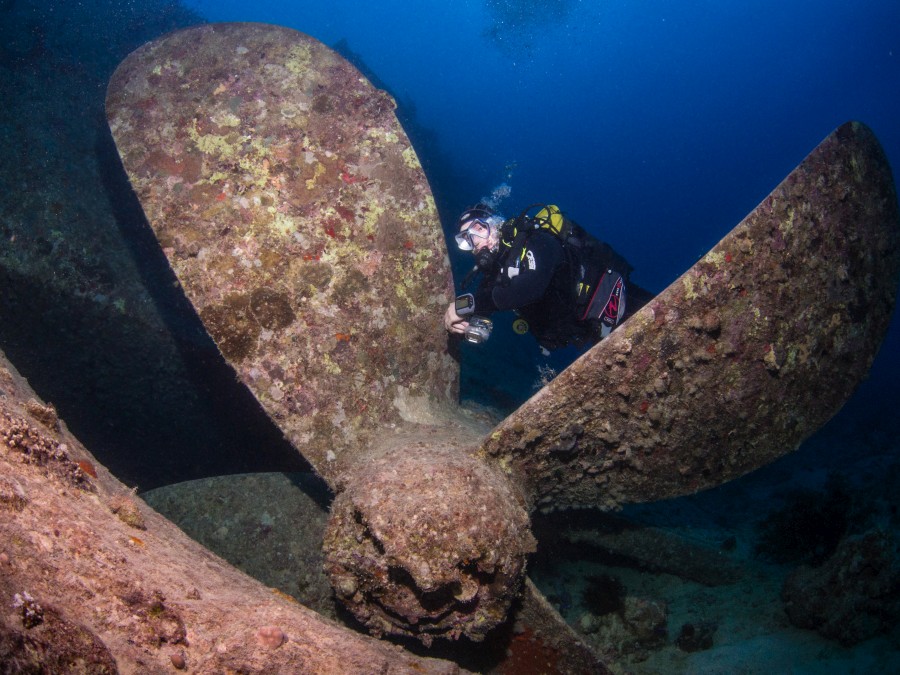
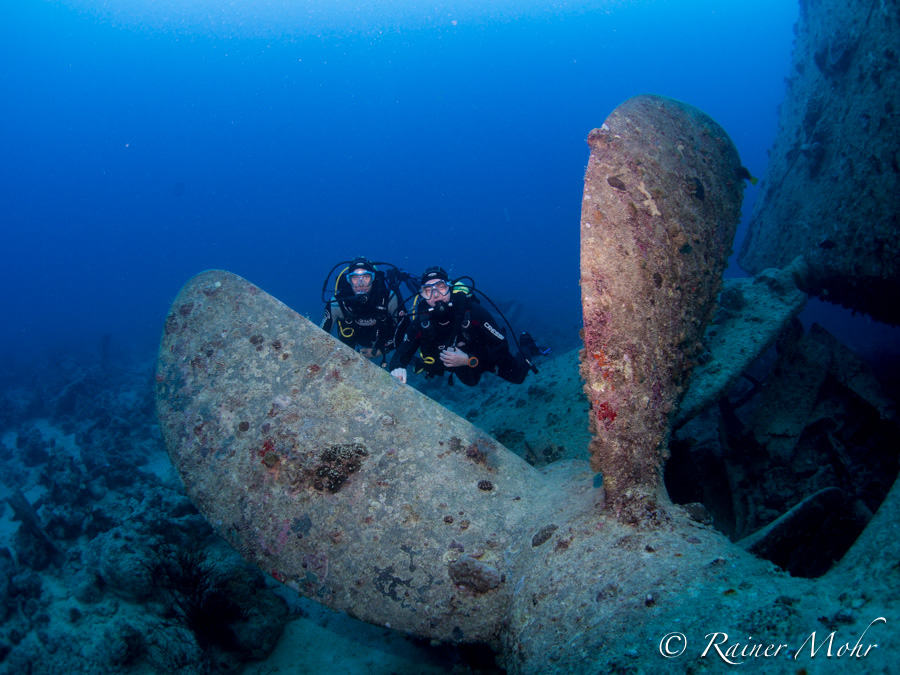
A large ship propeller from a wreck lies on the seabed, completely covered with marine growth of corals, algae and other organisms. The imposing metal structure has developed into an artificial reef, providing habitat for various marine organisms.
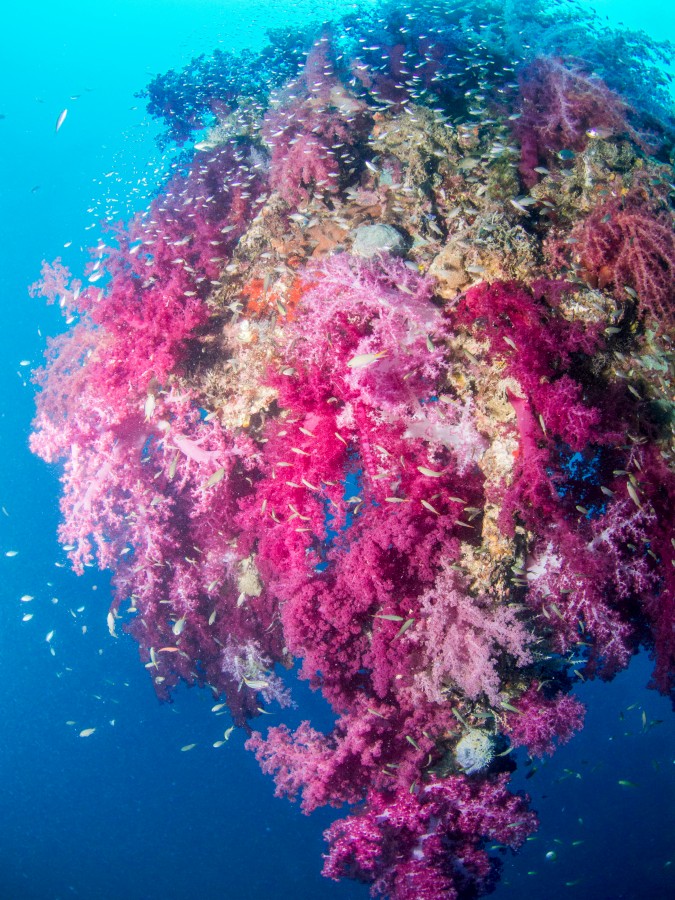
A colourfully encrusted wreck section (mast) is densely covered with vivid pink and violet soft corals. Hundreds of small fish, presumably anthias, swarm as a dense school around the coral formation in deep blue open water.
A diver explores a colourfully encrusted wreck densely covered with red and orange soft corals and other marine organisms. The wreck structure offers spectacular passages and openings through which the diver swims.
An imposing underwater wreck rises as a dark silhouette against the blue sea water. The dramatic shot shows the bow of the sunken ship viewed from the seabed, with sun rays penetrating the water and creating a mystical atmosphere.
A colourful reef scene with vivid pink soft corals in the foreground and various sea squirts or tunicates colonising the reef wall with their characteristic openings. In the background, small yellow reef fish swim and a diver is visible in the blue water column.
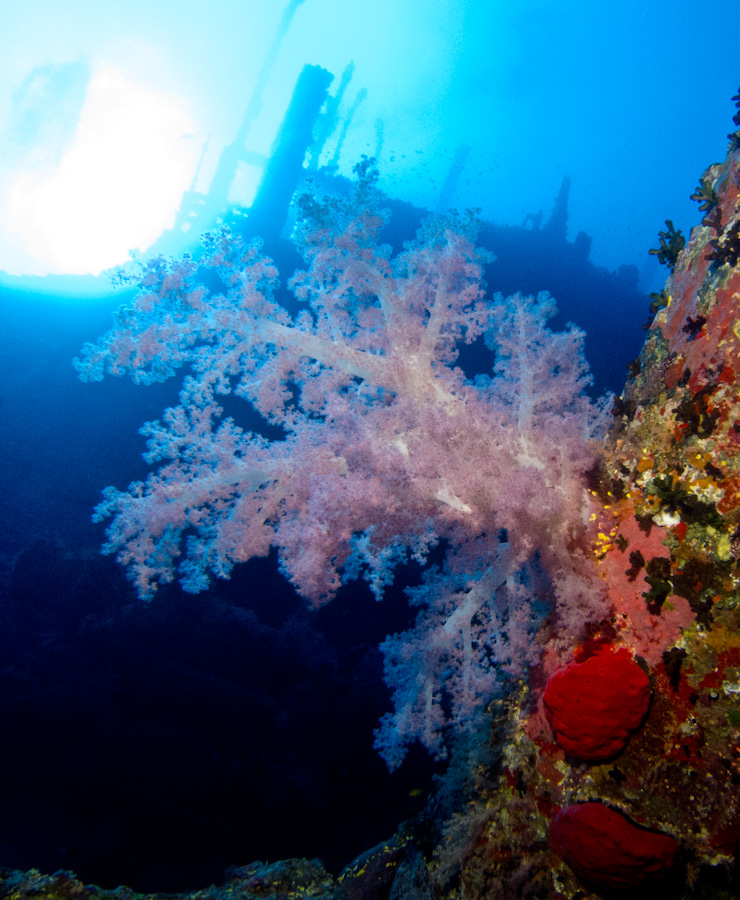
A magnificent soft coral dominates the scene with its extended pink-violet polyps swaying in the blue water of the reef. The coral grows on a mast of the wreck encrusted with colourful sponges and other marine organisms, while the deep blue water creates the typical underwater atmosphere in the background.
A sunken shipwreck is completely overgrown with magnificent soft corals shining in vivid pink, red and violet tones. The coral growth has transformed the wreck into an artificial reef, while the silhouette of the ship with masts and superstructure is recognisable in the background.
A diver explores the imposing bomb impact site of the Rosalie Moller wreck, which stands upright on the seabed. The massive structure with its superstructure is already colonised by marine organisms.
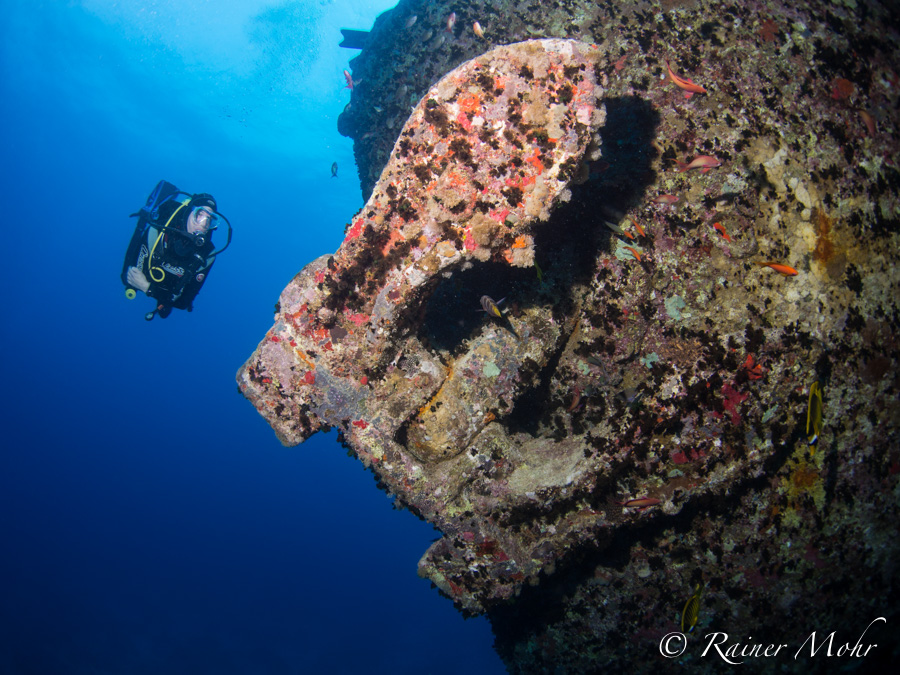
A diver explores the massive propeller of the SS Thistlegorm wreck. The rusty wreck parts are already heavily colonised by marine organisms and have formed an artificial habitat in the depths.
A diver explores a large shipwreck lying on the seabed. The wreck shows clearly visible superstructure and structures, while the diver serves as a scale reference, illustrating the imposing dimensions of the sunken vessel.
A diver explores a heavily colonised shipwreck on the seabed. The wreck is completely covered with colourful corals, sponges and other marine organisms, showing it has served as an artificial reef for some time.
A heavily colonised shipwreck lies on the sandy seabed in deep blue water. The ship's hull and still-recognisable masts are completely covered with marine organisms, giving the wreck a greenish-turquoise appearance.
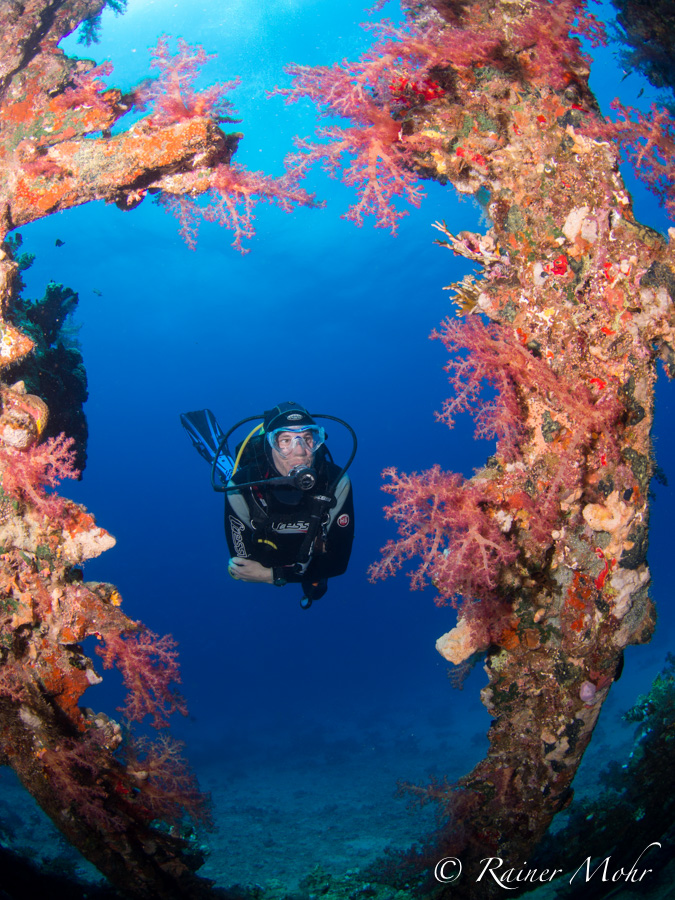
A diver swims through a spectacular coral formation with lushly growing pink and red soft corals. The corals form a natural frame around the diver, who is silhouetted impressively against the deep blue water.
A crocodilefish lies on the deck of a sunken shipwreck that has become an artificial reef, encrusted with colourful soft corals and sponges. Various tropical reef fish swim in the blue water while the wreck structure is completely covered with marine growth.
Two divers explore the ship's propeller of a large shipwreck in deep blue water. The metal parts of the wreck are heavily colonised by marine organisms and show clear signs of corrosion, indicating the age of the sunken vessel.
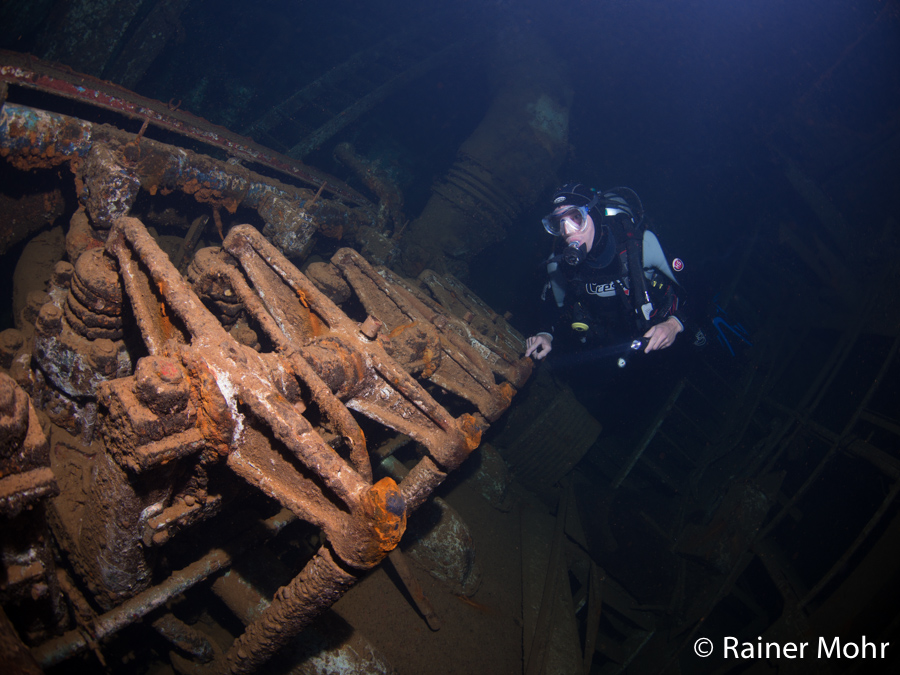
A diver explores a historic shipwreck and examines the rusty ship diesel of the wreck. The metal parts are heavily corroded and covered with marine growth, indicating the advanced age of the wreck.
Two divers explore a spectacular wreck completely overrun with vivid pink and red soft corals. Small reef fish swarm around the colourful coral growth while the deep blue water frames the dramatic scene.
An imposing shipwreck rises from the depths, its superstructure completely colonised by marine organisms. Small schooling fish circle the historic wreck, which has become an artificial reef now providing habitat for diverse marine life.
A Railroad-car from a sunken shipwreck is completely overgrown with marine life and has become an artificial reef. Various sponges, corals and other marine organisms have colonised the metal, giving the wreck a vibrant, colourful appearance in vivid orange, pink and red tones.
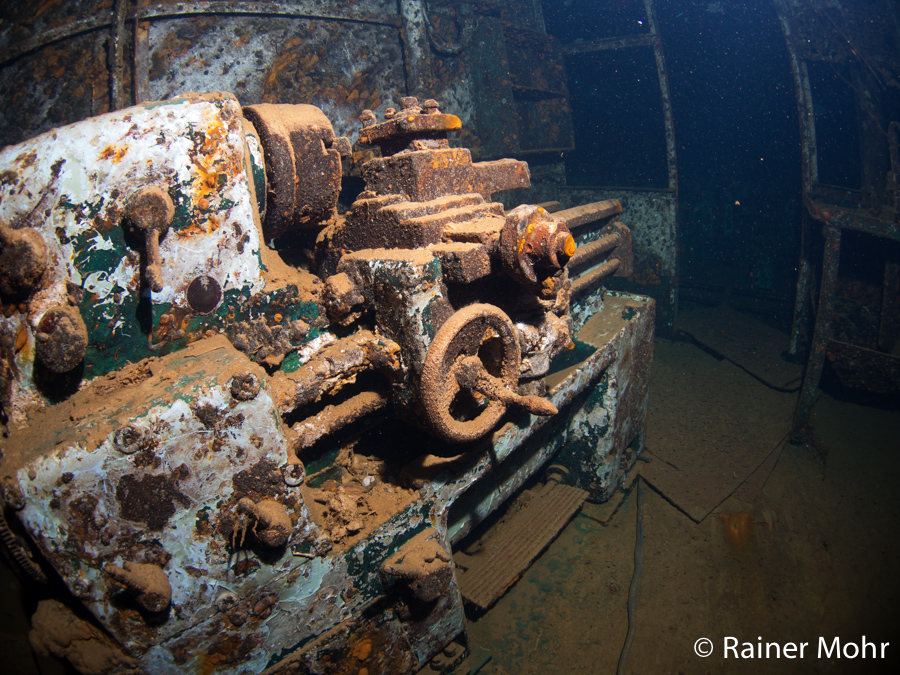
A heavily corroded workbench stands inside a wreck on the seabed. The metal parts are completely covered with rust and show the advanced decomposition after years of underwater exposure.