Nudibranchs
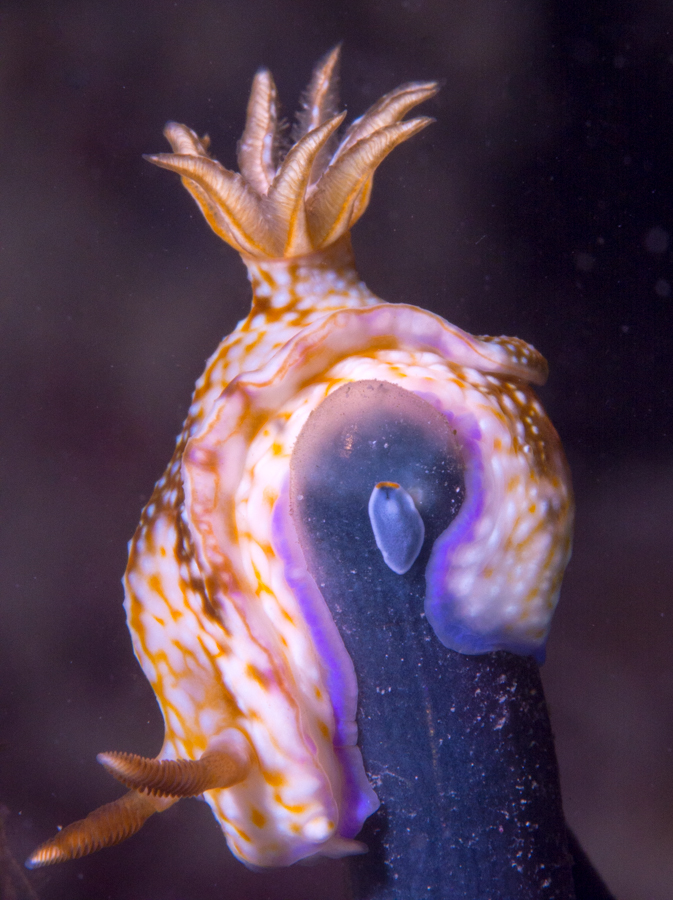
A nudibranch displays its characteristic dorsal gills and colourful body with orange-white patterns and violet-blue accents. Between the curved body of the sea slug, a tiny flatworm sits on the blue sponge.
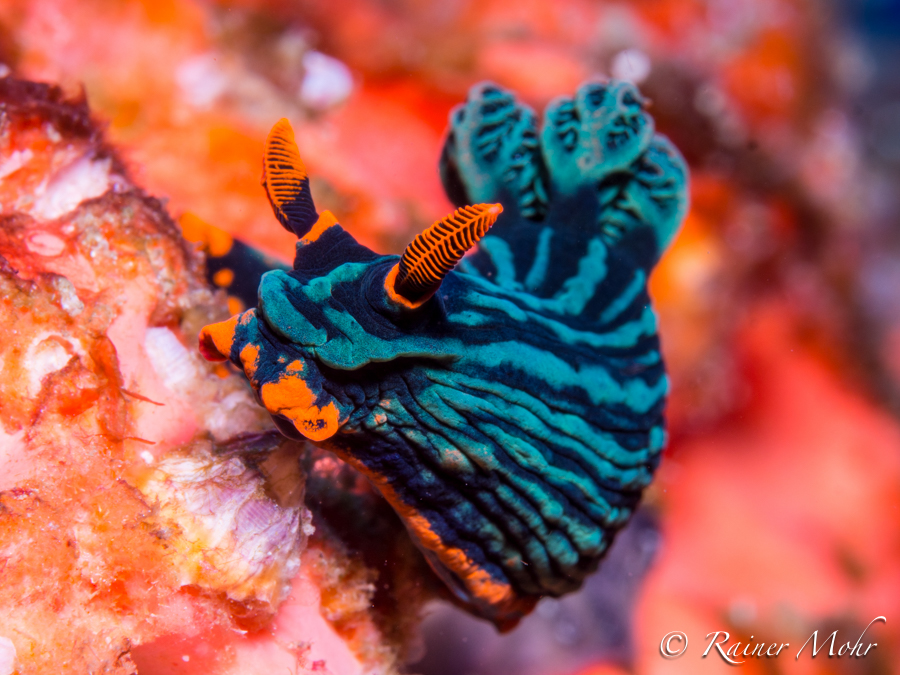
A magnificent Nembrotha nudibranch with characteristic turquoise-blue gills and orange-and-black rhinophores crawls over orange sponges. The sea slug displays its typical folded dorsal appendages in vivid blue and black tones.
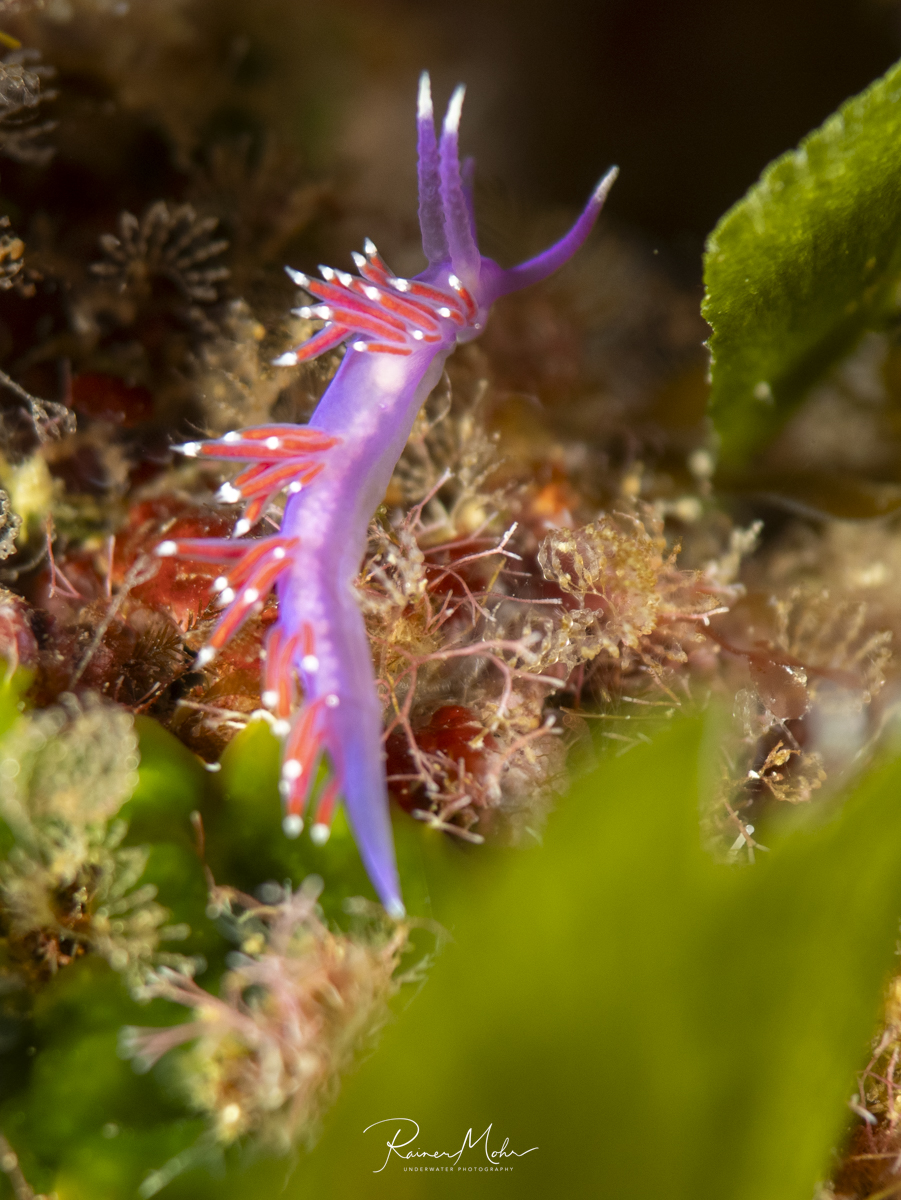
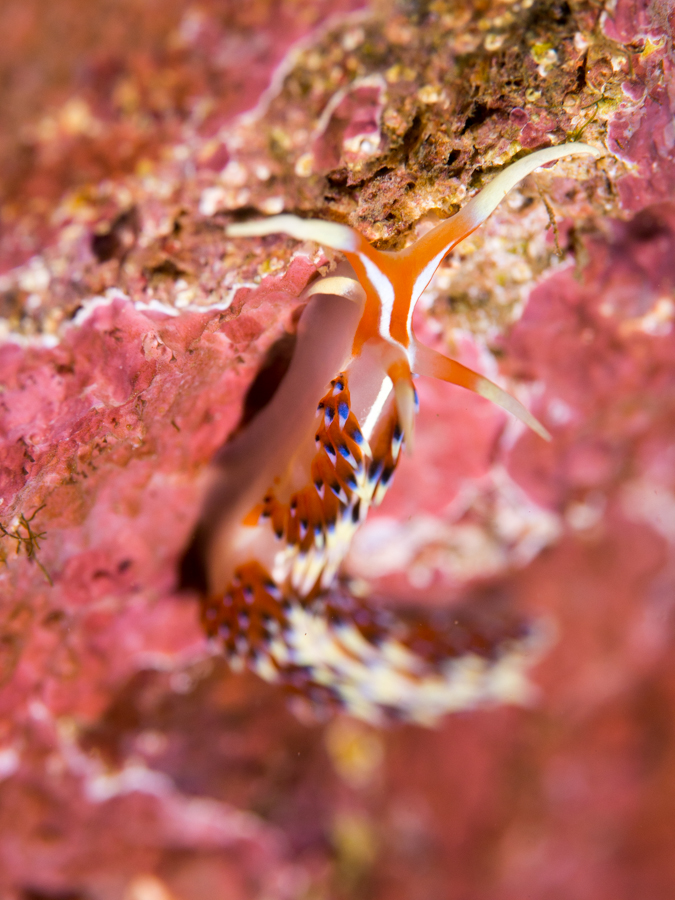
A thecacera nudibranch (Flabellina) crawls across the colourfully encrusted seafloor in search of food.
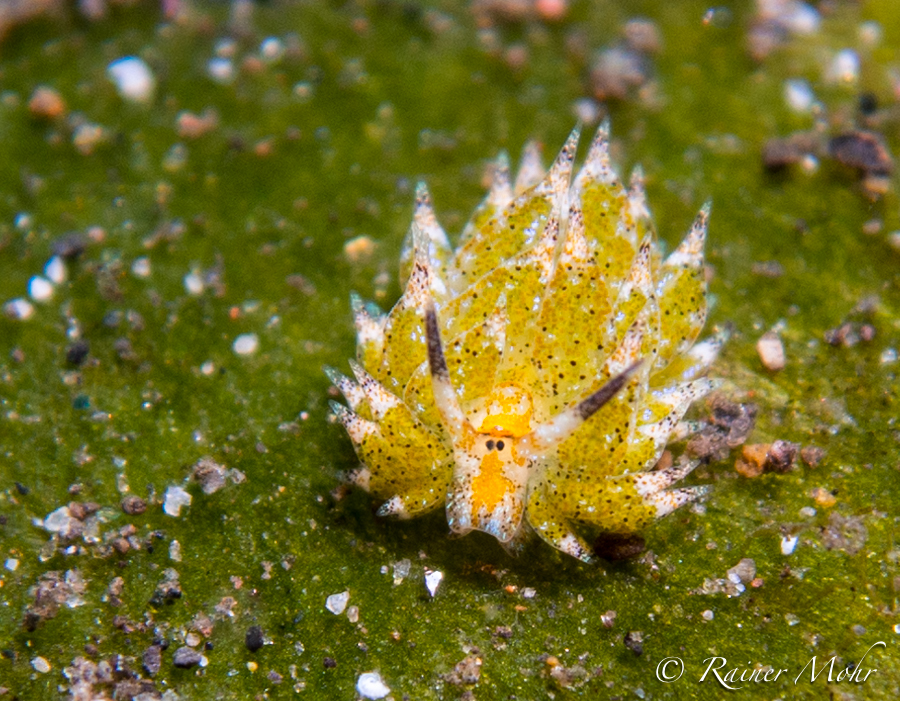
The image shows Costasiella kuroshimae, a tiny sea slug species also known as the "leaf sheep". They grow to only about one centimetre and have structures called cerata on their backs that give them a leaf-like appearance.
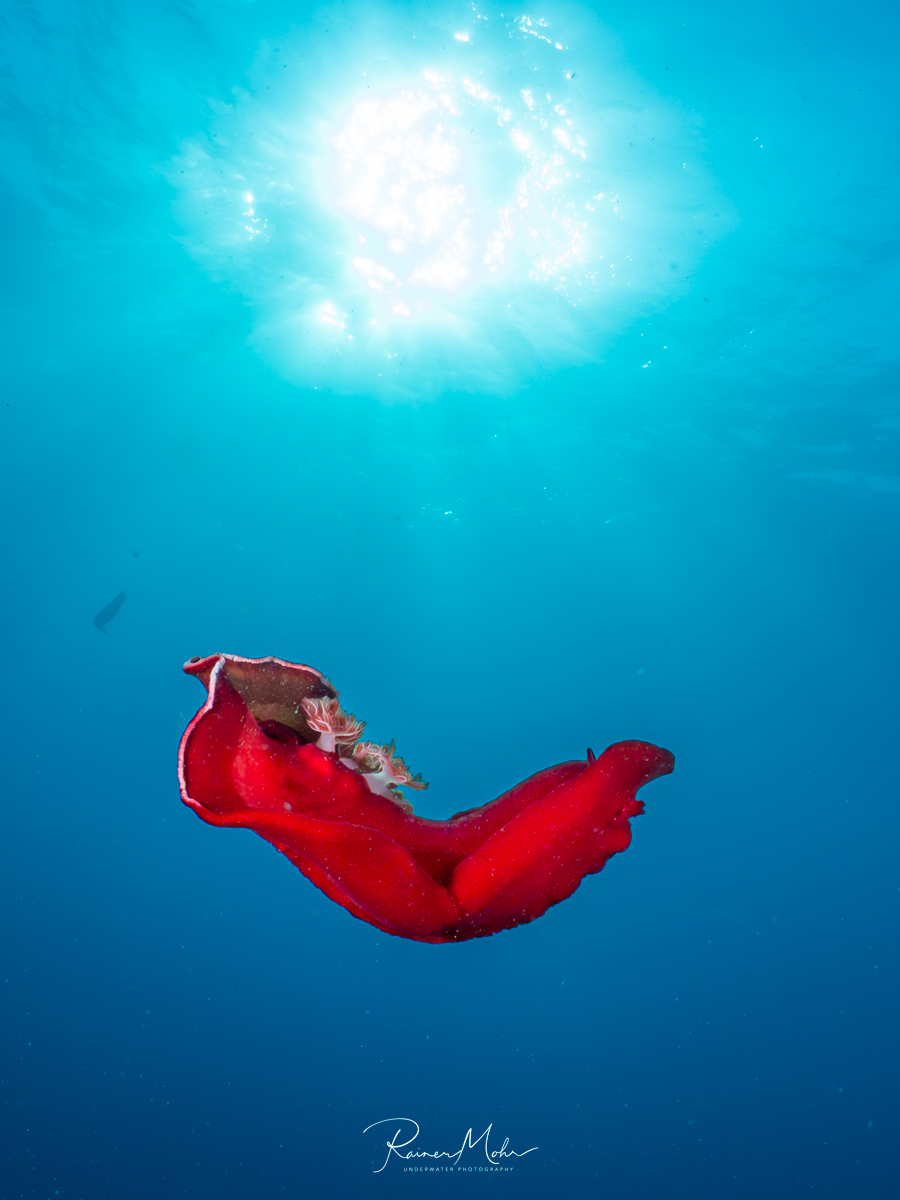
A vivid red Spanish dancer floats elegantly in the open blue water, bathed in sunlight from above.
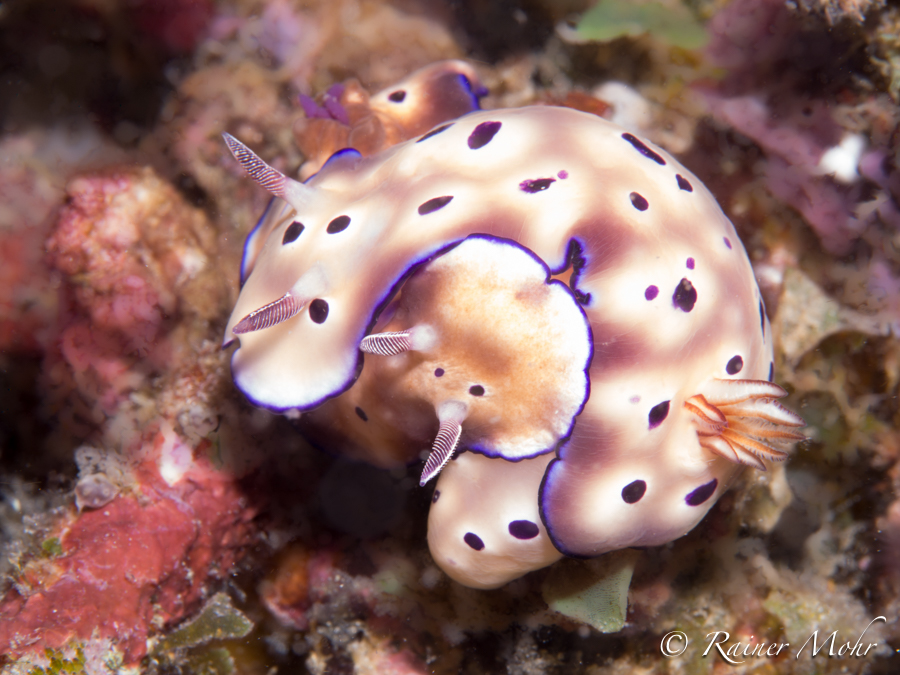
Two beautiful chromodoris nudibranchs crawl closely entwined over the reef, displaying their characteristic cream base colouration with violet dots and bluish-violet mantle border. The delicate gills and rhinophores are clearly visible as the slugs glide over the sponge- and coral-covered substrate.
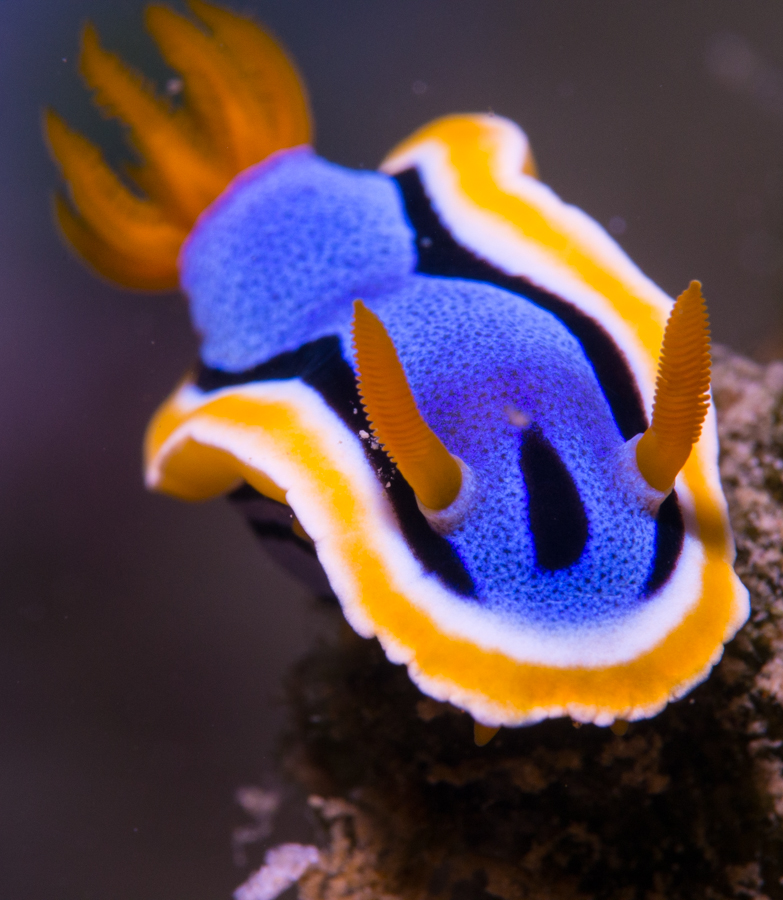
The image shows a nudibranch from the family Nembrothidae, very likely Nembrotha chamberlaini, with its vivid red rhinophores.
A colourful nudibranch with characteristic orange-red gills and violet-turquoise body colouration crawls over sandy seafloor. The feathered gill structures are clearly visible, showing the typical morphology of this sea slug species.
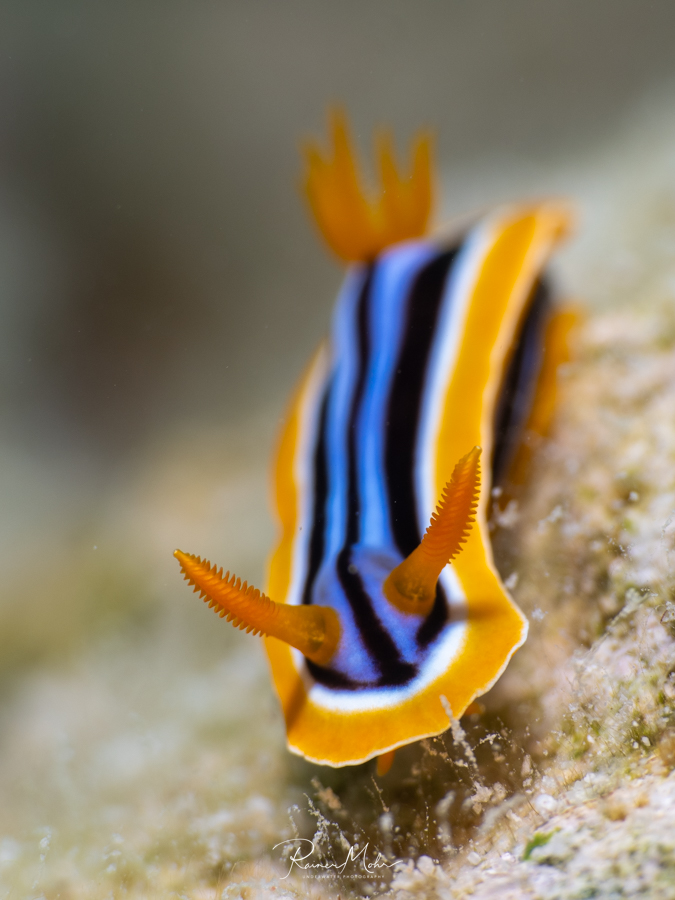
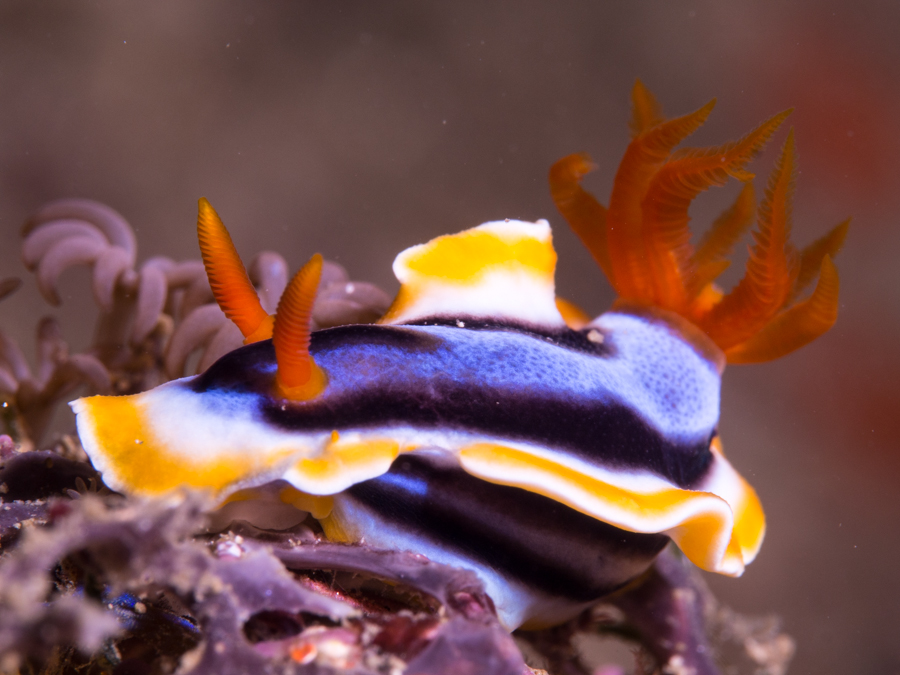
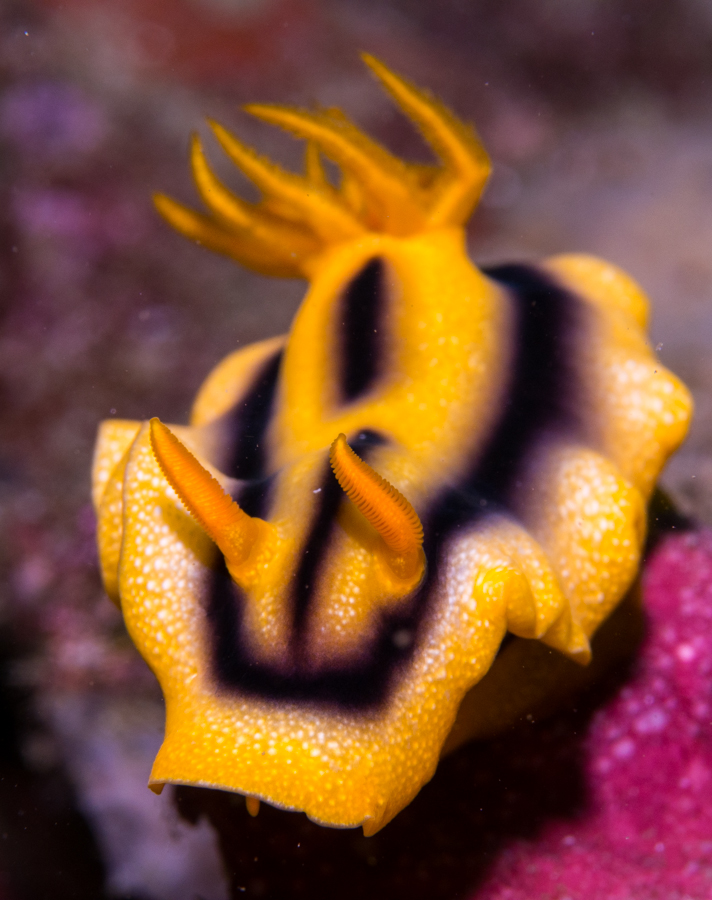
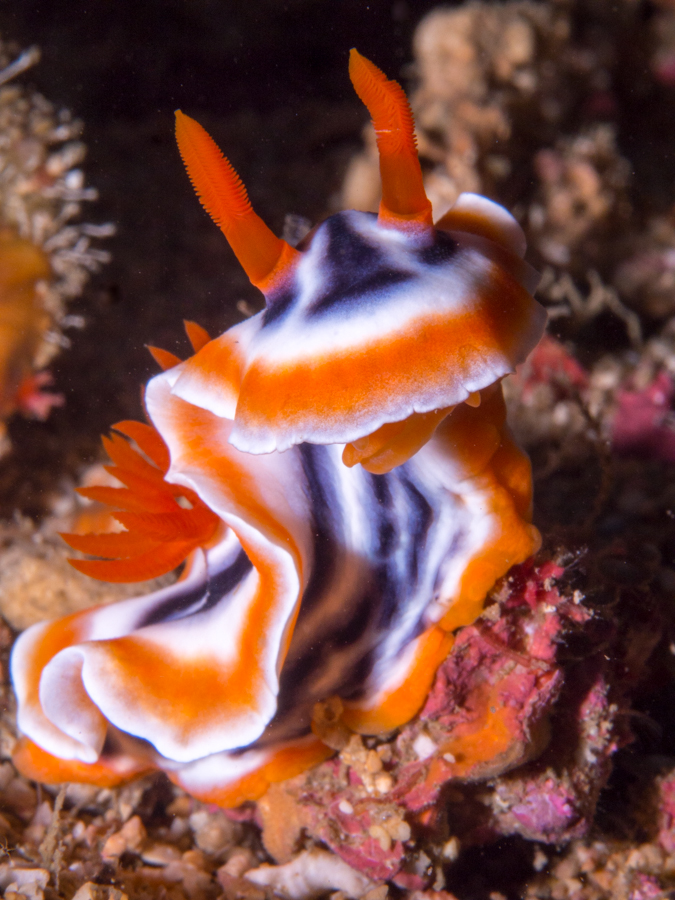
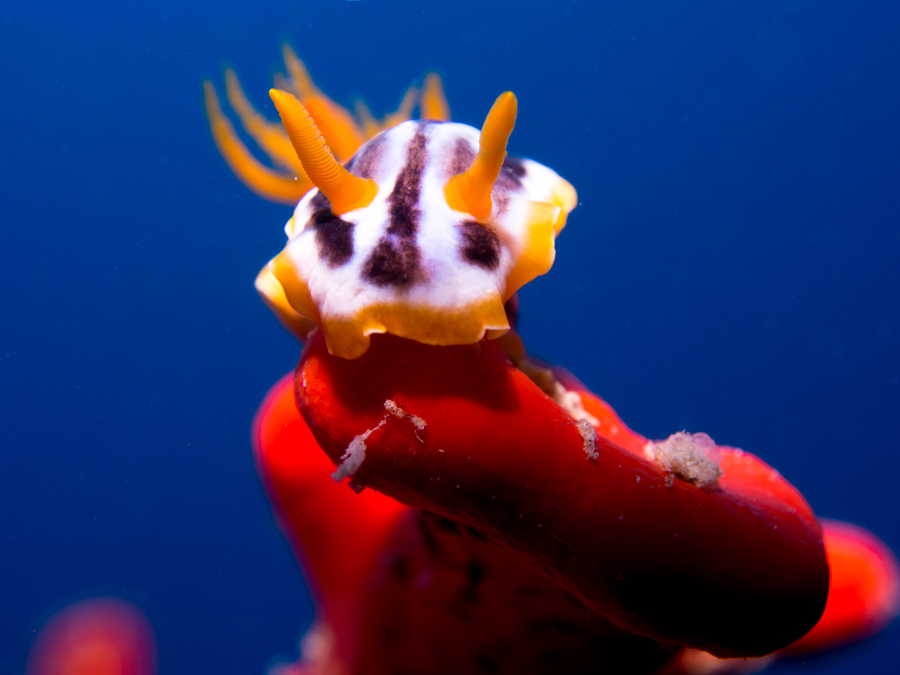
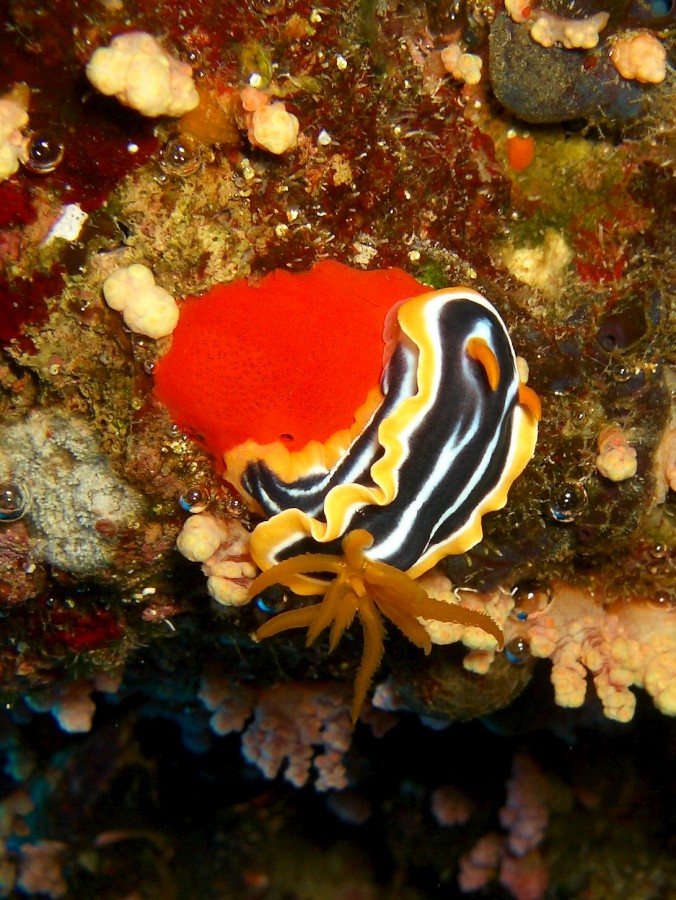
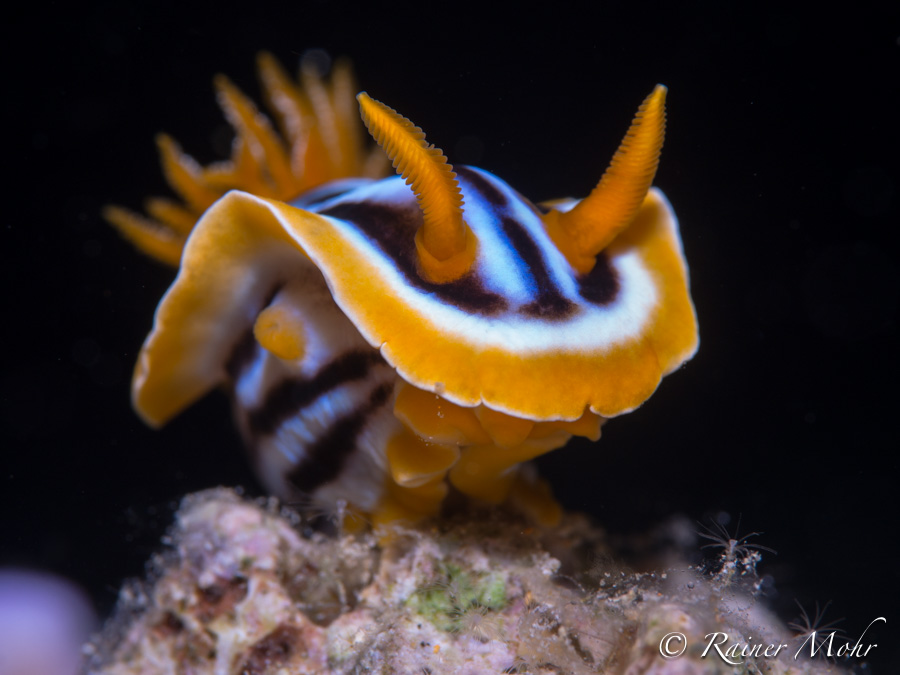
Chromodoris quadricolor nudibranch in frontal view with vivid orange border, blue-black stripes and orange rhinophores.
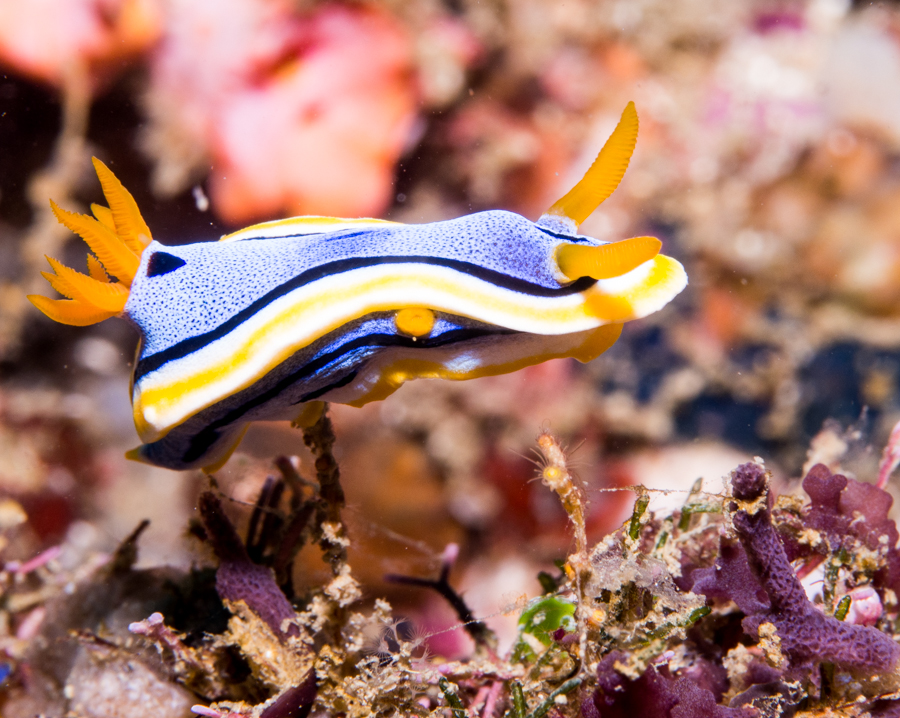
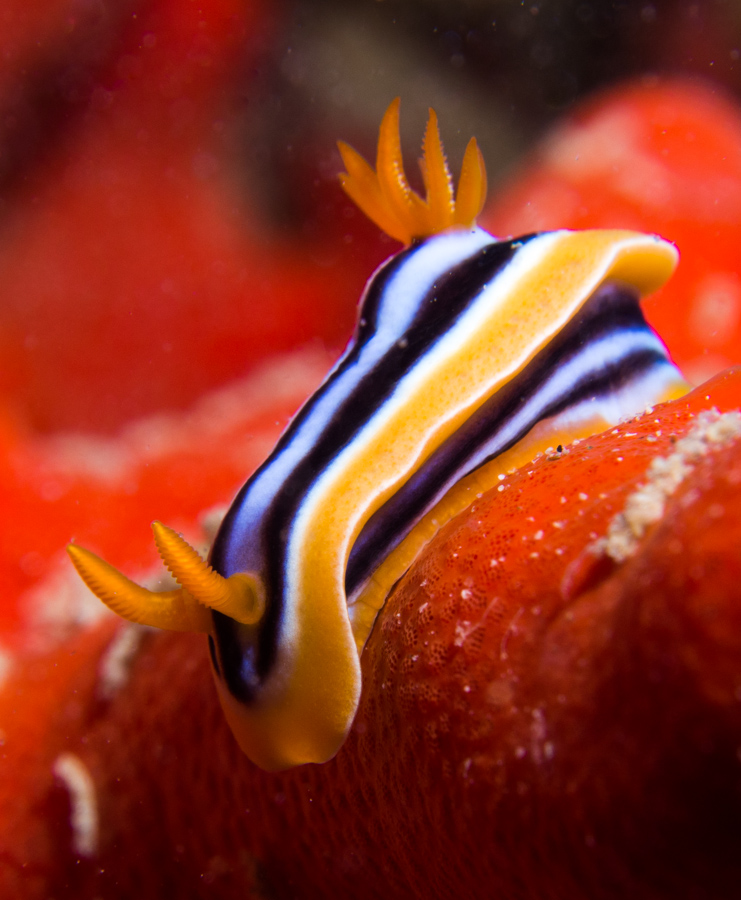
A colourful Chromodoris nudibranch moves elegantly across the coral reef. The nudibranch displays the characteristic bluish-white body colouration with yellow and black stripes and striking orange-yellow gills on its back.
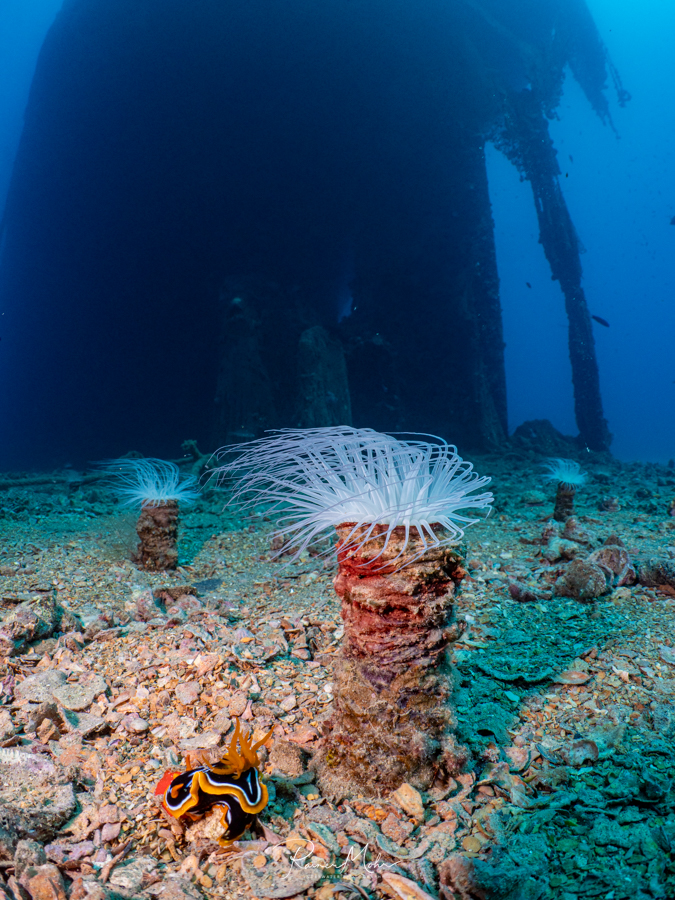
A colourful Chromodoris nudibranch crawls across the seafloor beside a delicate tube anemone with spread tentacles. In the background the wreck of the SS Turkia, with several ghost nets hanging from it.
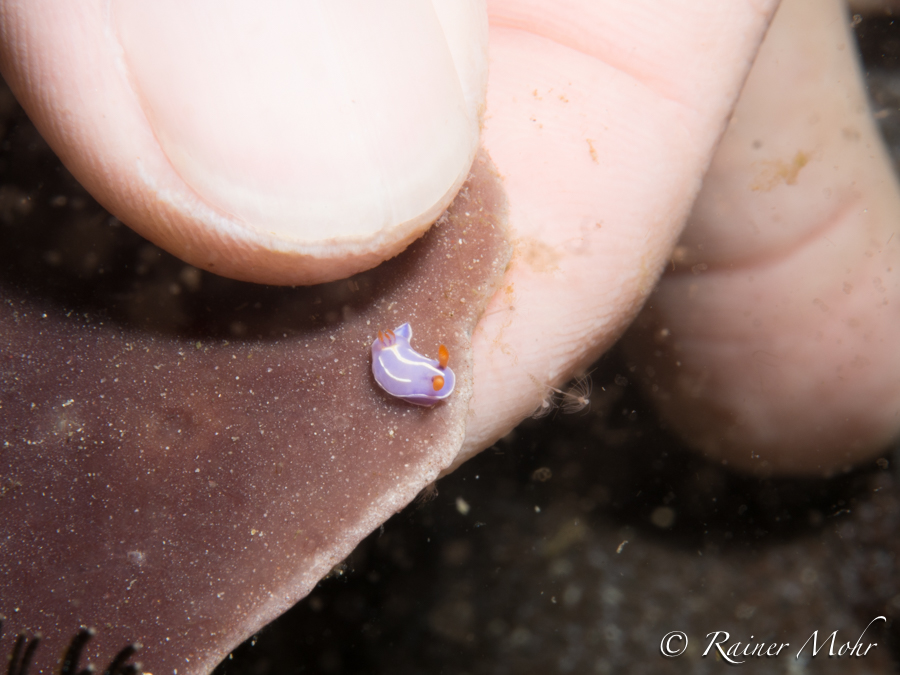
A tiny violet nudibranch with orange projections sits on a pale sponge or coral. The delicate nudibranch displays its characteristic cerata and is a perfect example of the fascinating microfauna of the reefs. A human thumb is included for scale.
A beautiful symbiosis between an emperor shrimp and a Risbecia nudibranch. The small crustacean with its characteristic red-and-white body and striking white claws has chosen the nudibranch as its habitat β€” a frequently observed behaviour.
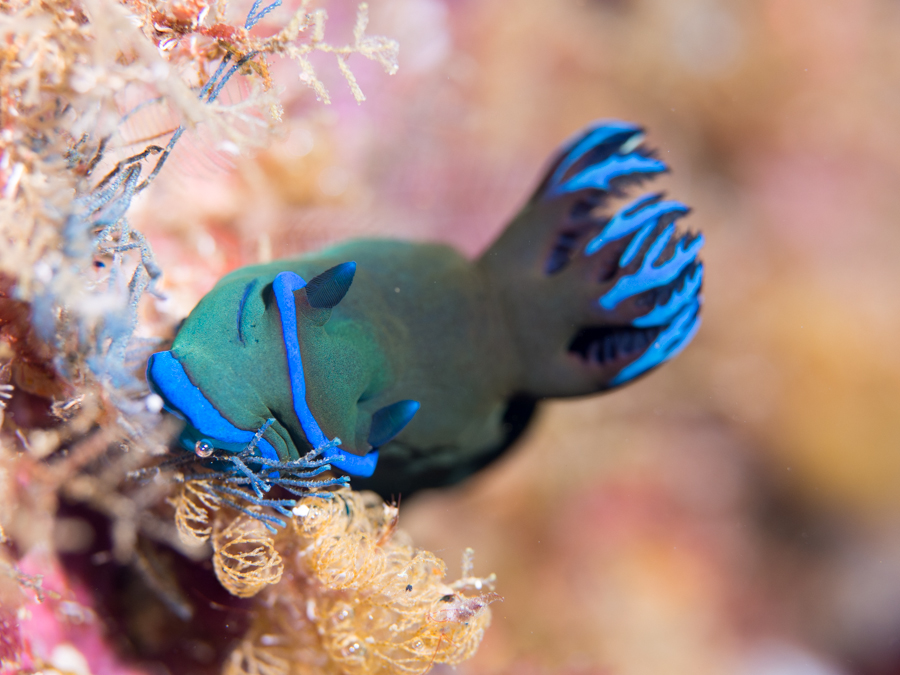
A Nembrotha nudibranch with a characteristic green body and vivid blue gills and rhinophores crawls over a reef surface covered with sponges and other organisms. The striking blue appendages contrast beautifully with the olive-green body of this colourful sea slug.
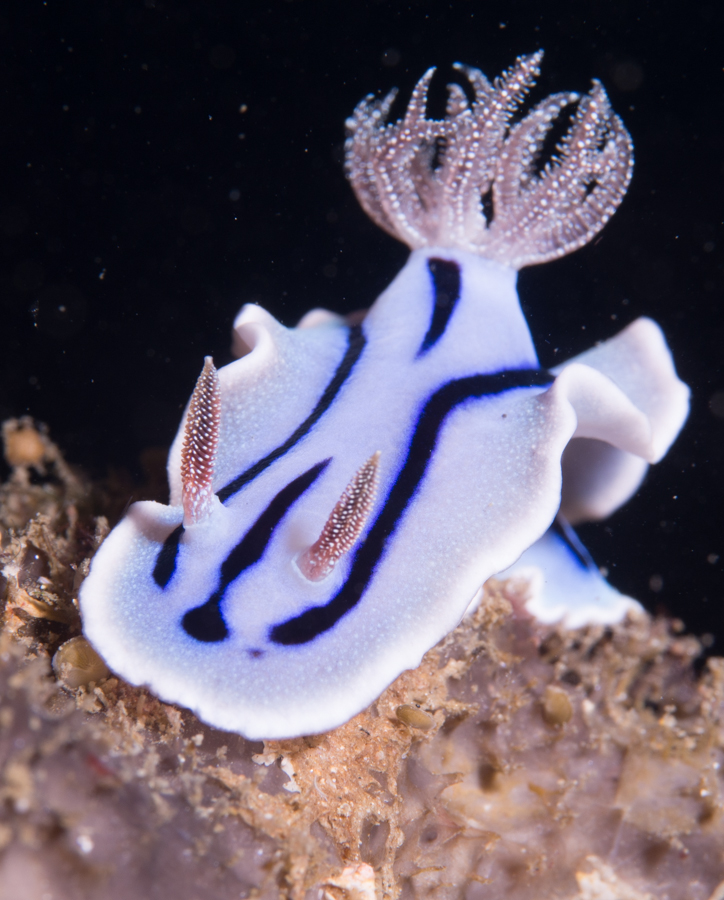
A white Chromodoris nudibranch with characteristic black lines and orange gills sits on the reef floor. The sea slug displays its typical elegant form with the feathery gill tufts at the rear end.
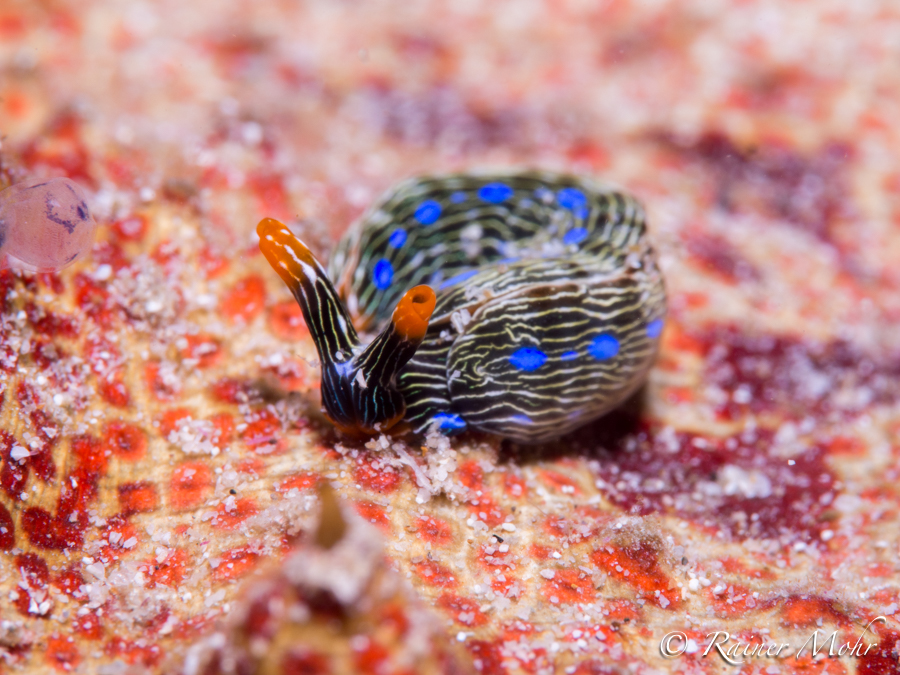
A beautiful sea slug with characteristic blue dots and white lines on a dark background crawls over a colourful coral or sponge. The orange-red rhinophores are clearly visible and the slug displays its typical striped pattern.
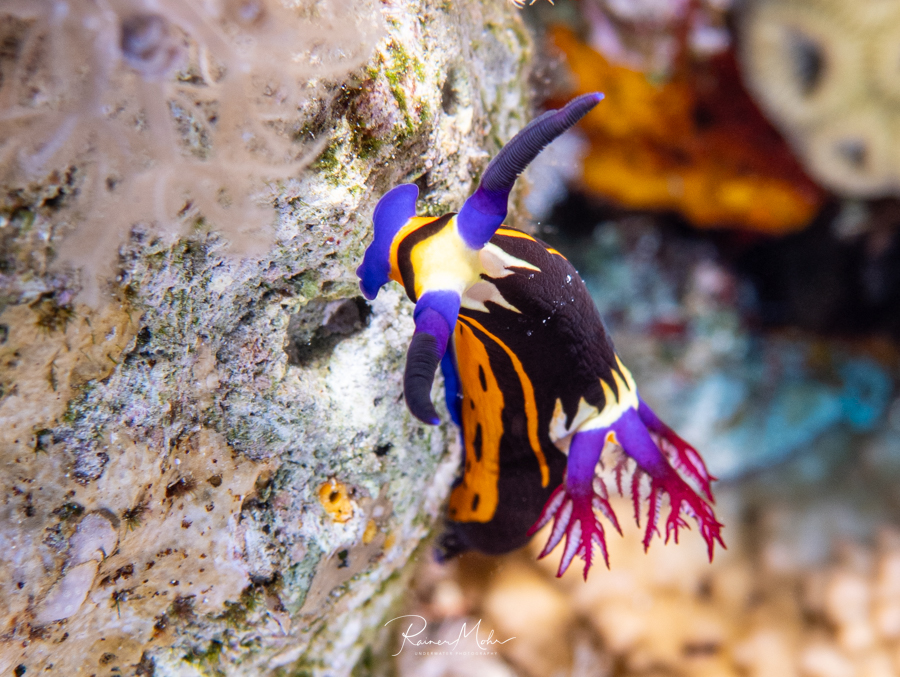
A colourful Nembrotha nudibranch with dark body, orange stripes, blue rhinophores and vivid red gill tufts crawls across an encrusted substrate.
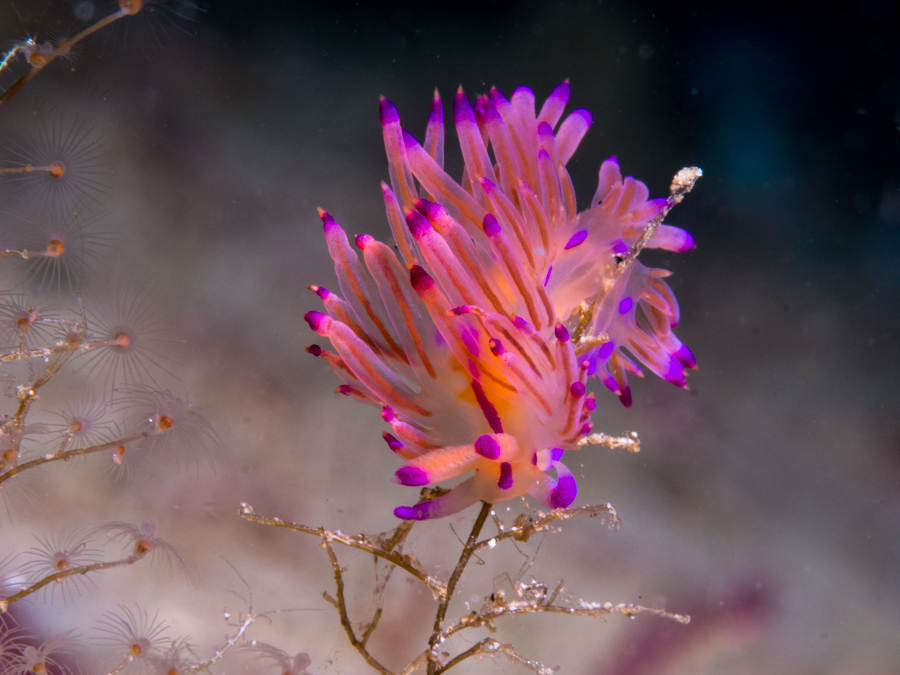
A colourful Flabellina nudibranch with transparent, violet-edged cerata (dorsal projections) crawls across red soft corals. The sea slug displays a beautiful colour combination of pink, orange and violet and is a typical example of the species diversity of small reef inhabitants.
A colourful nudibranch with a vivid violet base colouration and yellow dots rests on the seafloor. The characteristic orange rhinophores and the undulating body shape are clearly recognisable, while further specimens of the same species are blurred in the background.
A magnificent nudibranch with an undulating orange-and-white body and characteristic blue border fringe. The elegant gills and rhinophores are clearly visible as it glides across the reef.
A magnificent nudibranch with characteristic orange gills and a blue-white-yellow body sits on the reef ceiling. The striking colouration and feathery gill structures show the typical morphology of these elegant sea slugs.
The image shows a blue dragon nudibranch (Pteraeolidia ianthina). It is often called the "blue dragon" because its appearance resembles a Chinese dragon.
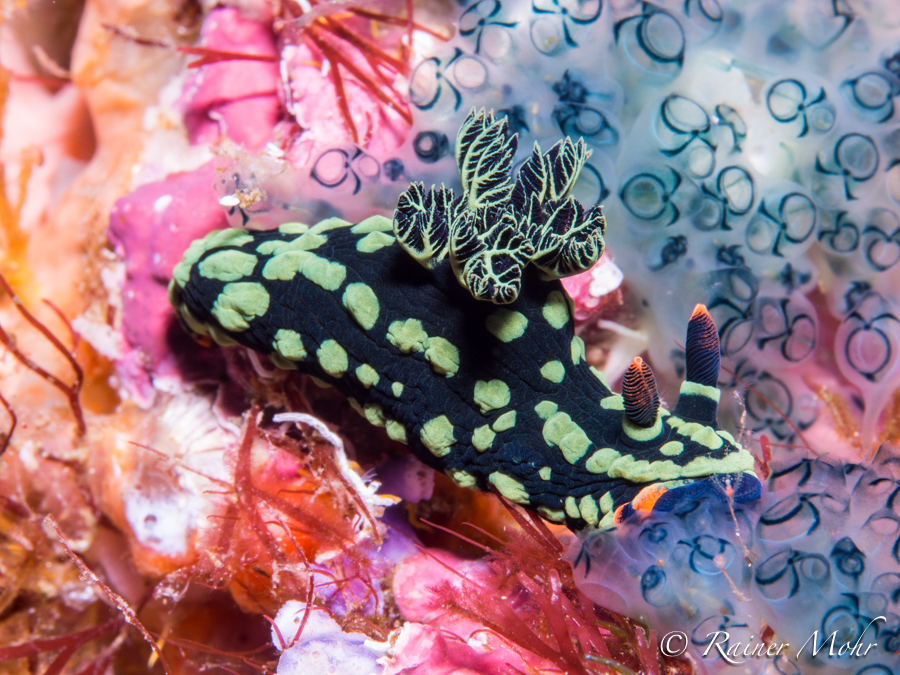
A beautiful nudibranch with a black body and green spots, and characteristic gills on its back, sits on colourful soft corals. The vivid colours of the pink and orange corals form a striking contrast to the elegant pattern of the sea slug.
A vivid yellow nudibranch with characteristic finger-like cerata on its back moves across colourful corals. The elegant sea slug displays its typical body shape with the striking dorsal projections that serve for respiration and digestion.
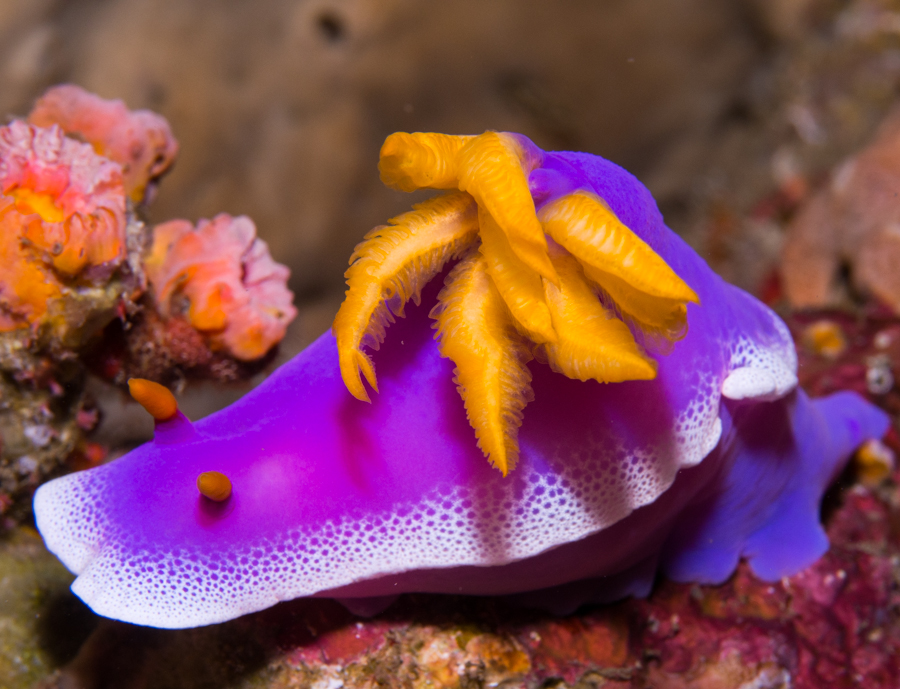
A vivid violet chromodoris nudibranch with orange-yellow gills crawls across the colourful coral reef. The sea slug displays its characteristic feathered dorsal gills and the typical intense colouration of this tropical sea slug species.
A colourful nudibranch with a transparent body and orange-white gills moves across a reef surface encrusted with pink coralline algae. The cerata (dorsal projections) display a beautiful blue-and-white pattern.
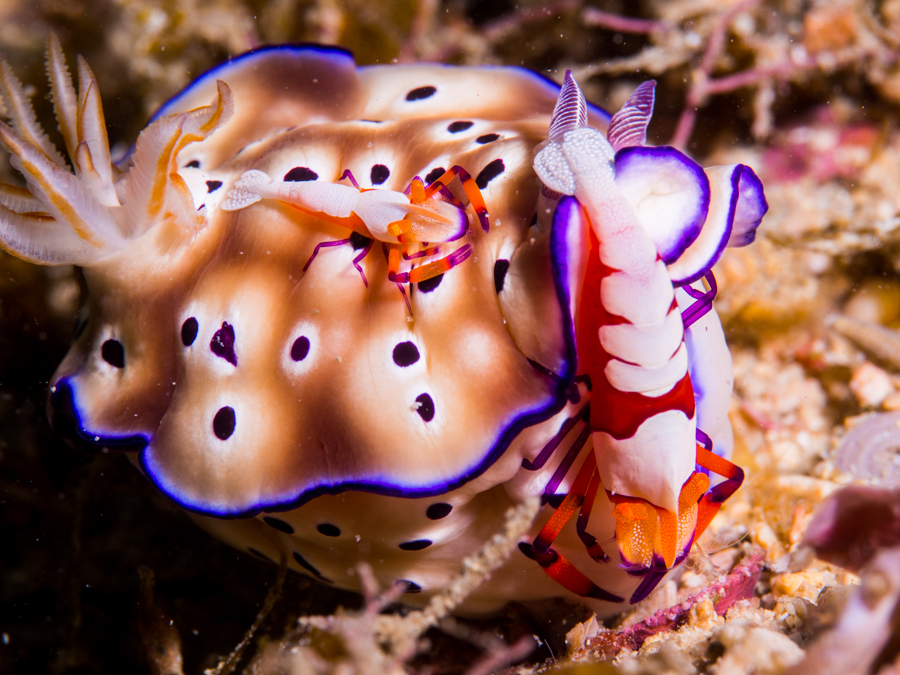
A magnificent dorid nudibranch with a cream-coloured body, characteristic black spots and a vivid violet mantle border crawls across the reef. Two shrips are hitching a ride on the nudibranch. The orange-red gill tufts and rhinophores of the nudibranch are clearly visible, showing the typical features of this colourful sea slug.
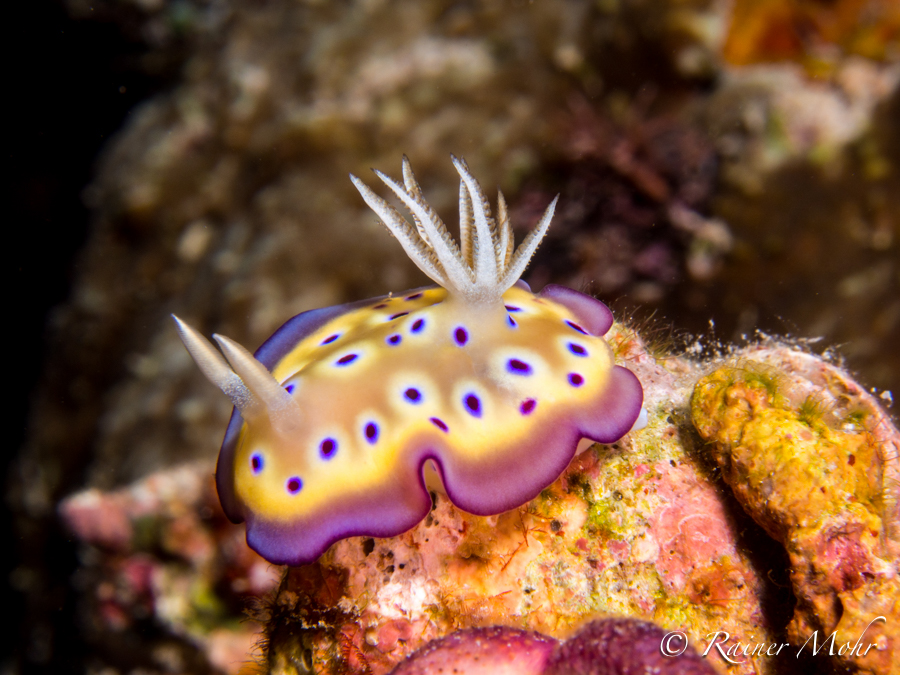
A colourful Chromodoris nudibranch with vivid yellow-violet colouration and characteristic blue spots sits on encrusted coral substrate. The white gill tufts and rhinophores are clearly visible, showing the typical appearance of this tropical sea slug.
A beautiful chromodoris nudibranch with a vivid blue body and characteristic orange-white borders crawls across the reef. The sea slug displays its typical gills and rhinophores in perfect detail.
An elegant nudibranch with a white, translucent body and characteristic orange-red gill appendages on its back. The animal sits on a red-coloured substrate, possibly a sponge or coral encrustation.
A small nudibranch crawls over a reddish-brown coral surface. The delicate nudibranch displays a translucent body with characteristic undulating body margins and feathered gill tufts at the rear end.
A beautiful nudibranch with characteristic blue cerata (finger-like projections) and vivid blue rhinophores sits on colourful coral ground. The elegant sea slug displays its typical colouration with a greenish body and striking blue gill appendages.
The image shows a Nembrotha chamberlaini, a species of colourful sea slug from the order Nudibranchia. These sea slugs have a cream-coloured body with prominent brown spots and are distinguished by striking, vivid red tentacles (rhinophores) and gills.
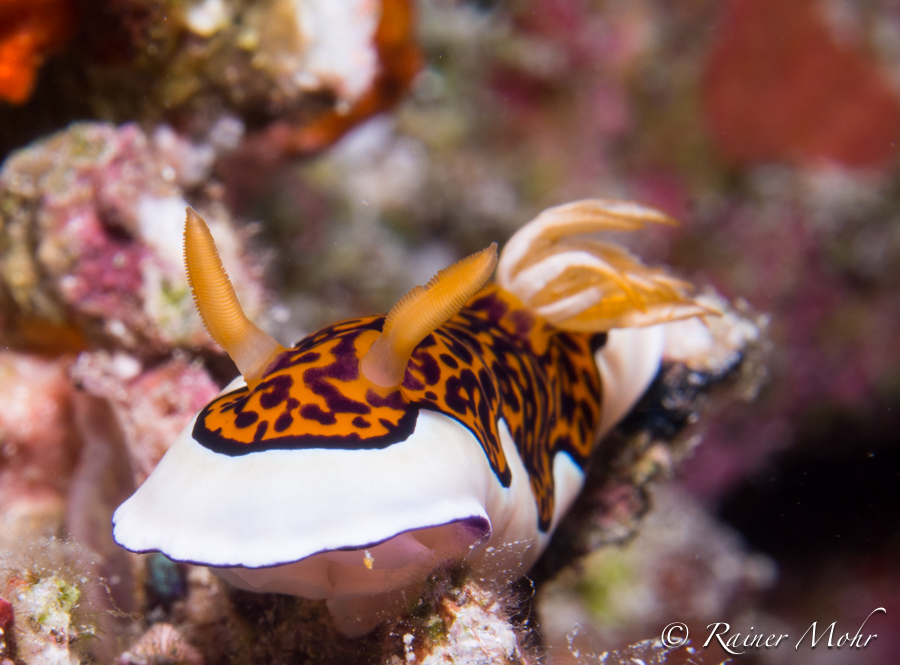
A beautiful nudibranch with characteristic orange-white colouration and violet accents crawls across the reef. The vivid orange gills and rhinophores (scent organs) are clearly visible, while the undulating body shows the typical form of this sea slug species.
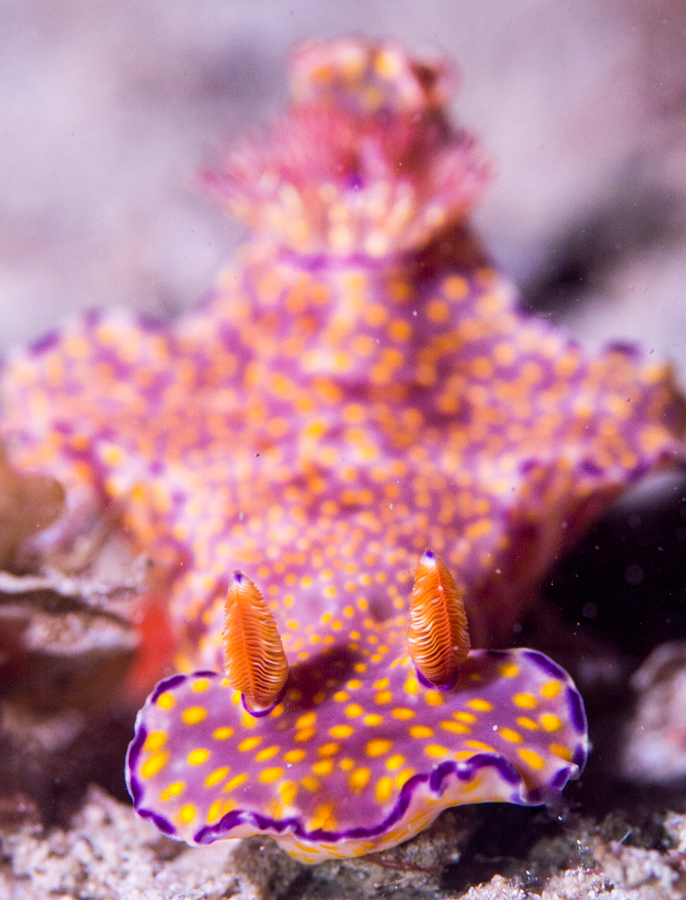
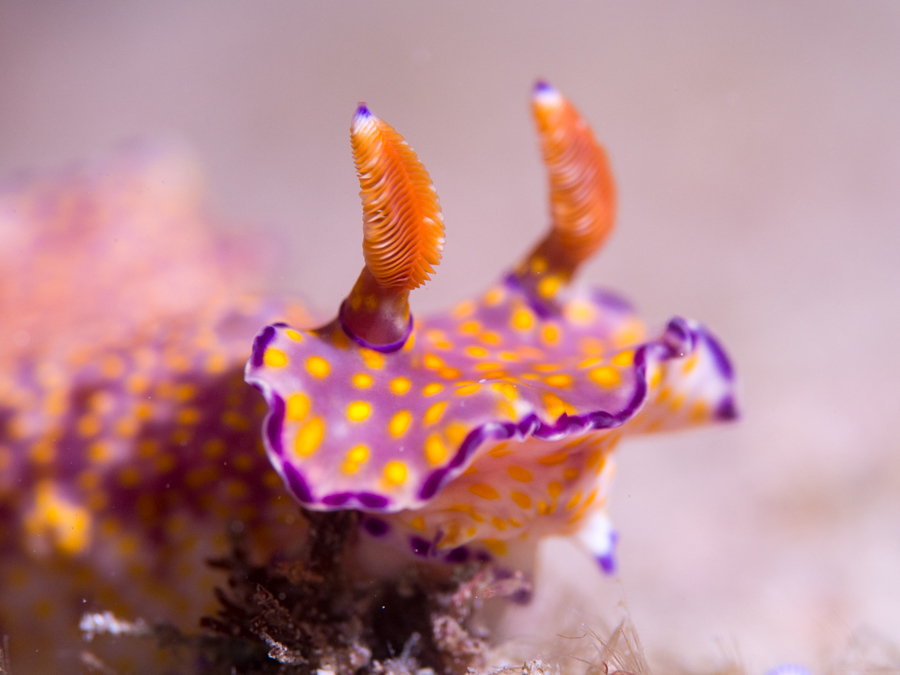
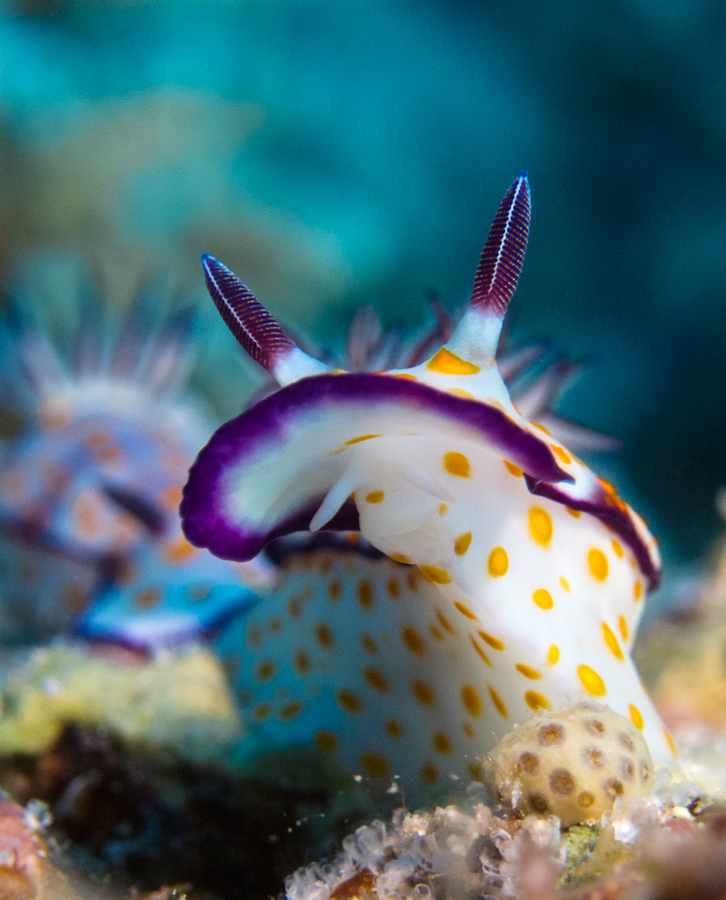
A beautiful chromodoris nudibranch with vivid yellow-orange spots on a violet body and characteristic orange-red rhinophores (scent organs) crawls across the seafloor. The striking colouration and typical spot pattern make this nudibranch a popular subject for macro photographers.
A vivid pink-violet nudibranch sits on a branching stalk surrounded by small white hydroids. The cerata (finger-like projections) of the nudibranch glow in intense magenta and orange tones, creating a spectacular contrast against the dark background.
A vivid orange nudibranch with characteristic bluish-white cerata (dorsal appendages) crawls over a pale coral and deposits its egg mass on the coral. The elegant nudibranch displays its typical finger-like projections that serve both for respiration and digestion.
The image shows Costasiella kuroshimae, a tiny sea slug species also known as the "leaf sheep". They grow to only about one centimetre and have structures called cerata on their backs that give them a leaf-like appearance.
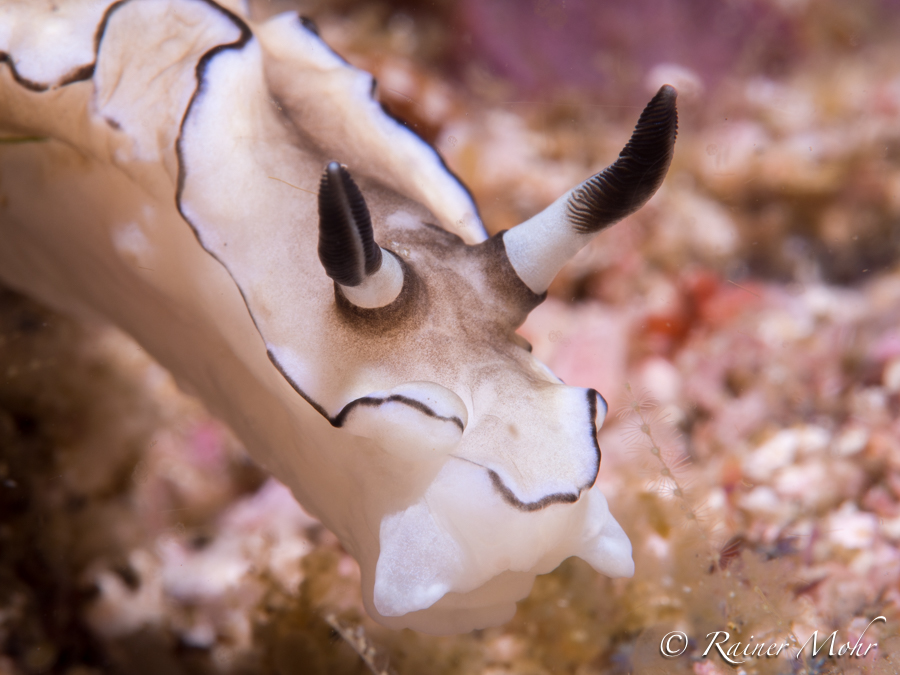
An elegant  nudibranch glides across the coral reef, displaying its characteristic dark rhinophores and typical cream-white colouration with striking black borders. The nudibranch moves gracefully over the colourful reef sand.
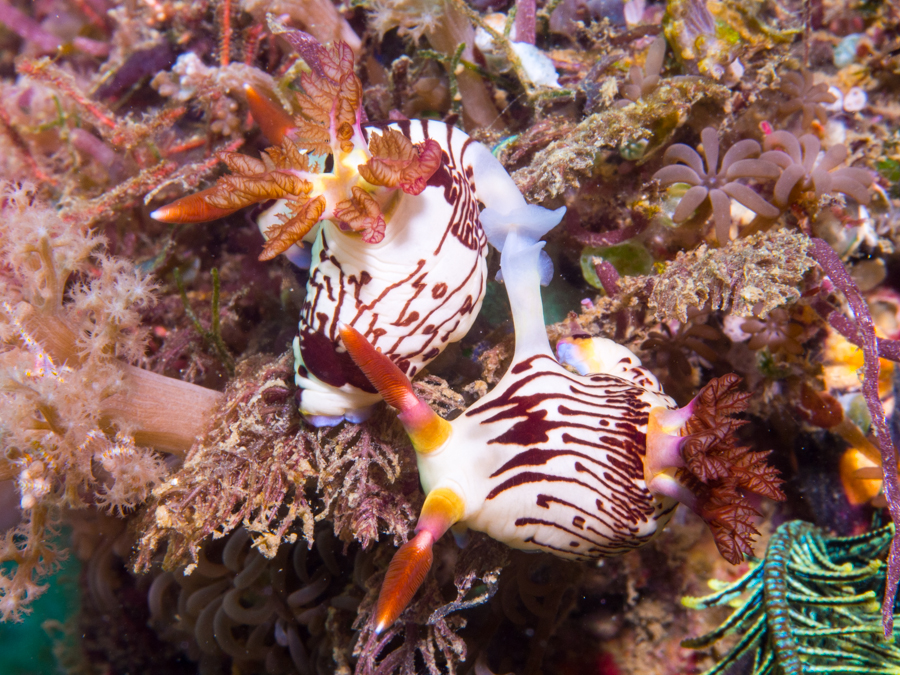
Two magnificent chromodoris nudibranchs with characteristic white bodies and reddish-brown striped patterns during mating. The sea slugs display their typical feathered gills and rhinophores in vivid orange and red tones, surrounded by various corals and sponges.
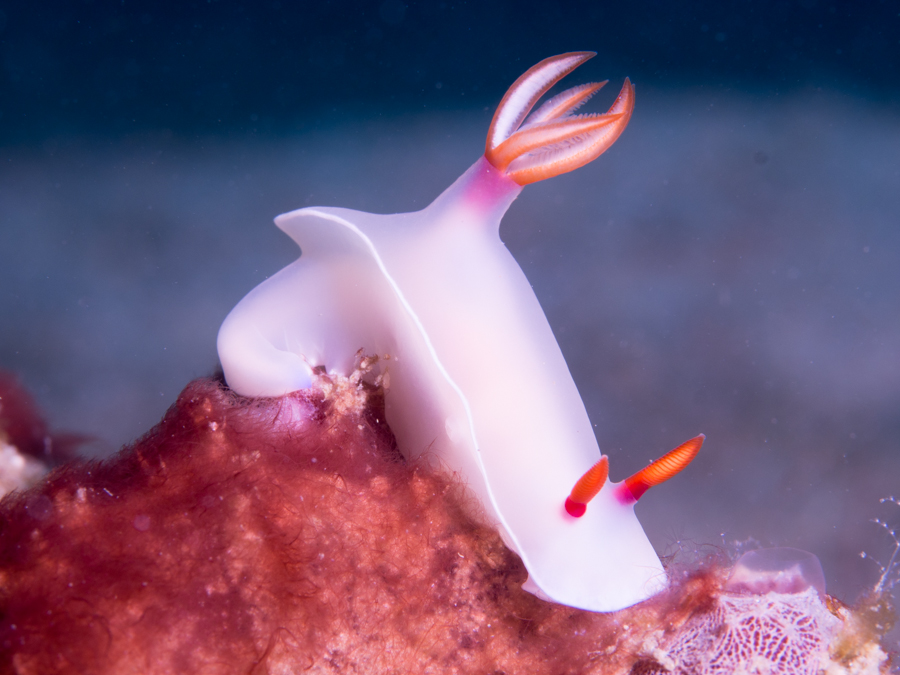
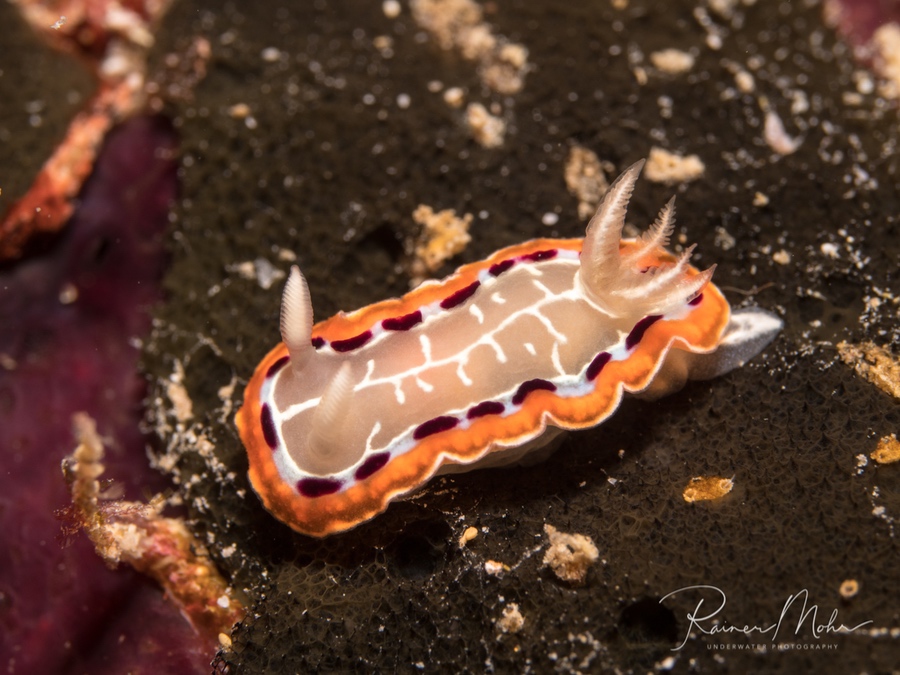
A beautiful nudibranch with orange-white colouration and violet markings crawls across the dark seafloor. The Chromodoris species displays its typical rhinophores (scent organs) and the undulating mantle tissue with vivid colours.
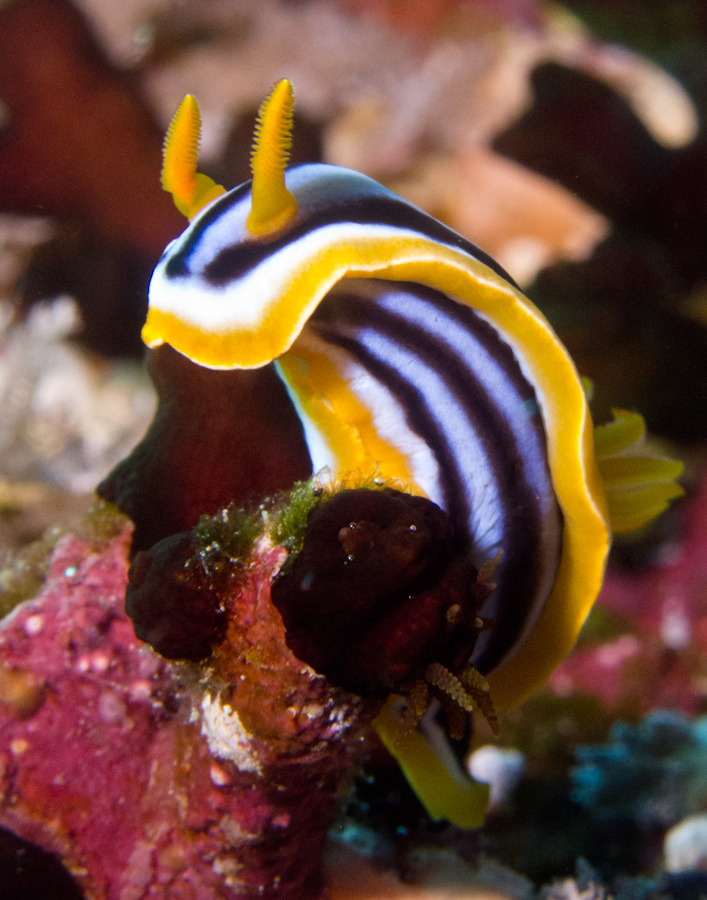
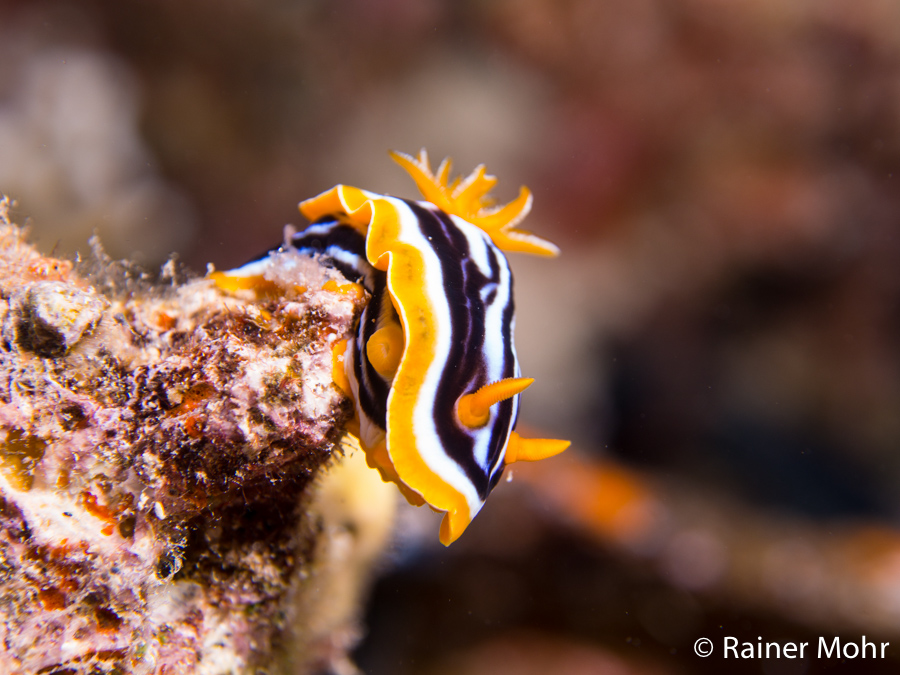
A beautiful Chromodoris nudibranch with characteristic orange-and-black patterning on a white body crawls over the colourful coral reef. The nudibranch displays its typical orange rhinophores (scent organs) and the feathered gills at its rear end.
Two nudibranchs with vivid, colourful gill tufts and rhinophores on sandy reef ground during mating. The sea slugs display their characteristic purple-red and white gills and typical sensory appendages on the head. A second nudibranch species is visible in the background.
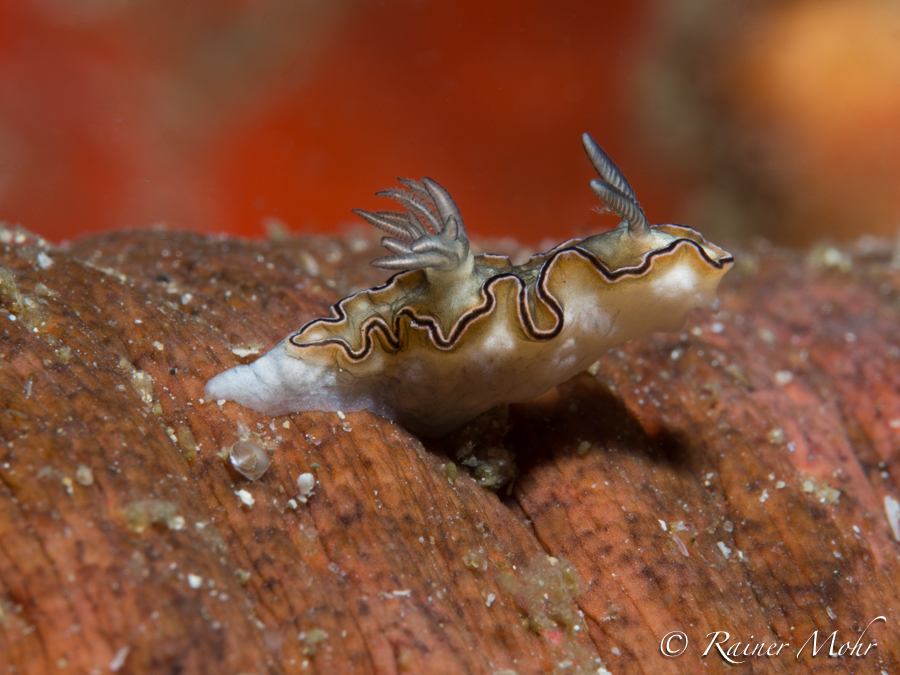
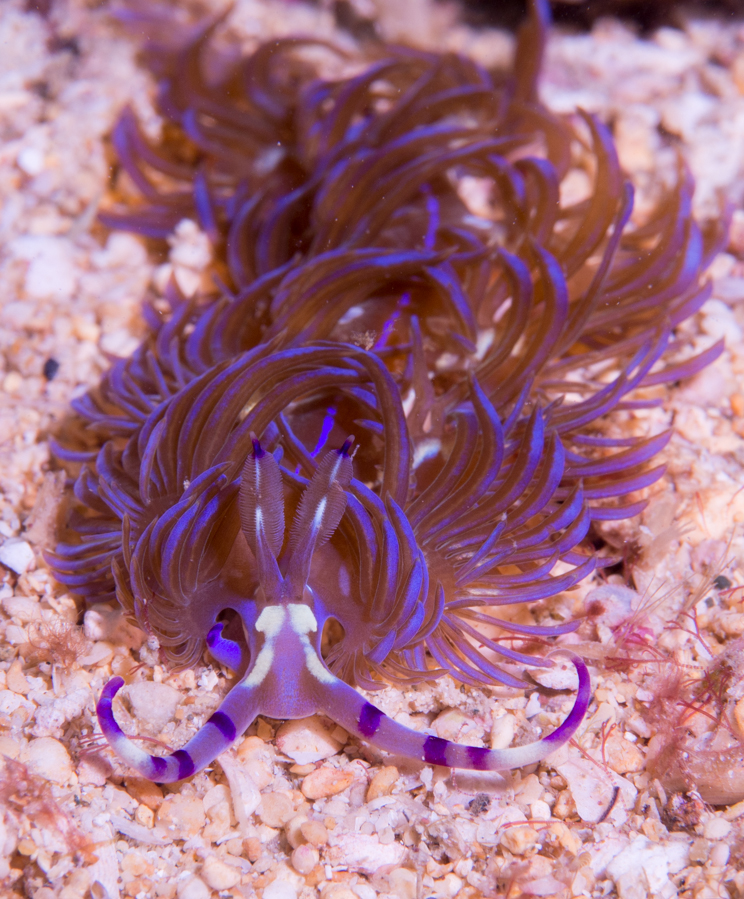
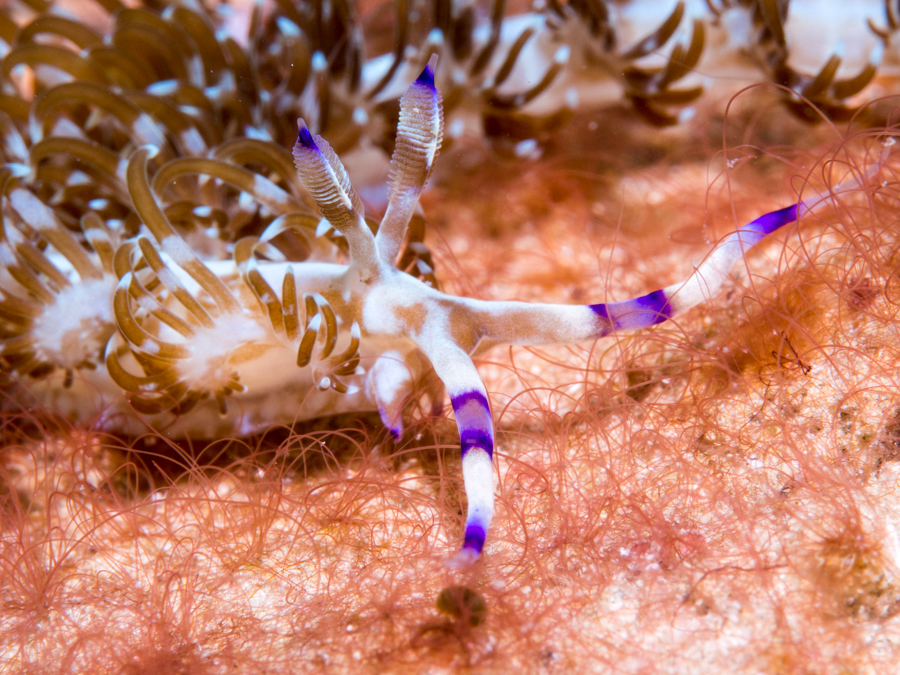
A thecacera nudibranch with characteristic violet bands on its tentacles and body crawls across the sandy seafloor among seagrass and algae. The elegant sea slug displays its typical dorsal gill appendages and striking rhinophores.
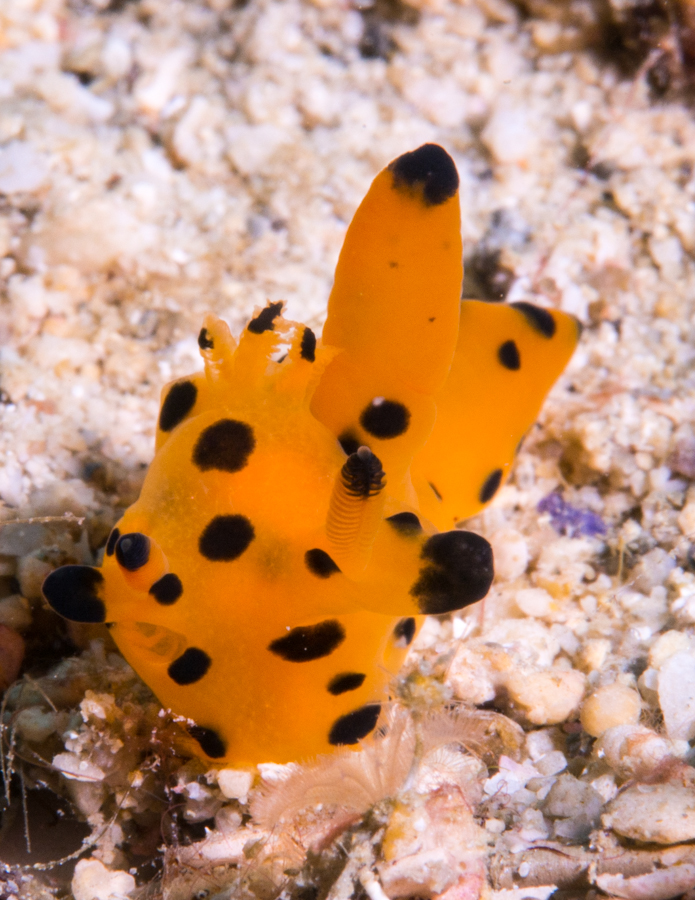
A vivid orange nudibranch with characteristic black spots crawls across the sandy seafloor. The nudibranch displays its typical rhinophores (scent organs) and gills as it searches for food.
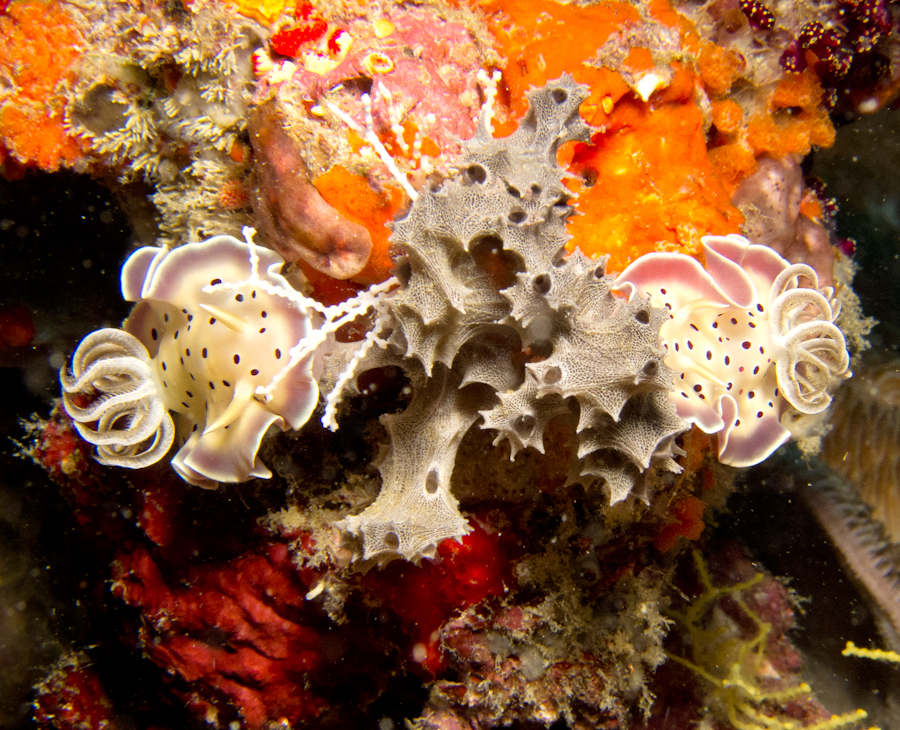
A colourful reef scene shows various nudibranchs on a substrate covered with sponges and corals. At the centre, white translucent nudibranchs with black spots and characteristic gill tufts are visible, surrounded by vivid orange and red sponges.
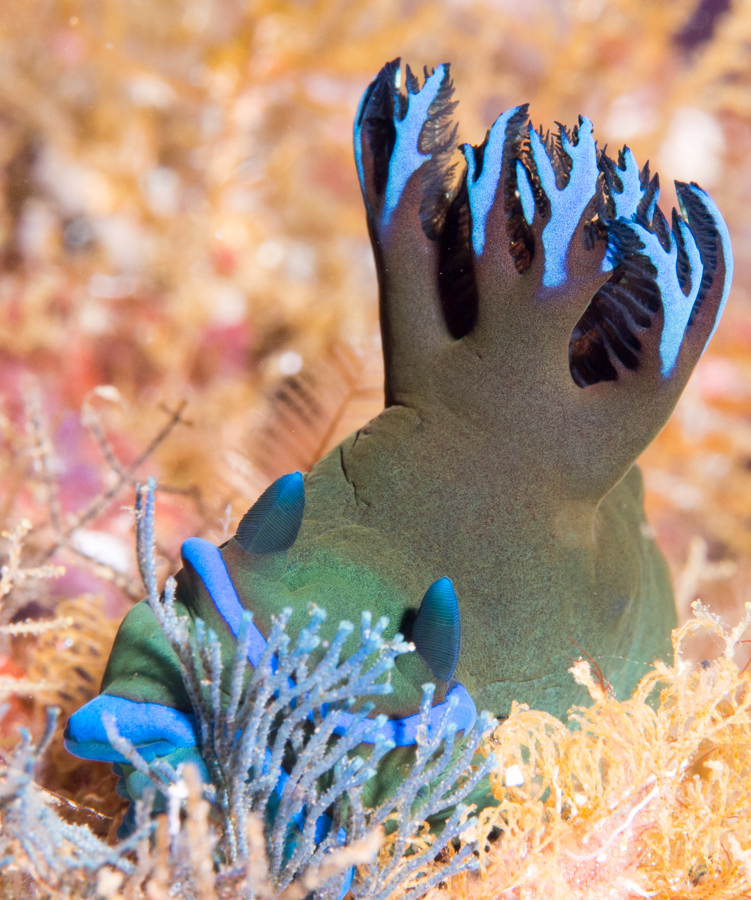
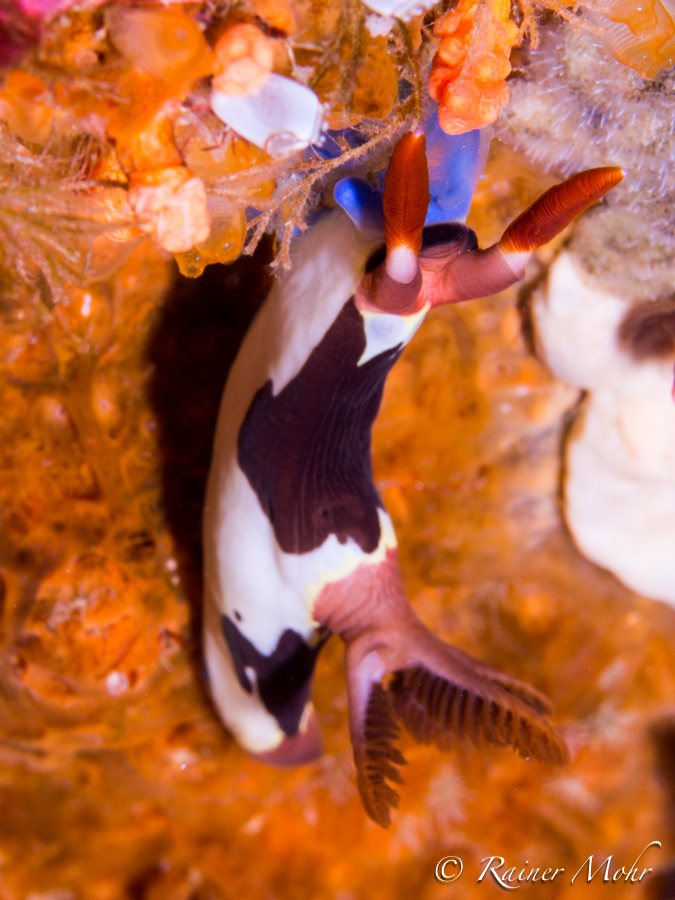
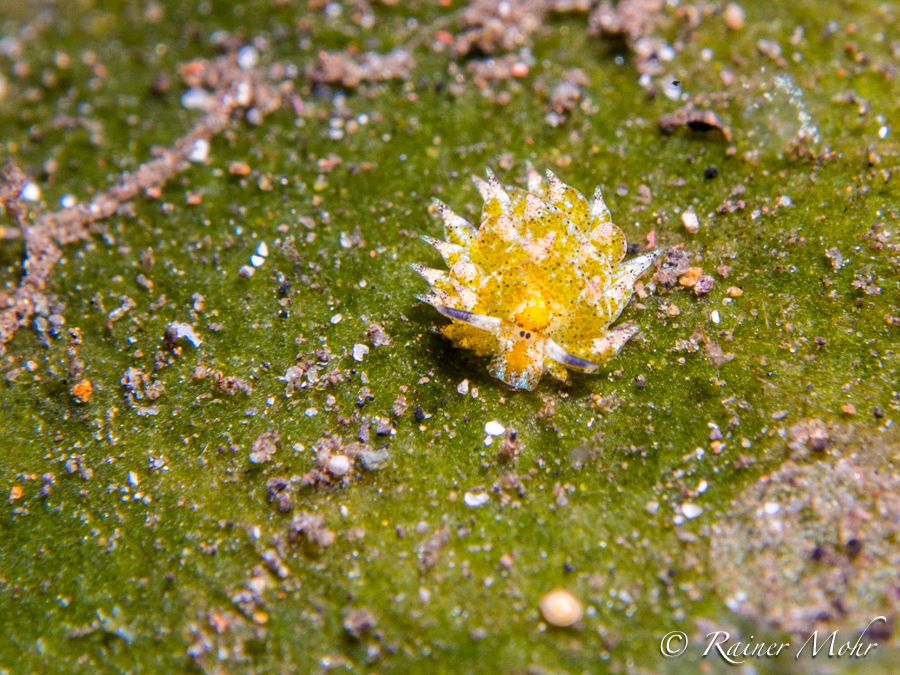
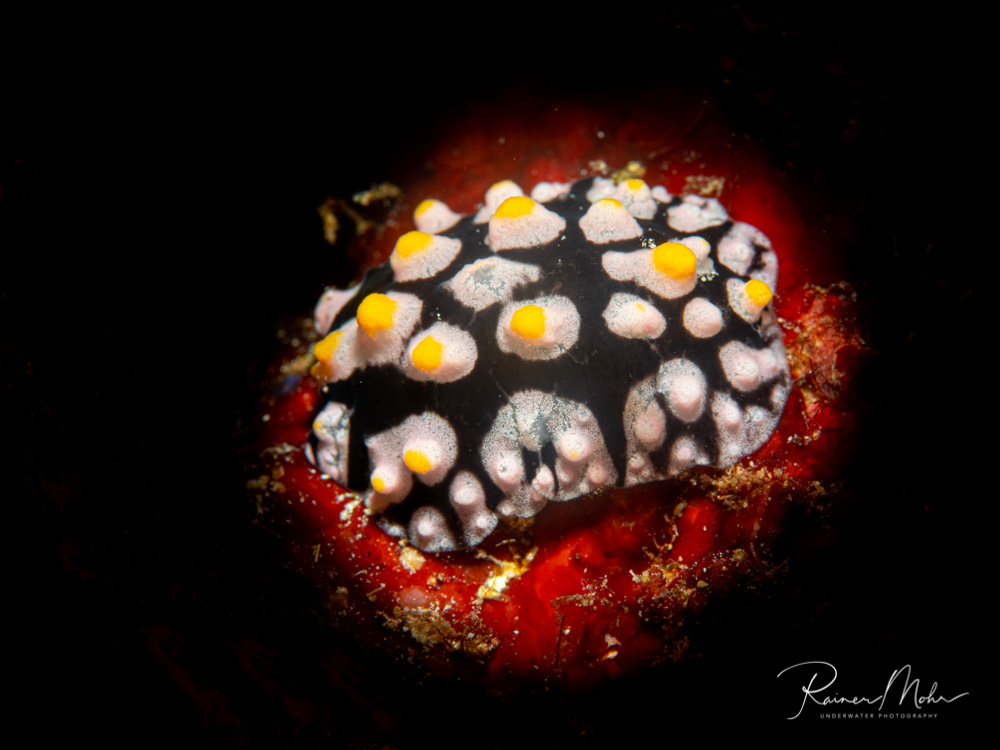
A phyllidiella nudibranch (Phyllidiella pustulosa) on a red sponge during a night dive. The black body with pink-white warts and yellow tips is a characteristic feature.
A beautiful Chromodoris nudibranch with characteristic orange-brown body colouration with dark spots and a white mantle border crawls over encrusted reef rock. The gill tufts at the rear end are clearly visible, showing the typical form of this colourful sea slug.
A colourful nudibranch with characteristic orange-yellow gill plumes on its back sits on a red sponge. The elegant sea slug displays its typical cerata (finger-like projections).
A beautiful nudibranch with characteristic black-and-white longitudinal stripes and yellow accents crawls over red soft corals. The orange rhinophores and gill plumes are clearly visible, showing the typical morphology of this elegant sea slug.
A magnificent nudibranch on a vivid red sponge, photographed from below against the sun. An artistic composition.
A beautiful partner risbecia nudibranch with characteristic violet gills and yellow-white colouring with orange spots crawls across the seabed. The elegant, feathered gills are clearly visible, displaying the typical colouring of this colourful sea slug. It is followed by a second specimen in the background, typical behaviour for this species.
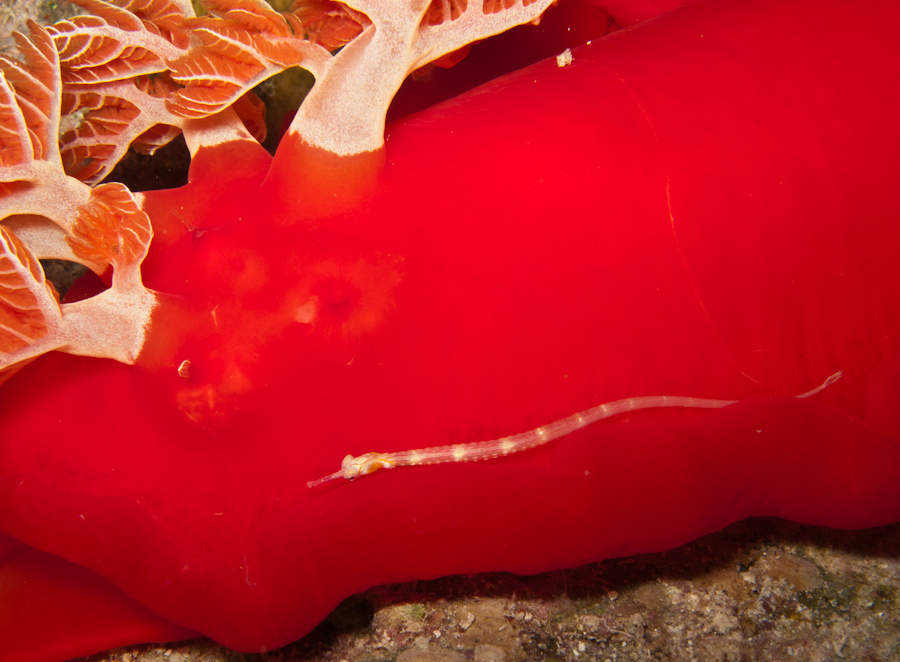
A slender pipefish swims over the side of a spanish dancer. The Rhinophores aof the large Nudibranch are clearly vizible
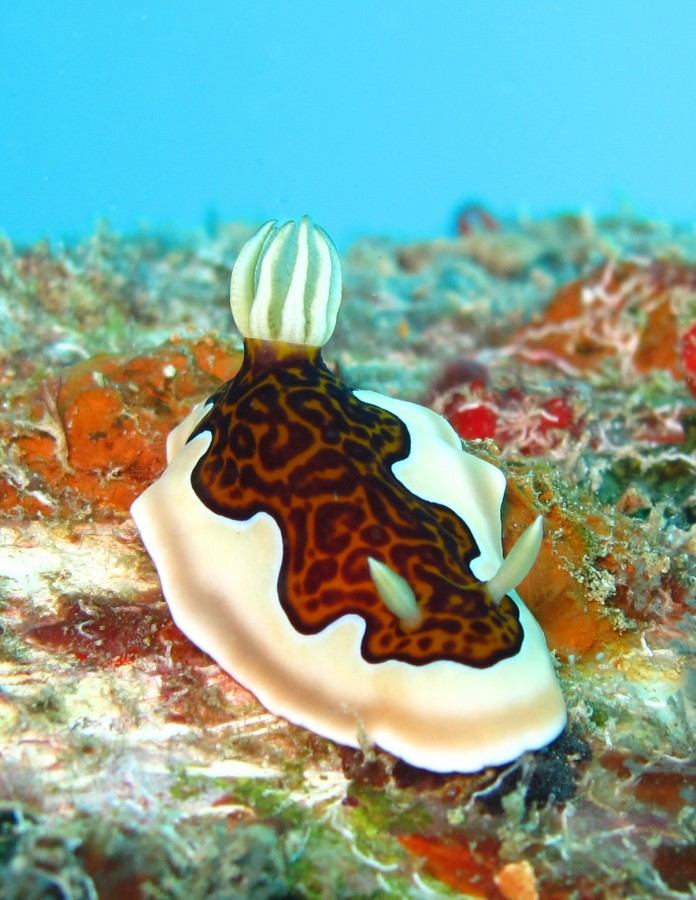
A beautiful nudibranch crawls across the colourful reef floor. The sea slug displays its characteristic white base colouring with a striking brown net-like pattern on its back and typical white gill plumes.
A small nudibranch with a yellowish body and characteristic bluish-violet stripes crawls across a vivid red sponge surface. The elegant body shape and striking colour combination make this nudibranch a popular macro photography subject.
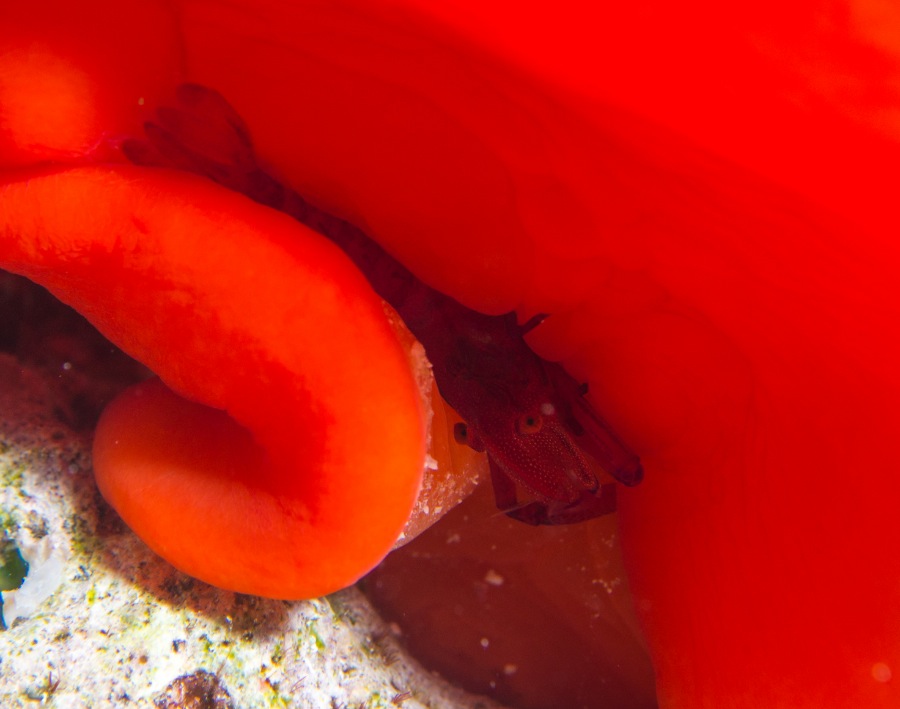
A vivid red emperor shrimp sits beside the mantle of a Spanish dancer nudibranch. The symbiosis between these two species is common β€” most Spanish dancers live together with this shrimp species.
An emperor shrimp sits on the mantle of a Spanish dancer nudibranch. The symbiosis between these two species is common β€” most Spanish dancers live together with this shrimp species.
A colourful nudibranch with characteristic black-and-yellow striped gills crawls over an encrusted reef substrate. The nudibranch displays its typical cerata (dorsal projections) and is surrounded by sponges, corals and other reef organisms.
A beautiful nudibranch with a vivid orange-yellow body and characteristic gill leaves on its back. The Chromodoris species displays its typical elegant body posture on the coral substrate.
A beautiful pyjama nudibranch with characteristic black-and-white stripes and yellow rhinophores and gills sits on colourful coral growth. The vivid colours of the sea slug contrast perfectly with the reddish-pink coral base.
A beautiful nudibranch crawls across encrusted reef substrate. The sea slug displays its characteristic black-and-white striped body colouring with vivid orange-yellow gills and rhinophores that rise from its back like tiny flowers.