Tag: Macro

A common cuttlefish rests on a colourful coral reef, displaying its characteristic brown-and-white colouring with striking large eyes. The animal is perfectly camouflaged among the corals and the encrusted substrate.
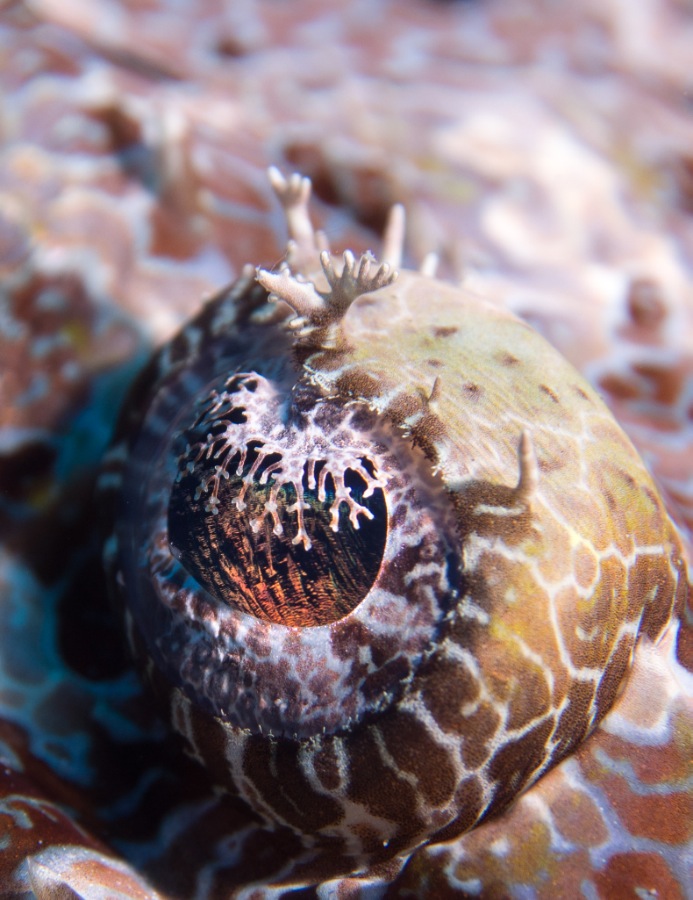
The image shows the eye of a crocodilefish (Cymbacephalus beauforti).
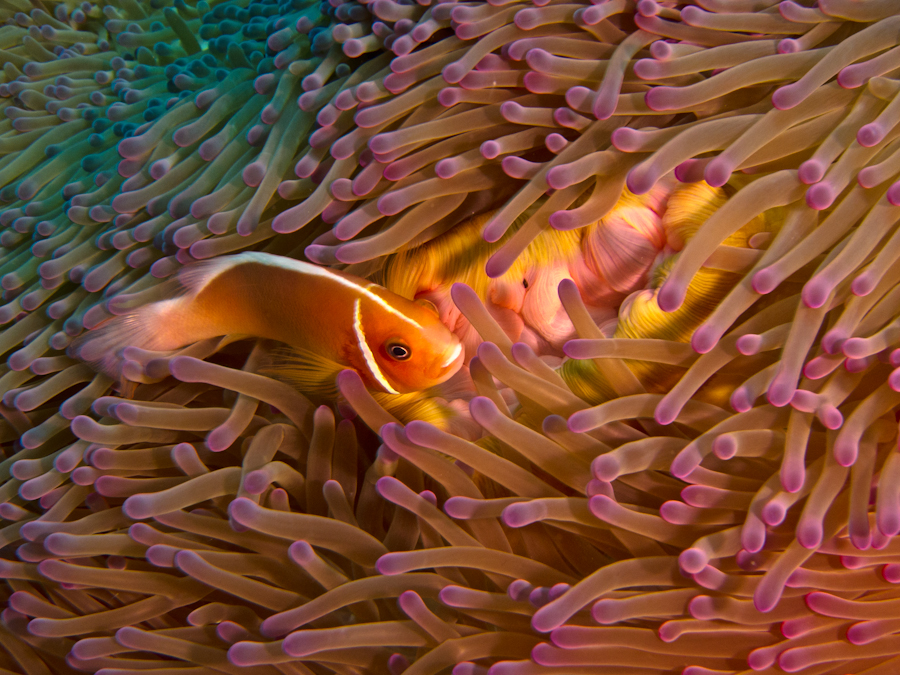
An orange-red anemonefish shelters protectively among the tentacles of its host anemone. The symbiosis between fish and anemone is clearly visible, with the vivid orange tones of the fish forming a beautiful contrast against the pink-violet anemone tentacles.
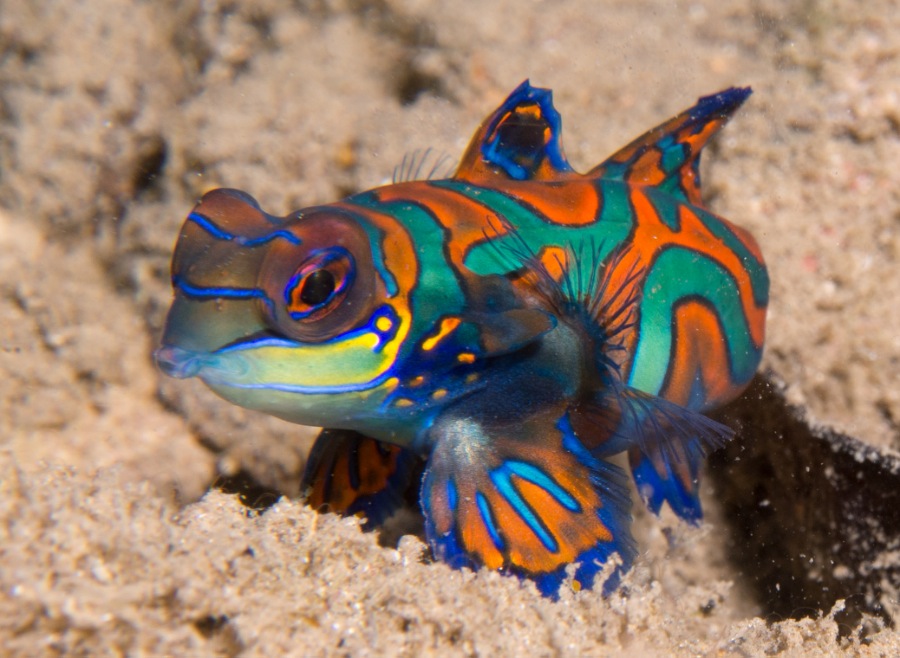
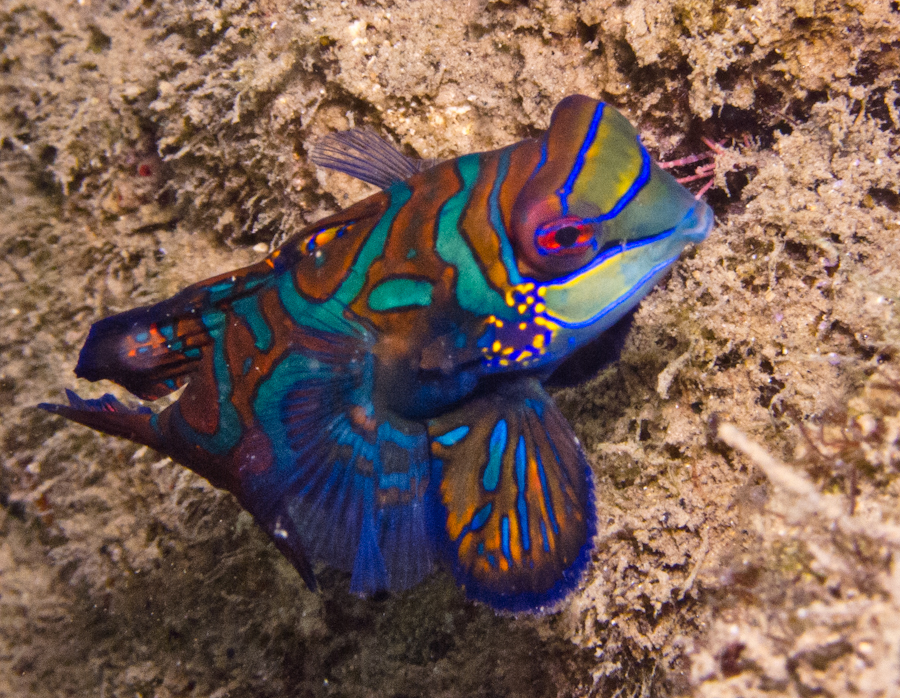
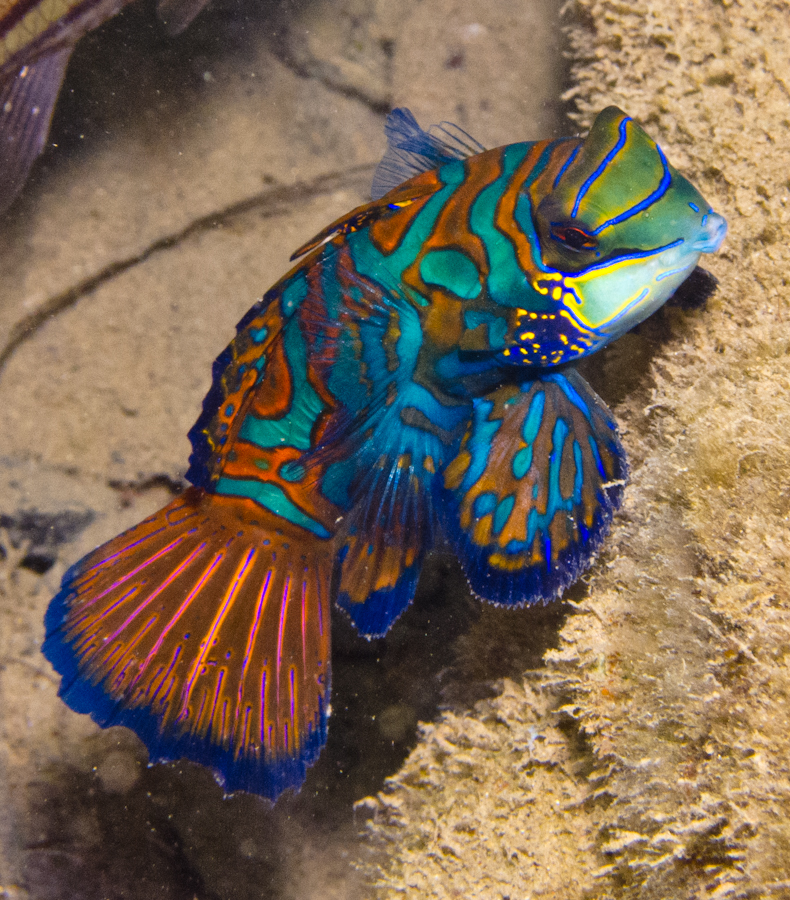
A magnificently coloured mandarin dragonet sits on sandy ground. The vivid colours in blue, orange, green and yellow with the characteristic undulating patterns are clearly recognisable, as are the large pectoral fins and the striking eyes.
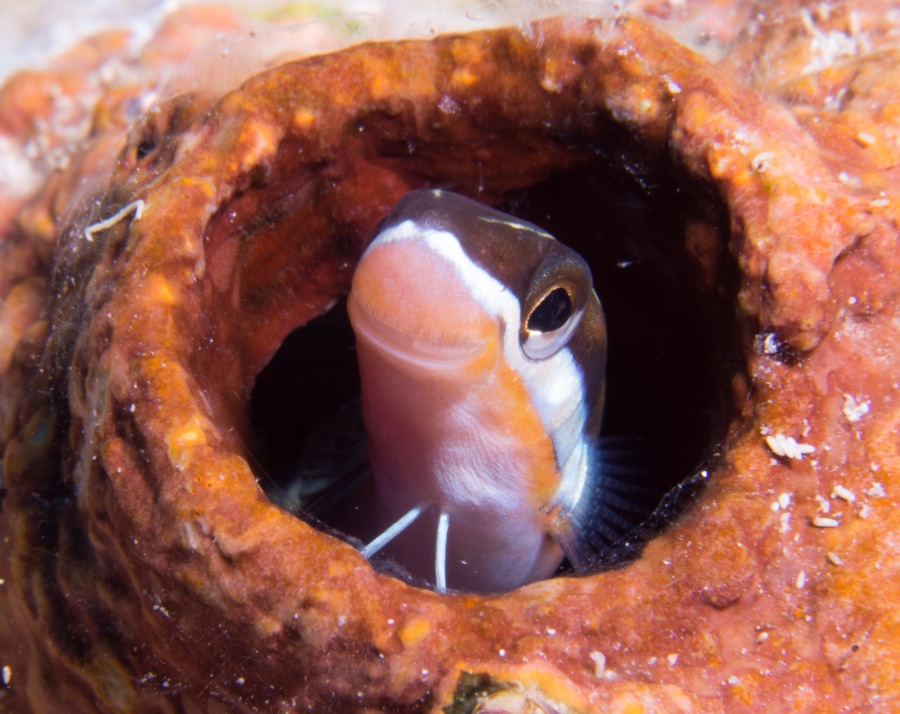
A blenny hides inside a tubular structure of a coral cave. The small fish displays the typical orange-and-white colours and uses the natural shelter as protection.
A colourful Flabellina nudibranch with transparent, violet-edged cerata (dorsal projections) crawls across red soft corals. The sea slug displays a beautiful colour combination of pink, orange and violet and is a typical example of the species diversity of small reef inhabitants.
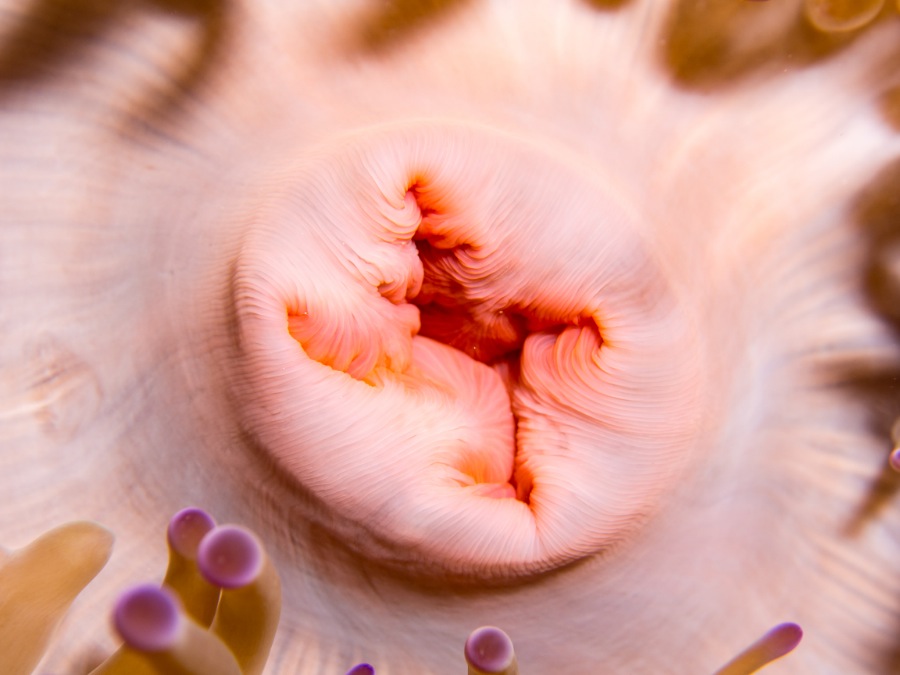
A macro shot shows a sea anemone with its characteristic central mouth opening, surrounded by fine tentacles in pink-whitish tones. The red-orange oral disc is clearly visible, while violet tentacles are visible.
A magnificent mandarinfish displays its characteristic vivid colouring with wavy lines in blue, green, orange and yellow. The small, colourful fish rests on the sandy seabed and presents its spectacular colour pattern.
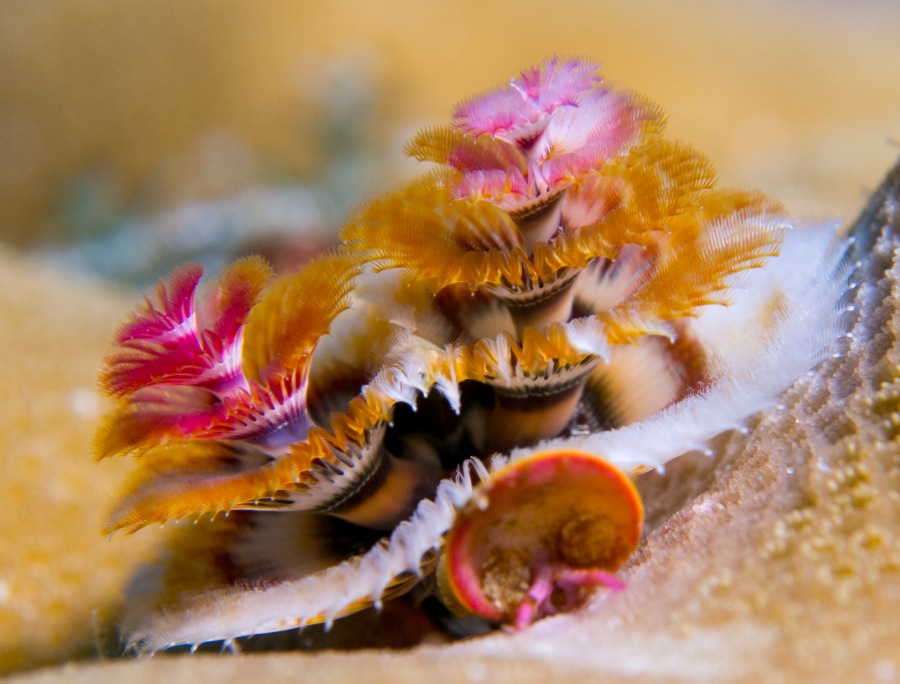
A colourful Christmas tree worm with its characteristic feathery gill crowns in vivid pink and orange tones protrudes from its calcareous tube. The fine, feather-like gill structures are clearly visible and show the typical spiral arrangement of these filter-feeding tube worms.
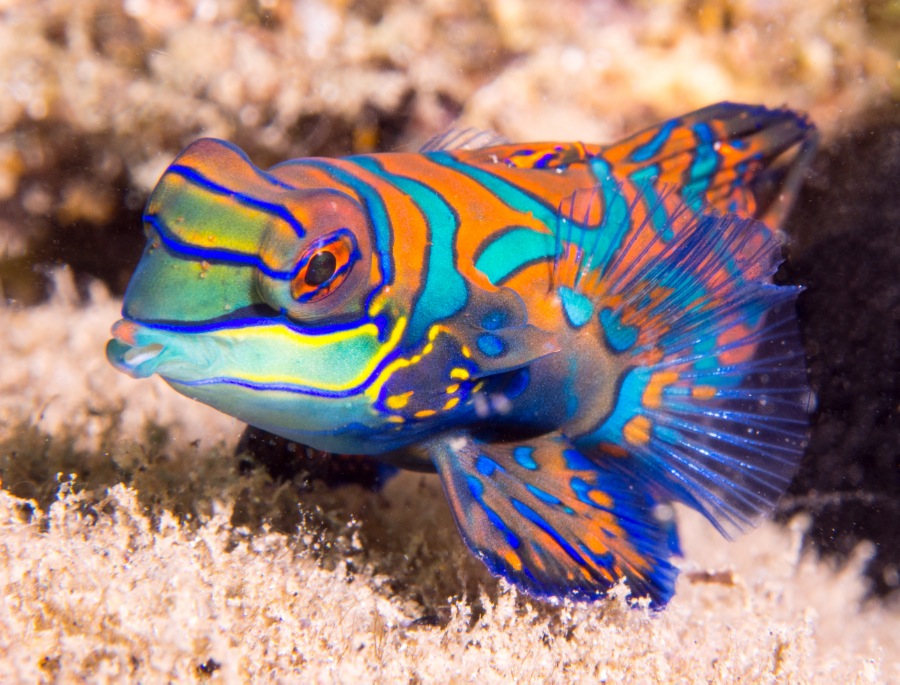
A magnificent mandarin dragonet displays its characteristic vivid colouring with vivid blue, orange and green stripes and patterns. The small fish rests on the sandy seabed among coral fragments and presents its typical stocky body shape and the conspicuous pectoral fins.
A colony of Christmas tree worms displays its characteristic spiral filter crowns in vivid blue tones. The fine, feathery tentacles are spread fan-like and serve for feeding by filtering plankton from the water.
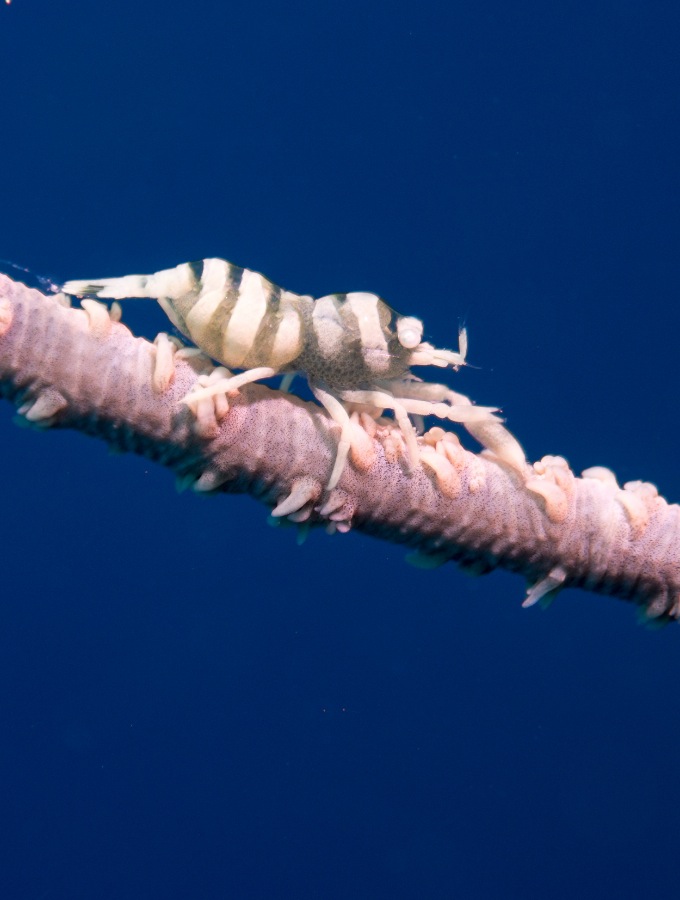
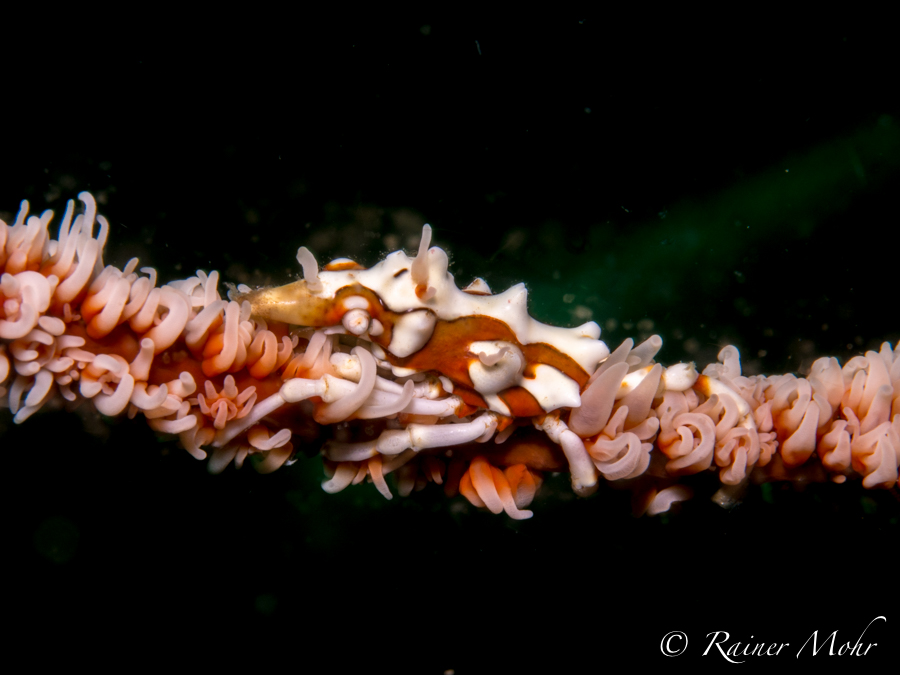
The image shows a whip coral shrimp (Pontonides ankeri) resting on its host coral. These small shrimps live in a symbiotic relationship with whip corals and are perfectly adapted to the colour and structure of their host coral, providing extremely effective camouflage.
A magnificent mandarin dragonet displays its spectacular colour splendour with vivid blue, green, orange and red patterns. The fish rests on the sandy seabed and presents its characteristic undulating fins in full beauty.
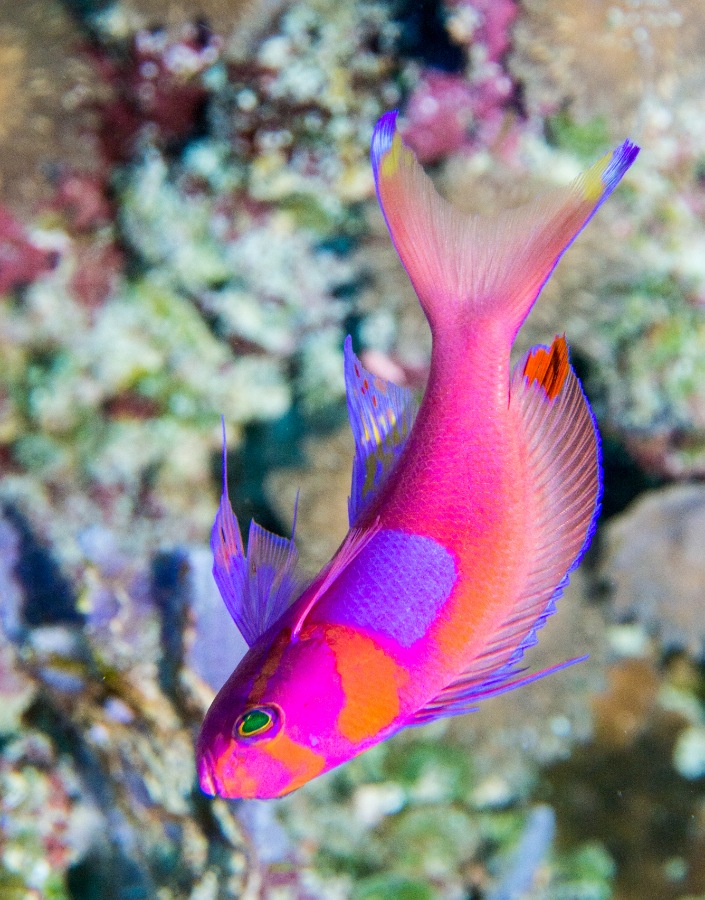
A beautiful pygmy anthias swims elegantly above the coral reef. The vivid pink to violet colouring with orange-yellow accents and the characteristic bluish fin margins make this small reef dweller one of the most colourful fish in the tropical ocean.
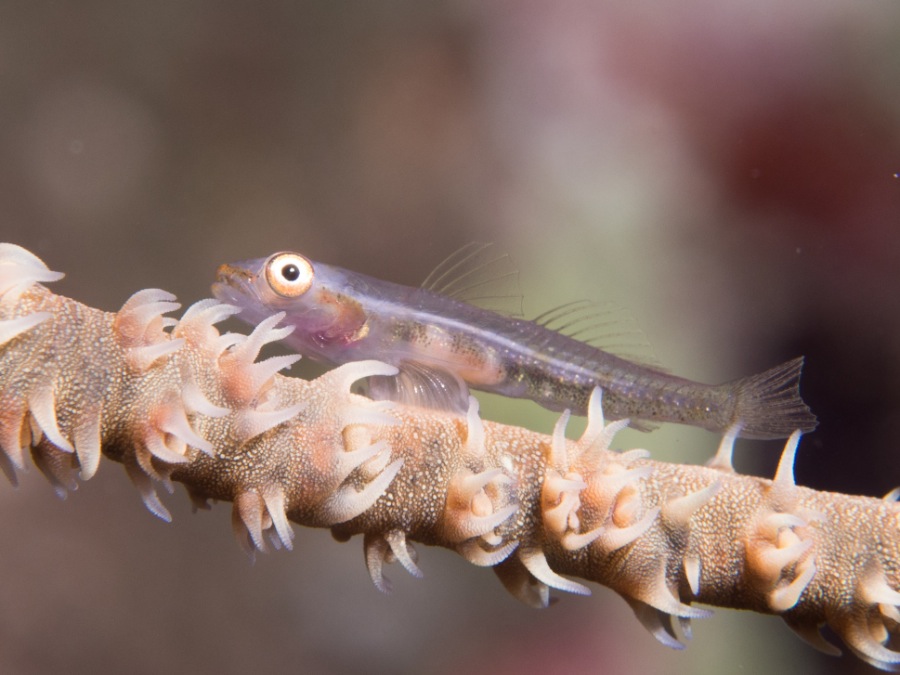
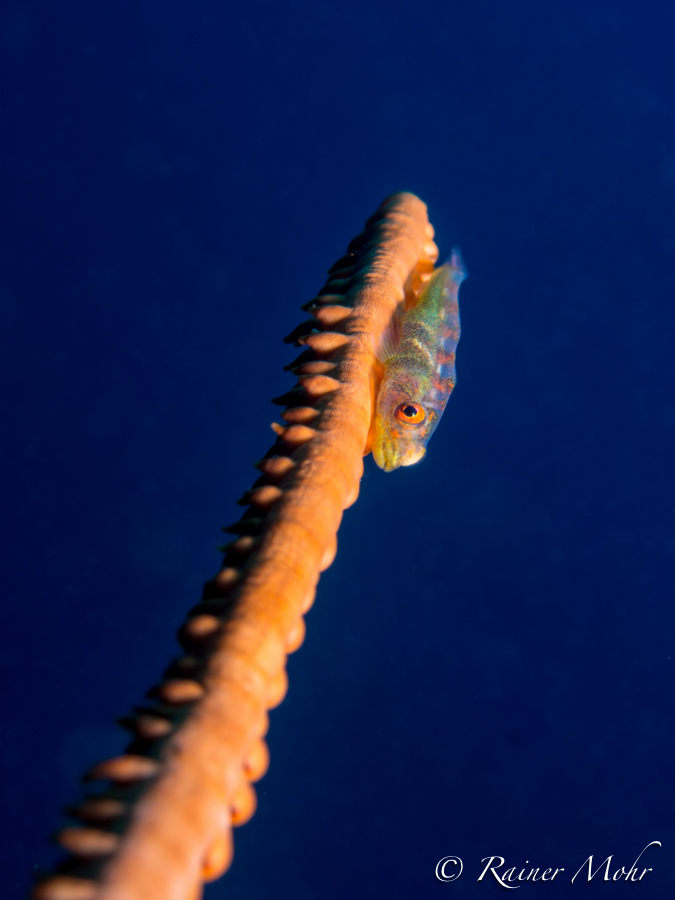
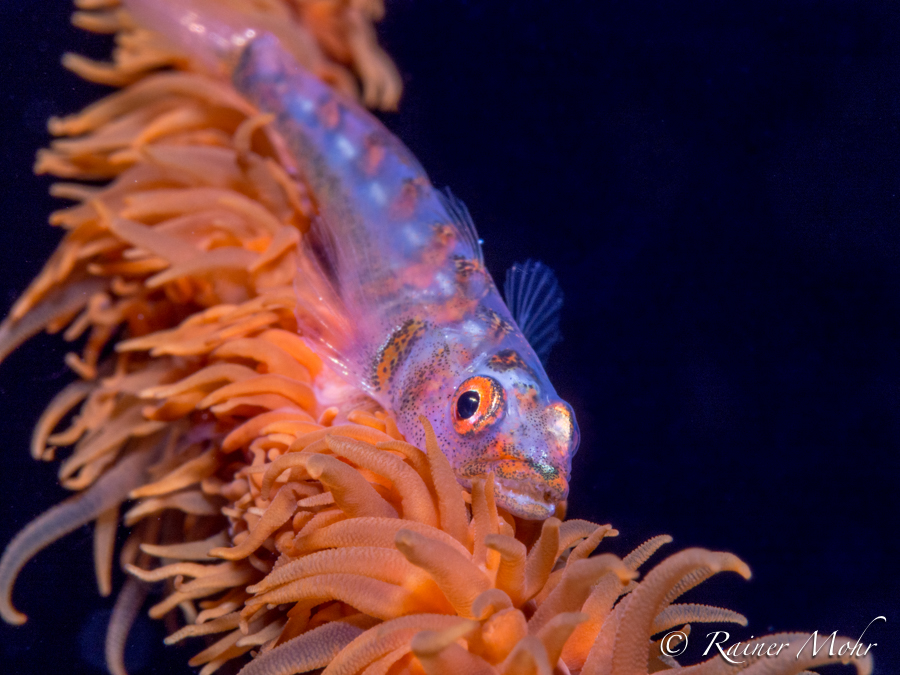
A small transparent goby sits on a wire coral.
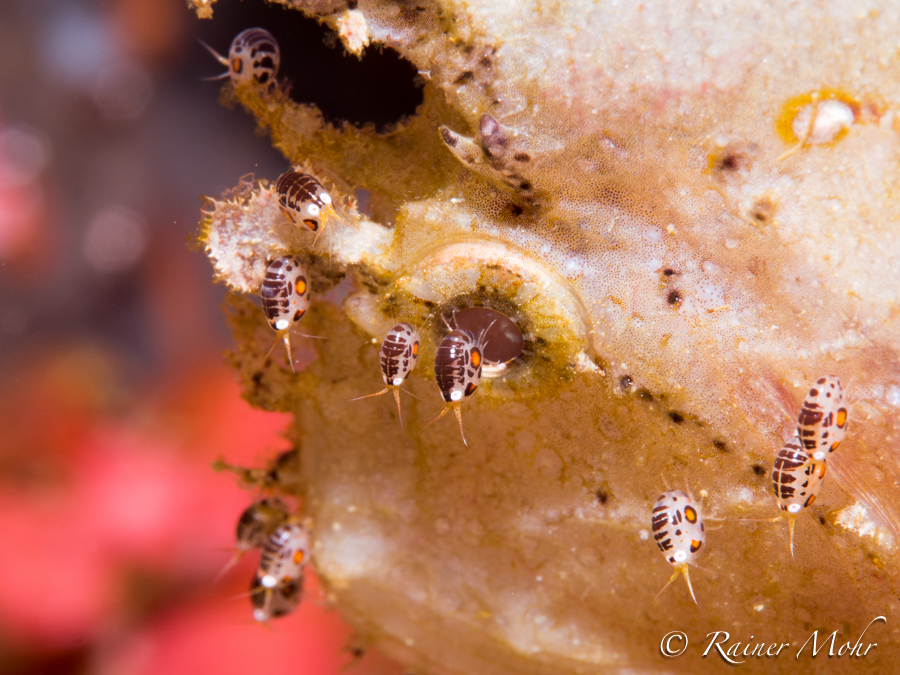
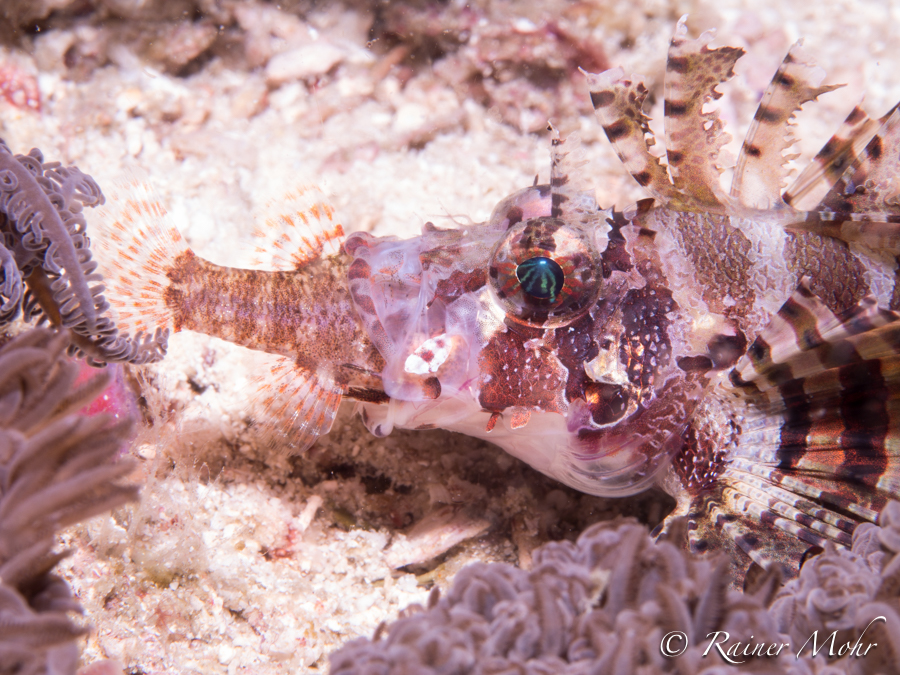
A group of small mysid shrimps moves across a tassled scorpionfish, with one sitting directly on its eye. The transparent crustaceans with their characteristic striped bodies and long antennae are seen in a typical setting.
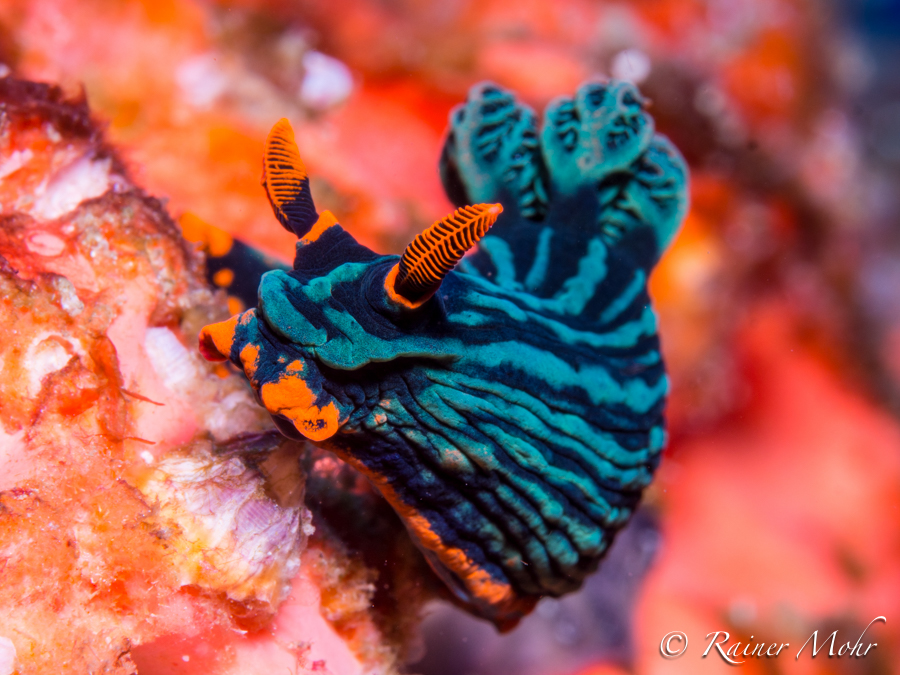
A magnificent Nembrotha nudibranch with characteristic turquoise-blue gills and orange-and-black rhinophores crawls over orange sponges. The sea slug displays its typical folded dorsal appendages in vivid blue and black tones.
A colorful squat lobster in purple and yellow sits between the arms of a crinoid.
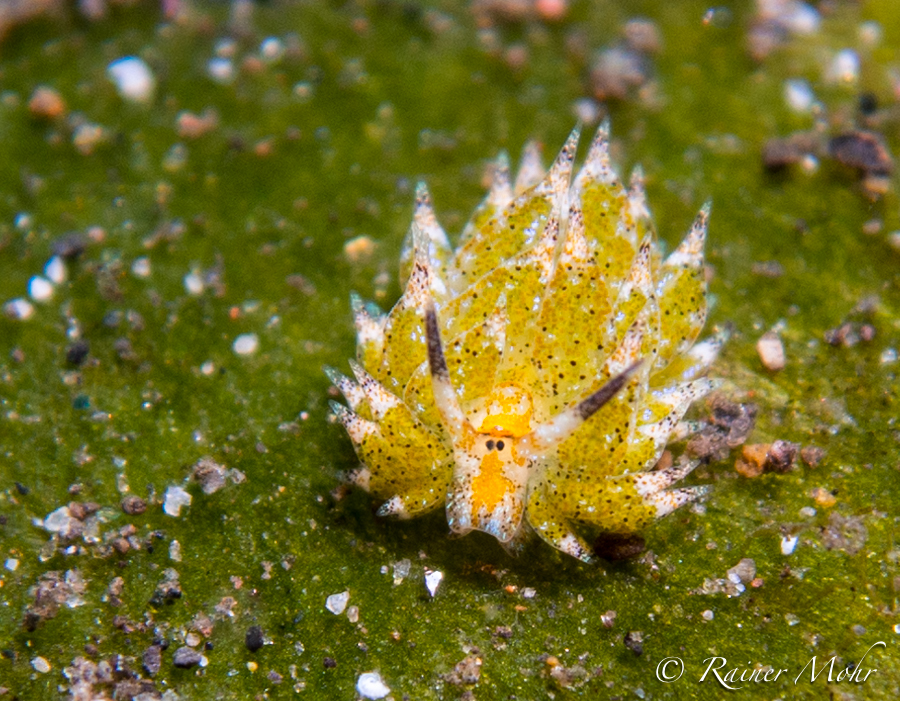
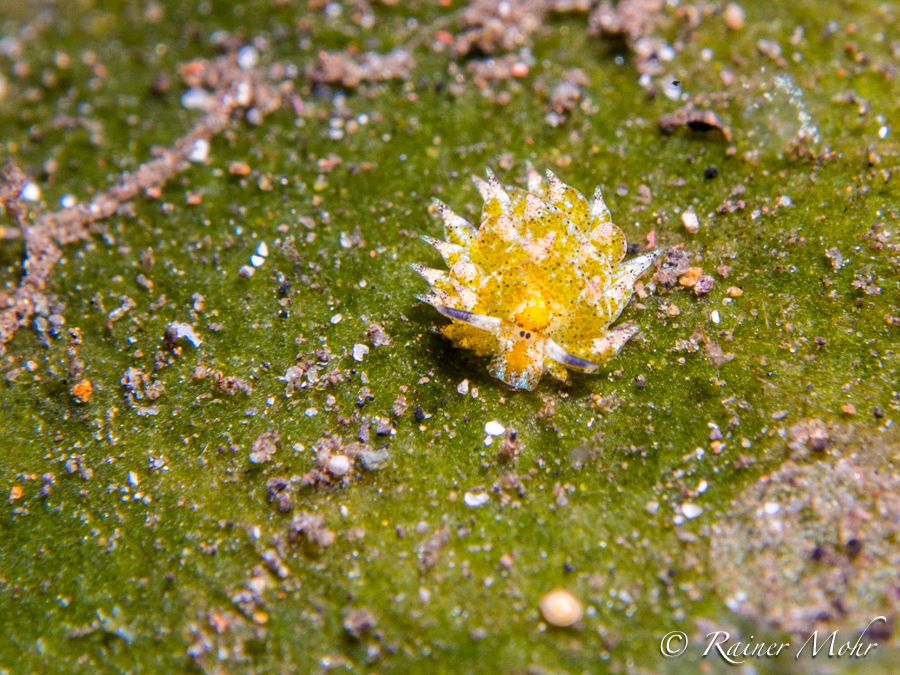
The image shows Costasiella kuroshimae, a tiny sea slug species also known as the "leaf sheep". They grow to only about one centimetre and have structures called cerata on their backs that give them a leaf-like appearance.
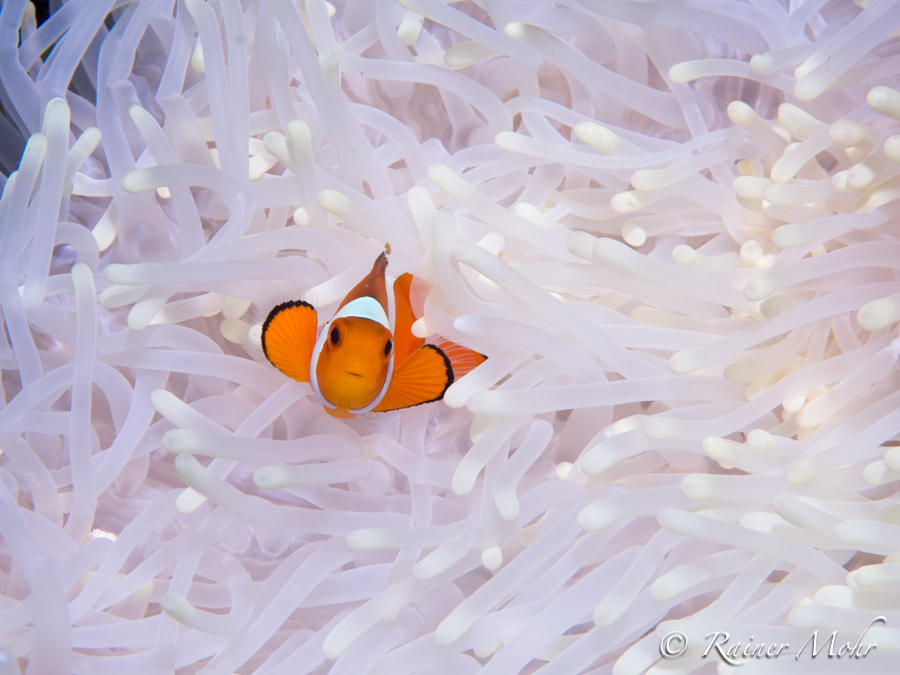
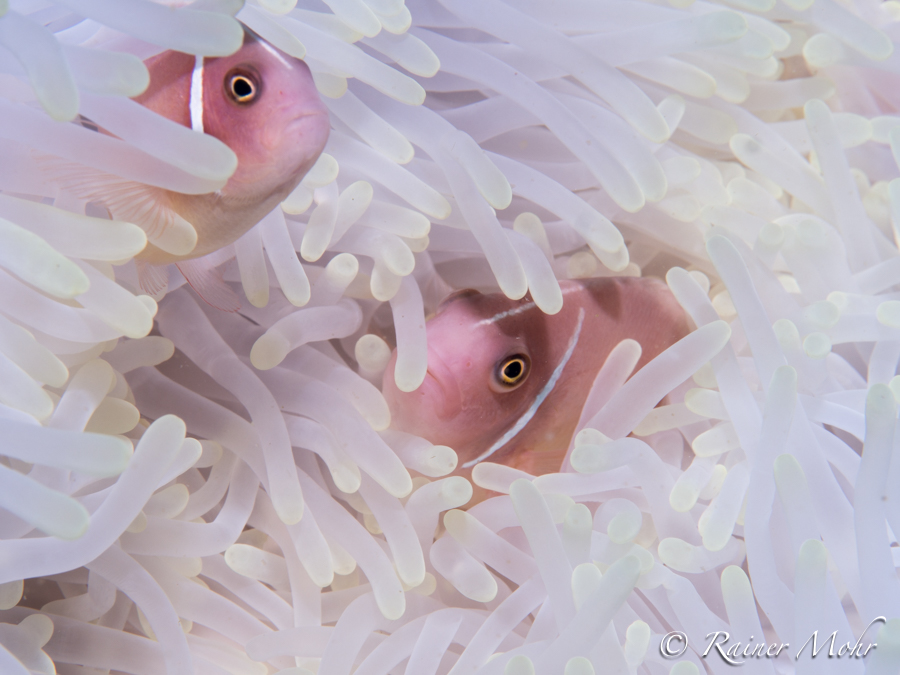
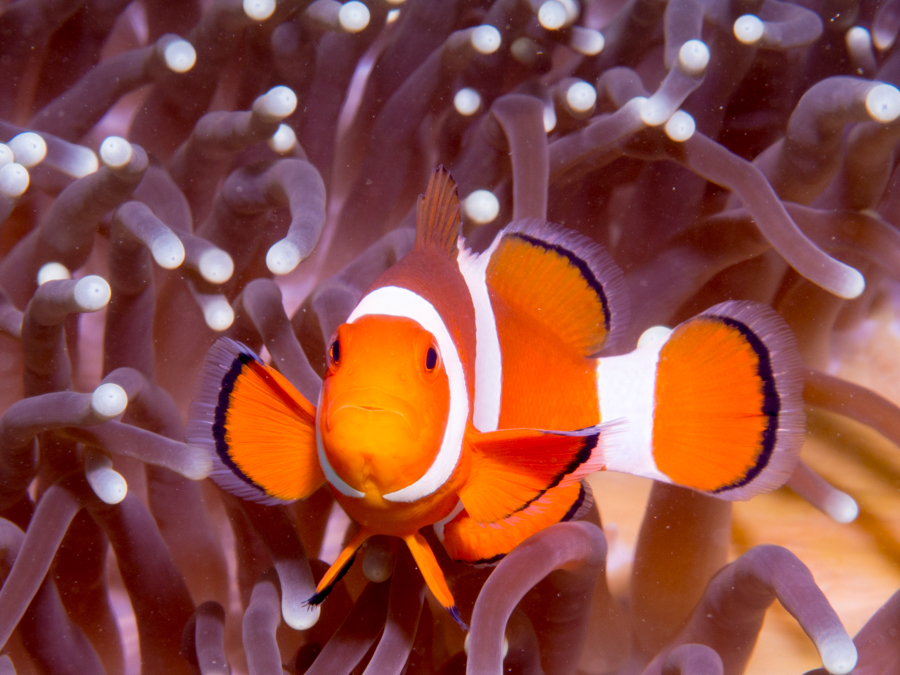
A false clownfish shelters protectively in the tentacles of its host anemone. The characteristic orange colouration with white stripes contrasts clearly with the pale, almost white anemone tentacles β€” a classic example of the famous symbiosis between anemonefish and sea anemones. The anemone shows signs of bleaching caused by water temperatures that were too high.
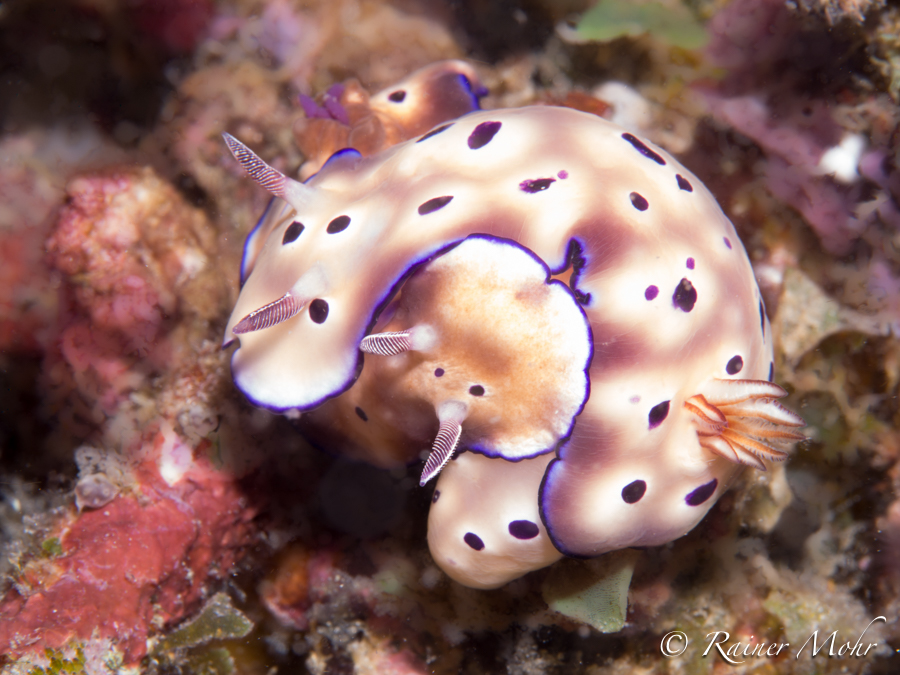
Two beautiful chromodoris nudibranchs crawl closely entwined over the reef, displaying their characteristic cream base colouration with violet dots and bluish-violet mantle border. The delicate gills and rhinophores are clearly visible as the slugs glide over the sponge- and coral-covered substrate.
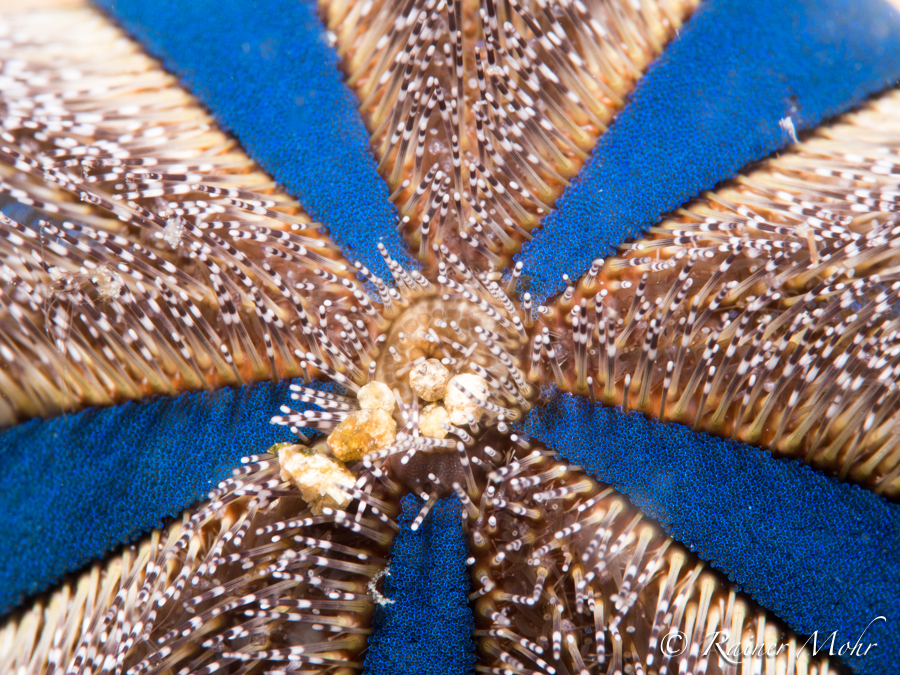
A detailed macro shot of the underside of a blue sea star shows the characteristic ambulacral grooves with white tube feet and the central mouth opening. The bluish colouration and typical anatomy suggest a Linckia sea star.
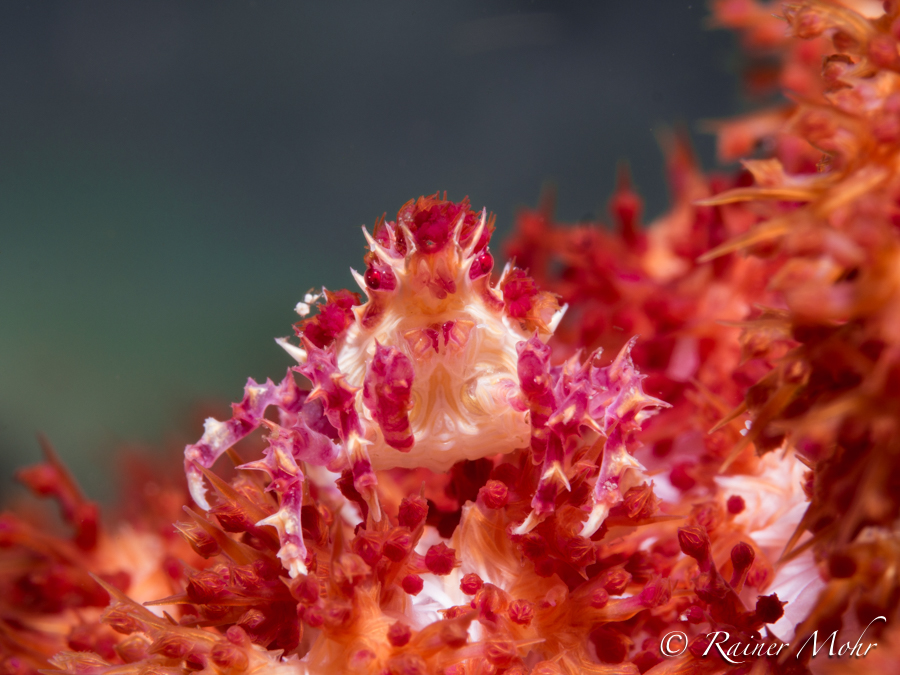
A fascinating macro shot shows a candy crab in perfect camouflage among colourful soft corals. The yellowish-transparent crab blends almost completely with its surrounding pink and orange branching structures.
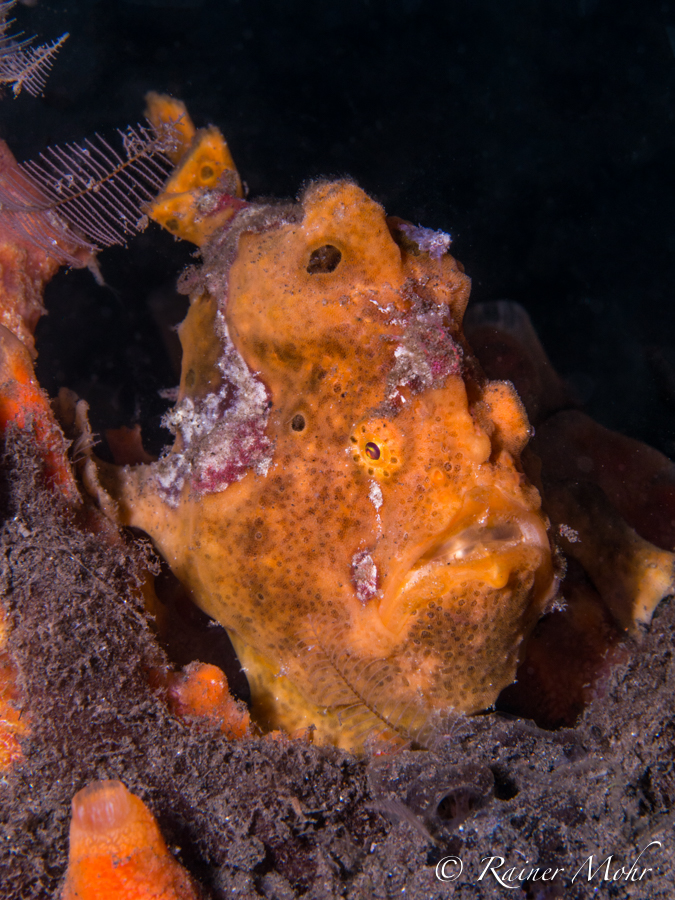
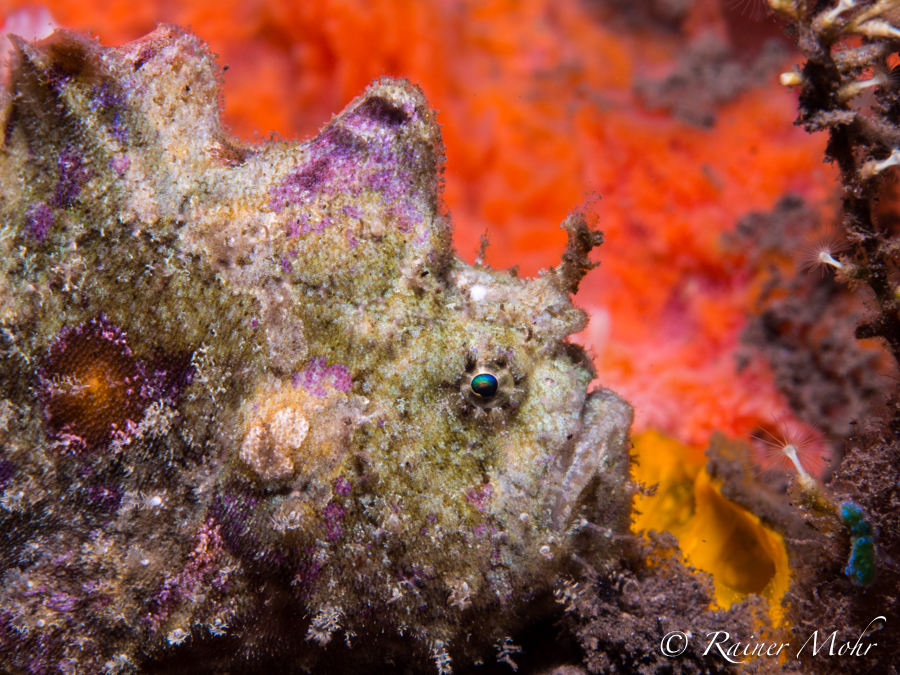
An orange-yellow frogfish (Antennariidae) sits camouflaged among sponges and coral growth on the seafloor. The small, rounded animal with its characteristic knobbly body shape and clearly visible eyes shows perfect adaptation to its environment.
A whip coral goby sits on an orange-reddish whip coral against deep blue water. The small fish displays a greenish-blue colouration with striking yellow eyes and uses the coral for shelter or foraging.
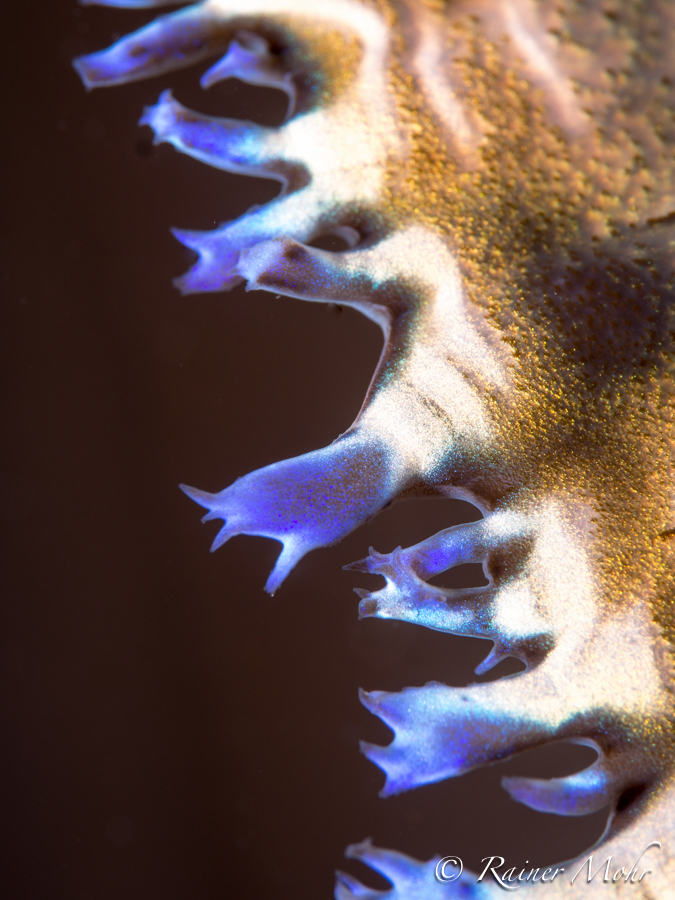
This macro shot shows the characteristic bluish-violet gill appendages of a file clam with golden dots on the body.
Two sexy shrimps (Thor amboinensis) with characteristic white-and-blue spots on their brown carapace are visible on the sandy seafloor. The small crustaceans display their typical behaviour with their rocking tails and long antennae as they move through their natural environment.
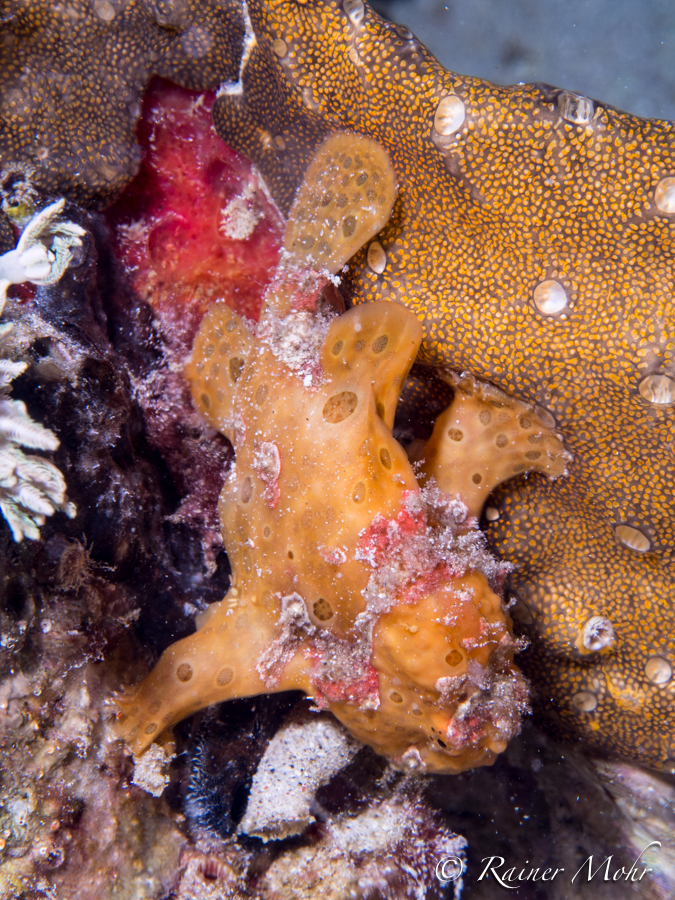
The image shows a painted frogfish (Antennarius pictus), also known as the round-spot frogfish. These fish are masters of adaptation, mimicking sponges in both shape and colour to become nearly invisible to prey and predators alike. As ambush predators they remain motionless for hours. With a modified dorsal fin ray that acts like a fishing rod with a lure, they attract prey directly in front of their large mouth.
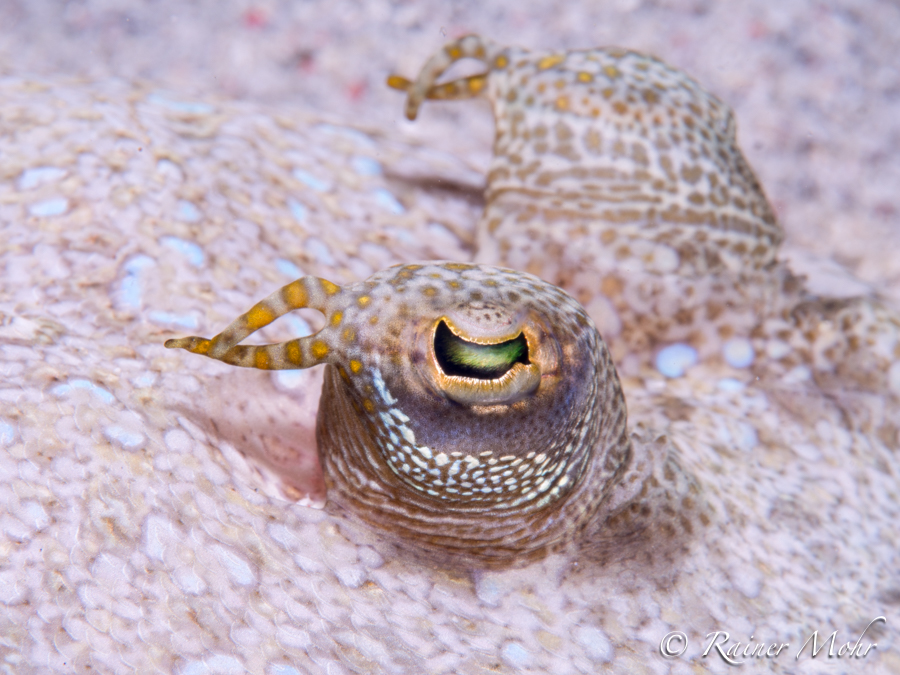
Close-up of the eye of a sole. The delicate iris fringes (lappets) and the perfect sand camouflage are visible in fine detail.
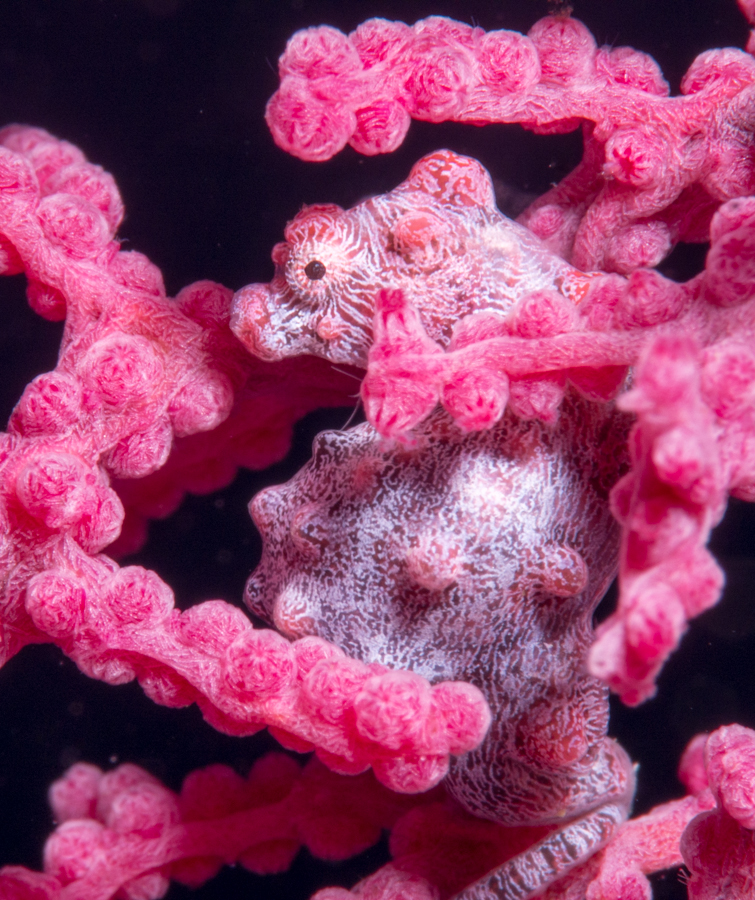
A pink-reddish pygmy seahorse (approx. 1 cm) sits in its host coral.
A fascinating macro shot shows a small crab that has hidden in a vivid pink sea feather. The transparent crab with its characteristic striped legs and claws uses the anemone for protection, while the whitish tentacles of the anemone float elegantly in the water.
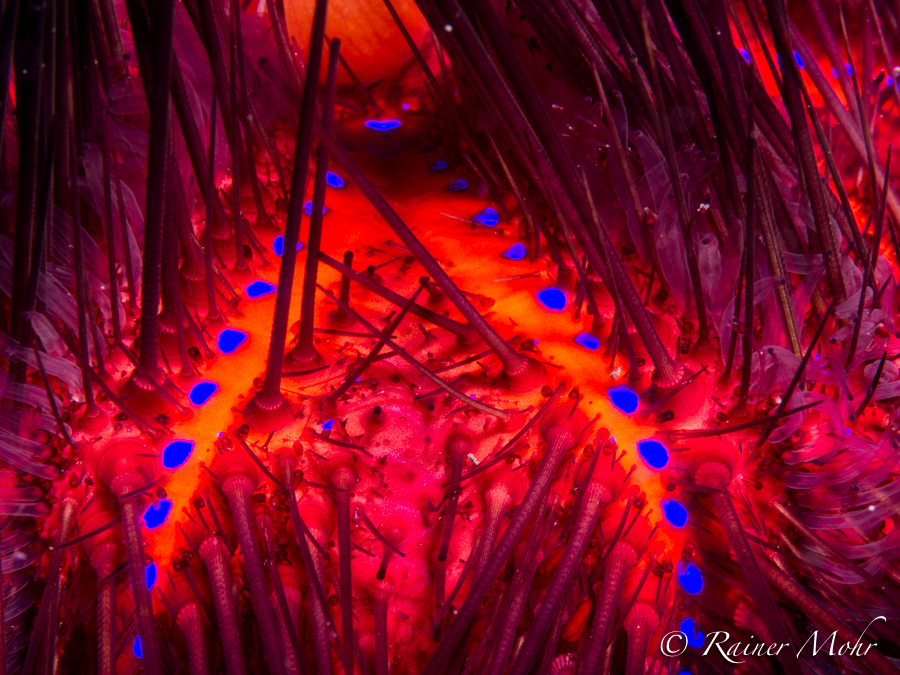
A sea urchin displays its intense red and orange colouration with characteristic blue dots distributed in regular rows across the body. The long, dark spines frame the colourful body and create an impressive contrast.
A perfectly camouflaged frogfish sits among colourful corals and sponges on the reef. The animal demonstrates its impressive ability to camouflage by mimicking the colour and texture of its surroundings, making it nearly invisible.
The image shows a whip coral goby (Bryaninops yongei) resting on a whip coral (Cirrhipathes anguina). The body is semi-transparent, allowing the fish to blend perfectly with the colour of the coral.
A juvenile red lionfish with its prey in its mouth.
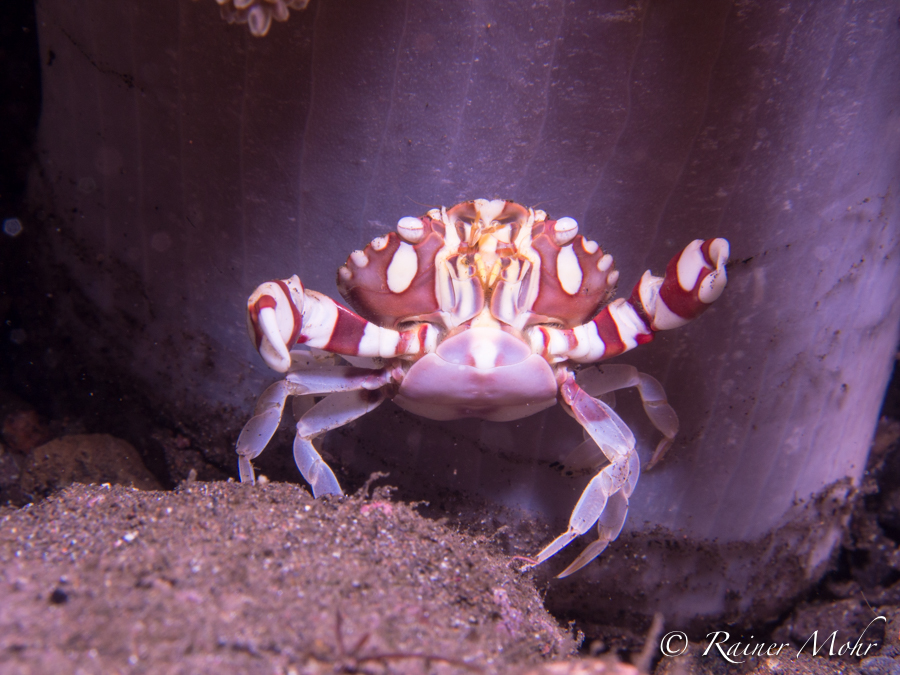
A swimming crab with characteristically red-and-white striped claws and legs sits on sandy ground among corals and an anemone. The crab displays a defensive posture with raised claws and is photographed face-on.
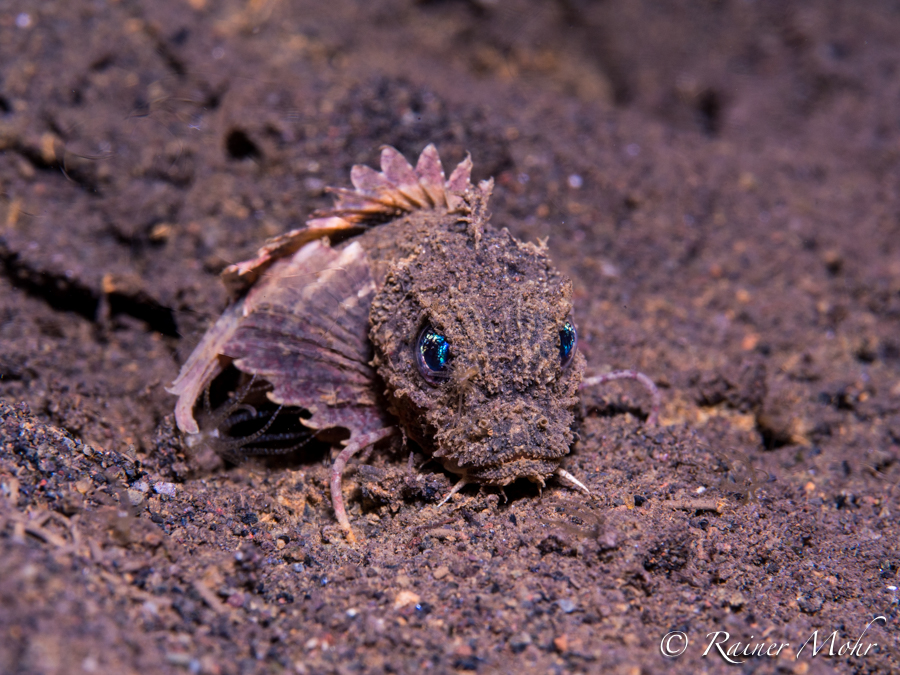
A juvenile scorpionfish on dark sandy ground.
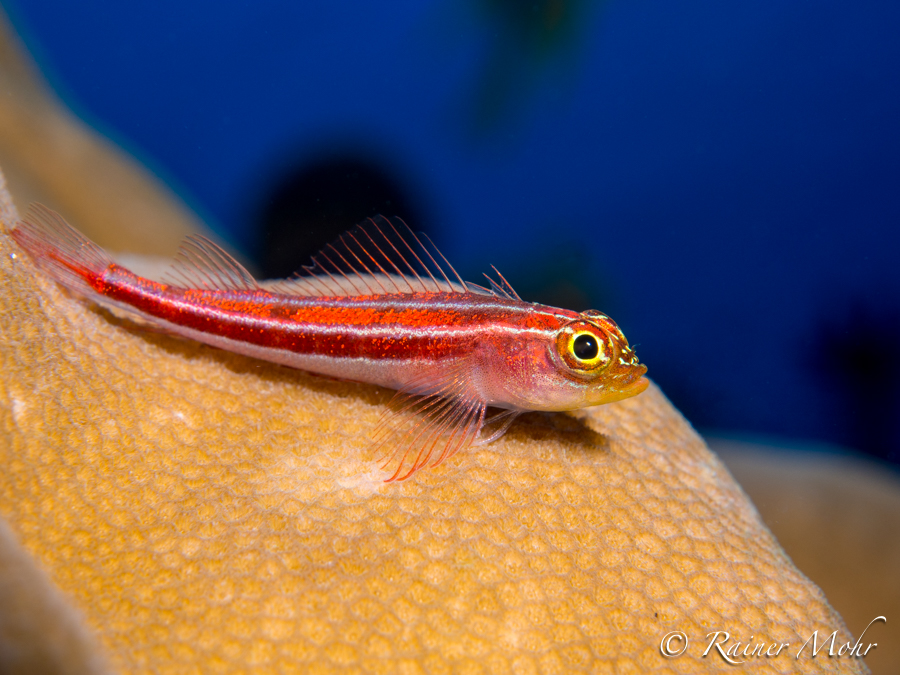
A small striped goby with characteristic red longitudinal stripes and golden-yellow eyes rests on a yellowish coral. The delicate goby displays its typical fine fins and striking striped pattern.
A four-eyed blenny peers curiously out of its hole in the reef. The small fish displays its characteristic orange-greenish colouration with striking yellow eyes and the typical elongated body shape of blennies.
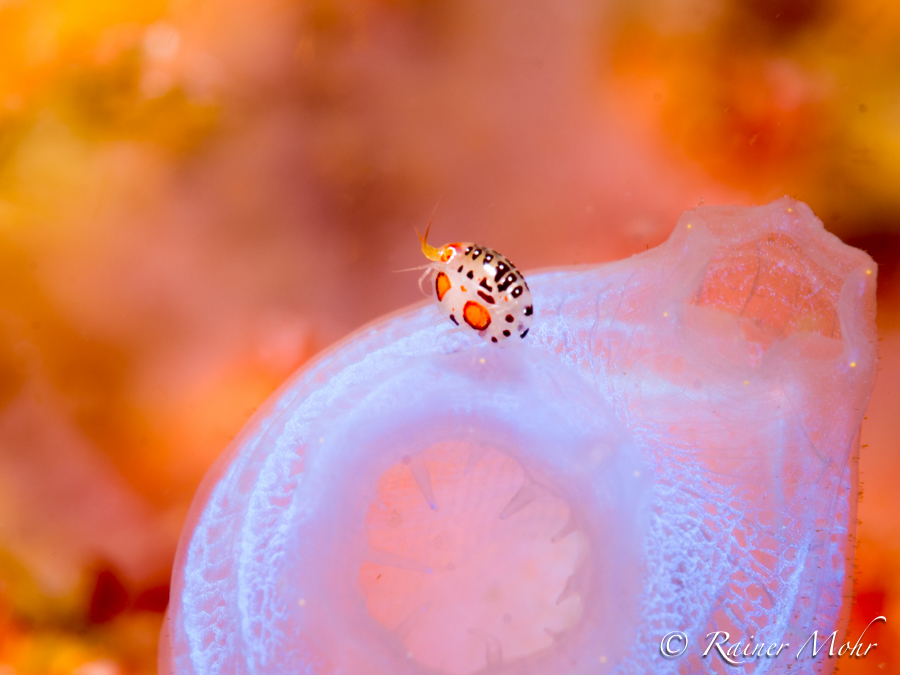
A small Ladybug amphipod with characteristic white base colouration and black and yellow-orange spots sits on a translucent sea squirt. The delicate structure of the host animal shows a glassy, almost transparent surface in pink-violet tones.
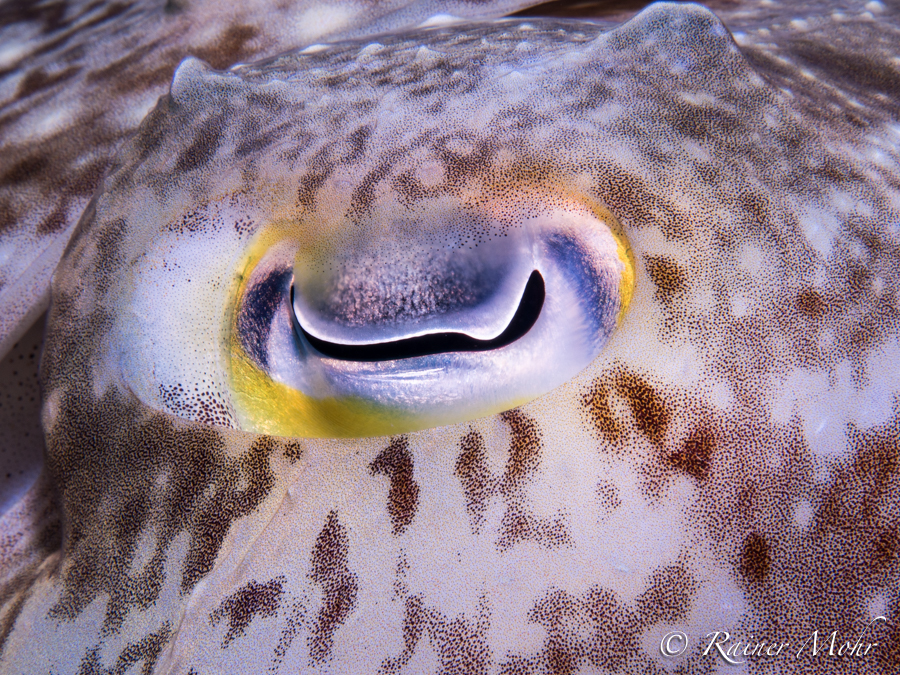
Close-up of the eye of a cuttlefish with its characteristic slit-shaped pupil. The detailed macro shot reveals the fine dotting and patterning of the skin and the distinctive pupil shape.
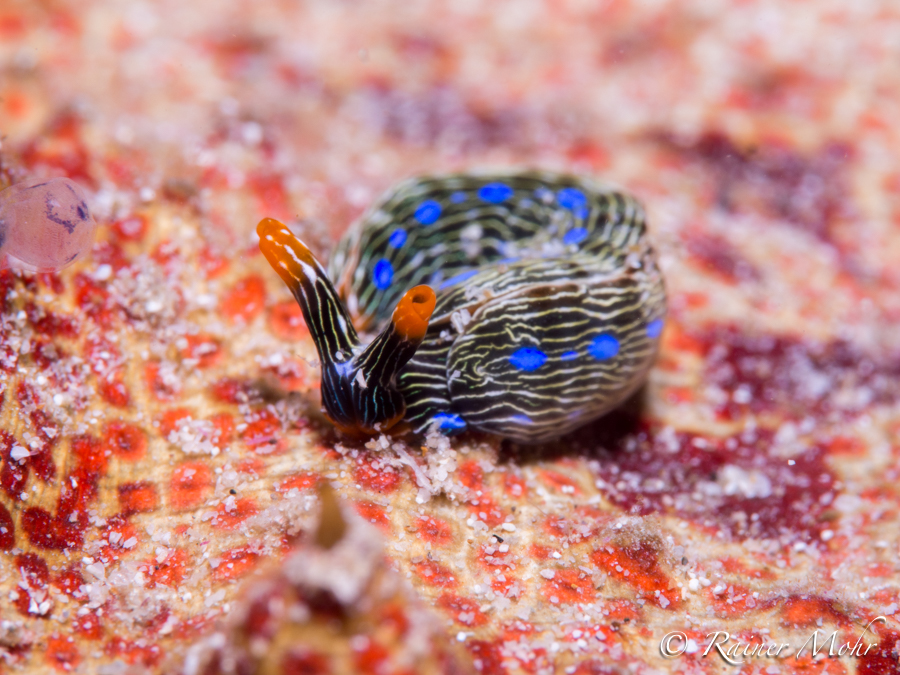
A beautiful sea slug with characteristic blue dots and white lines on a dark background crawls over a colourful coral or sponge. The orange-red rhinophores are clearly visible and the slug displays its typical striped pattern.
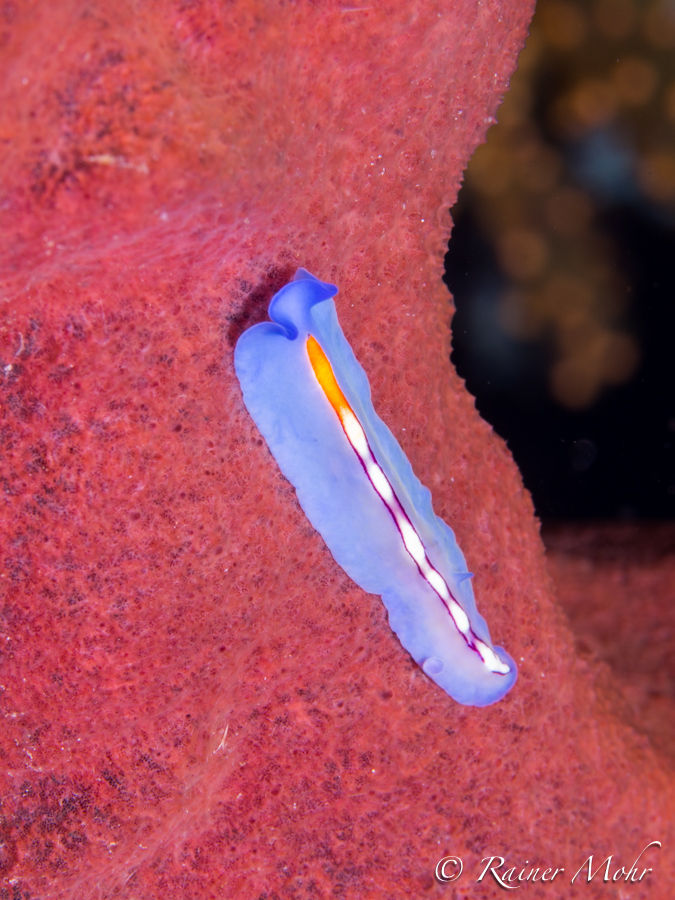
A delicate Pseudoceros flatworm with a bluish-white body and characteristic orange-red lines crawls over a vivid red sponge. The elegant marine flatworm displays its typical elongated form and coloured markings.
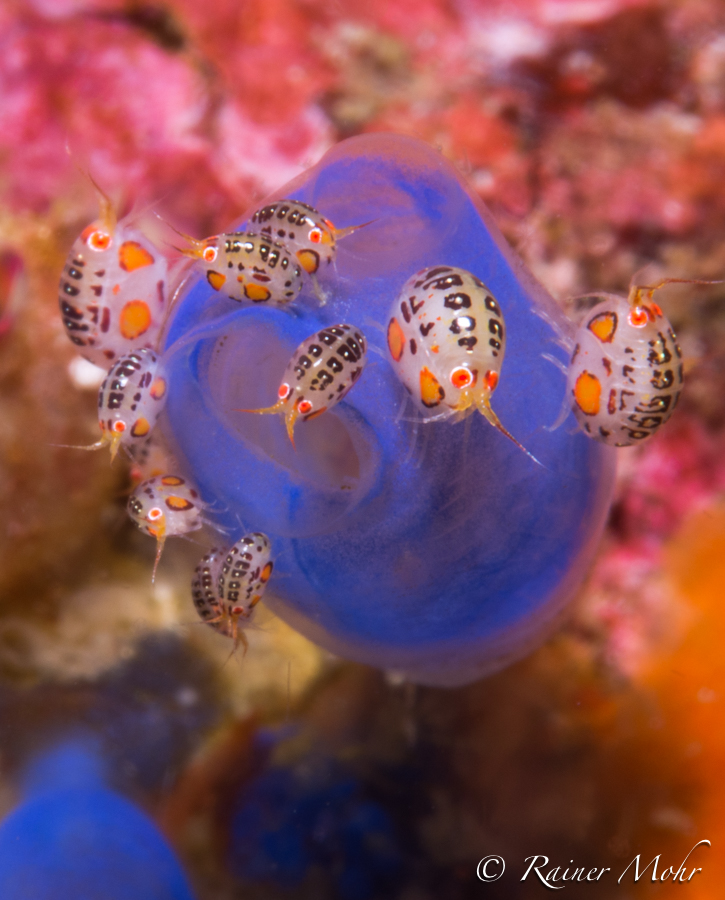
A blue sea squirt is inhabited by several small amphipods with characteristic black spots and orange patches. The tiny crustaceans with their red eyes use the interior of the sea squirt for protection, presenting a fascinating example of symbiosis in the coral reef.
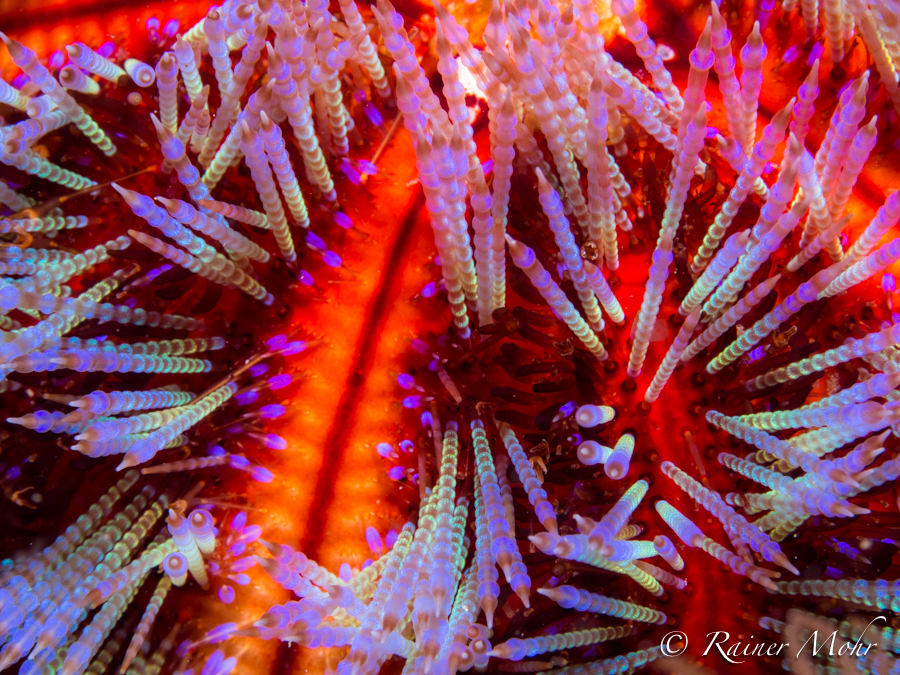
Macro shot of the surface of a sea urchin. The detailed spines in their green-blue-violet tones stand out strikingly from the red-orange skin.
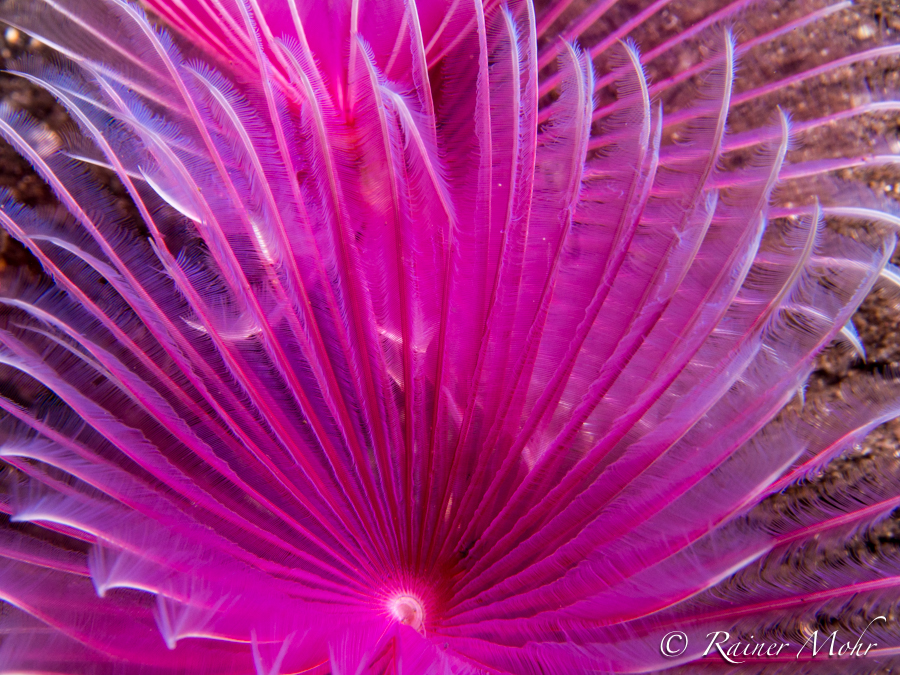
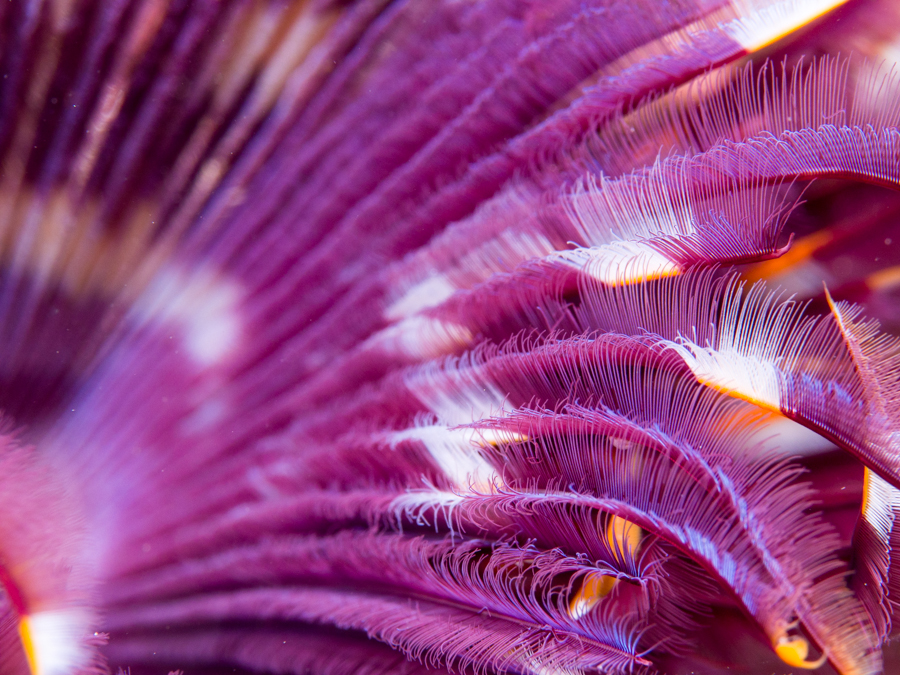
A magnificent tube worm species displays its fan-shaped spread tentacles in vivid pink and violet tones. The fine, feathery structures of the filter tentacles are visible in great detail and radiate from the central body.
A tiny fish hides among the arms of a feather star.
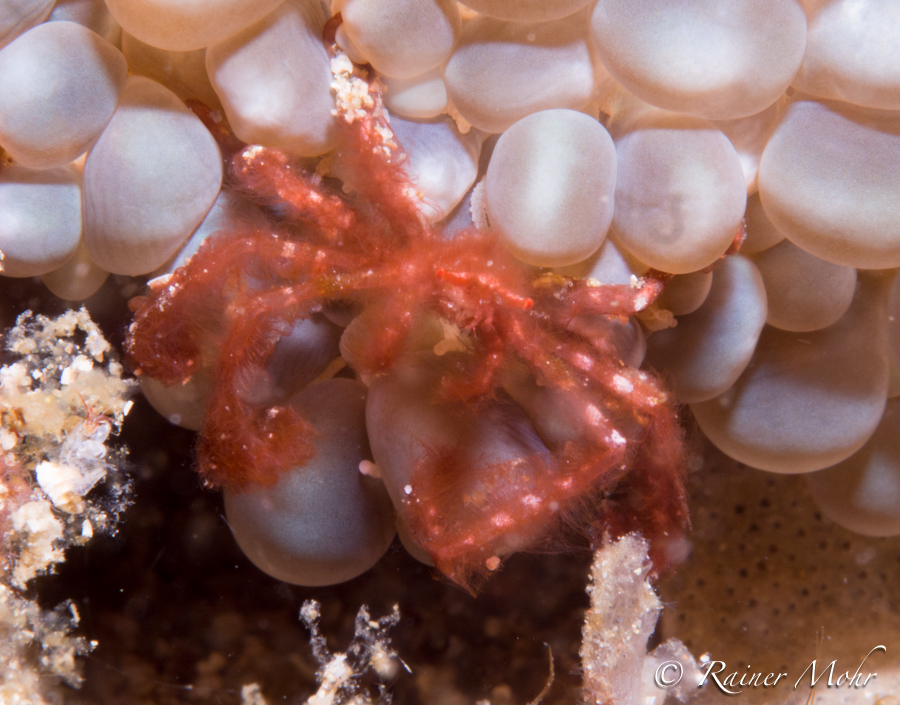
An orangutan crab sits on an anemone.
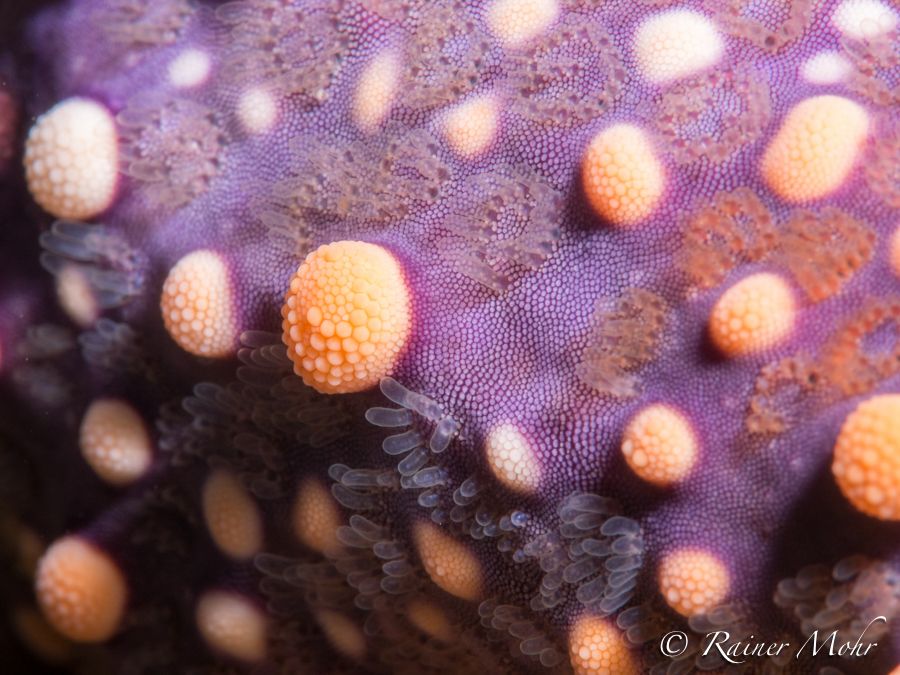
A fascinating macro shot of an arm of a sea star. The warty, yellow protrusions stand out from the otherwise violet skin.
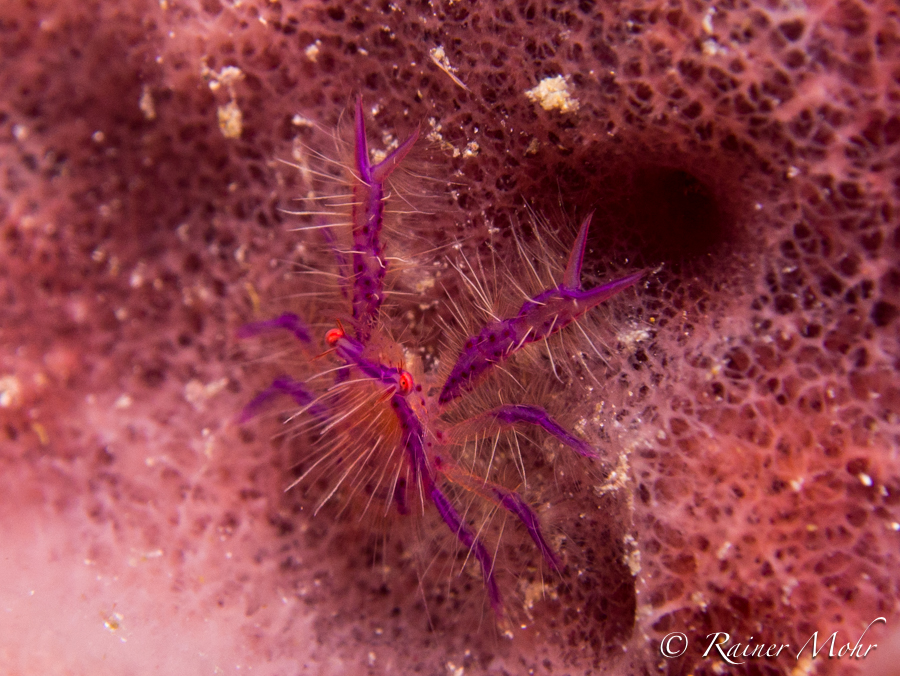
The image shows a hairy squat lobster, scientifically known as Lauriea siagiani. They are characterised by their vivid pink or violet colour and a dense covering of white hairs. They are often found on giant barrel sponges, where they filter nutrients from the water.
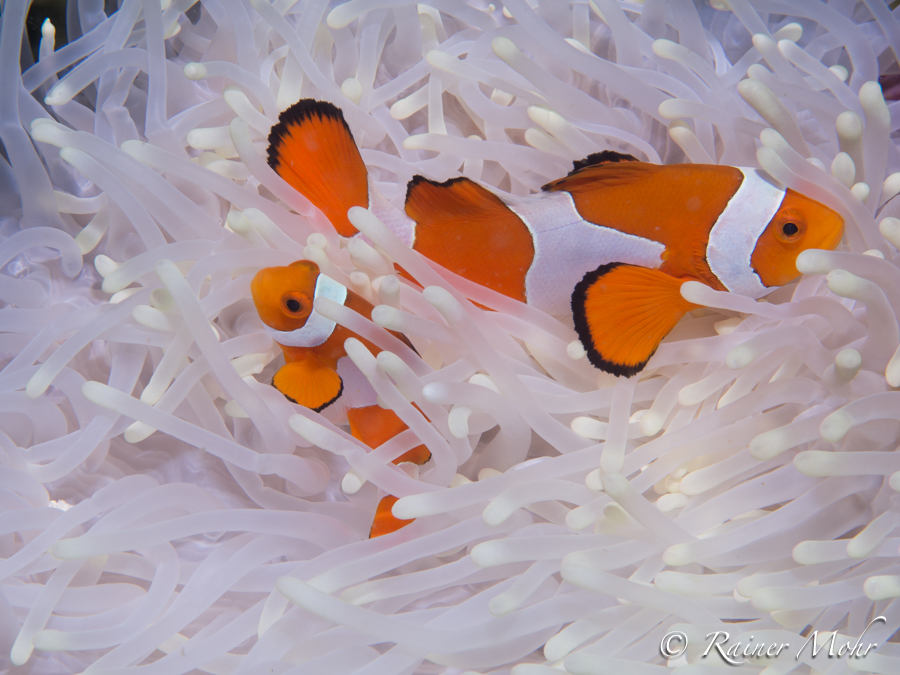
Two clownfish live in symbiotic community in a white sea anemone. The characteristically orange-and-white striped anemonefish are perfectly visible among the protective tentacles of their host anemone.
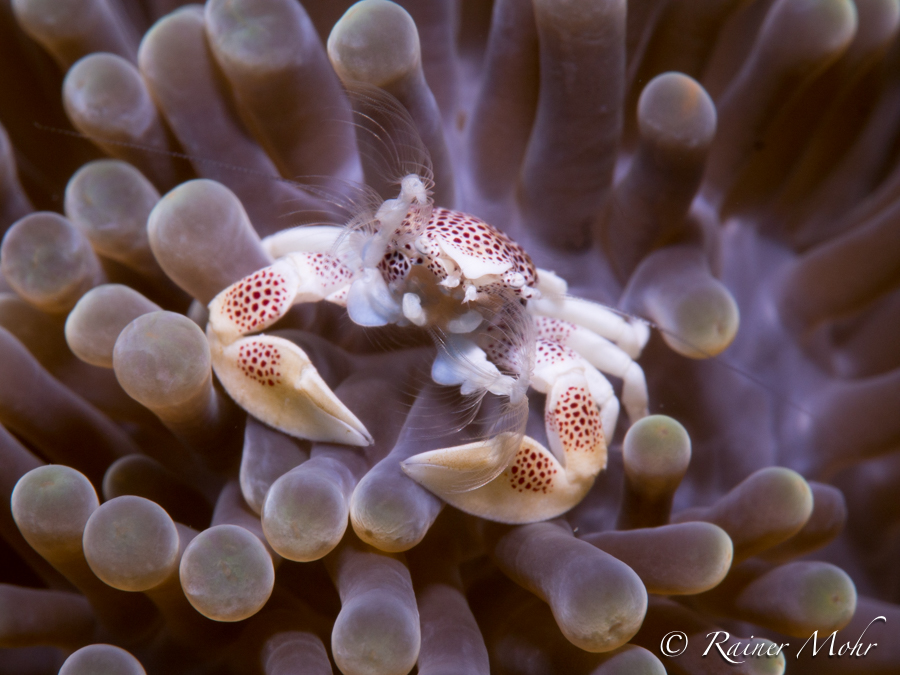
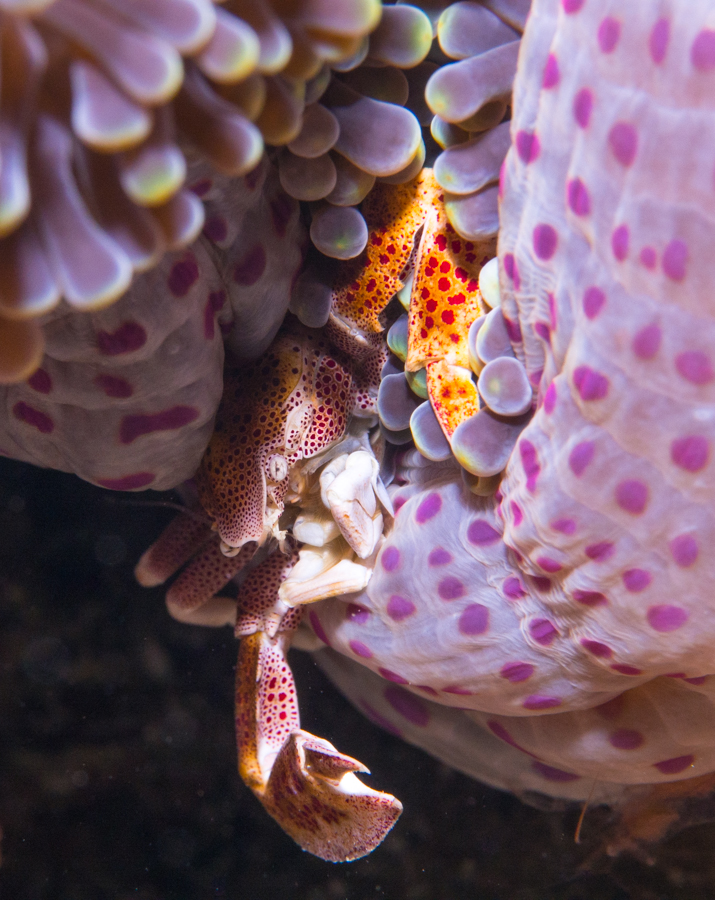
A porcelain crab with characteristic red spots on a white body lives in symbiosis among the tentacles of a sea anemone. The small crab uses the protective tentacles as its habitat and filters plankton from the water.
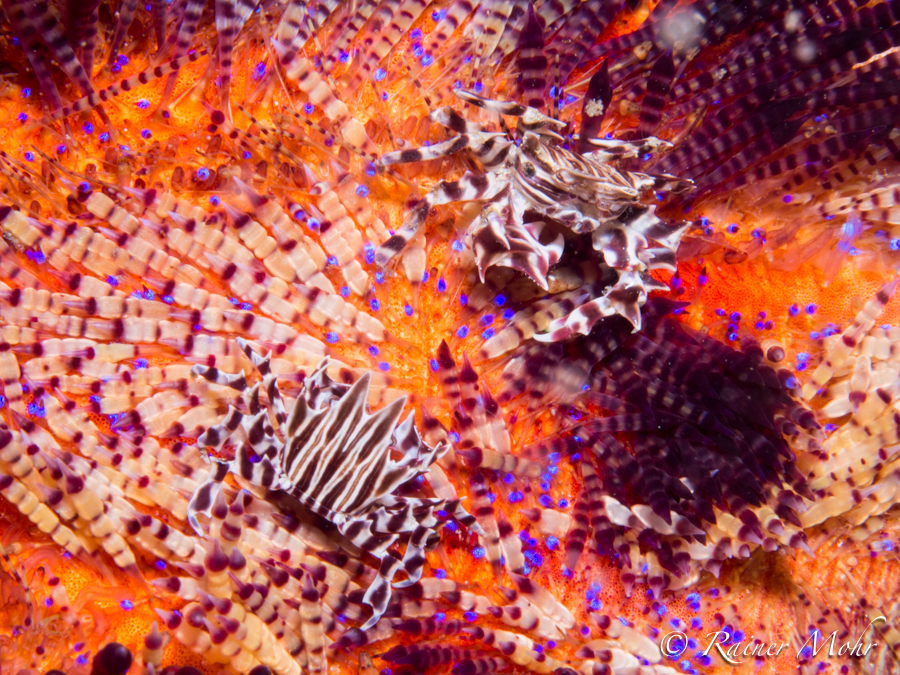
Two zebra crabs ride on a fire urchin. The red skin with the striking, vivid and highly varied spines of the sea urchin form the habitat of this crab species.
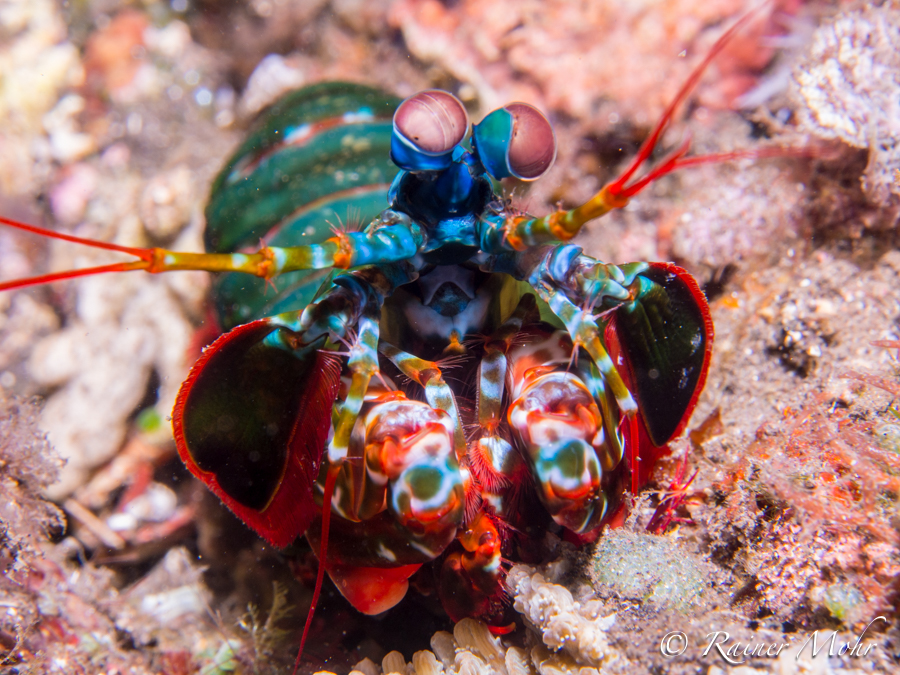
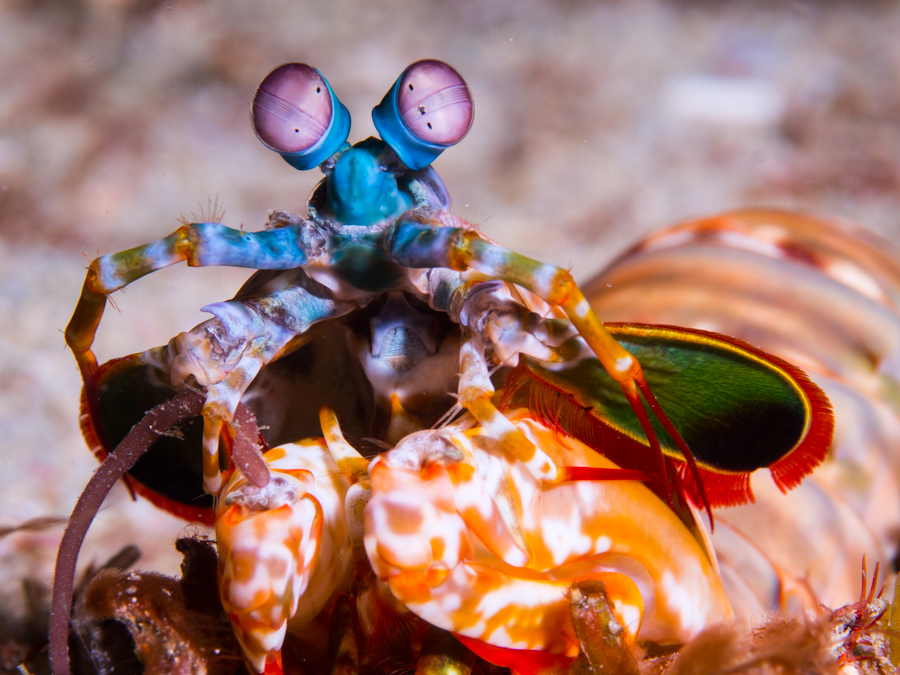
A magnificent mantis shrimp with its characteristic large compound eyes and vivid raptorial claws is visible in its hiding place among corals. The vivid colours of green, blue, red and orange demonstrate the impressive colour range of these highly evolved crustaceans.
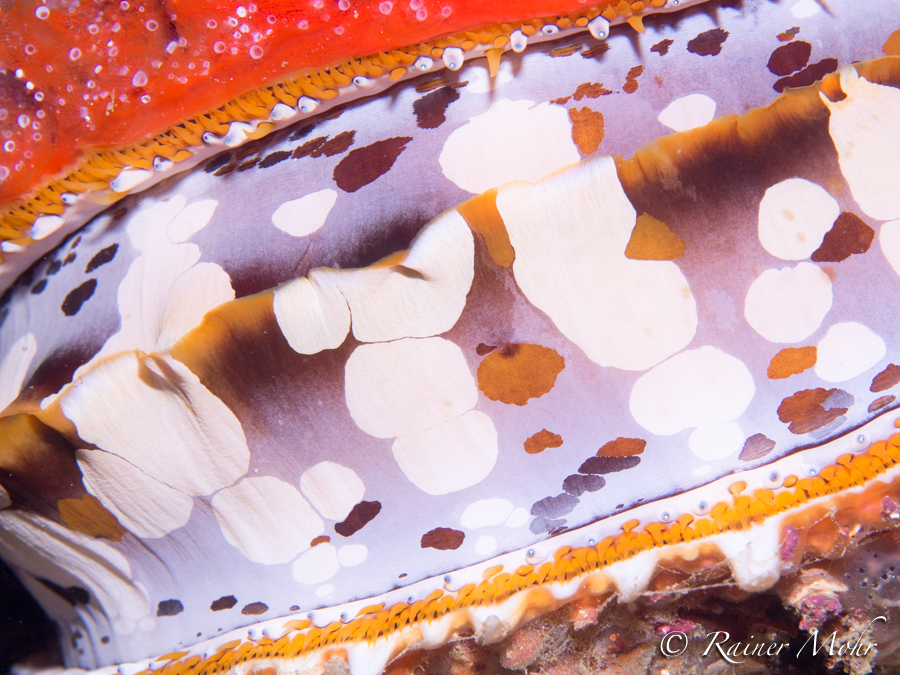
The image shows the open mantle cavity of a clam with its characteristic vivid colouration in orange, violet and white tones. The serrated mantle edges and typical spot patterns are clearly visible as the clam has opened, presumably to filter plankton.
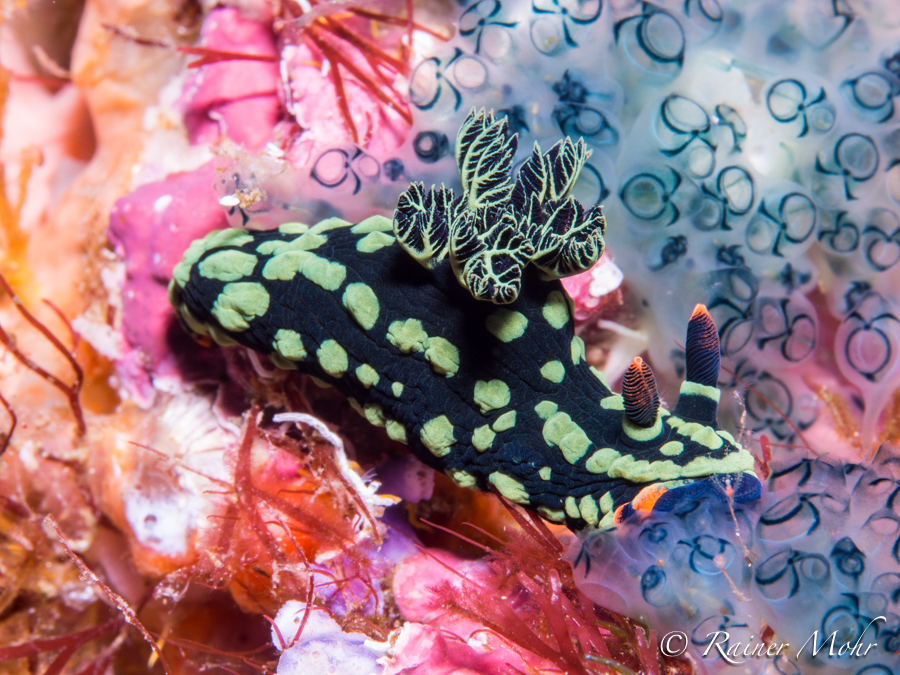
A beautiful nudibranch with a black body and green spots, and characteristic gills on its back, sits on colourful soft corals. The vivid colours of the pink and orange corals form a striking contrast to the elegant pattern of the sea slug.
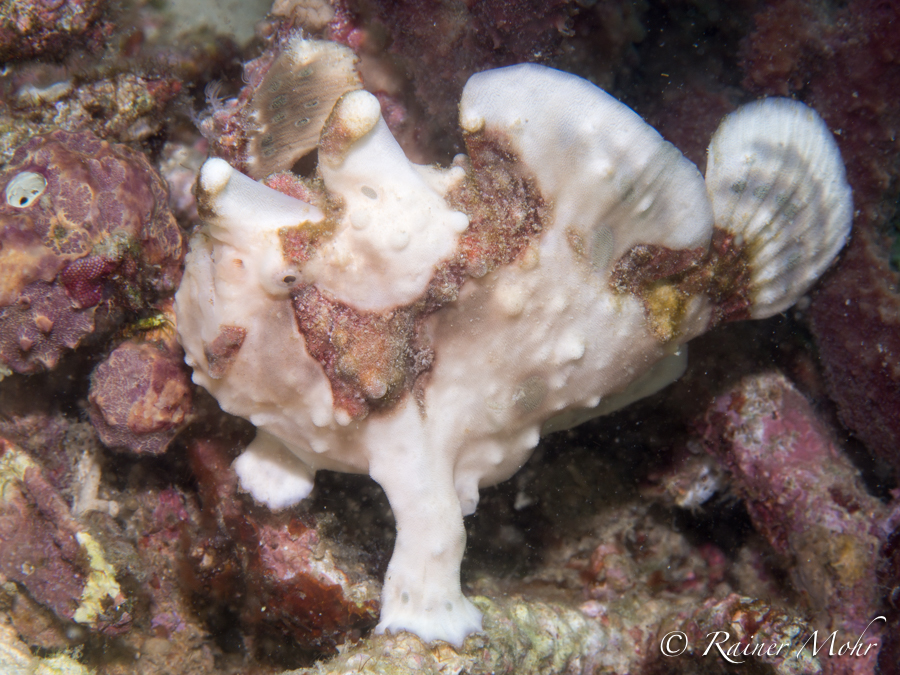
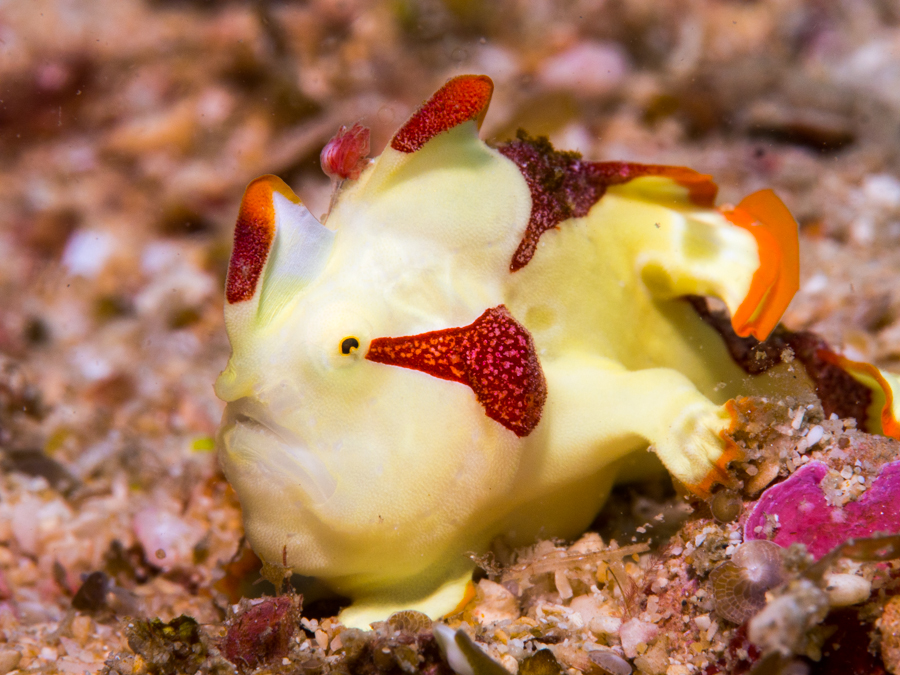
A whitish warty frogfish (Antennarius maculatus) rests on the encrusted reef floor. These fish have warty skin with variable colouration to perfectly adapt to their surroundings, such as sponges or corals, and wait for passing prey.
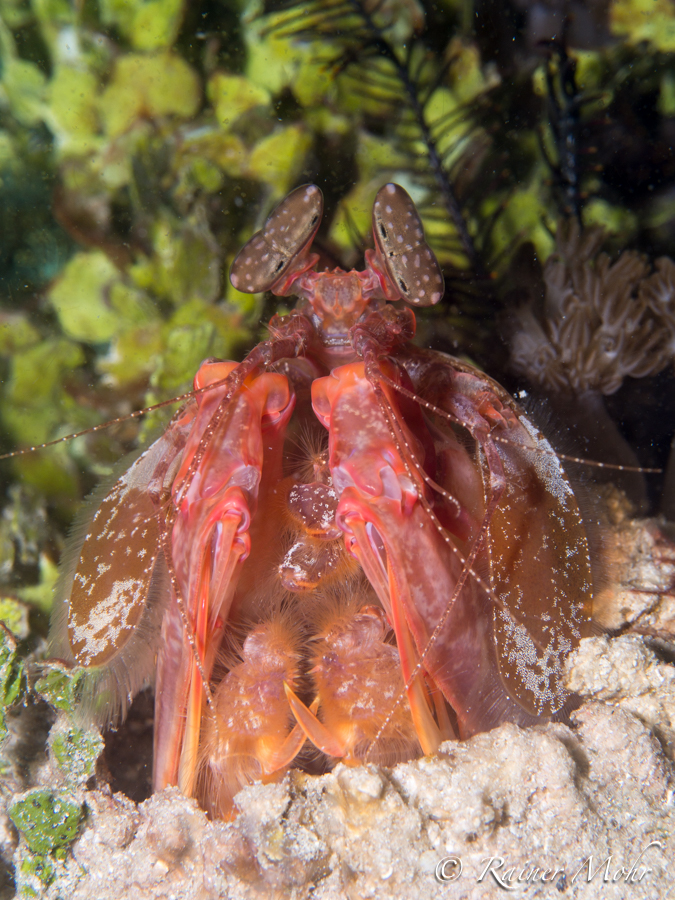
A spearing mantis shrimp sits in its sandy burrow, waiting in ambush for unwary passing prey. The striking compound eyes are clearly visible.
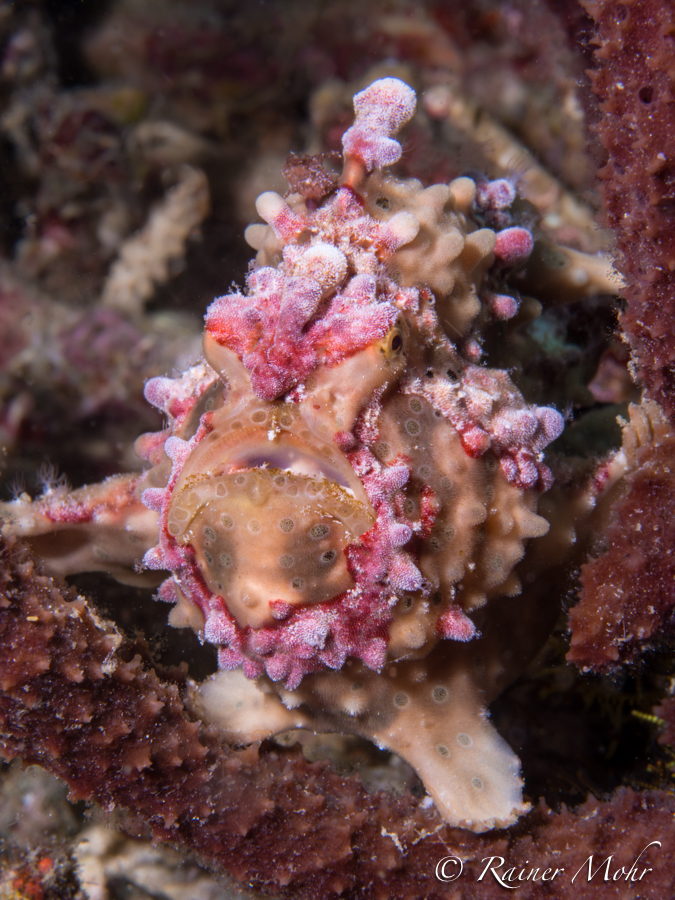
A colourful warty frogfish sits perfectly camouflaged on algae-covered reef substrate. The small anglerfish displays its characteristic warty skin protrusions in pink-violet tones, blending masterfully with its surroundings.
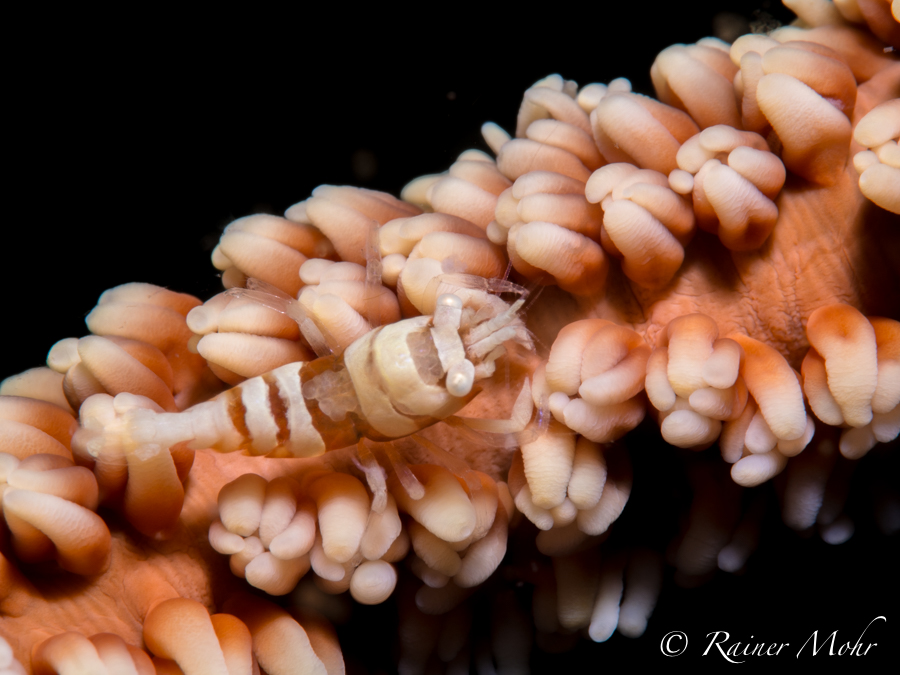
The image shows a whip coral shrimp (Pontonides ankeri or similar species) on a whip coral. It is a small shrimp that lives in a commensal relationship with whip corals.
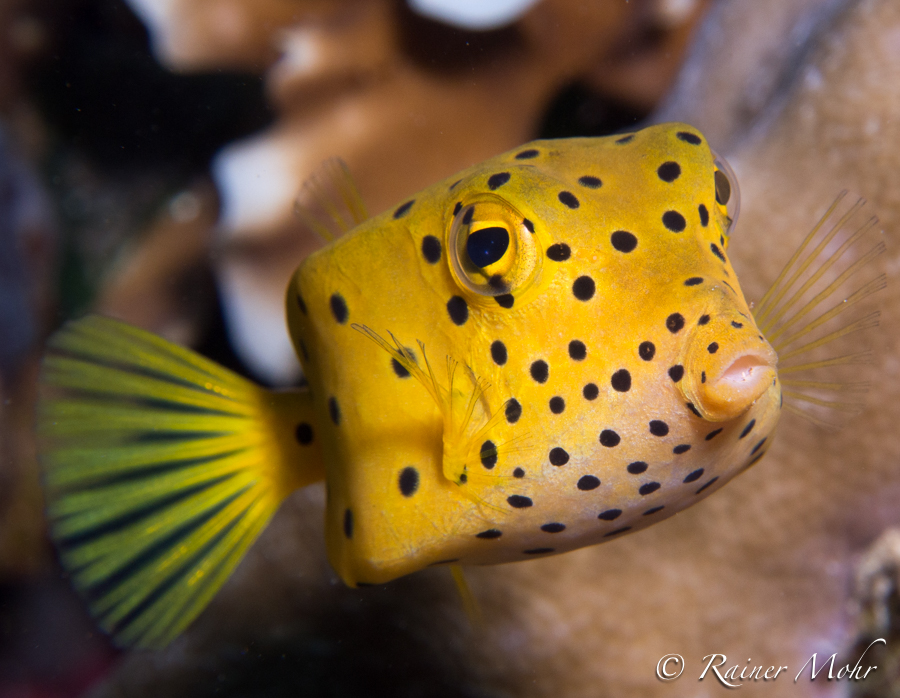
A vivid yellow boxfish with characteristic black spots hovers in front of a coral backdrop. The small fish clearly displays its typical box-shaped appearance with large eyes and forward-facing mouth.
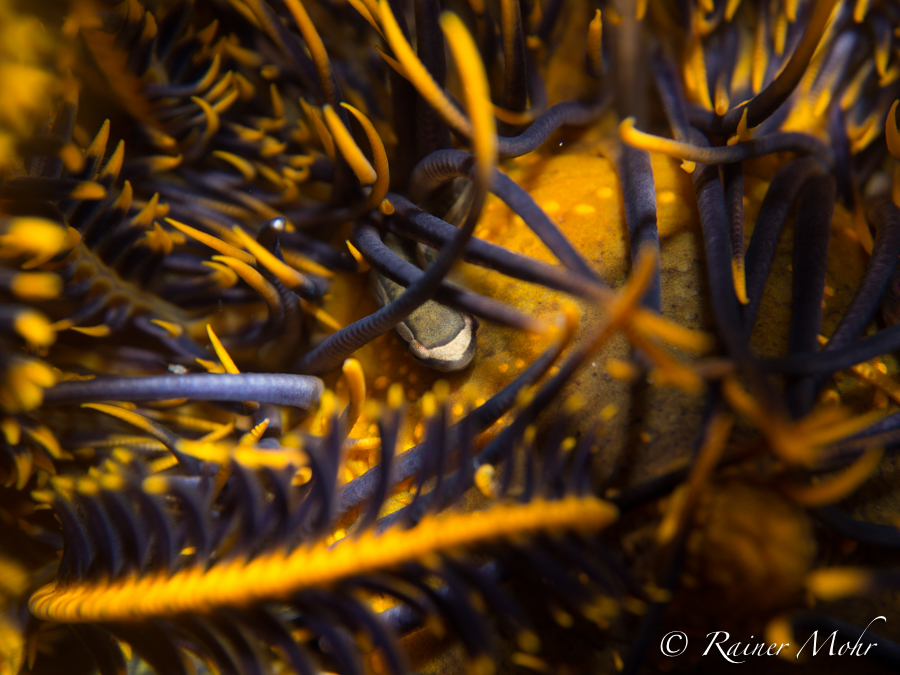
The macro photo shows the delicate, feathery arms of a feather star in warm orange-golden tones. The fine pinnulae (lateral branches) are perfectly structured, showing the characteristic feathered anatomy of these echinoderms. Due to their structure they provide an ideal habitat for various symbionts, including the shrimp visible here.
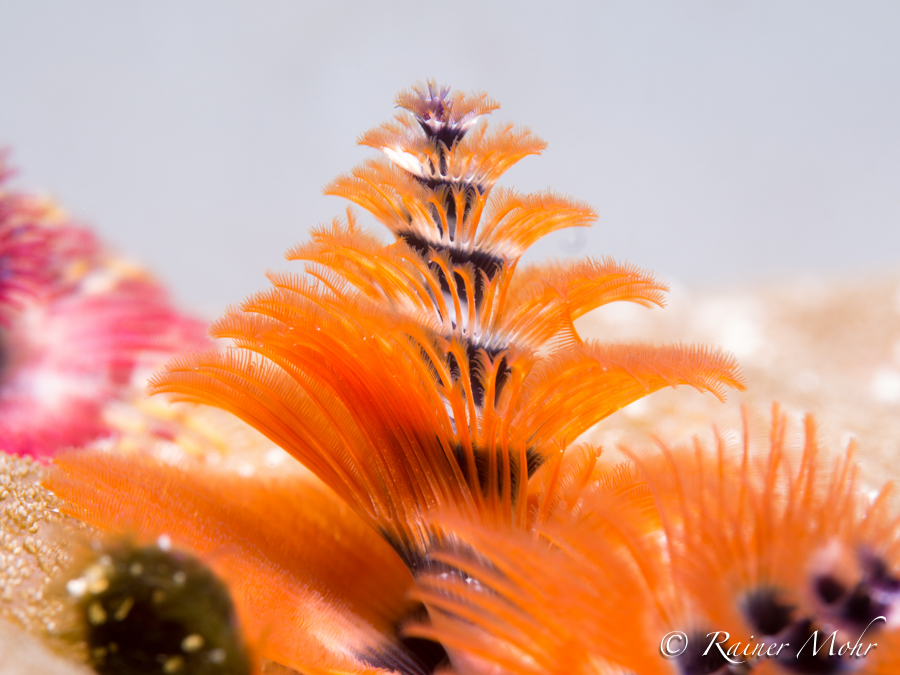
A magnificent colony of orange tube worms with their fully extended, feathered tentacle crowns rising like small Christmas trees from their tubes. The fine, feathery structures serve to filter plankton from the water.
A beautiful mandarinfish displays its characteristic vivid pattern with blue lines and orange rings on a brownish background. The small reef dweller sits among corals and shows its typical shy behaviour in its hiding place.
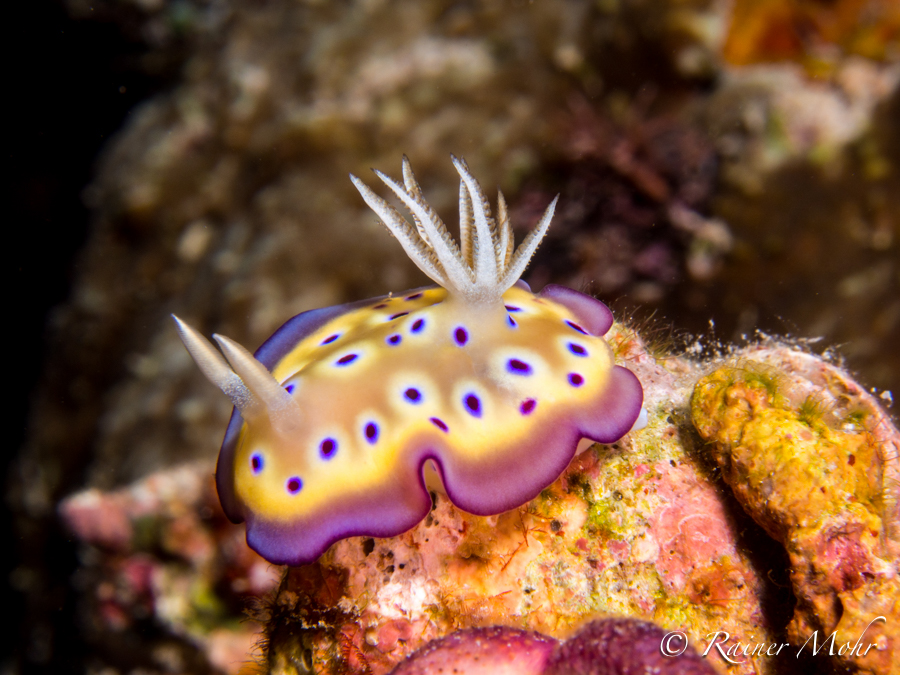
A colourful Chromodoris nudibranch with vivid yellow-violet colouration and characteristic blue spots sits on encrusted coral substrate. The white gill tufts and rhinophores are clearly visible, showing the typical appearance of this tropical sea slug.
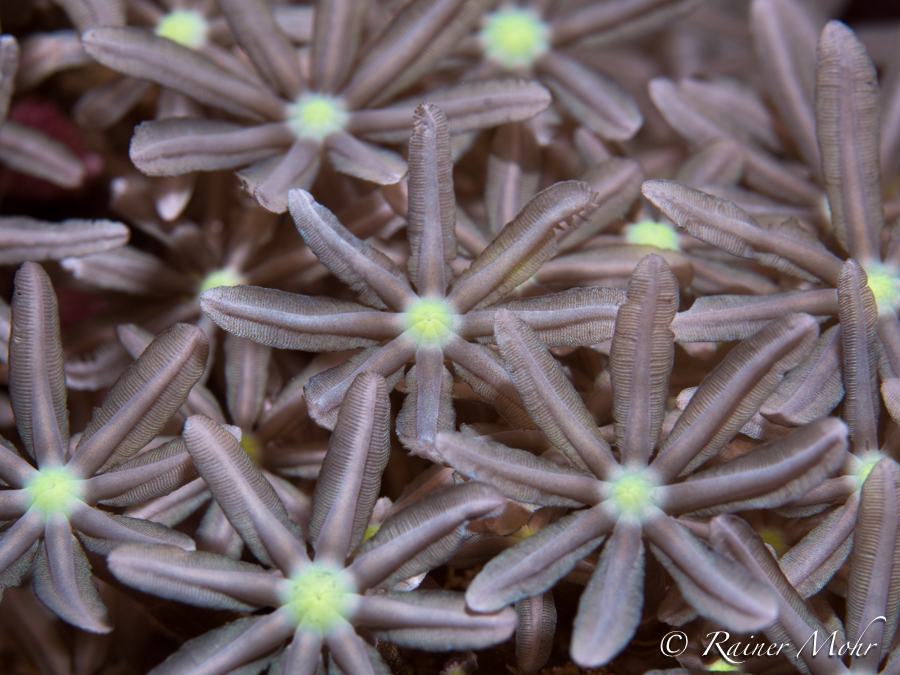
A detail shot of soft corals shows several star-shaped polyps with brightly glowing yellow-green centres. The individual tentacles are clearly visible, forming characteristic eight-armed structures typical of soft corals.
An orange-and-white striped wire coral crab hides among the tentacles of a whip coral. The symbiotic relationship shows the small crab seeking shelter in the coral while simultaneously feeding on plankton.
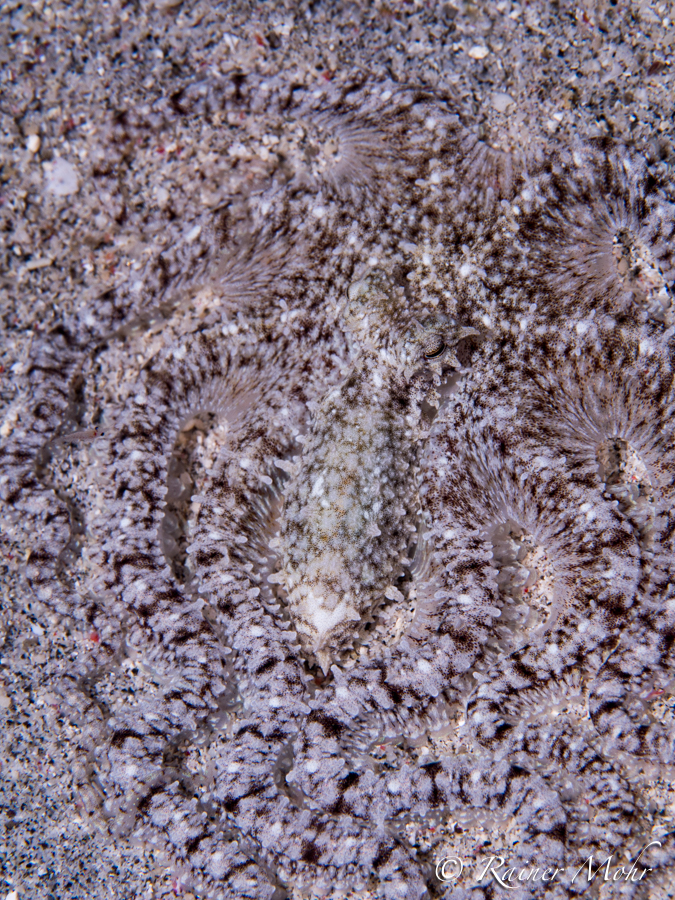
A masterfully camouflaged octopus lies motionlessly on the sandy seafloor. The body shape and perfect adaptation to the sediment colour make the animal nearly invisible β€” an impressive example of camouflage in the underwater world.
A small nudibranch crawls over a reddish-brown coral surface. The delicate nudibranch displays a translucent body with characteristic undulating body margins and feathered gill tufts at the rear end.
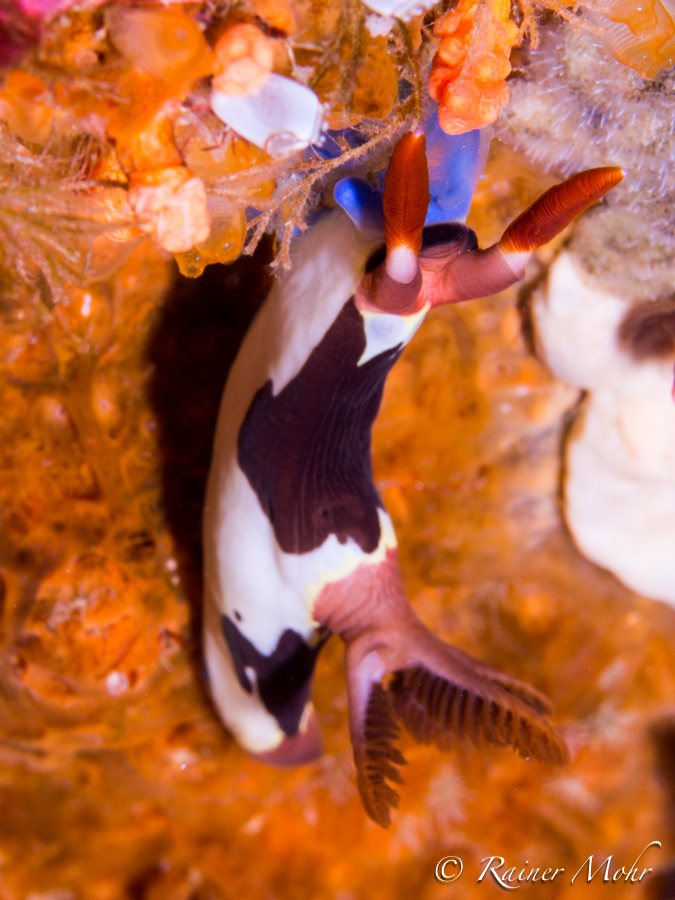
The image shows a Nembrotha chamberlaini, a species of colourful sea slug from the order Nudibranchia. These sea slugs have a cream-coloured body with prominent brown spots and are distinguished by striking, vivid red tentacles (rhinophores) and gills.
Two pink anemonefish hide among the white tentacles of their host anemone. The fish display the typical symbiosis with the anemone, which offers them protection while they in turn clean it of parasites.
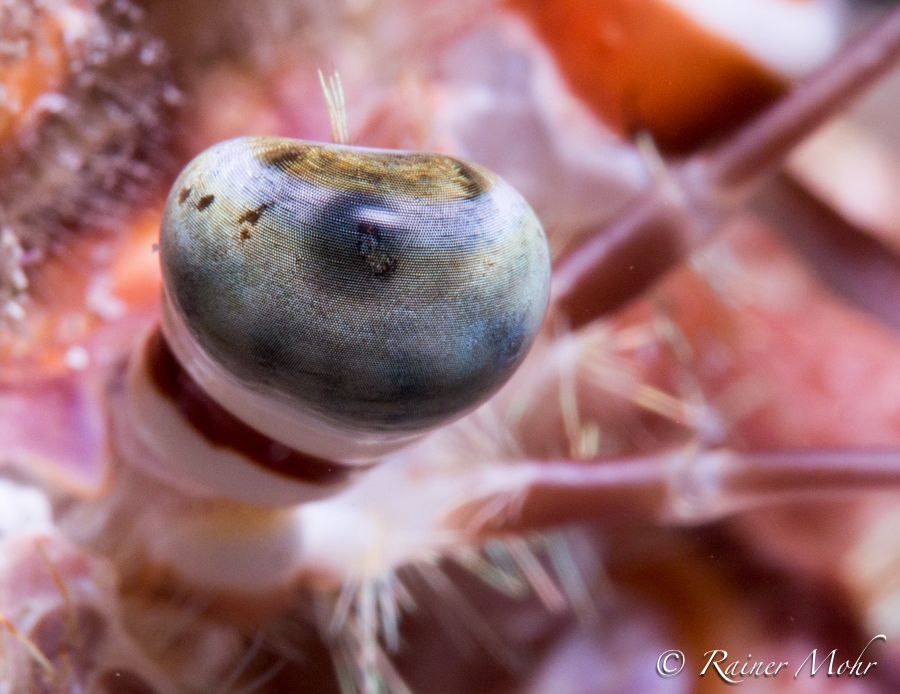
Super-macro shot of the compound eye of a crustacean.
A polychaete worm displays its magnificent, feathery gills in full extension. The fan-shaped tentacles shimmer in pink, white and brownish tones and serve both for respiration and food capture.
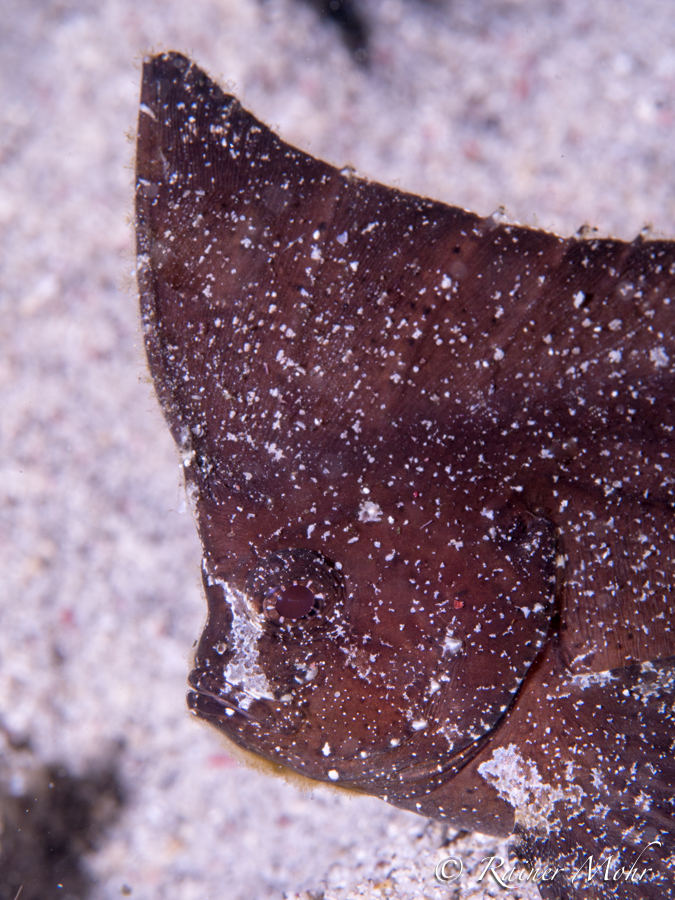
A dark cockatoo waspfish (Ablabys taenianotus) lies perfectly camouflaged on the sandy seafloor. The brown colouration with characteristic white dots and patches provides excellent camouflage in the sand.
A vivid orange nudibranch with characteristic bluish-white cerata (dorsal appendages) crawls over a pale coral and deposits its egg mass on the coral. The elegant nudibranch displays its typical finger-like projections that serve both for respiration and digestion.
A small reddish shrimp sits on an orange sponge or coral. The shrimp displays the characteristic long antennae and transparent body parts typical of many cleaner shrimps.
The image shows Costasiella kuroshimae, a tiny sea slug species also known as the "leaf sheep". They grow to only about one centimetre and have structures called cerata on their backs that give them a leaf-like appearance.
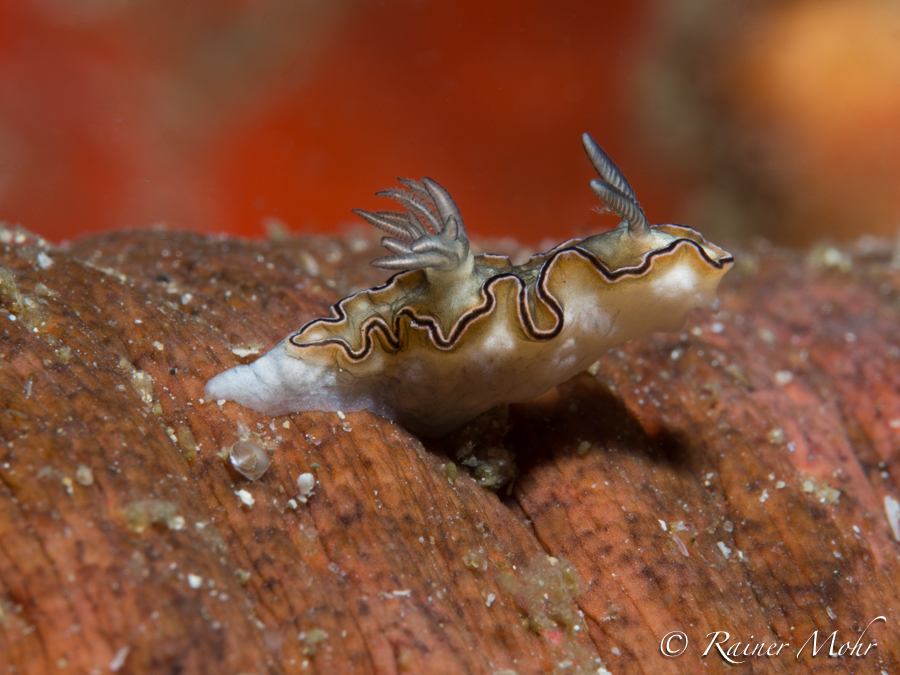
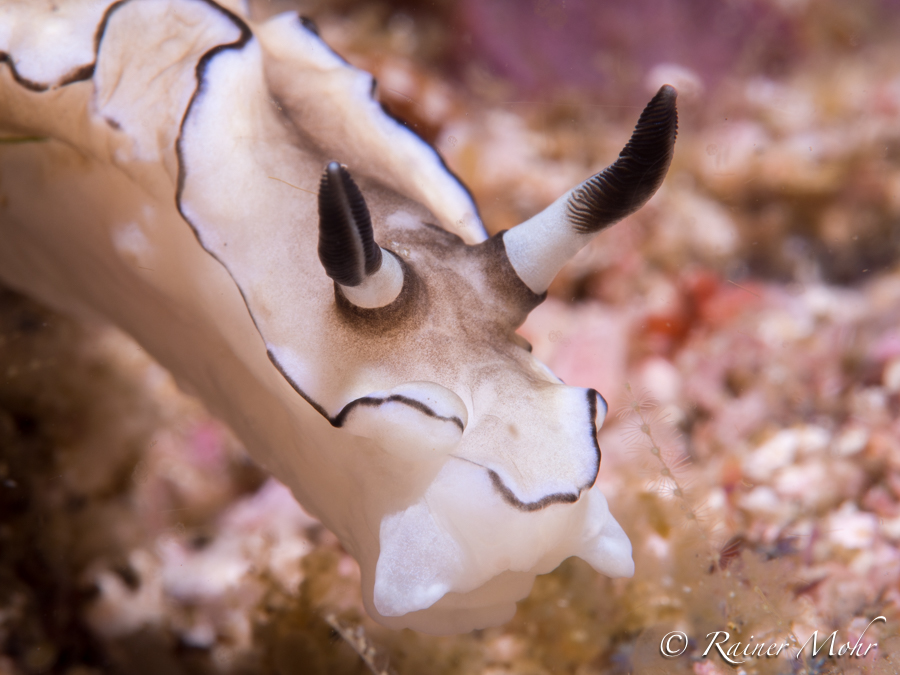
An elegant  nudibranch glides across the coral reef, displaying its characteristic dark rhinophores and typical cream-white colouration with striking black borders. The nudibranch moves gracefully over the colourful reef sand.
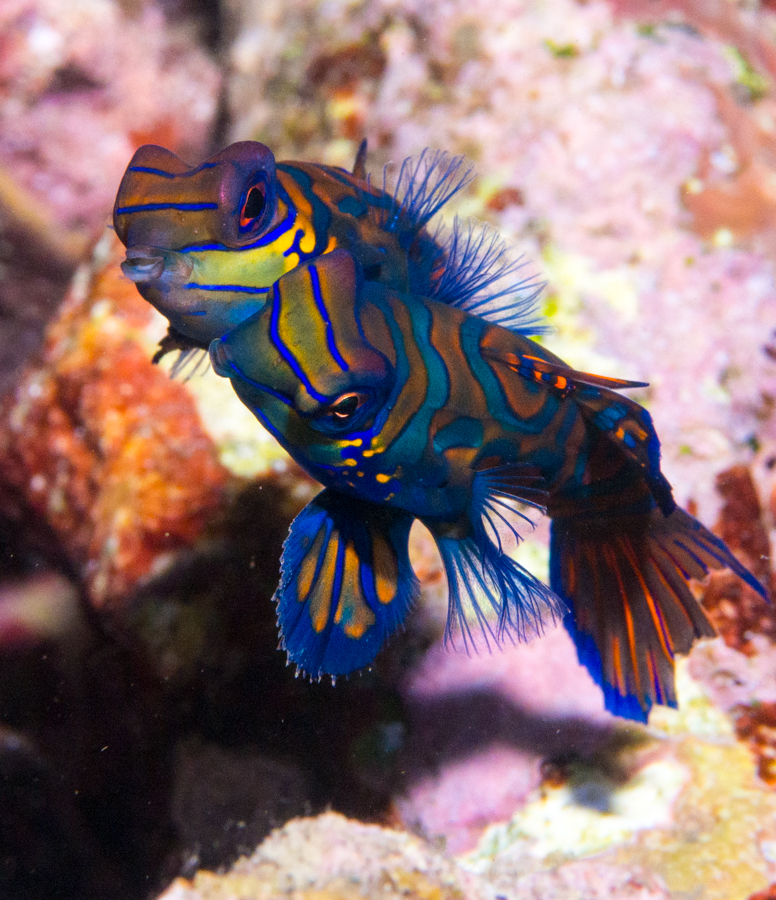
Two magnificently coloured mandarinfish in vivid blue, green and orange tones hover close together above the reef floor. The small fish display their characteristic psychedelic colour pattern with undulating lines and are likely engaged in courtship or mating behaviour.
A dwarf seahorse hides perfectly camouflaged among the pink polyps of a soft coral. The tiny seahorse shows a remarkable adaptation to its surroundings and demonstrates its ability to blend into the coral structure.
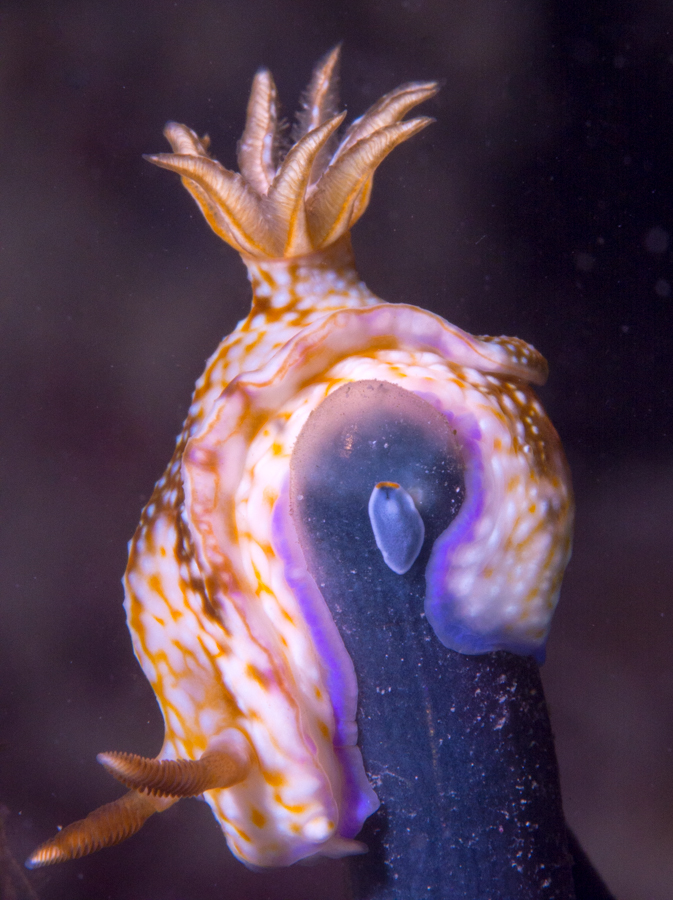
A nudibranch displays its characteristic dorsal gills and colourful body with orange-white patterns and violet-blue accents. Between the curved body of the sea slug, a tiny flatworm sits on the blue sponge.
A colourful mantis shrimp with characteristic violet-blue stalked eyes and a vivid body in bright orange, green and red tones. The animal displays its powerful raptorial claws and sits presumably in front of its hiding place on the seafloor.
A young warty frogfish (Antennarius maculatus), often called the clown frogfish due to its vivid colouration. These fish are specialised ambush predators that barely move, waiting for prey to come within range.
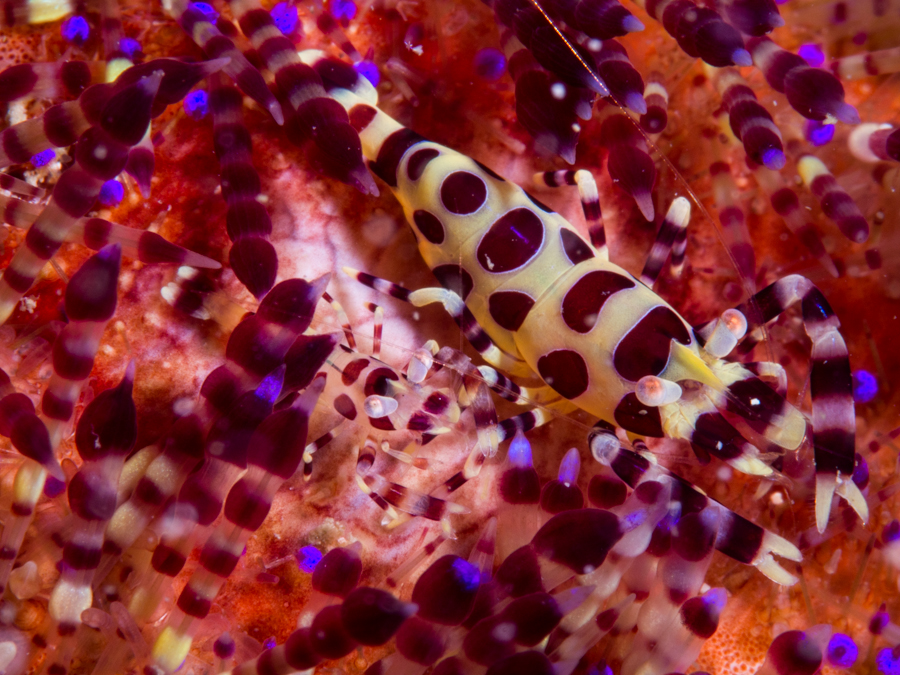
A perfectly camouflaged Coleman shrimp sits on a fire urchin.
Blue-ringed octopus in threat display, showing its vivid blue rings as a warning signal. Raised up on coral rubble. Macro shot.
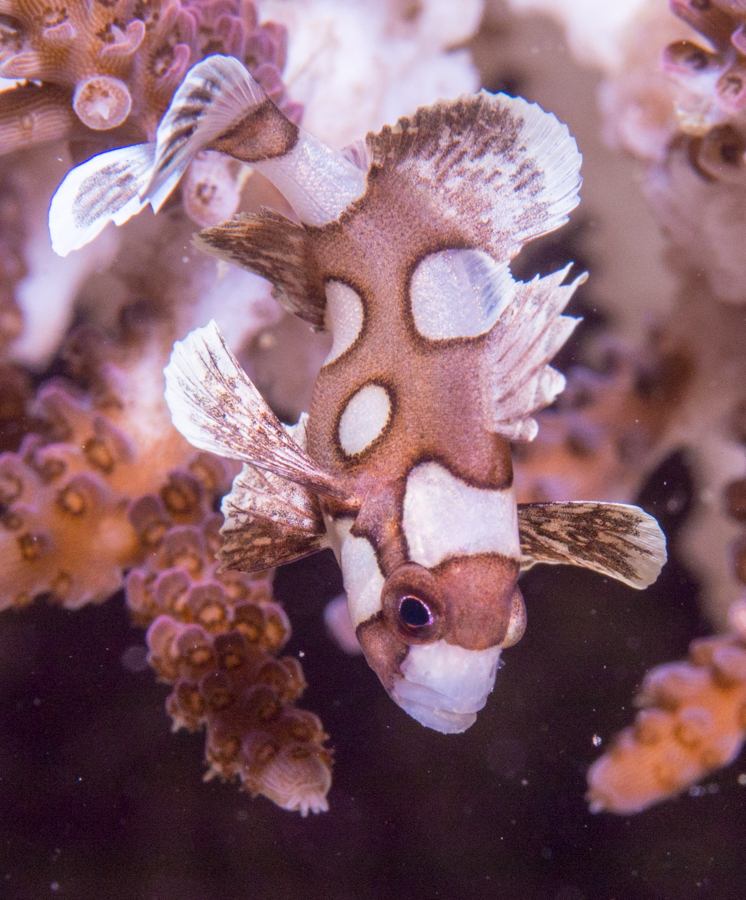
A juvenile harlequin sweetlips (Plectorhinchus chaetodonoides) displays its characteristic brown-and-white colouration. As a juvenile it has a brown-and-white pattern that changes dramatically as it grows into a white body with black spots.
The image shows a nudibranch from the family Nembrothidae, very likely Nembrotha chamberlaini, with its vivid red rhinophores.
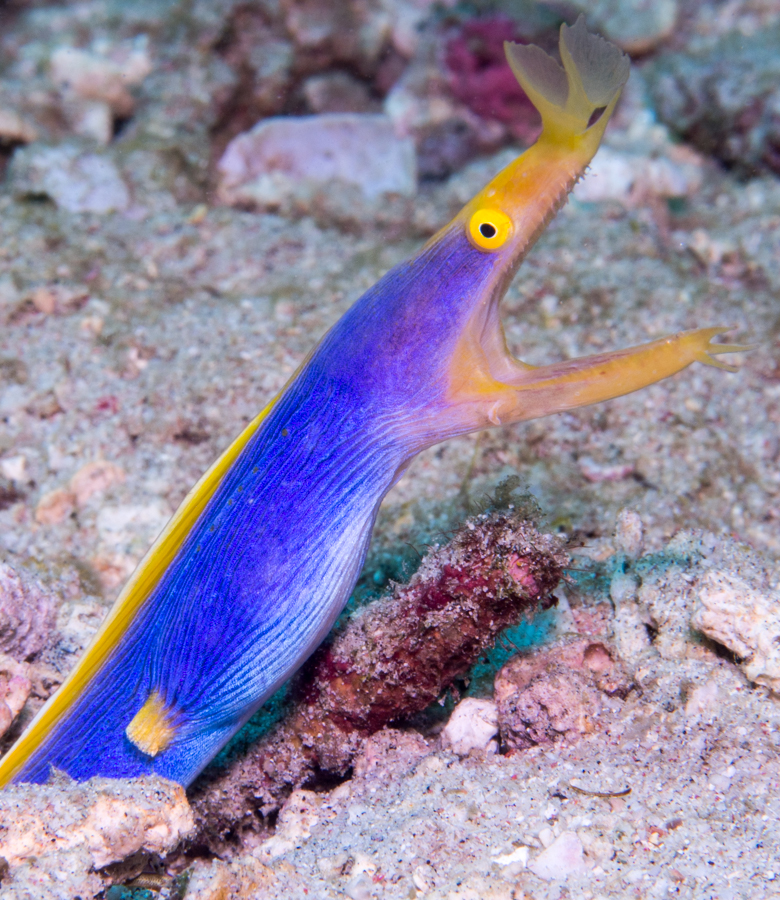
A ghost moray displays its characteristic behaviour with its mouth wide open in a threat posture. The vivid blue body colouration with yellow accents and the typical upright body posture are clearly visible as the moray projects from its hiding place.
A vivid orange-and-white false clownfish rests among the tentacles of its host anemone. The characteristic symbiosis shows the fish safely protected among the normally stinging tentacles, which cannot harm it thanks to a special mucus coating.
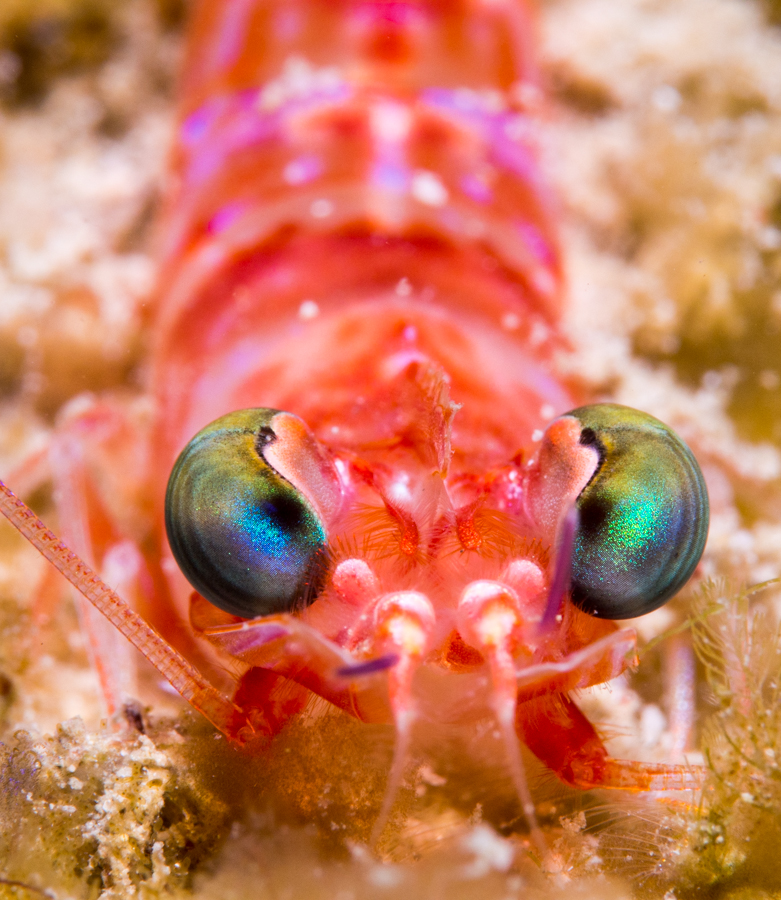
A colourful shrimp displays its characteristic iridescent compound eyes and vivid red and pink body colouration. The animal sits in its sand burrow and looks directly into the camera, with the metallic-shimmering eyes particularly prominent.
A colourful nudibranch with characteristic orange-red gills and violet-turquoise body colouration crawls over sandy seafloor. The feathered gill structures are clearly visible, showing the typical morphology of this sea slug species.
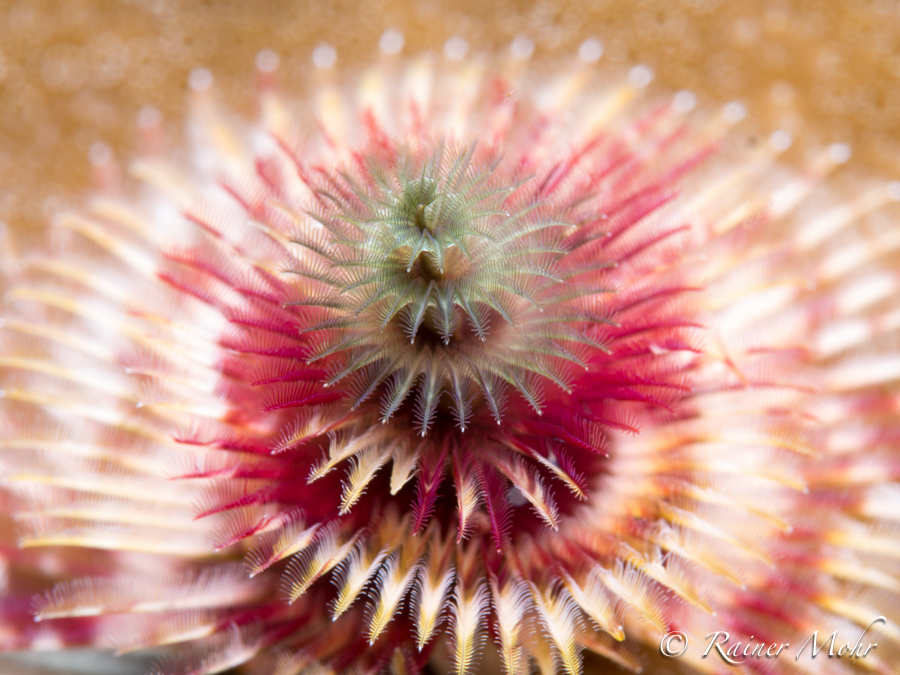
An impressive macro shot shows the tentacles of a calcareous tube worm (Serpulidae). The fine, feathery structures serve to filter food particles from the water. The worms live permanently fixed in calcareous tubes that they produce themselves.
A porcelain crab hides among the tentacles of a large anemone. The delicate, spotted tentacles of the anemone envelop the small crab, which has entered a perfect symbiosis with its host, gaining protection from predators.
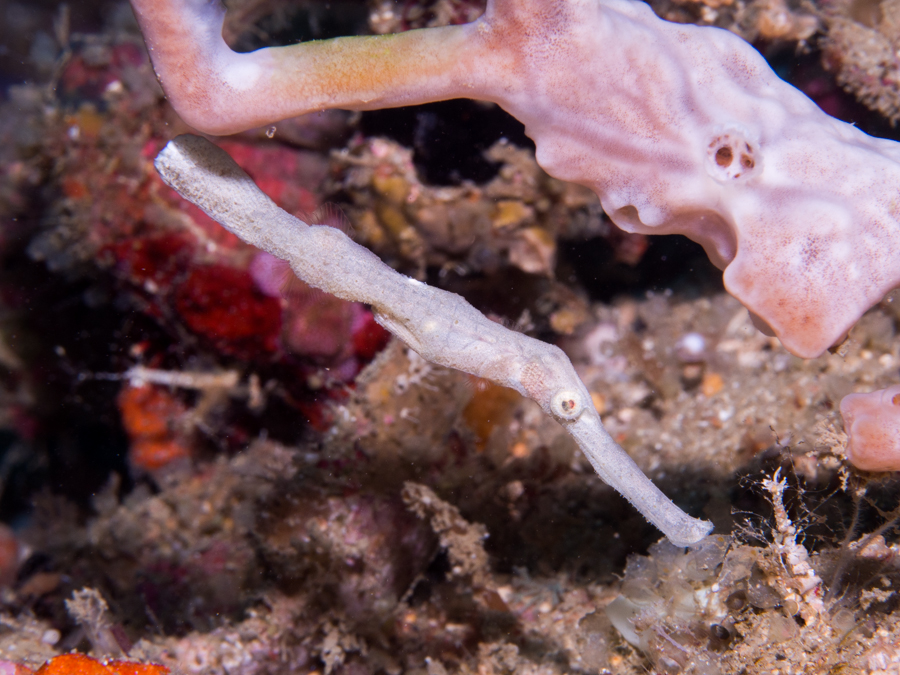
A robust ghost pipefish (Solenostomus cyanopterus) β€” a fish that is nearly indistinguishable from its surroundings thanks to its extraordinary camouflage. It mimics drifting debris, seagrass or aquatic plants to conceal itself from predators.
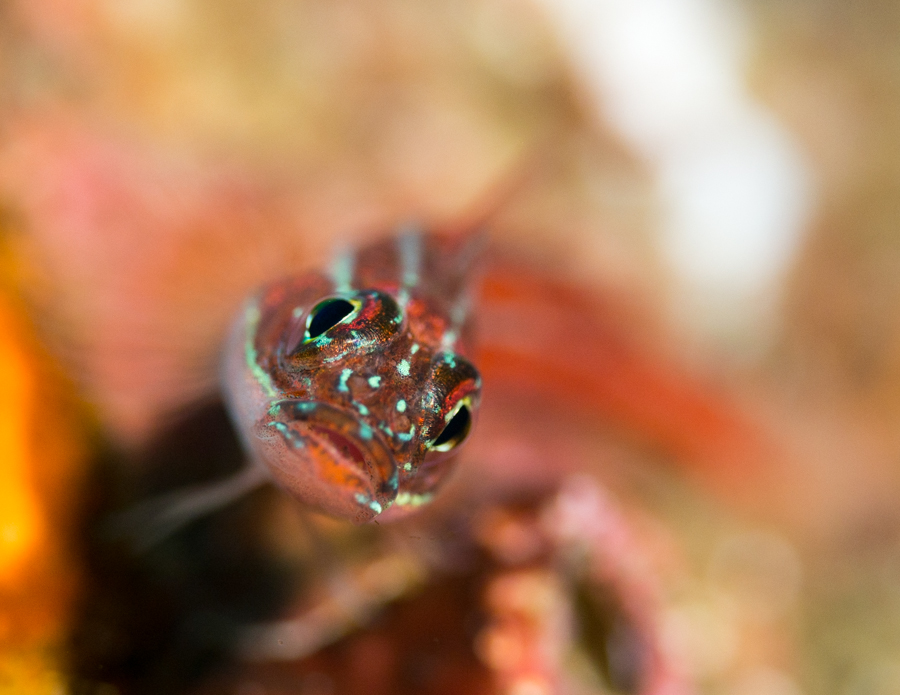
A small goby with large, dark eyes and a colourfully iridescent head looks directly into the camera. The macro shot clearly reveals the detailed structure of the head with metallic-shimmering scales and the characteristic large eyes of this fish species.
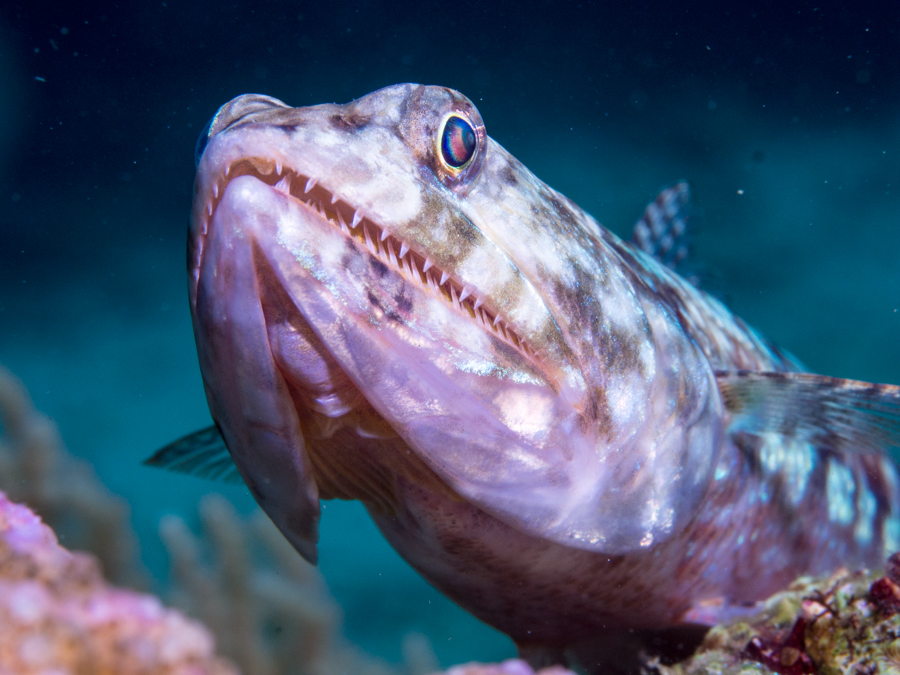
A lizardfish portrait shows the slightly open jaw with characteristic needle-sharp teeth and the striking iridescent eye.
A vivid red-pink coloured Dragonet sits on sandy ground, displaying its characteristic large pectoral fins and typical frog-like head. The animal presents an intense red colouration with white spots and has its pectoral fins widely spread.
Two magnificent mandarinfish with their characteristic blue bodies and vivid orange and blue line patterns during their mating dance. The complex undulating patterns and spread fins reveal the extraordinary beauty of these small reef dwellers.
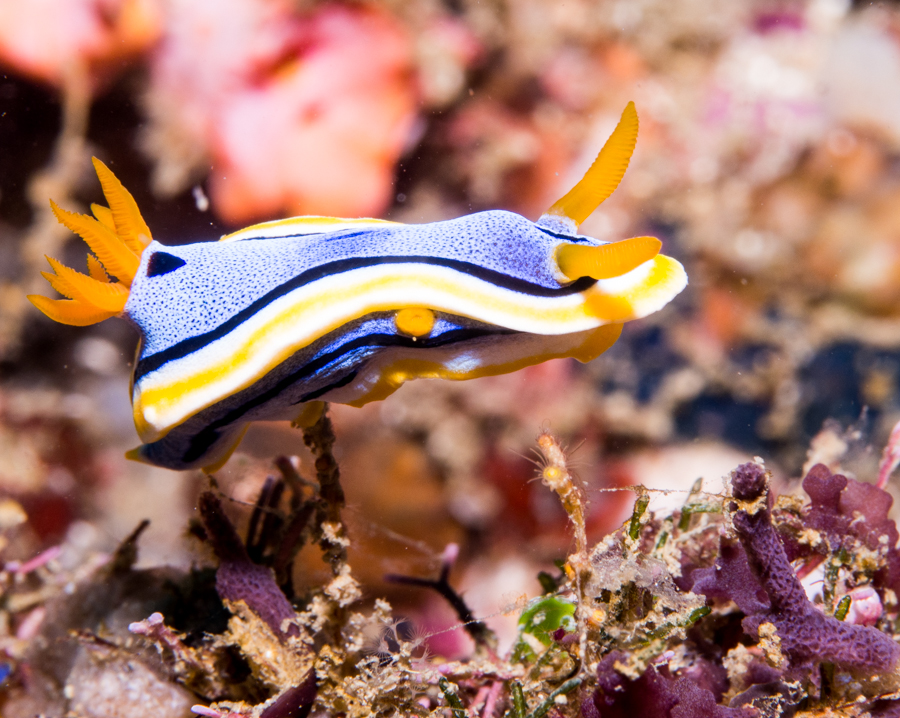
A colourful Chromodoris nudibranch moves elegantly across the coral reef. The nudibranch displays the characteristic bluish-white body colouration with yellow and black stripes and striking orange-yellow gills on its back.
PAGES:  1   2   3   4