Tag: Camouflage

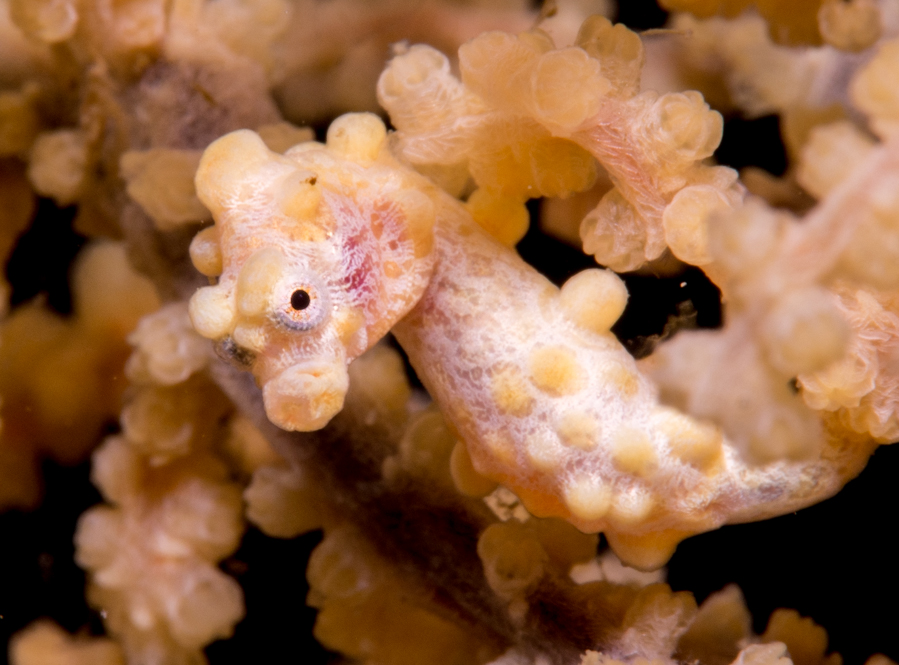
Two perfectly camouflaged pygmy seahorses hide among the yellow branches of their host corals. The tiny animals use their extraordinary camouflage ability, mimicking the colour and structure of the corals to become nearly invisible.
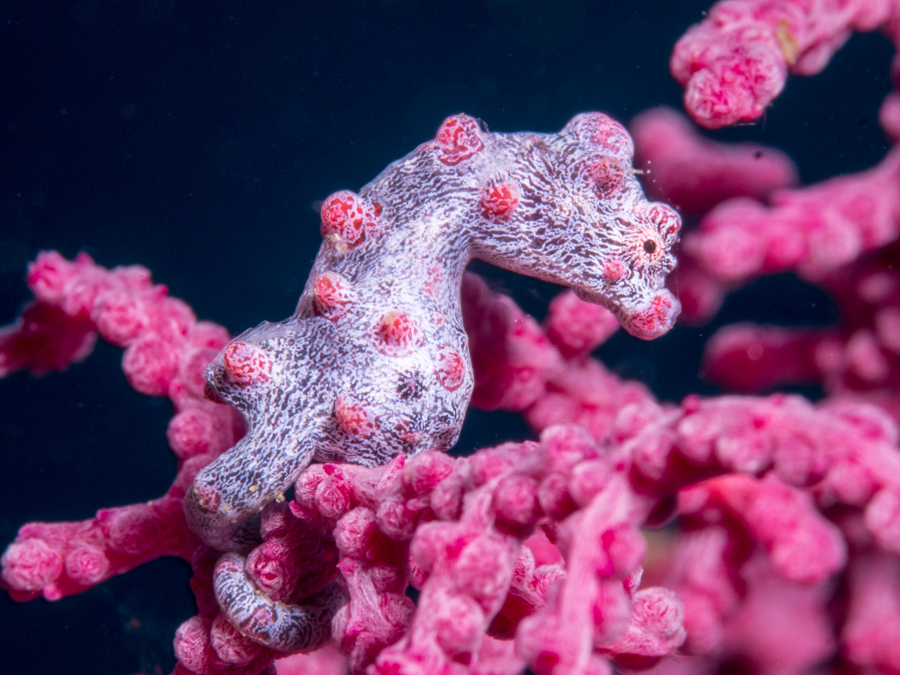
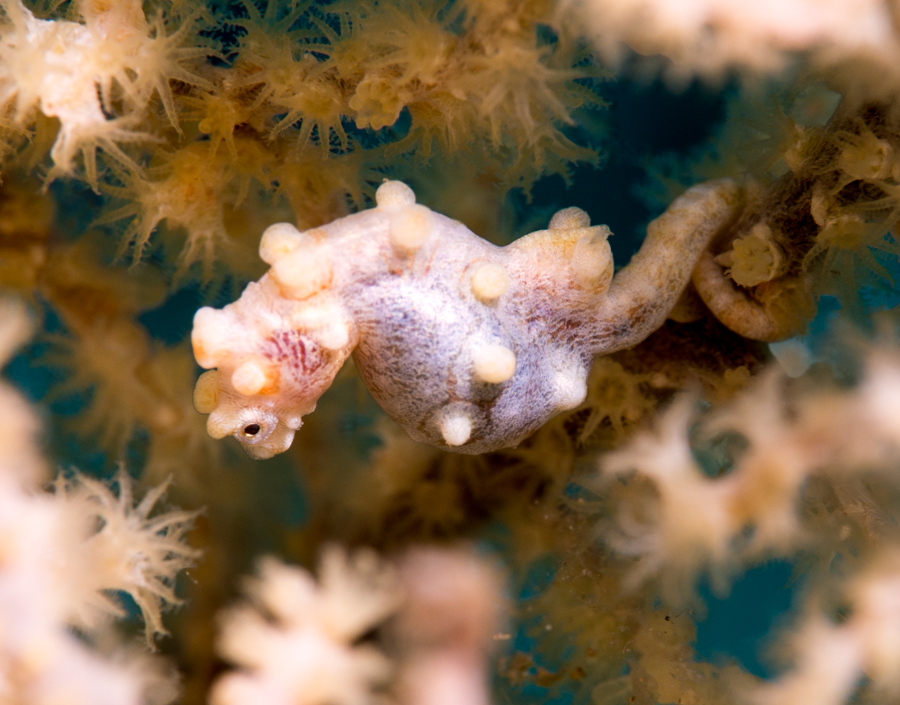
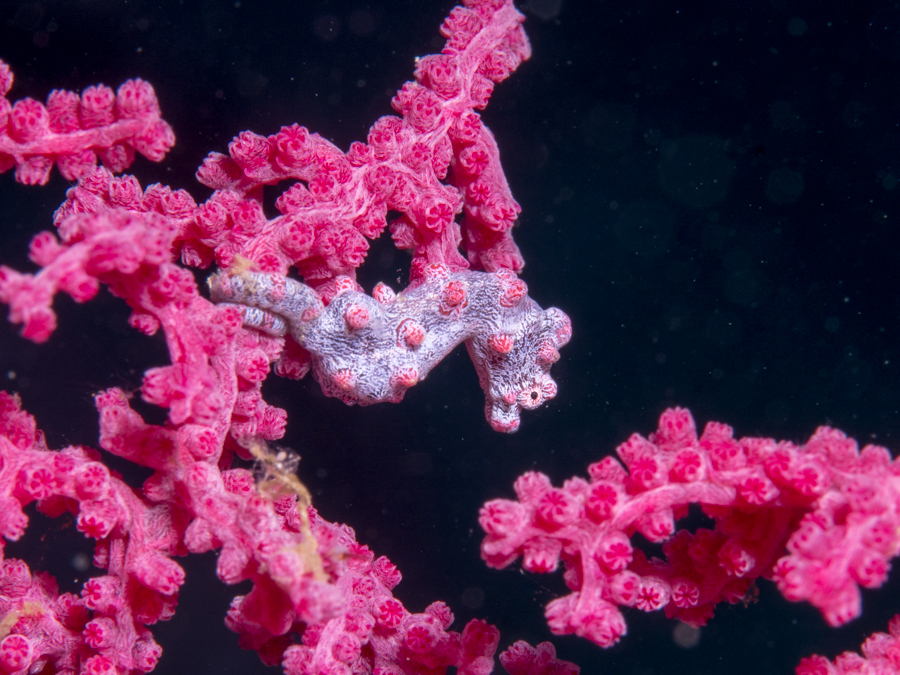
A tiny dwarf seahorse sits perfectly camouflaged among the pink polyps of a soft coral. The reddish skin appendages of the seahorse imitate the shape and colour of the coral polyps, providing nearly perfect concealment.
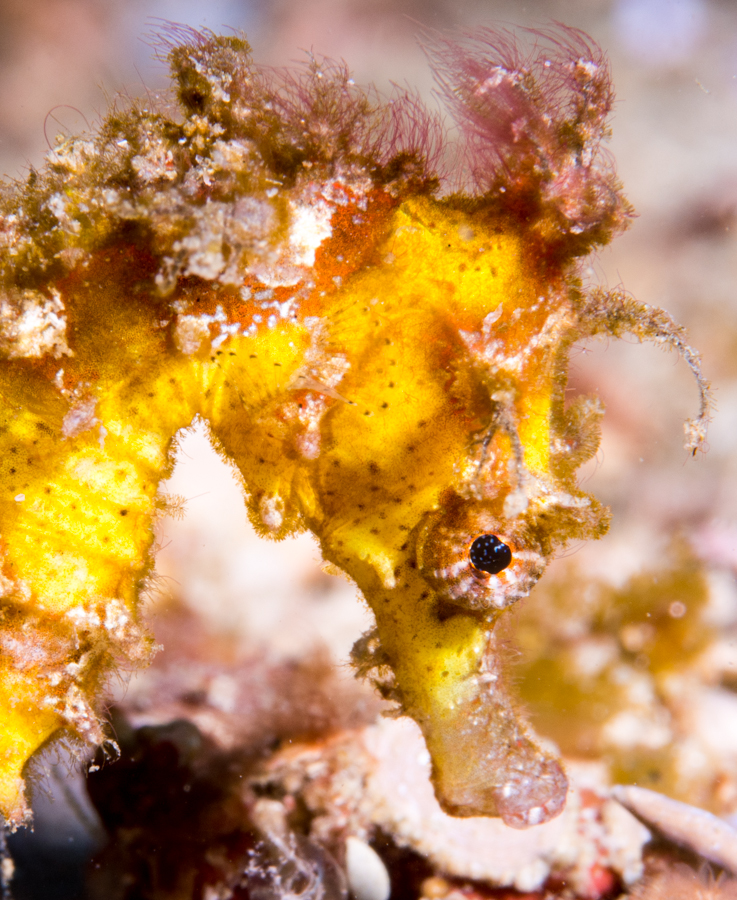
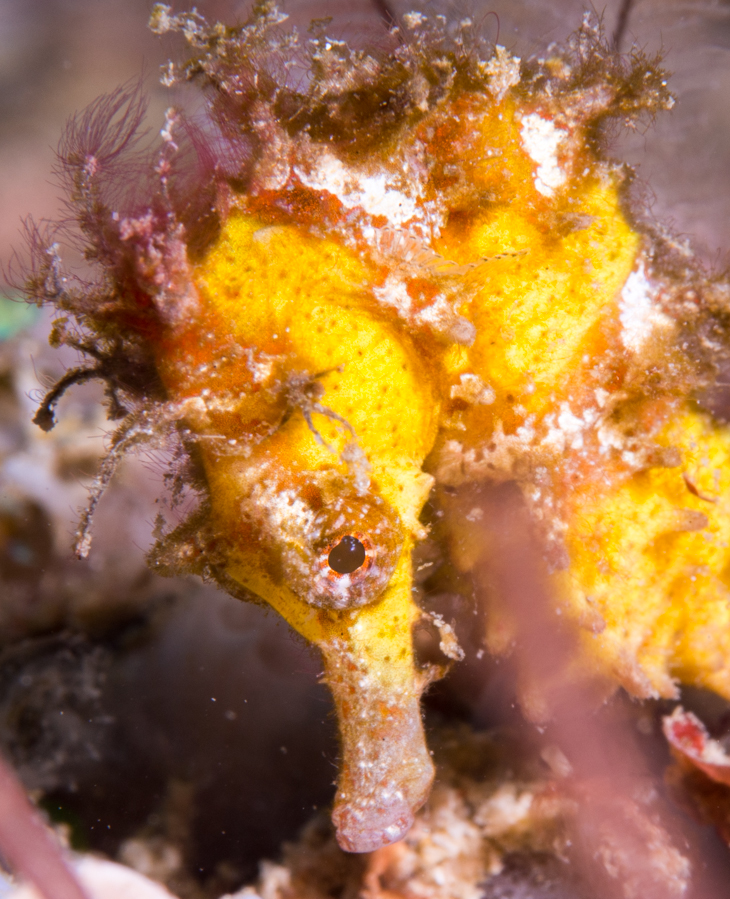
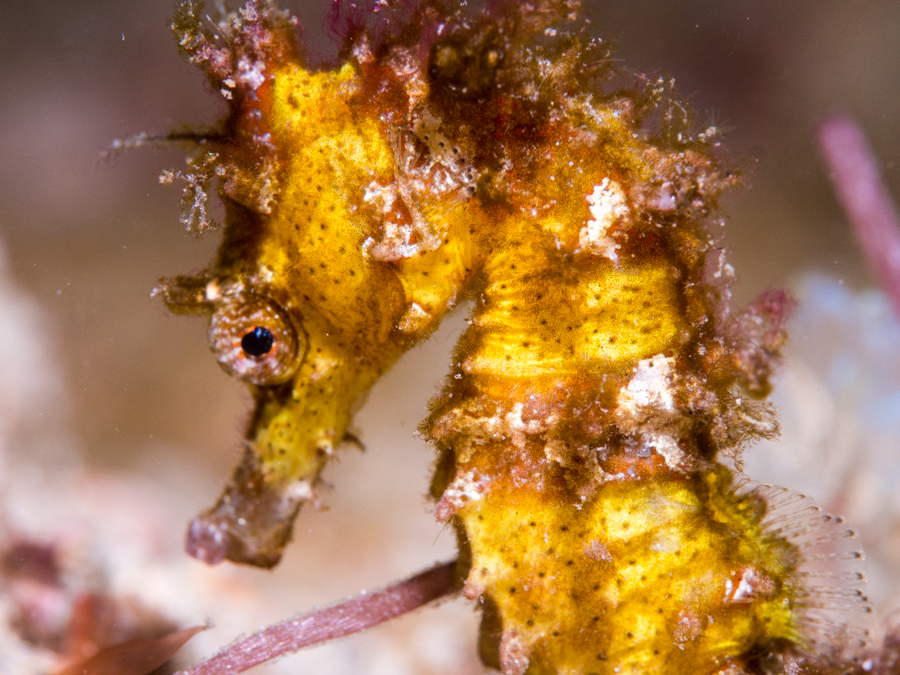
A yellow seahorse displays its perfect camouflage among corals and sponges. The characteristic black eye and algae-covered skin make the extraordinary adaptability of these small reef dwellers clearly visible.
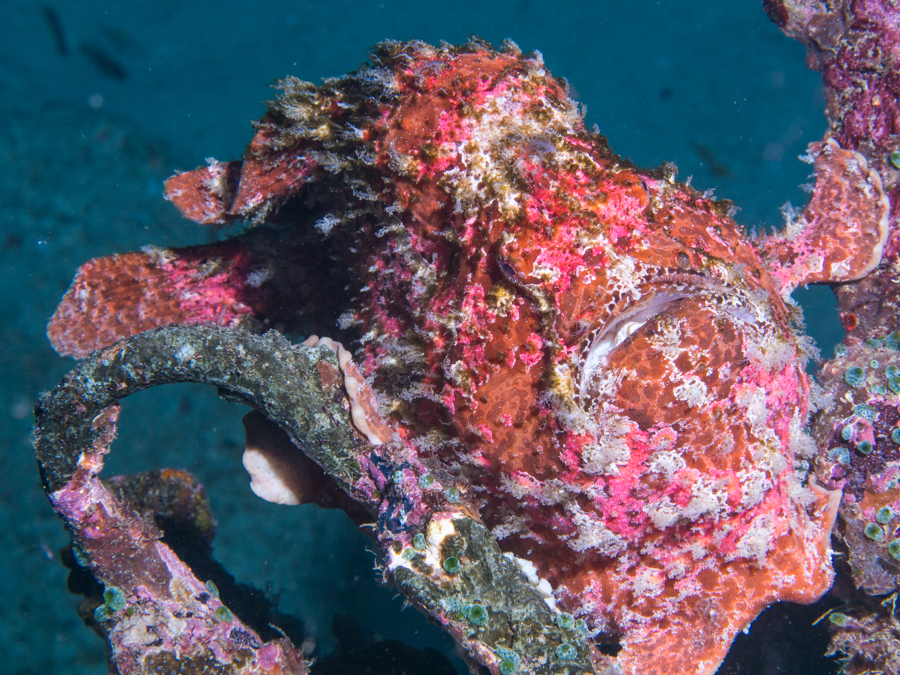
A warty frogfish (Antennarius maculatus), often called the clown frogfish due to its vivid colouration. These fish are specialised ambush predators that barely move, waiting for prey to come within range.
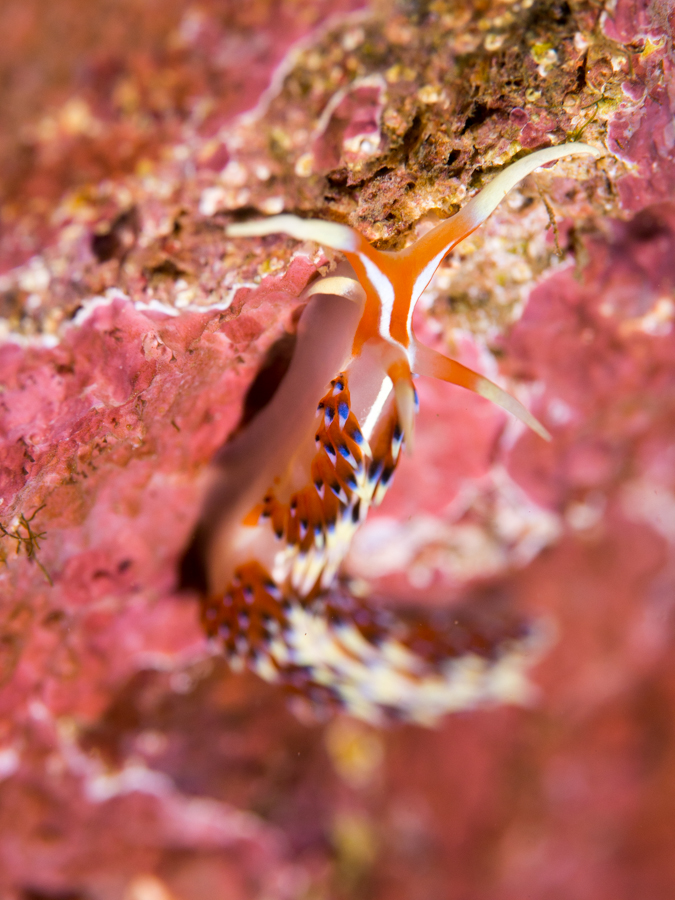
A colourful nudibranch with a transparent body and orange-white gills moves across a reef surface encrusted with pink coralline algae. The cerata (dorsal projections) display a beautiful blue-and-white pattern.
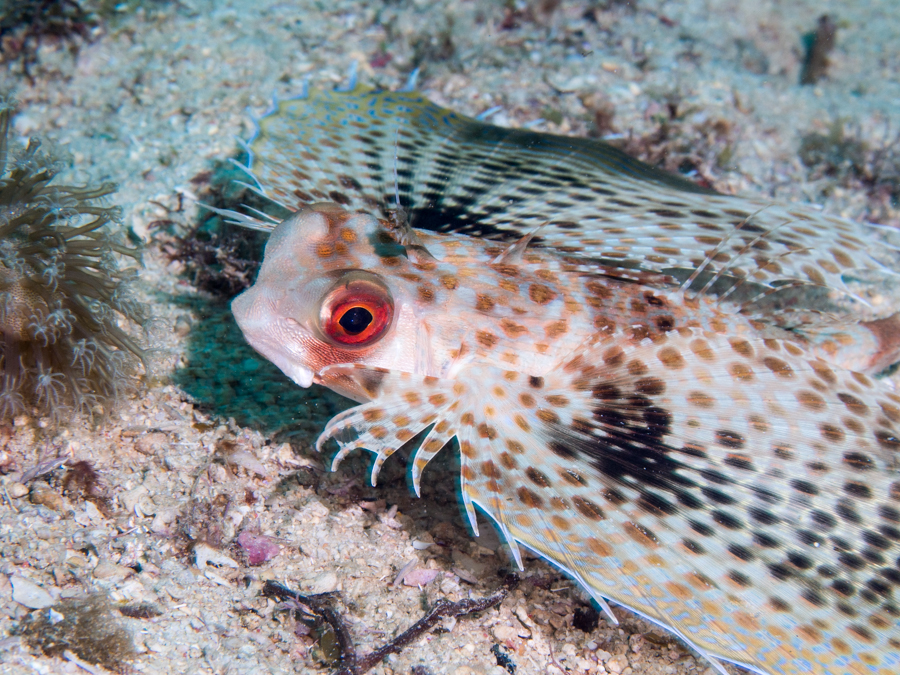
A red-eyed gurnard lies on the sandy seafloor, displaying its characteristic red eyes and finger-like pectoral fin rays. The fish is perfectly adapted to the substrate and uses its mobile fin rays to probe the surroundings for food.
A yellow pygmy seahorse in its host coral. The tiny seahorse mimics the colour and structure of its host coral to achieve the best possible camouflage.
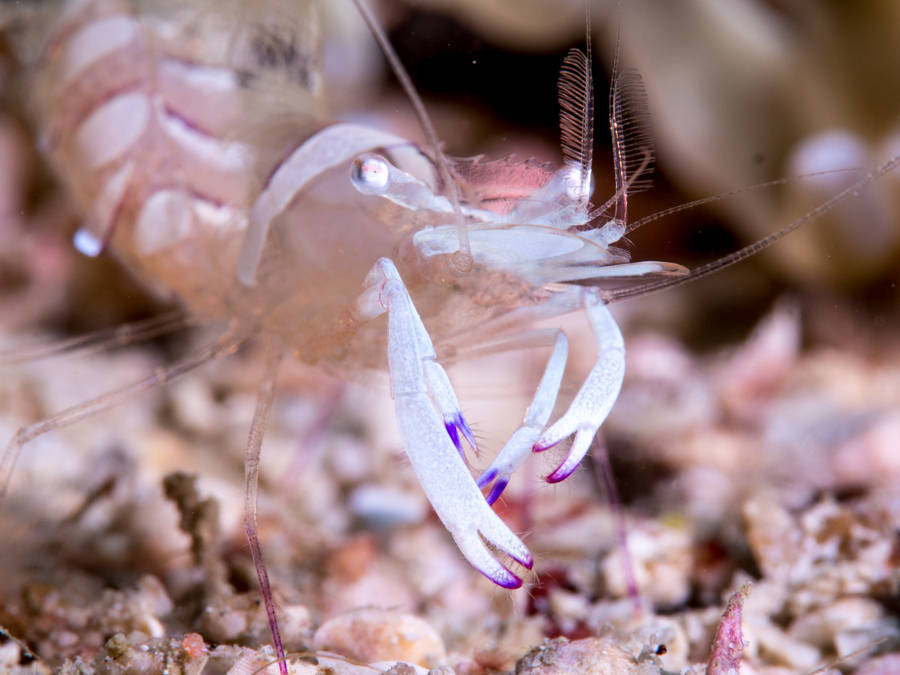
The animal shown is a glass anemone shrimp (Periclimenes brevicarpalis), also known as the peacock-tail anemone shrimp. These shrimps live in a symbiotic relationship with sea anemones, which provide them with shelter.
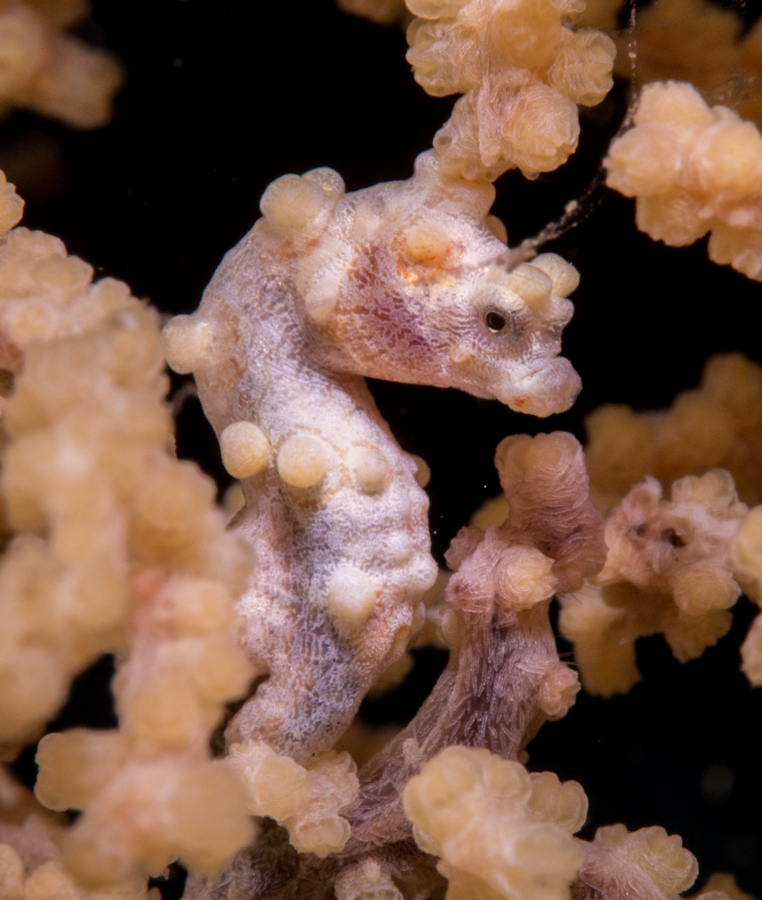
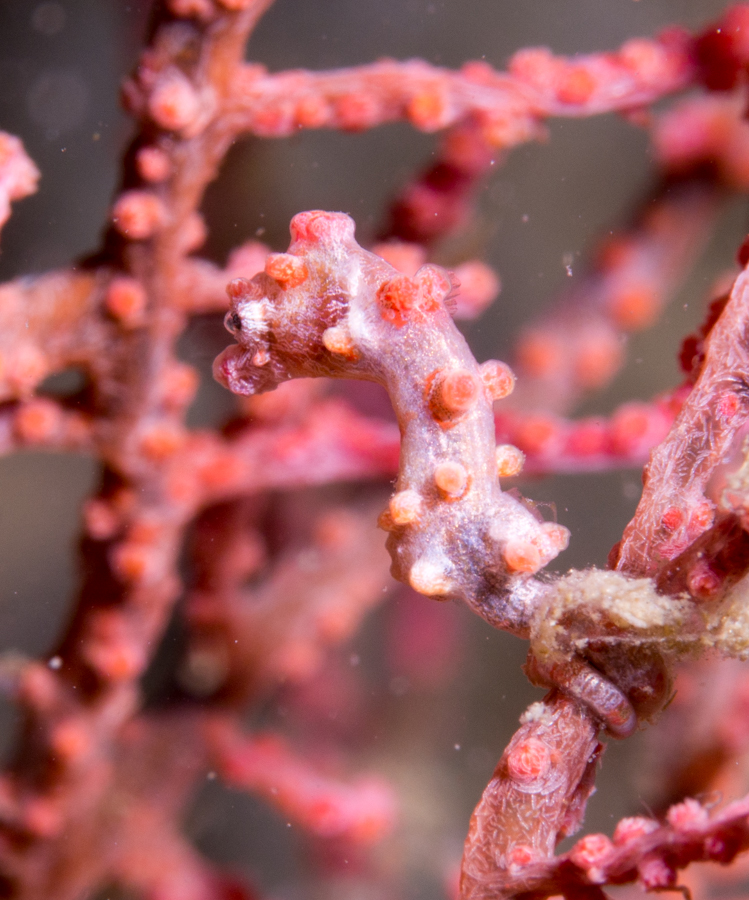
A pygmy seahorse hides perfectly camouflaged among the polyps of a soft coral. The pink-orange colouration and warty skin protrusions of the tiny seahorse adapt ideally to its coral habitat, making it nearly invisible.
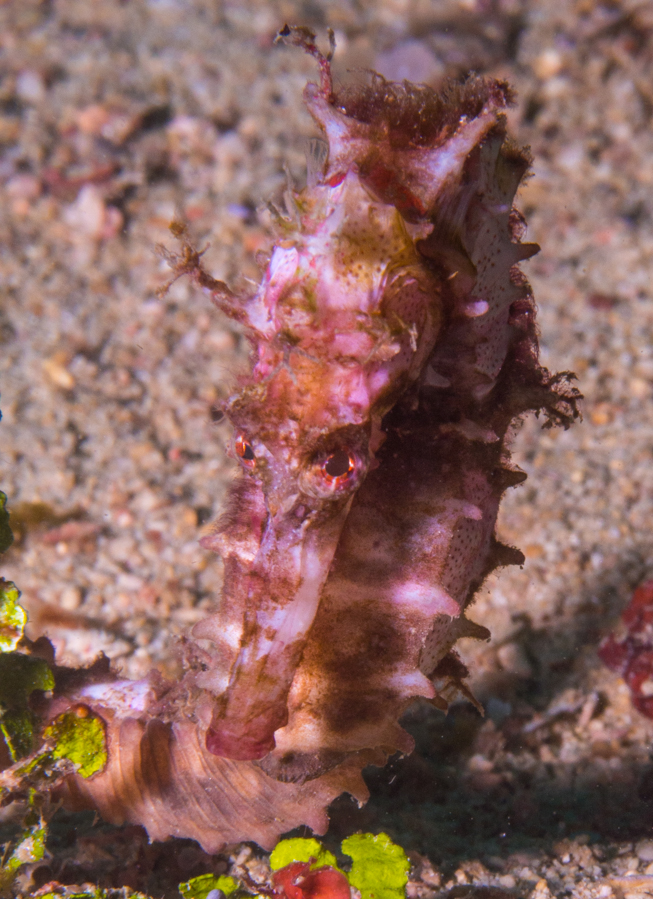
A seahorse with characteristic skin appendages and reddish-brown colouration rests on the sandy seafloor. The well-developed skin growths serve as perfect camouflage, allowing the animal to blend with algae and coral encrustation.
A vivid yellow seahorse with characteristic skin appendages for camouflage clings to a coral or other substrate. The animal displays the typical curved body posture and distinctive prehensile tail of seahorses.
A vivid orange frogfish sits perfectly camouflaged among sponges and corals on the reef. The mouth is wide open, revealing the characteristic white oral cavity, as the fish waits motionlessly for prey.
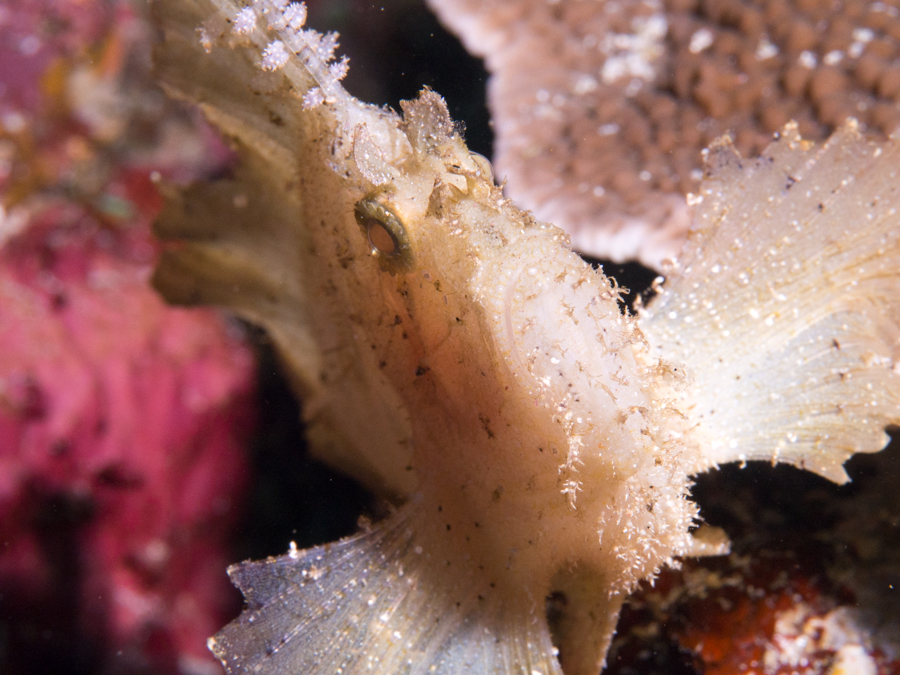
A yellowish tassled scorpionfish with characteristic skin appendages and granular texture sits perfectly camouflaged among colourful corals and sponges, displaying the typical ambush posture as it waits motionlessly for prey.
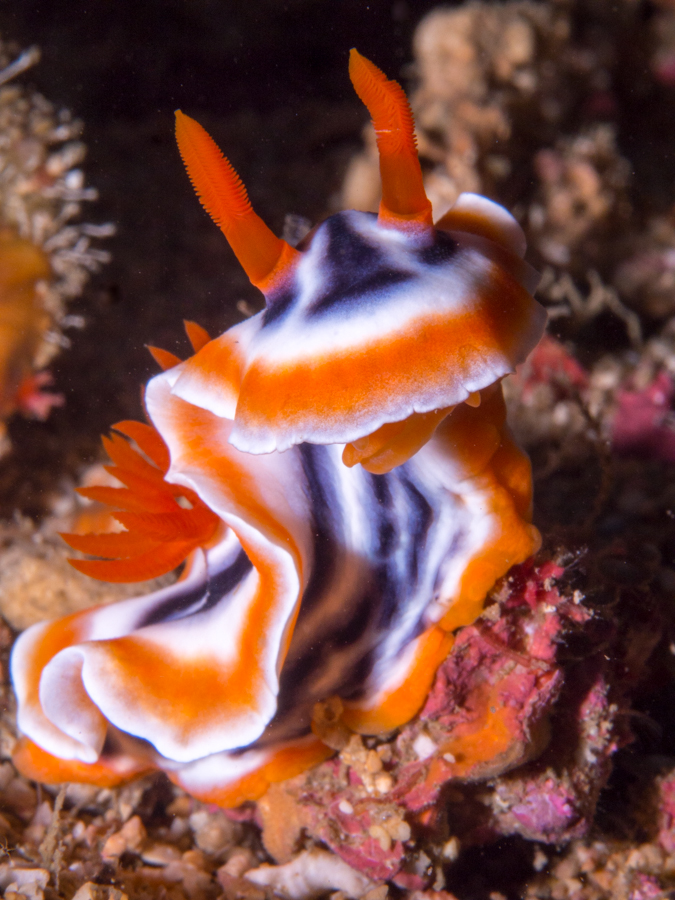
A beautiful nudibranch with characteristic orange-white colouration and violet accents crawls across the reef. The vivid orange gills and rhinophores (scent organs) are clearly visible, while the undulating body shows the typical form of this sea slug species.
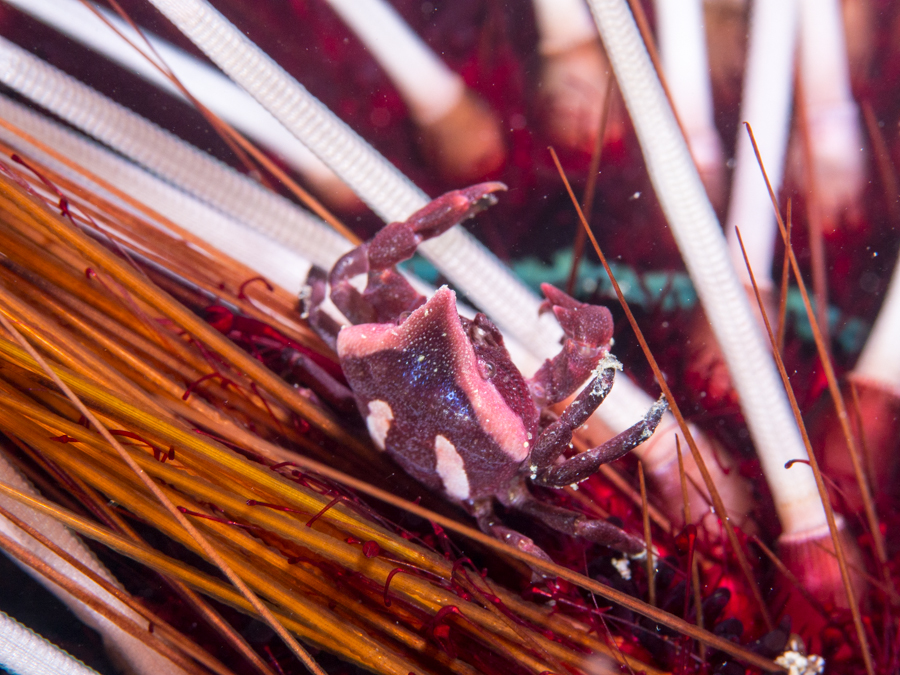
A small crab with characteristic claws sits among the long spines of a sea urchin. The reddish-brown colouration of the crab harmonises perfectly with the warm tones of the urchin spines, providing excellent camouflage.
A dwarf seahorse hides perfectly camouflaged among the polyps of a soft coral. The pink-orange colouration of the seahorse matches the surrounding coral polyps almost perfectly, creating impressive camouflage.
A perfectly camouflaged frogfish rests on colourful coral rubble covered with corals and sponges. Its skin has adapted in colour and texture to match the pink-red surroundings as it waits motionlessly for passing prey.
A tiny black frogfish, well camouflaged on coral rubble. The fish is only a few centimetres in size. Macro shot.
A well-camouflaged seahorse sits on the sandy seafloor. The characteristic skin-like appendages in pink-brownish tones help it blend with its surroundings and remain perfectly concealed.
A yellow seahorse with characteristic skin appendages and encrustation clings with its prehensile tail to a coral branch. The detailed macro shot clearly shows the distinctive eye and typical body posture of the animal.
A tiny pygmy seahorse sits perfectly camouflaged on a red coral branch. The animal, only a few centimetres long, shows an impressive adaptation to its surroundings with skin-like protrusions and a reddish colouration that makes it nearly invisible.
A pygmy seahorse camouflages itself perfectly among the vivid pink branches of its host coral. The elongated fish with its characteristic short snout and skin-like appendages blends almost completely with its coral surroundings.
PAGES:  1   2