Tag: Camouflage

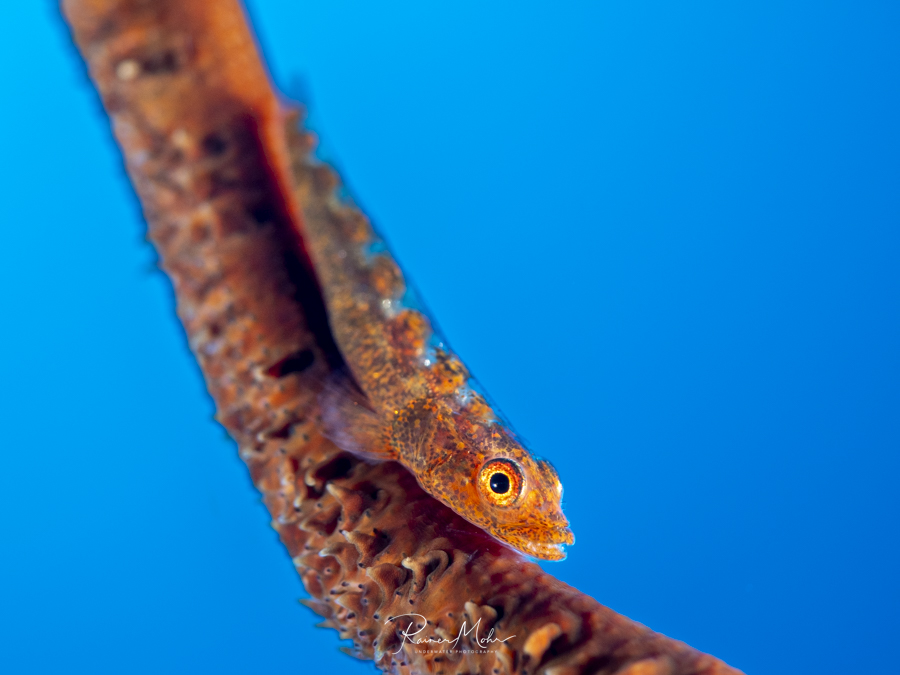
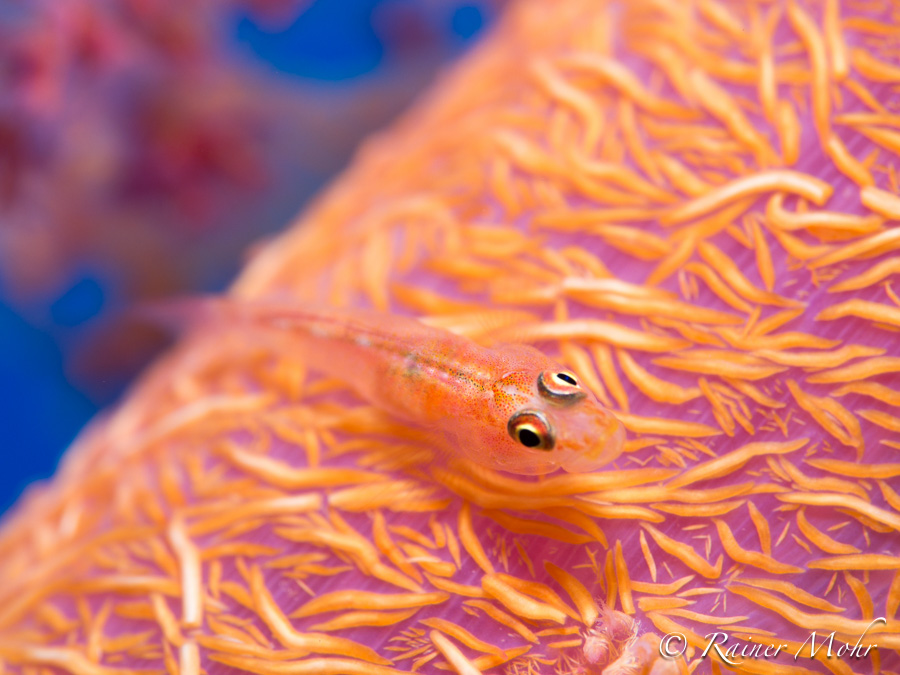
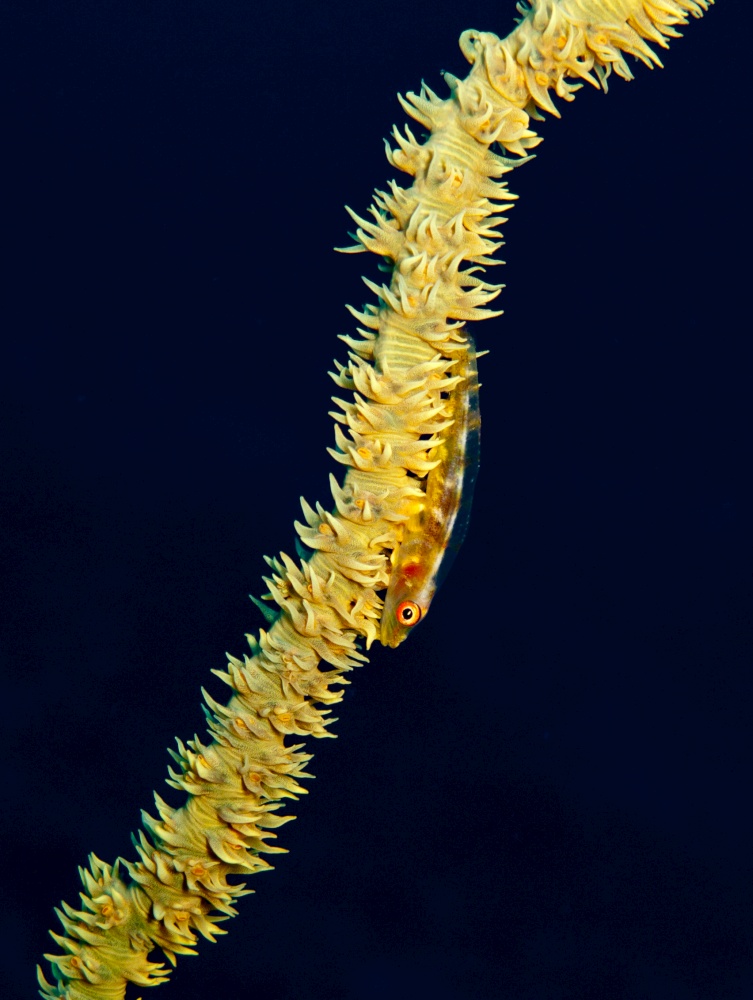
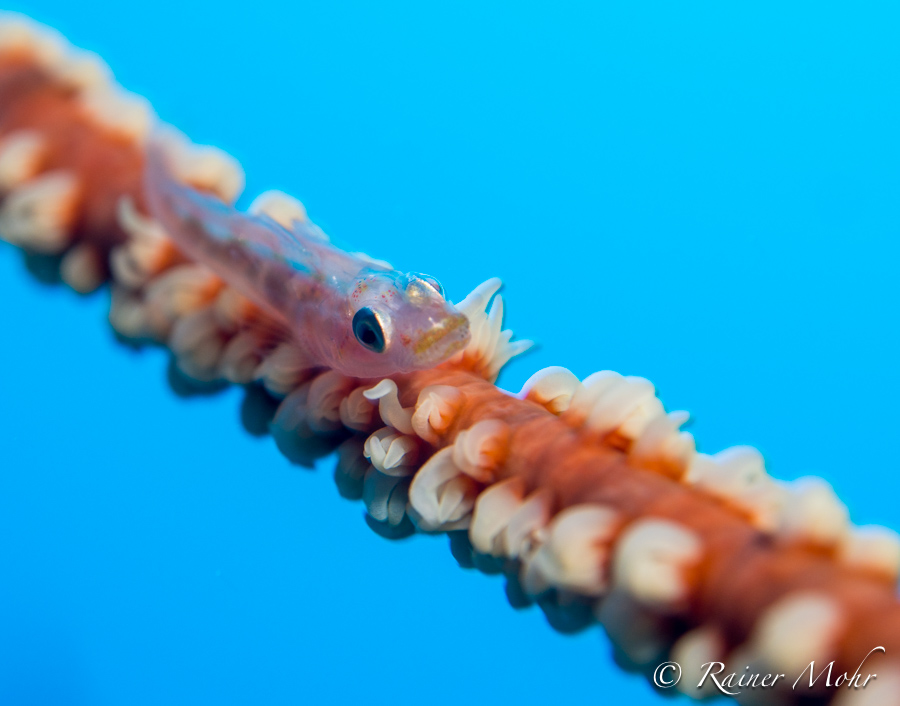
A tiny whip coral goby sits perfectly camouflaged on a whip coral. The macro portrait shows the detailed pattern of the small fish.
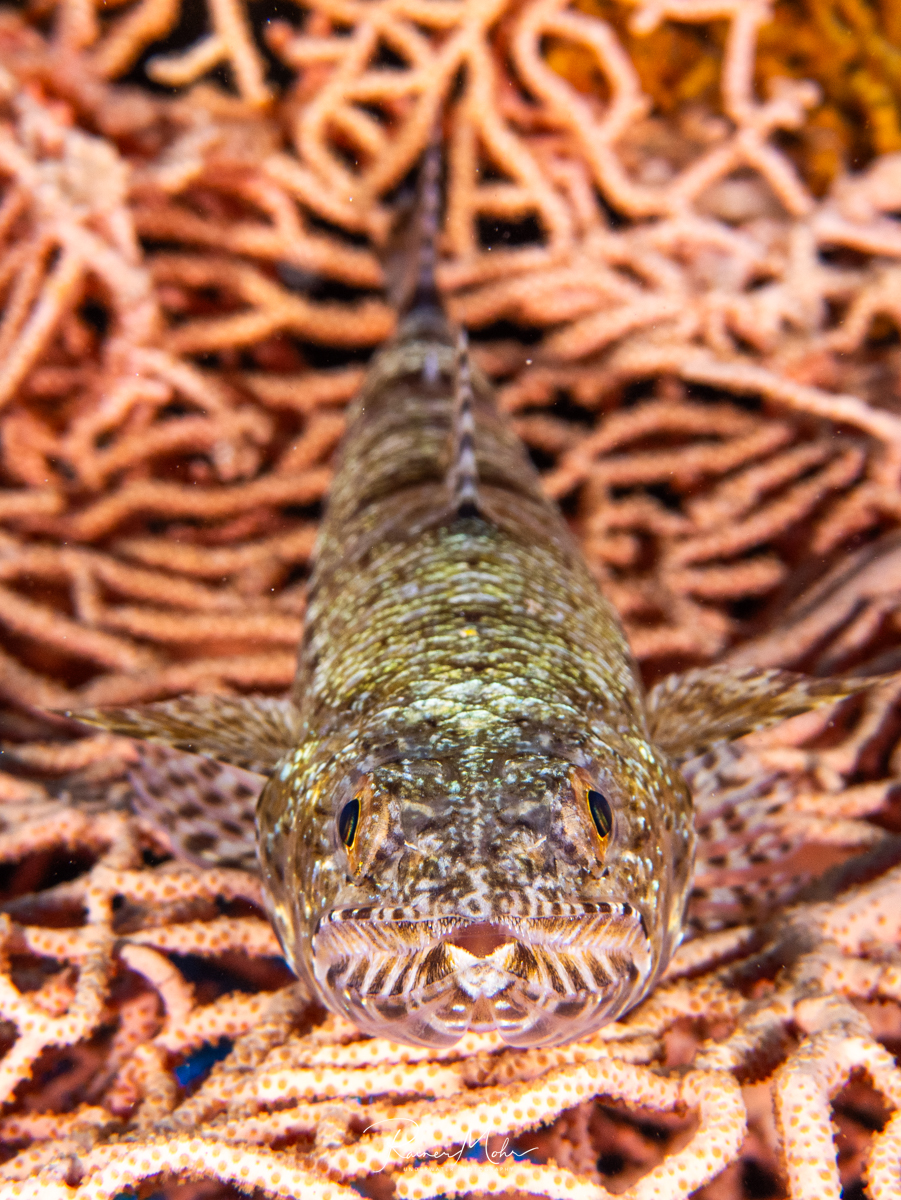
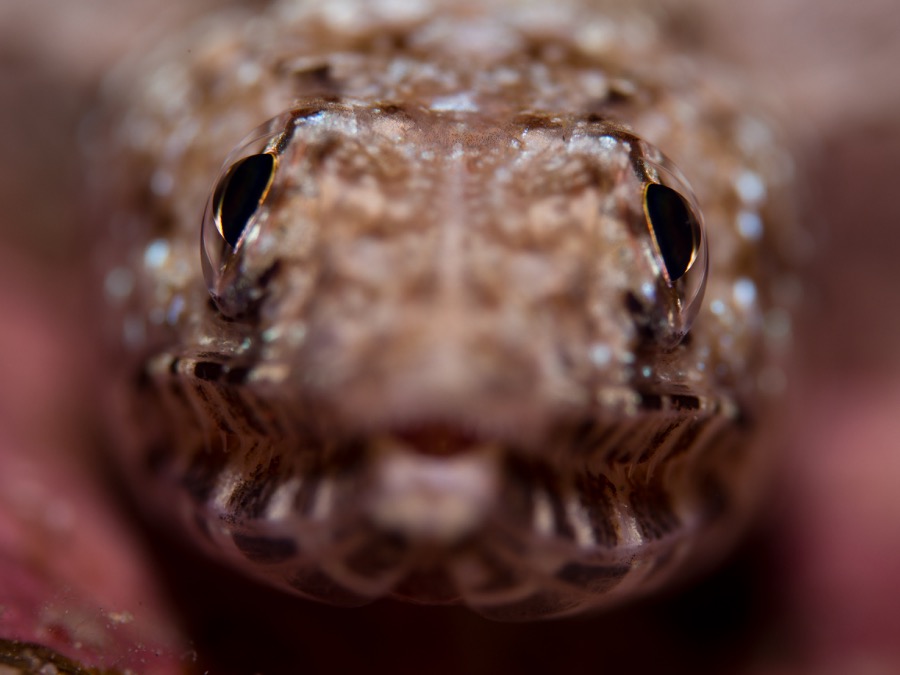
Frontal close-up portrait of a lizardfish resting on a coral and looking directly into the camera with its mouth slightly open.
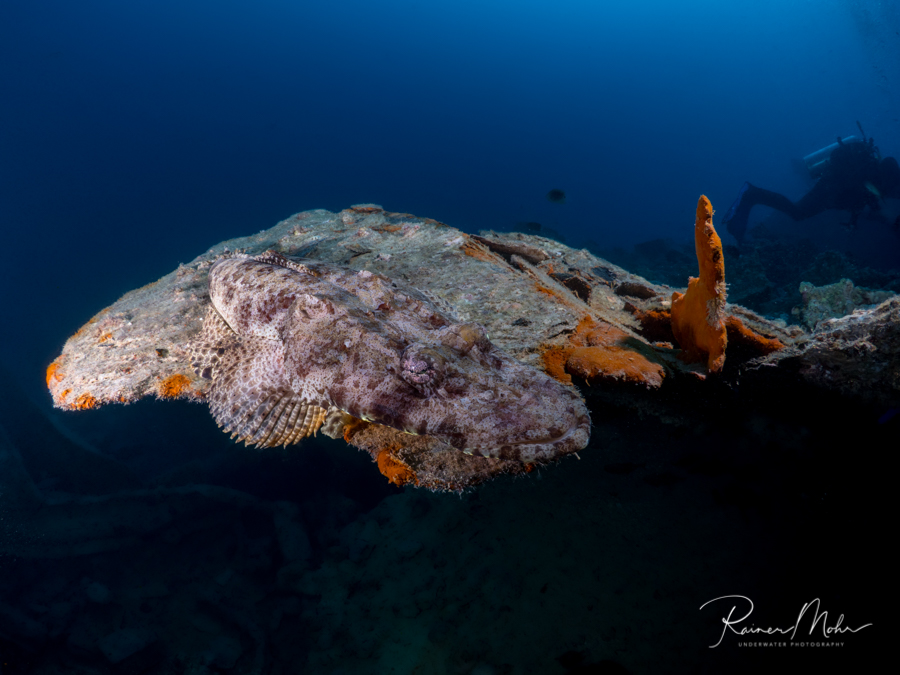
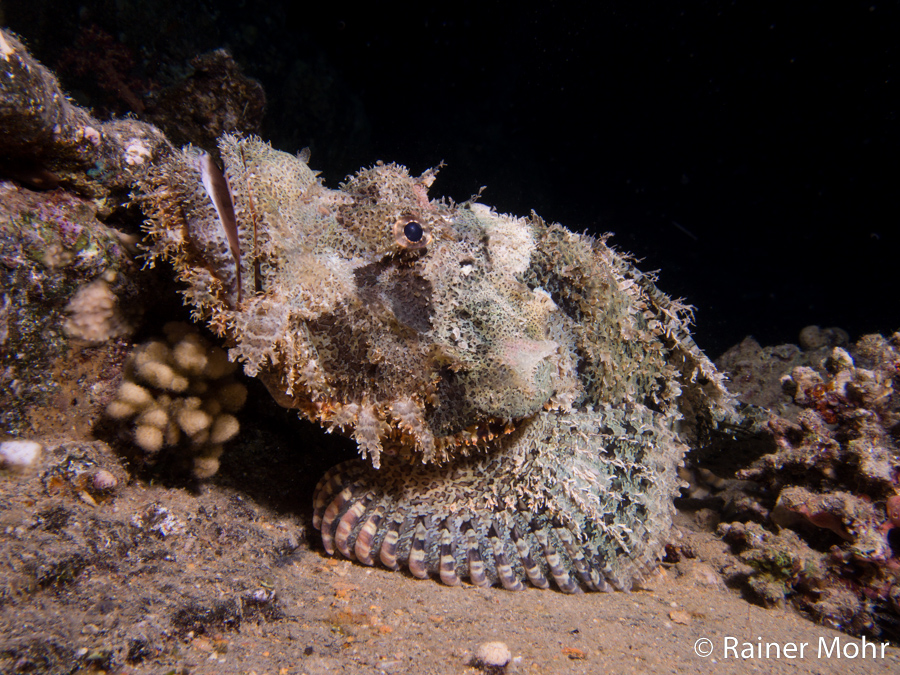
A crocodilefish (Papilloculiceps longiceps) lies well camouflaged on the encrusted wreck. A diver hovers in the background; orange sponges cover the wreck.
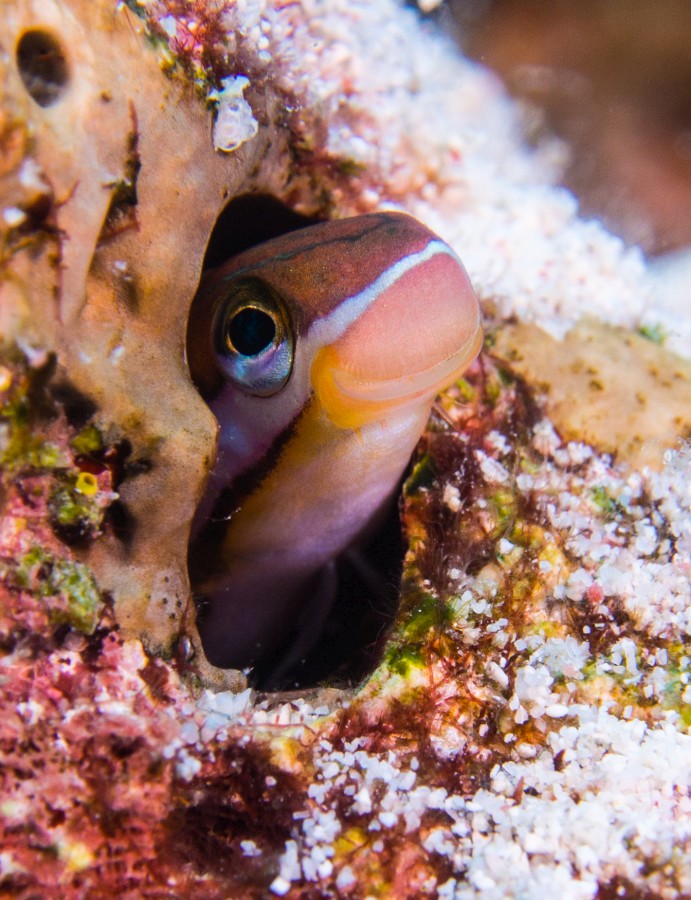
A blenny peers curiously from its cave in the coral reef. The small fish displays its typical large eyes and characteristic pattern with pink-violet and yellow tones, perfectly adapted to its hiding place among the encrusted corals.
Two whip coral gobies facing opposite directions on their coral against a black background. The individual polyps of the coral are clearly visible.
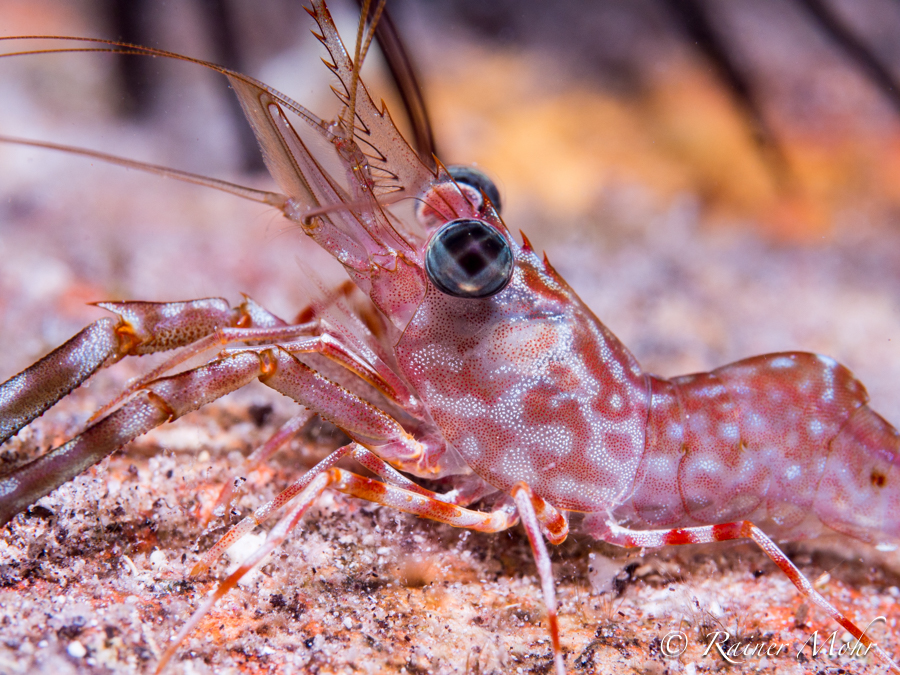
A shrimp species from the family Rhynchocinetidae (hinge-beak shrimps), possibly Cinetorhynchus reticulatus. Hinge-beak shrimps are found in tropical and subtropical seas worldwide and often live in reefs.
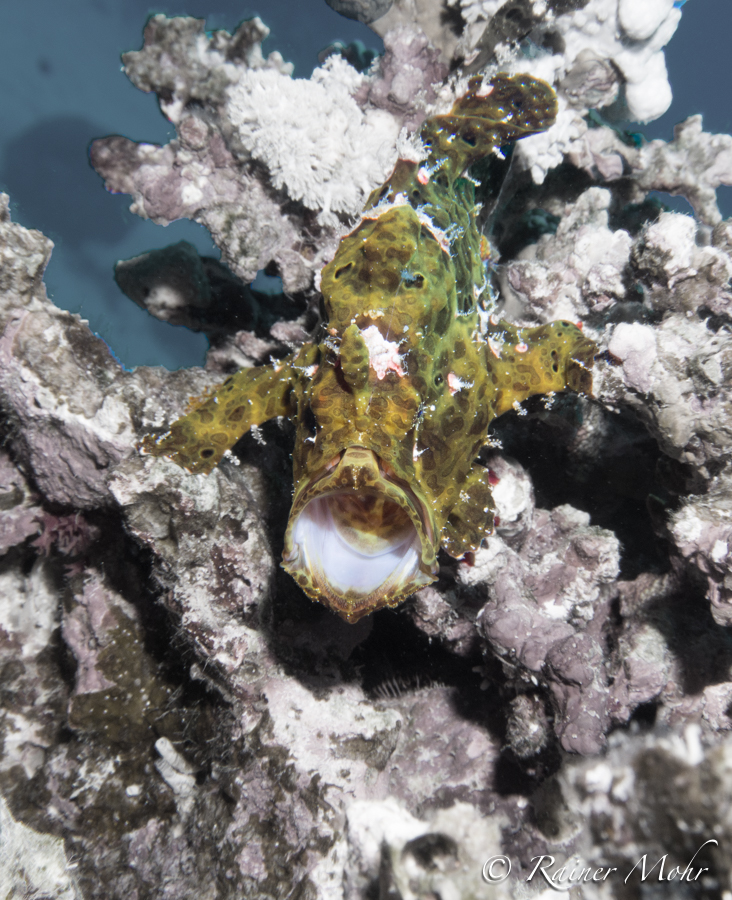
A green frogfish sits perfectly camouflaged among corals, displaying its characteristic behaviour by opening its mouth wide. The yellowish-brown colouration and typical skin papillae help it blend with the reef environment. The corals were desaturated in post-processing to highlight the fish.
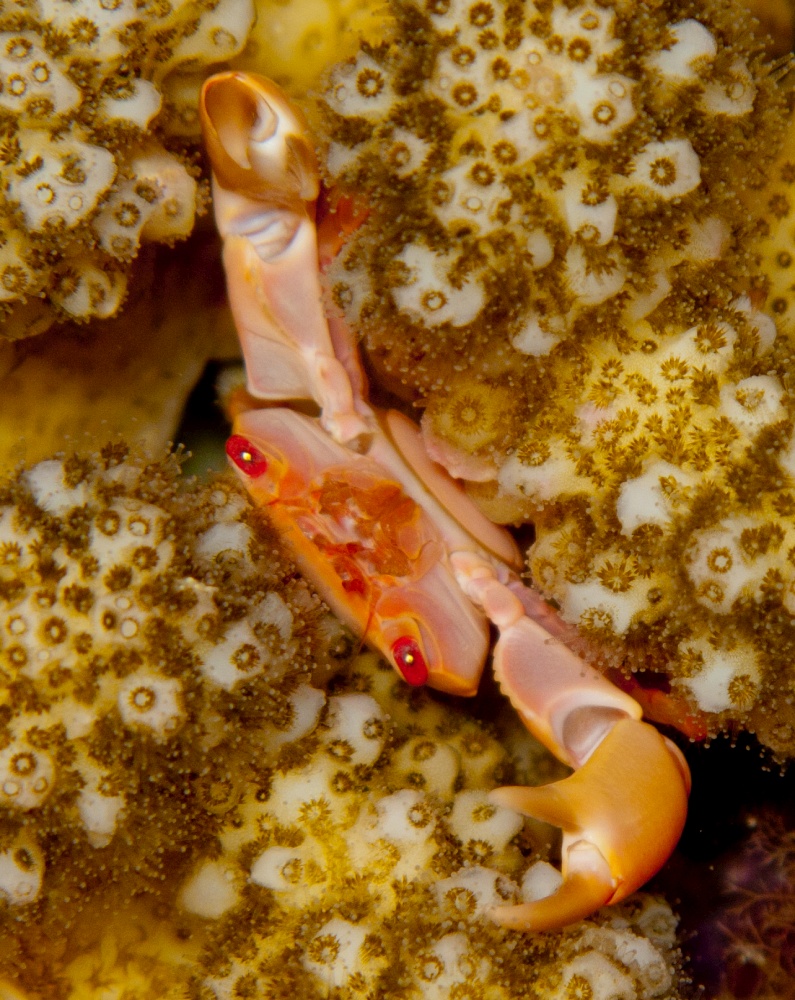
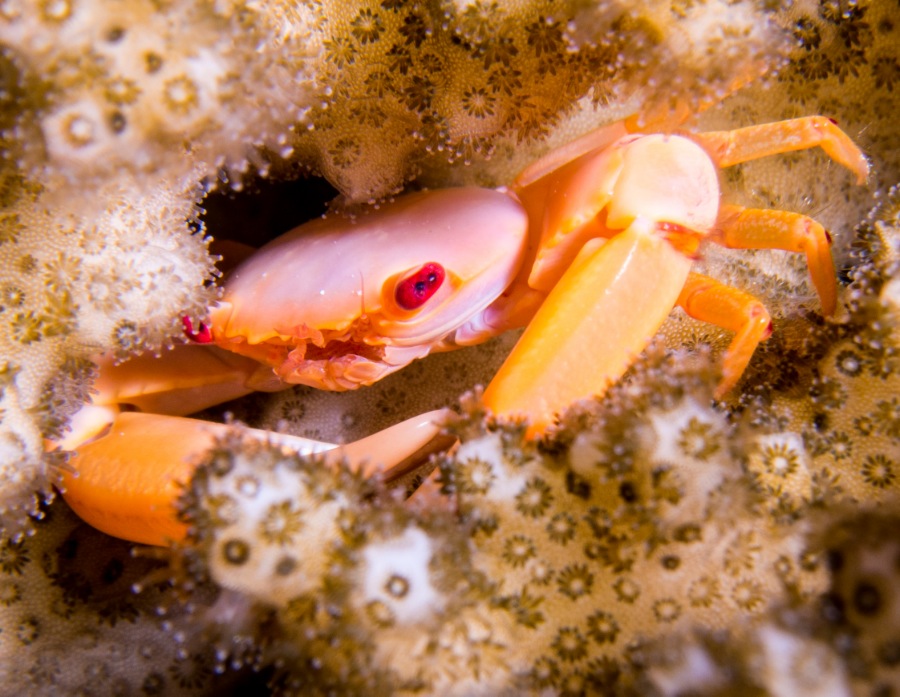
An orange crab with characteristic red eyes sits among the polyps of a stony coral. The small crustacean uses the coral reef as shelter and habitat.
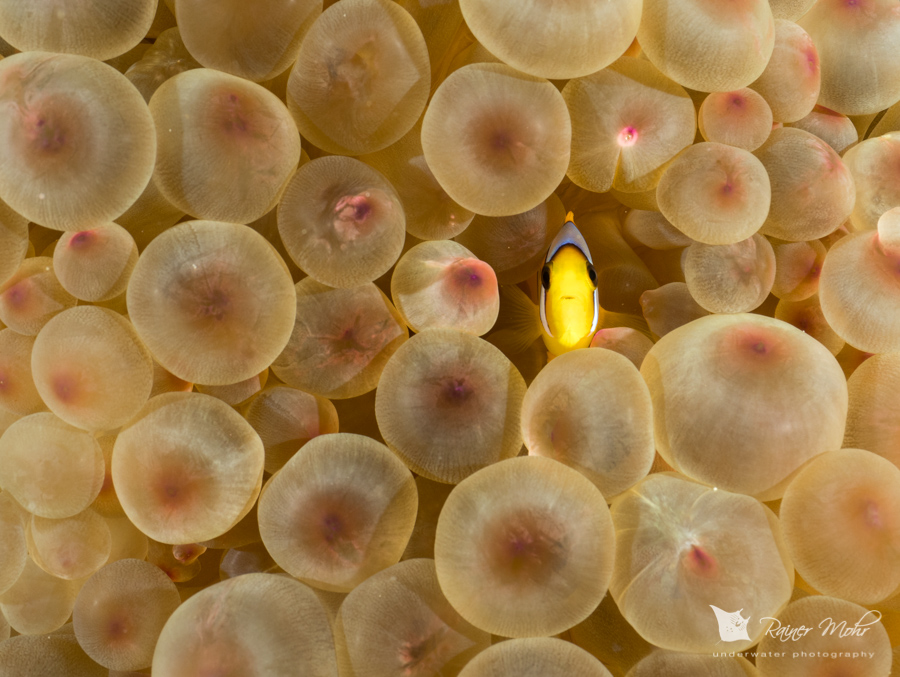
A small yellow-orange anemonefish hides perfectly camouflaged among the bubble-shaped tentacles of its host anemone. The symbiosis between fish and anemone is wonderfully visible here β€” the fish finds protection among the stinging tentacles while protecting the anemone from predators.
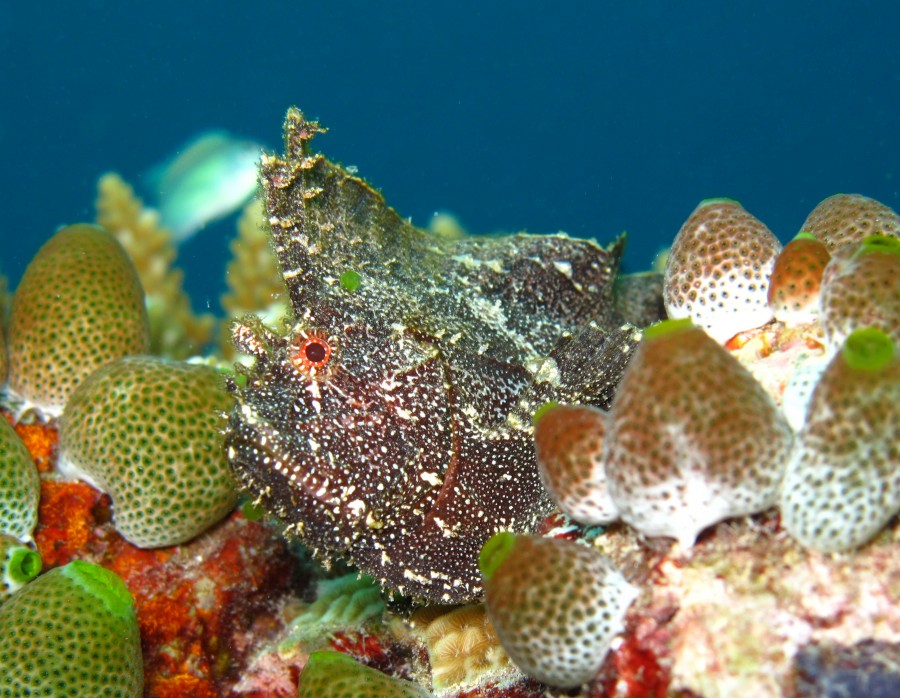
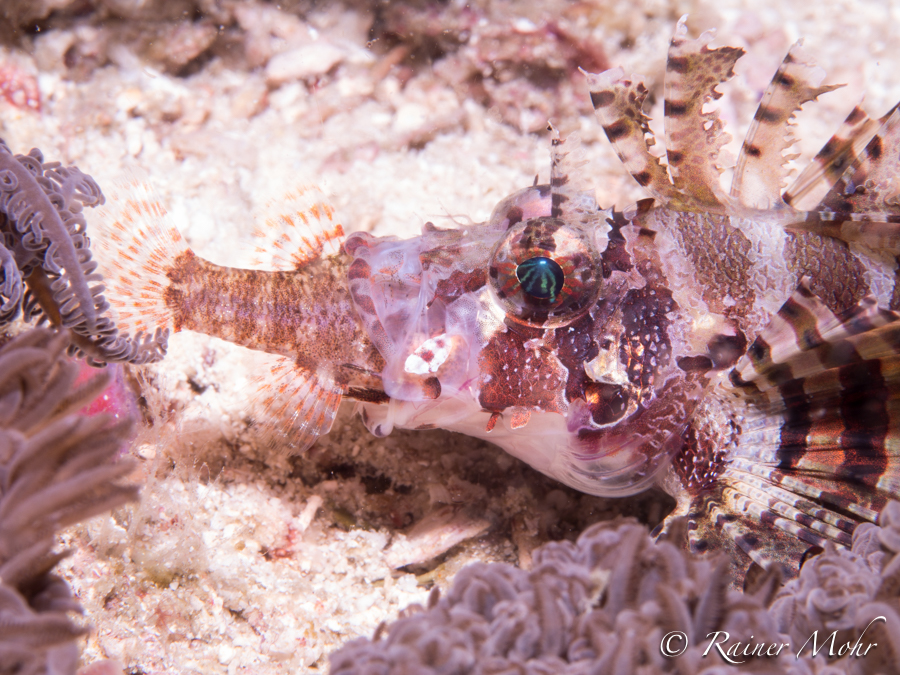
A perfectly camouflaged fringed devilfish rests on the seabed among corals, displaying its impressive adaptability. The body is covered with numerous skin projections, causing it to blend perfectly with the corals and rubble.
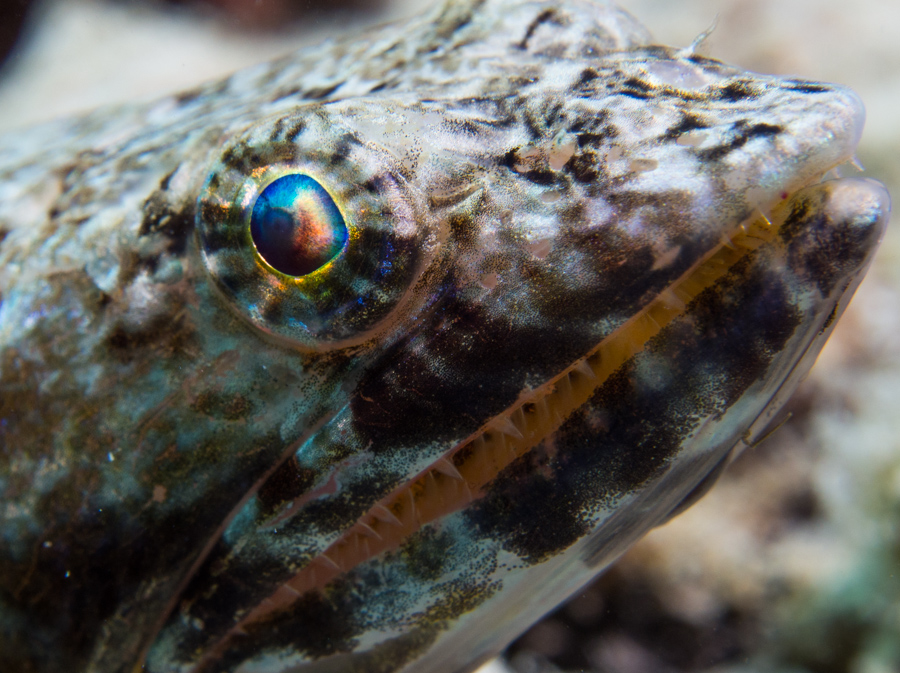
A lizardfish displays its characteristic profile with a striking, vivid blue eye and spotted body markings. The macro shot captures the details of the rough skin and the intense eye colouring with particular impact.
A small goby sits perfectly camouflaged on the trunk of an orange soft coral.
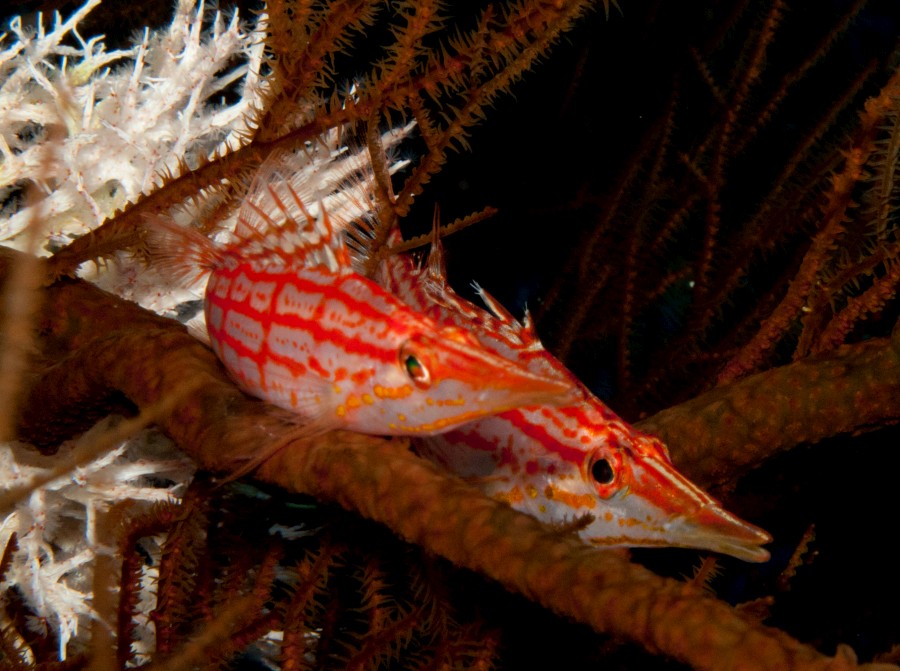
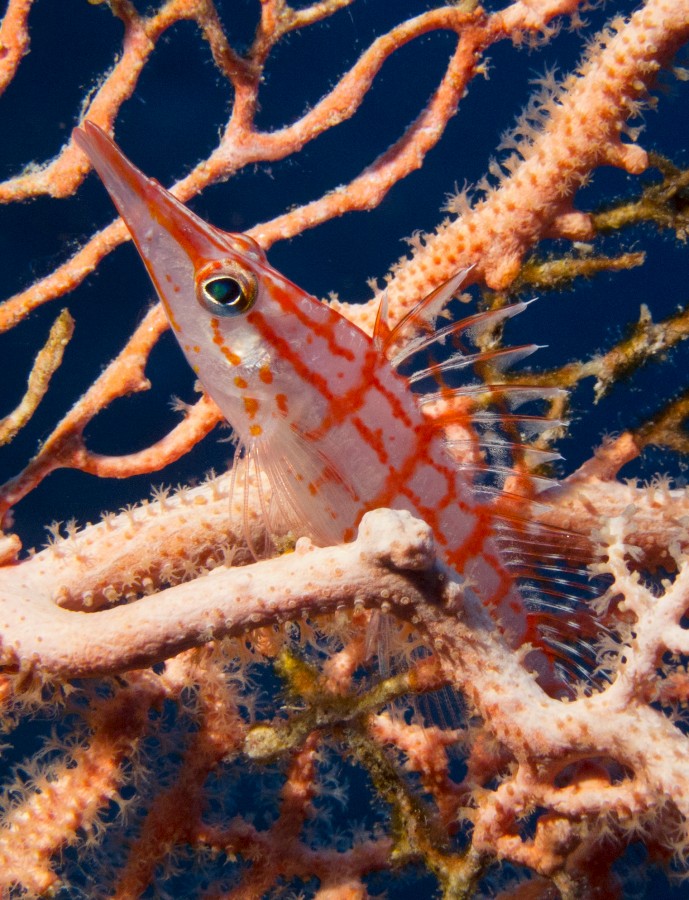
Two long-snouted hawkfish hide among the arms of a gorgonian. The red-and-white patterned fish use the gorgonian as a hiding place.
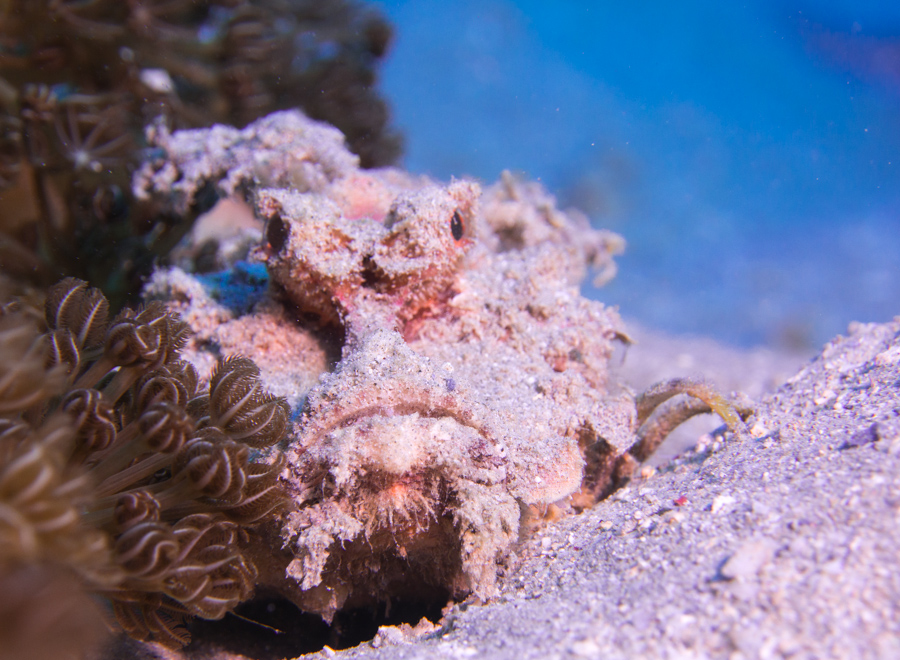
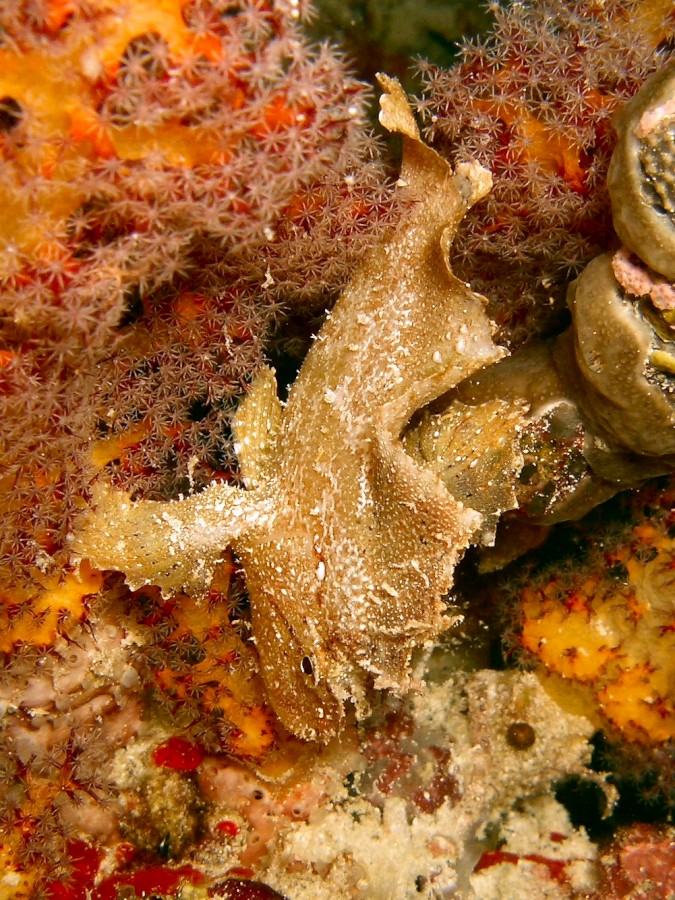
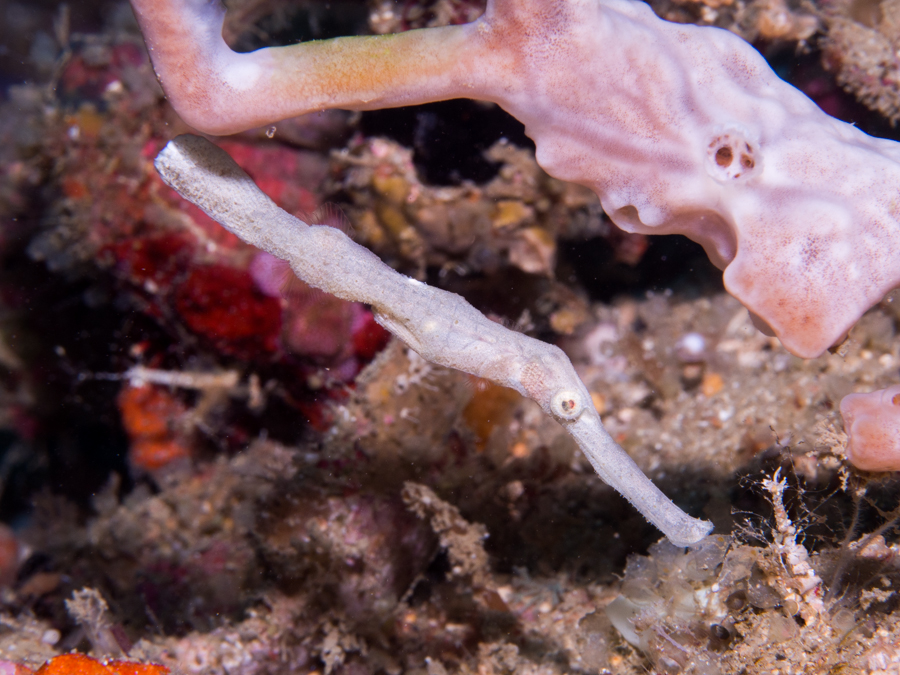
A perfectly camouflaged filament devilfish rests motionless on the sandy seabed among corals. Its warty skin and pink-brown colouring cause it to blend almost completely with the surroundings, while its characteristic eyes remain clearly recognisable.
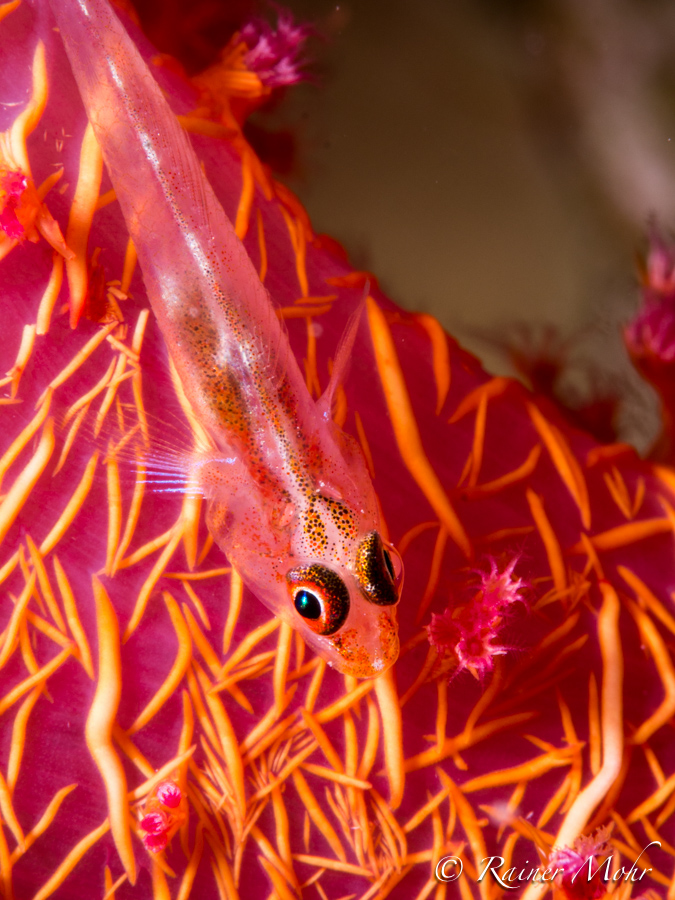
A transparent goby rests on the trunk of a red soft coral. The slender fish with its characteristic large eyes uses the coral as shelter and camouflage, its transparent body structure harmonising perfectly with the coral branches.
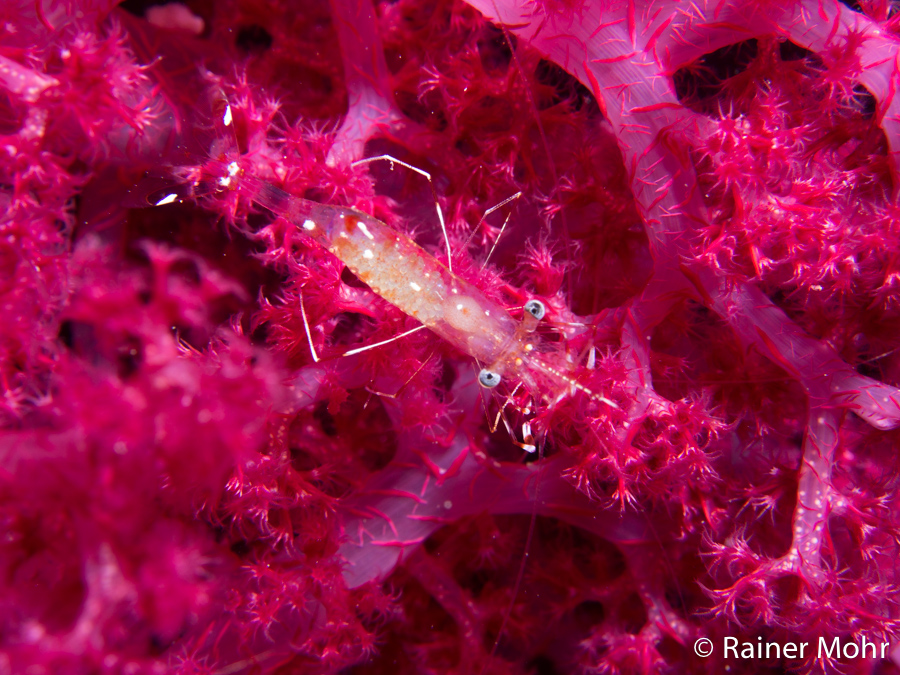
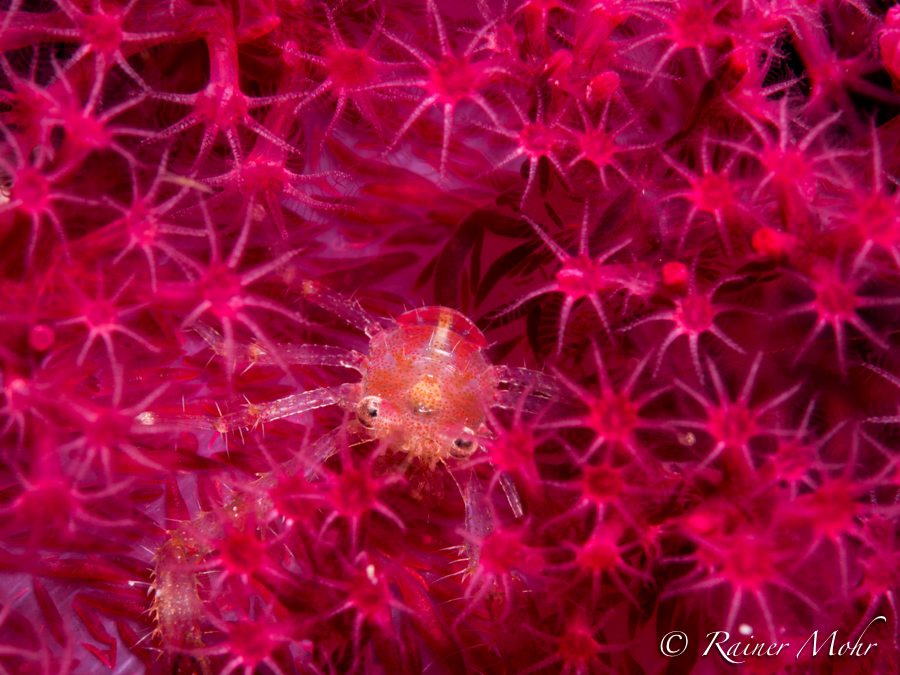
A tiny transparent shrimp sits among the vivid pink tentacles of a soft coral. The perfect camouflage and symbiotic relationship between shrimp and coral are clearly recognisable.
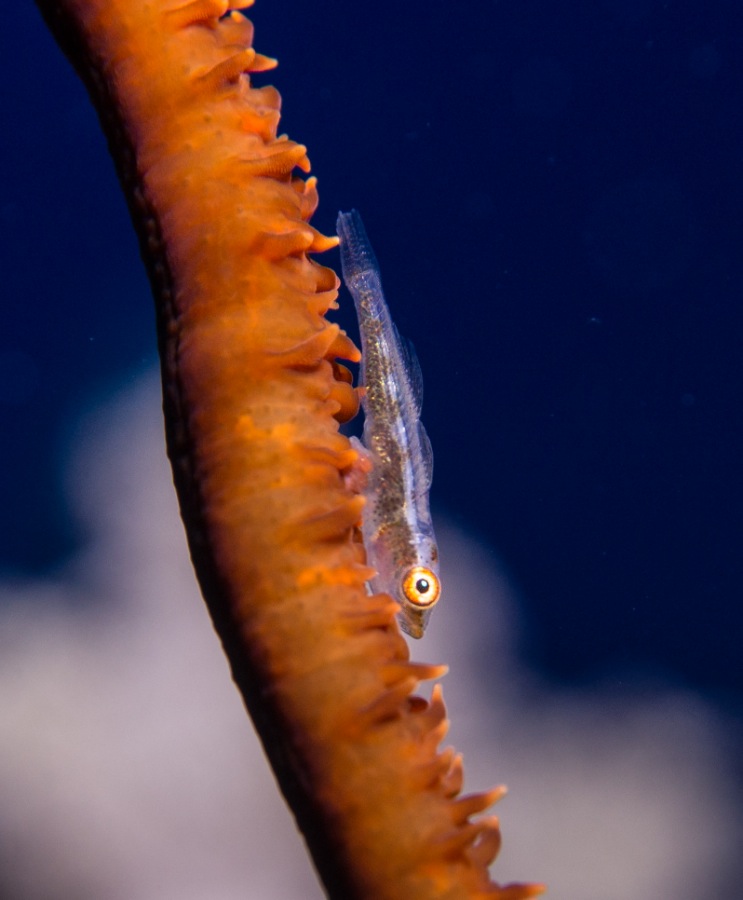
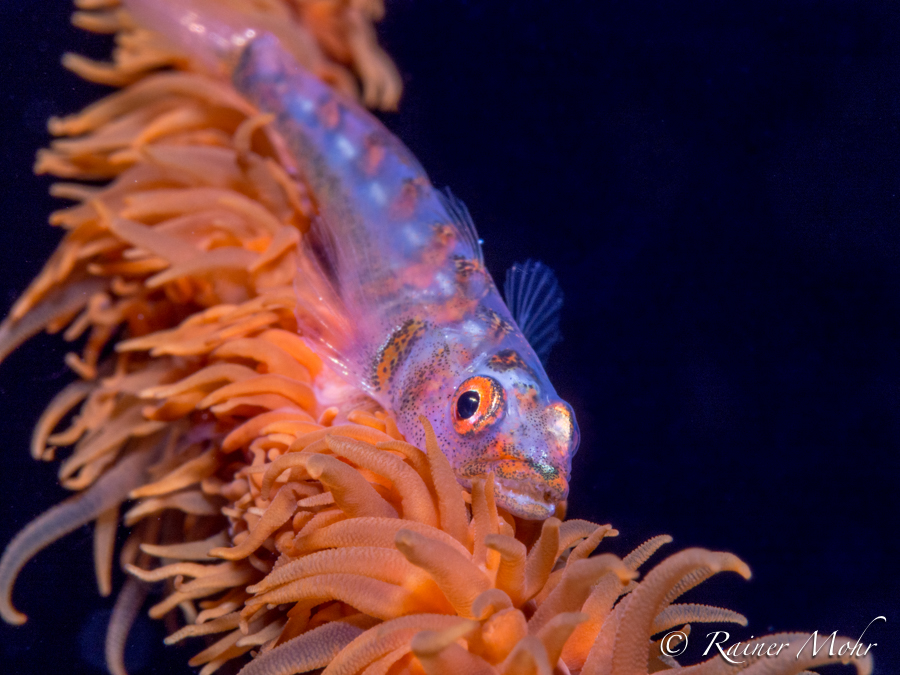
A small transparent goby sits among the orange polyps of a whip coral. The tiny fish with its characteristic large eye uses the coral as shelter and habitat β€” a typical example of reef symbiosis.
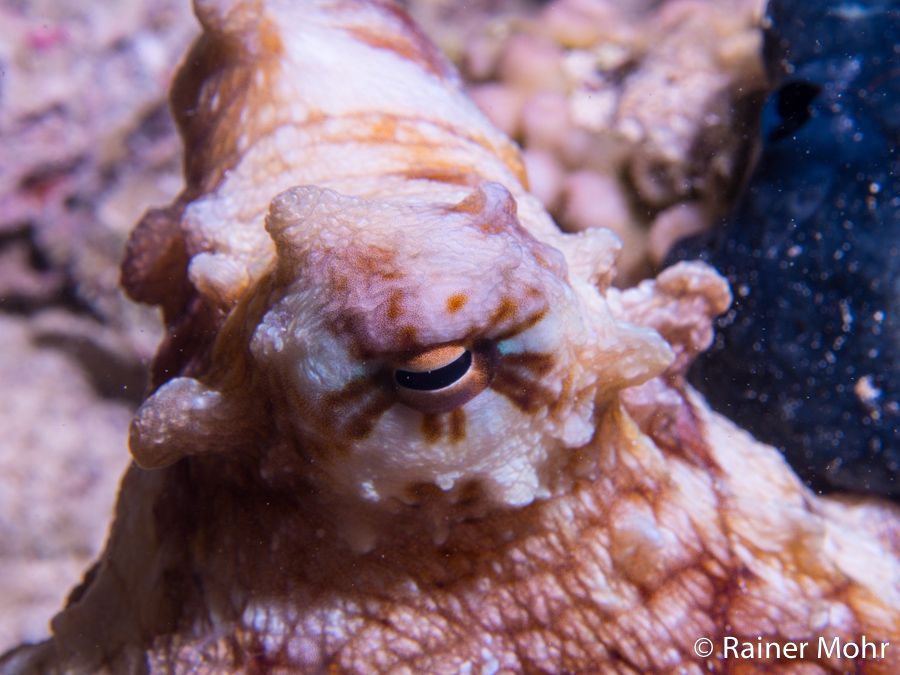
A common octopus displays its impressive camouflage among corals and reef rocks. The animal has perfectly adapted its skin to the surroundings, showing characteristic skin textures and a striking dark eye.
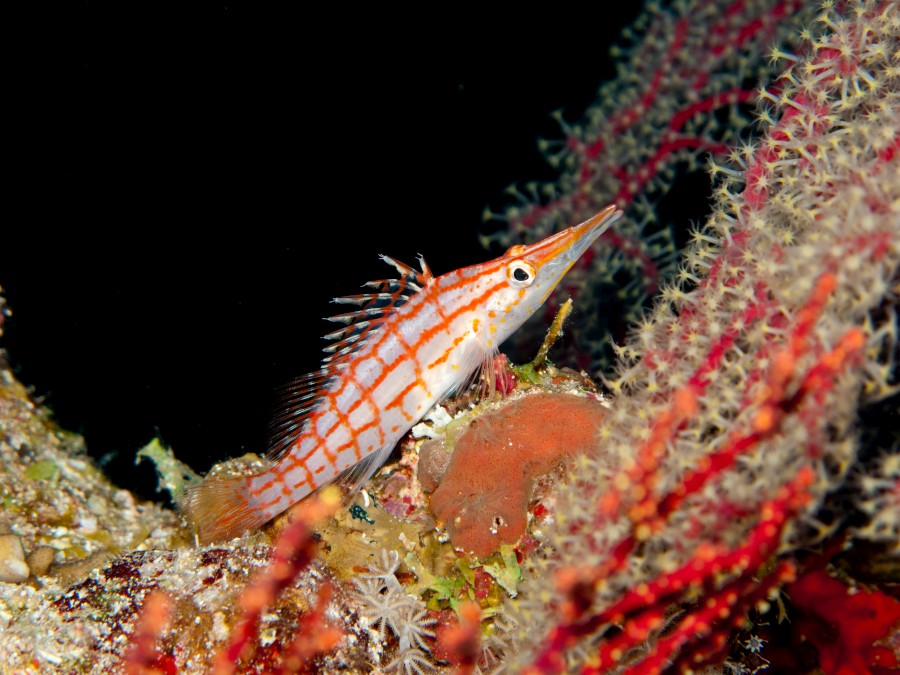
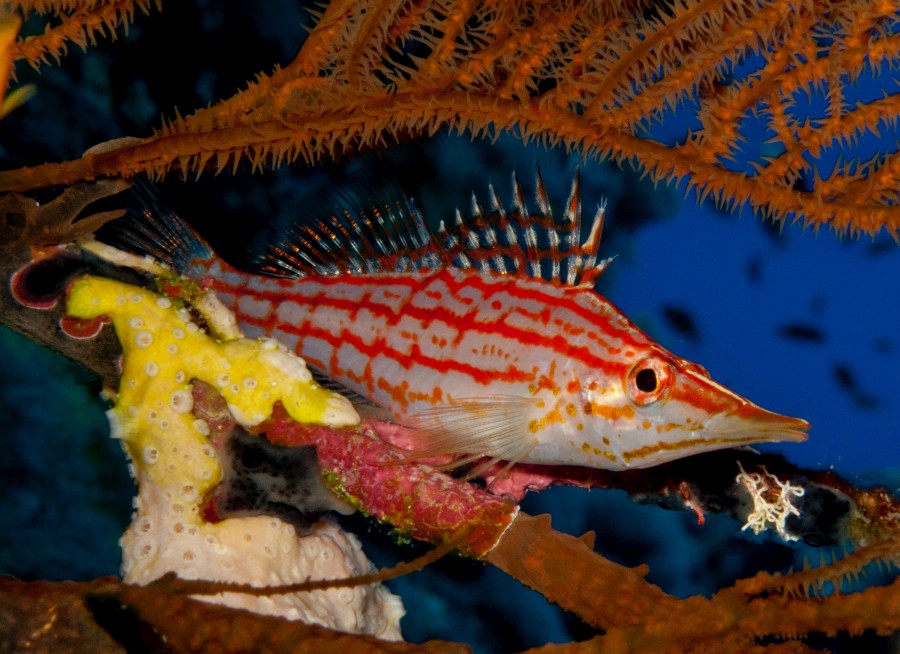
A long-nosed hawkfish hides among colourful soft corals, displaying its characteristic red-and-white striped pattern. The small fish with its distinctive elongated snout and raised dorsal fin spines sits perfectly camouflaged among the orange-red and yellow coral polyps.
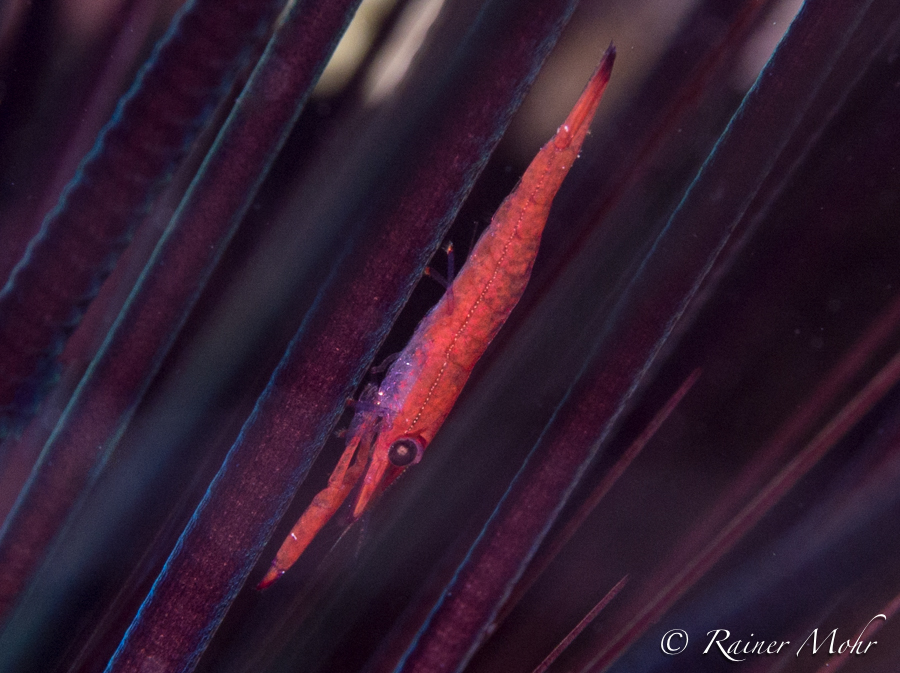
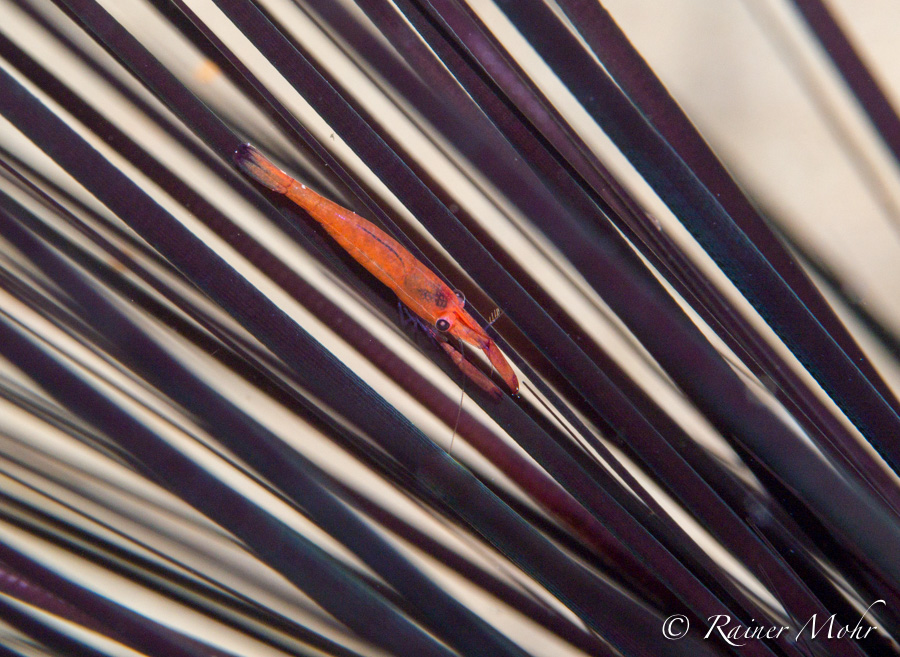
A red-coloured shrimp hides among the long dark spines of a sea urchin. This perfect camouflage is a fascinating example of mimicry on the reef, with the slender animal and its pointed rostrum becoming almost invisible among the urchin spines.
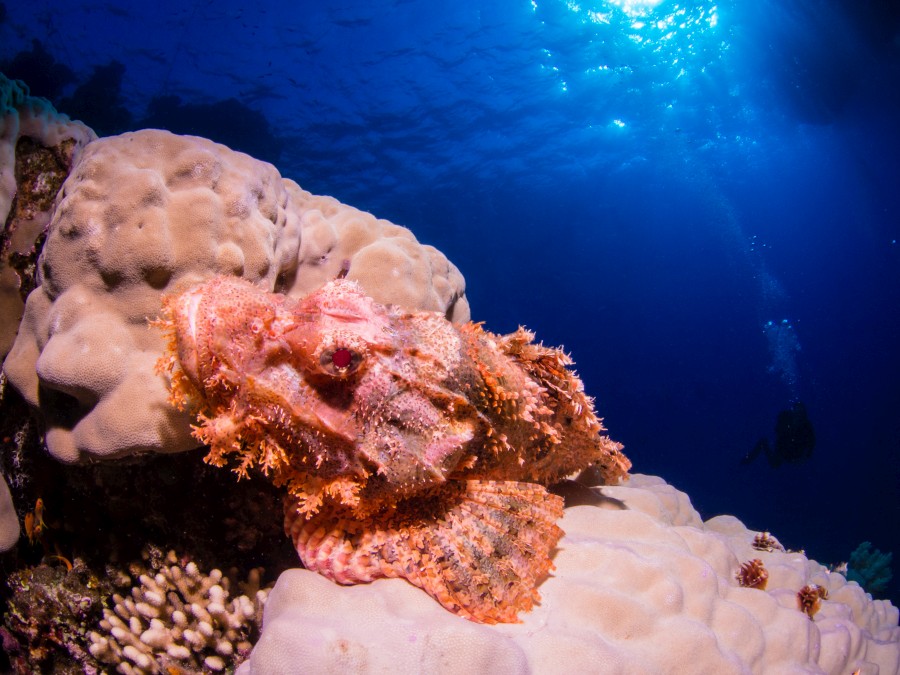
A red-orange scorpionfish sits perfectly camouflaged among white corals on the reef. Its spiny fins and warty skin blend masterfully with the reef structure, while the deep blue water in the background forms a beautiful contrast.
A close-up of a lizardfish reveals its characteristic reptilian face with striking upward-pointing eyes and broad mouth. The detailed macro shot captures the complex skin texture and perfect camouflage of this bottom-dwelling predator.
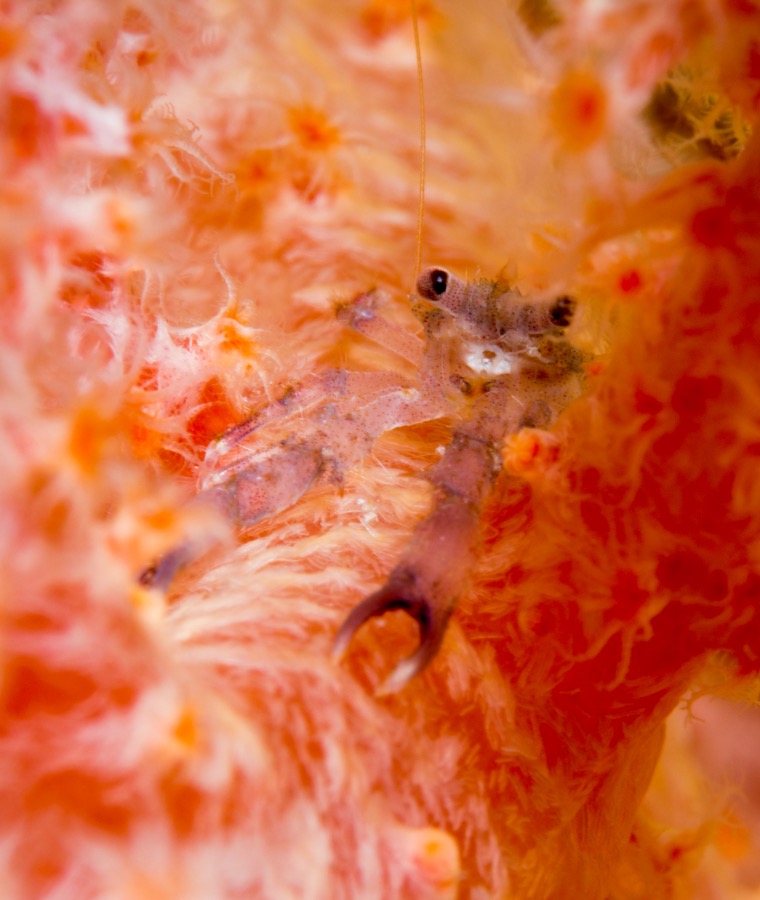
A tiny transparent crab with characteristic black eyes sits on an orange-red coral or sponge. The animal achieves perfect camouflage through its transparent body structure, blending harmoniously into the warm colours of its surroundings.
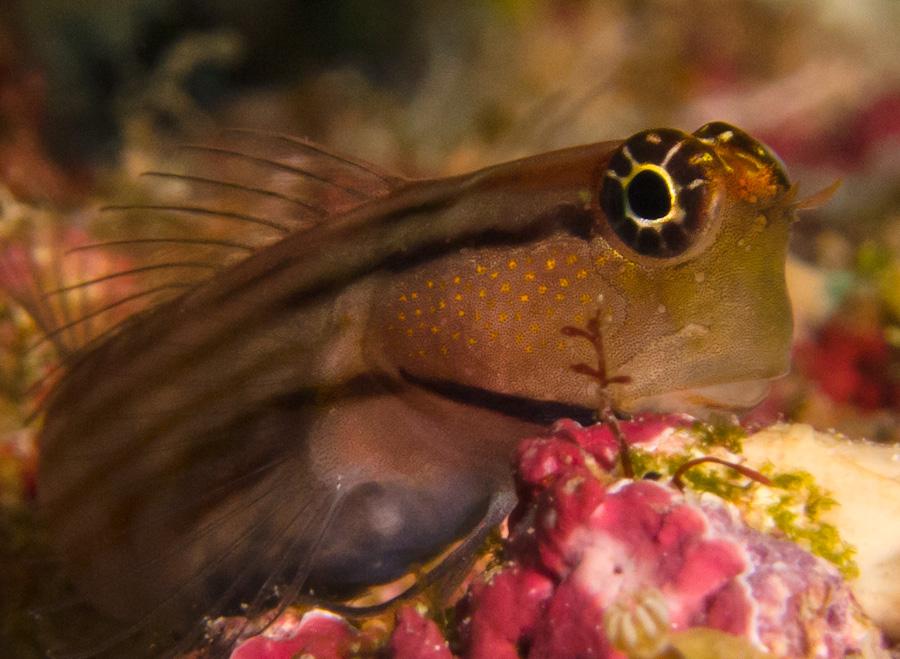
A blenny with characteristically yellow-rimmed eyes and orange spots on its skin rests among colourful corals and sponges. The small fish shows typical behaviour for its species, tucking itself into a protected crevice of the reef.
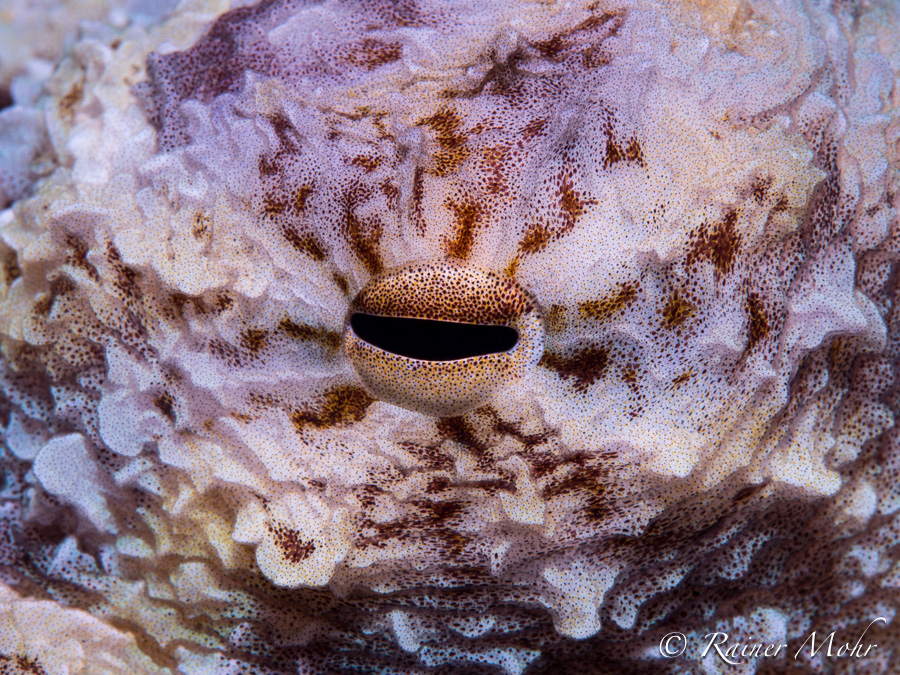
A perfectly camouflaged octopus demonstrates its impressive ability to adapt to its surroundings. The characteristic eye with its horizontal pupil is clearly recognisable, while the skin texture and colouring blend almost perfectly with the rocky substrate.
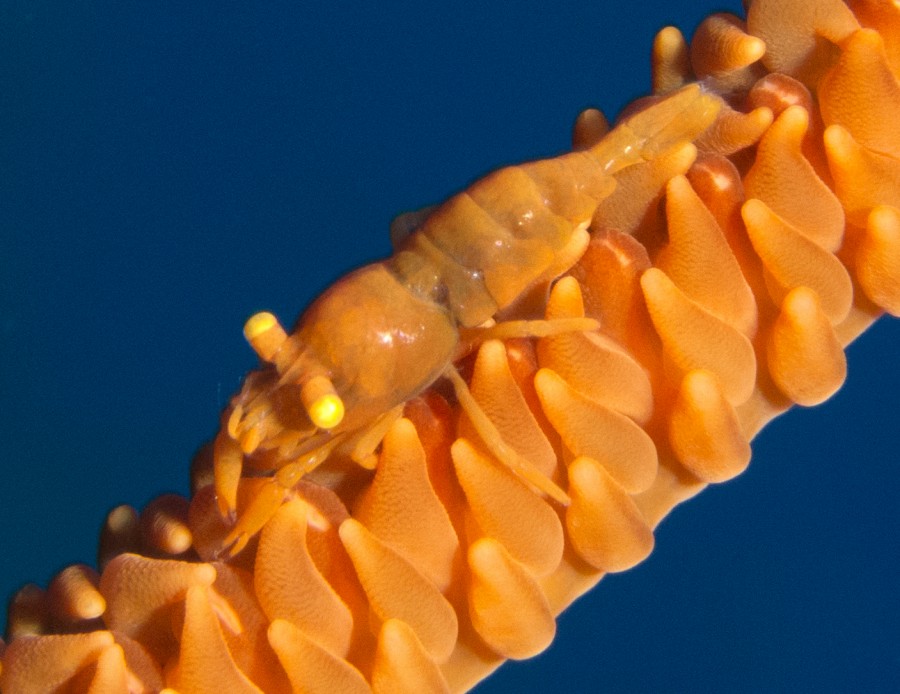
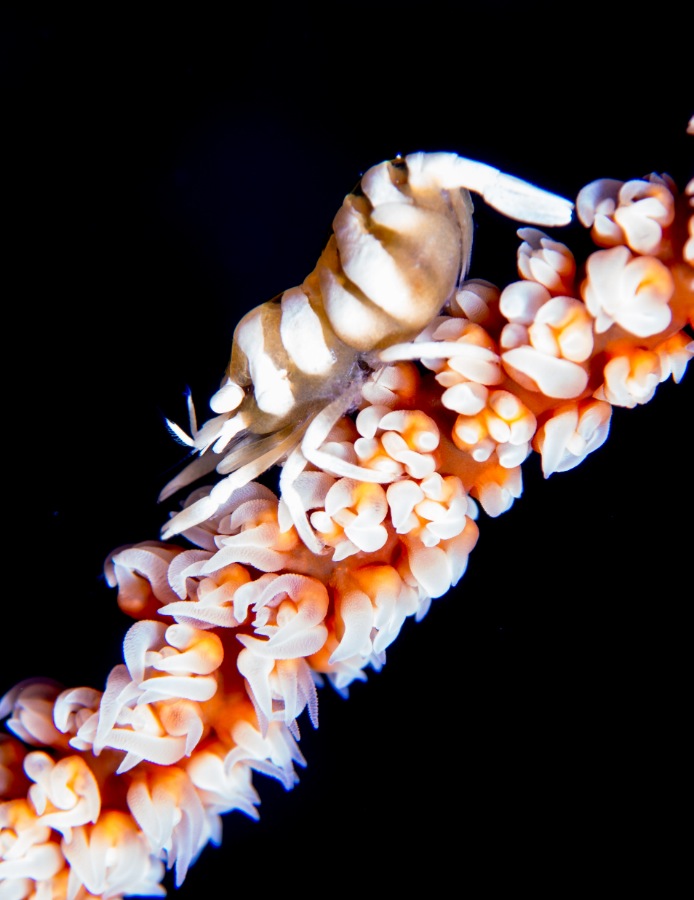
The image shows a wire coral shrimp (Pontonides sp.) on a coral. The shrimp's perfect camouflage protects it from predators.
A small crab with vivid orange legs and a pink-whitish body with distinctive red eyes hides among corals. The crab displays perfect camouflage in its natural habitat among the structured coral polyps.
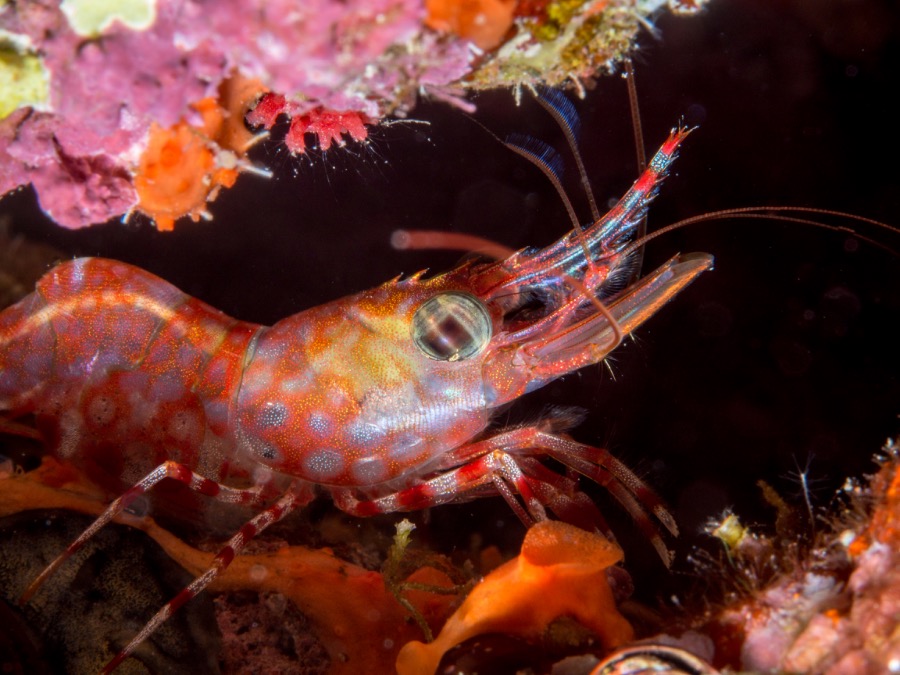
A colourful shrimp with orange-red spots and a transparent body sits among colourful corals and sponges. The long antennae are clearly visible and the animal adopts the typical crouched posture of a reef-dwelling shrimp.
A dragonhead scorpionfish with its characteristic large dark eye is perfectly camouflaged among corals and sponges. The brown-beige colouring and structured skin blend optimally with the reef environment, while small skin projections enhance the camouflage.
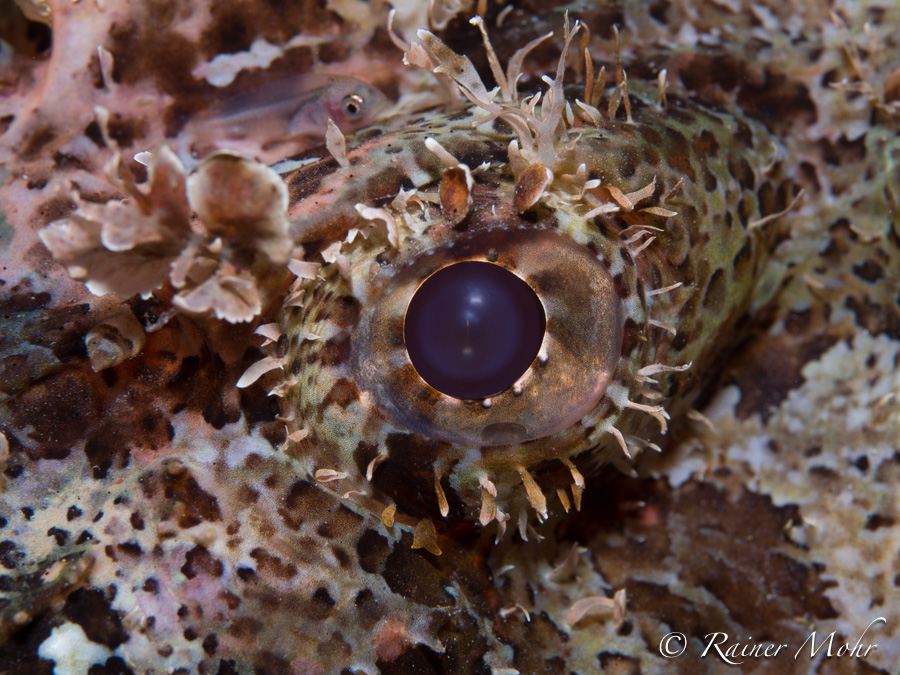
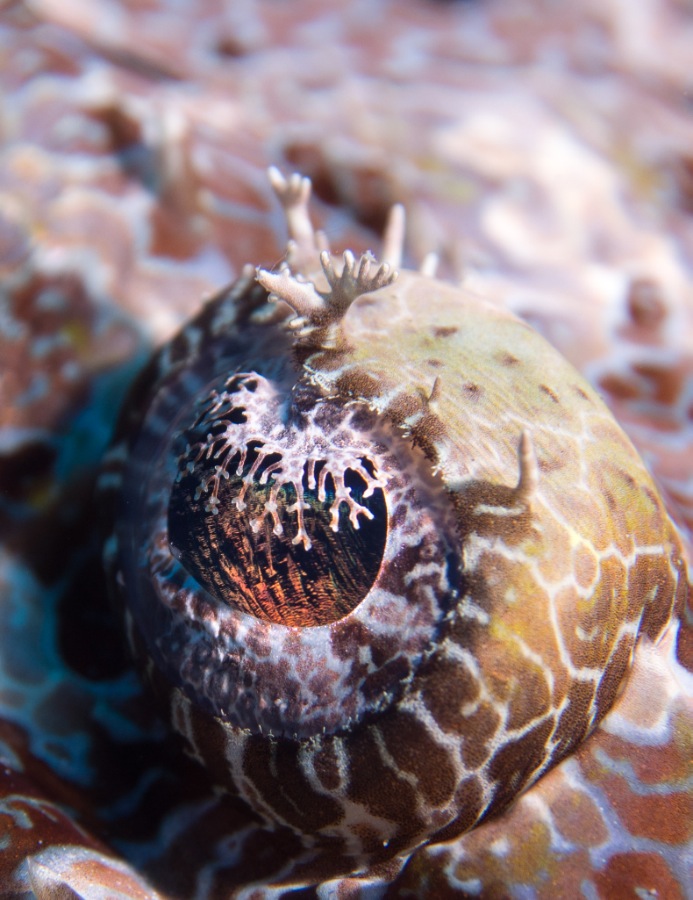
An impressive close-up of a crocodilefish eye reveals the characteristic W-shaped pupil and complex skin structure. The dark eye with its iridescent reflections contrasts strikingly with the spotted, colour-changing skin of the fish.
A transparent cleaner shrimp with violet spots and white stripes sits among the tentacle-like arms of a sea anemone. The shrimp displays typical cleaning station behaviour, removing parasites and dead tissue from visiting fish.
A wire coral with a goby living on it, photographed against a deep blue background.
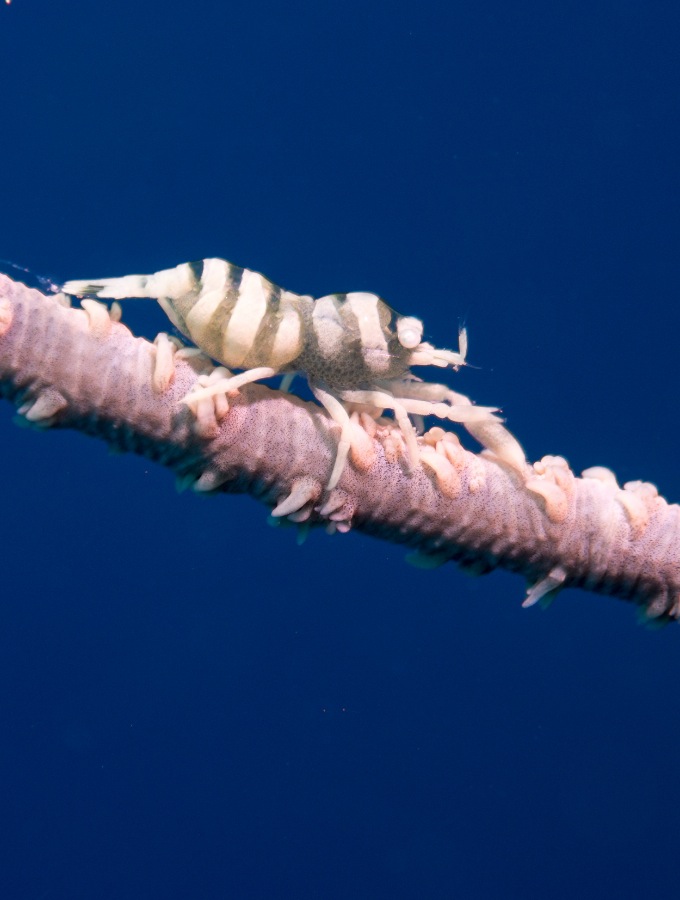
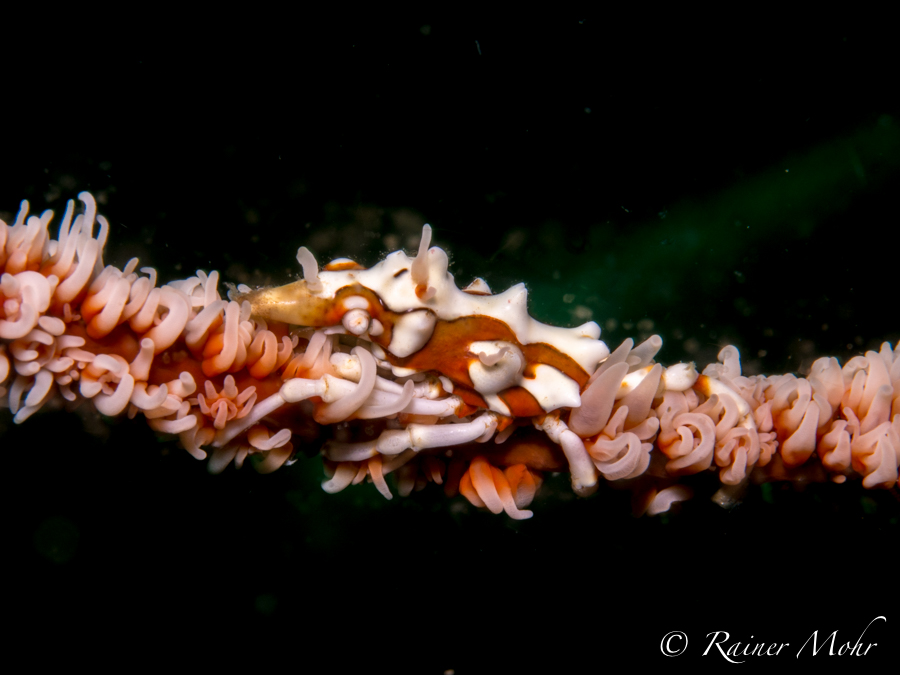
The image shows a wire coral shrimp (Dasycaris zanzibarica) sitting on a wire coral, perfectly adapted to its surroundings to hide from predators.
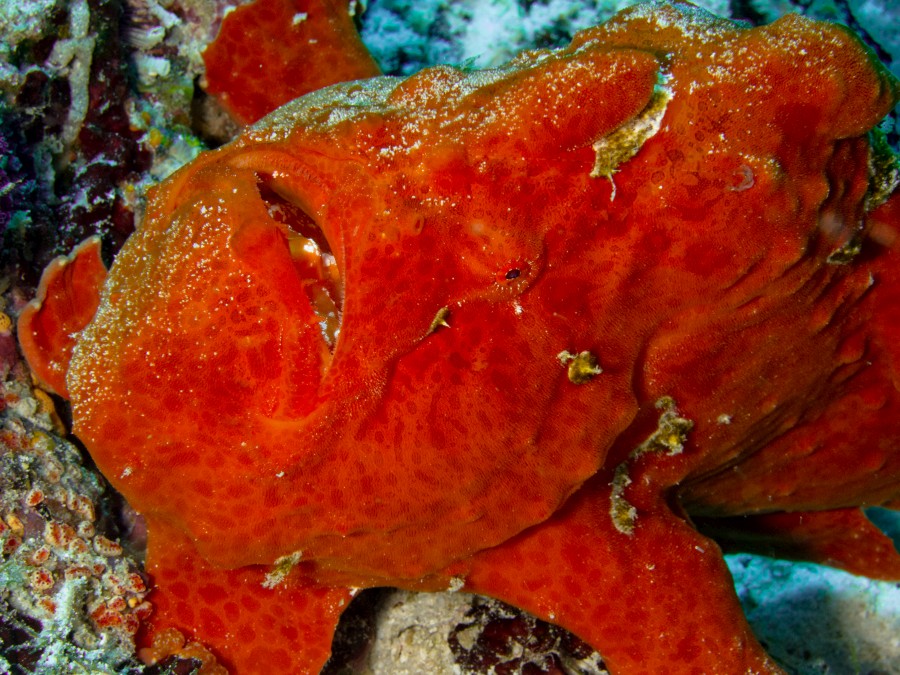
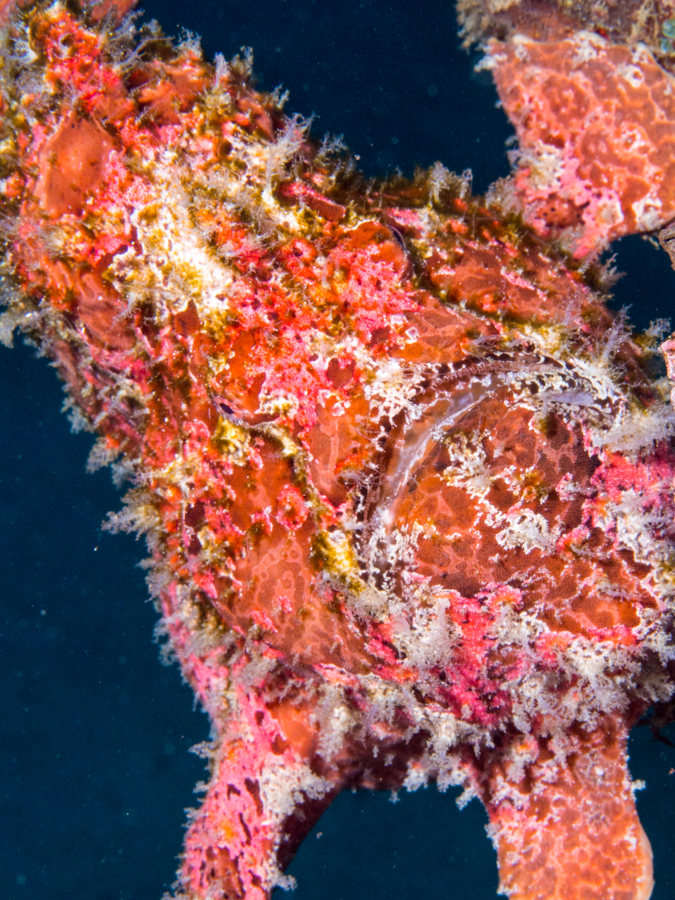
A colourful close-up shows a frogfish with its characteristic warty, skin-flap-covered skin in vivid red and brown tones. The complex skin structure with its fleshy outgrowths and perfect camouflage make this master of mimicry a fascinating photography subject.
A tiny transparent shrimp with orange body details sits perfectly camouflaged among the vivid pink tentacles of a soft coral. Due to its transparent body structure and colour adaptation to its habitat, the shrimp is barely visible β€” a masterpiece of camouflage.
A long-snouted hawkfish swims among the branching arms of a gorgonian. The small fish displays its characteristic orange-red lattice pattern and elongated snout as it seeks shelter in the coral branches.
A wire coral shrimp sits on its host wire coral against a deep blue backdrop. The tiny crustacean is perfectly adapted to its host and displays fascinating camouflage.
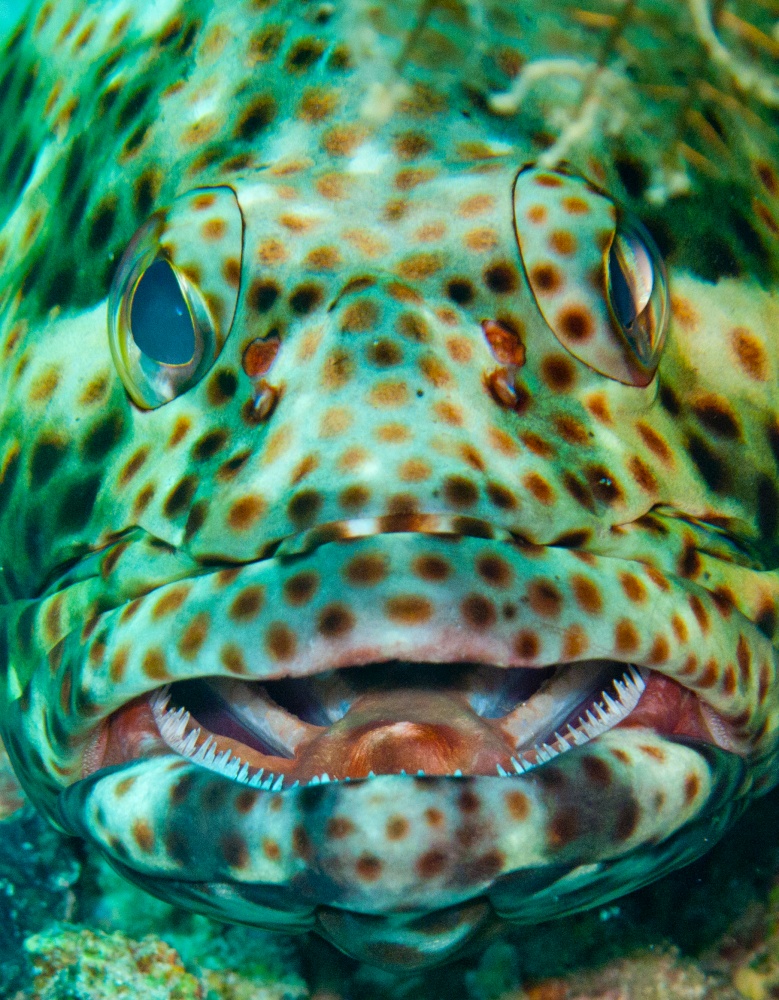
An impressive portrait of a red-spotted grouper with open mouth, revealing its characteristic pointed teeth and orange-red oral cavity. The fish shows its typical greenish-brown spotted pattern and the striking upward-pointing eyes.
A long-nosed hawkfish hides among the branches of a gorgonian. The red-and-white striped fish with its characteristically elongated snout uses the coral as shelter, its colouring harmonising perfectly with the orange-red gorgonian.
A transparent ghost shrimp or glass shrimp sits perfectly camouflaged among the pink tentacles of a soft coral. The transparent body structure of the shrimp makes it almost invisible in its vivid pink habitat.
A small orange-red shrimp hides among the long dark spines of a sea urchin. The animal uses the spines as shelter and hiding place, its vivid orange colouring forming a beautiful contrast against the dark spines.
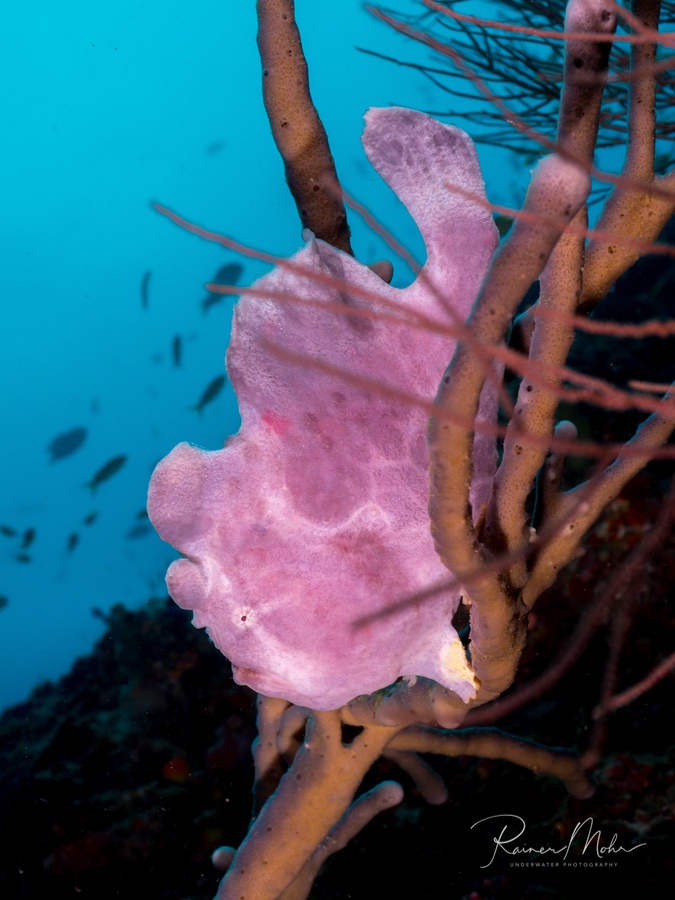
A pink frogfish clings to black coral branches and is perfectly camouflaged by its body shape and colouration. Small reef fish swim through the blue water in the background.
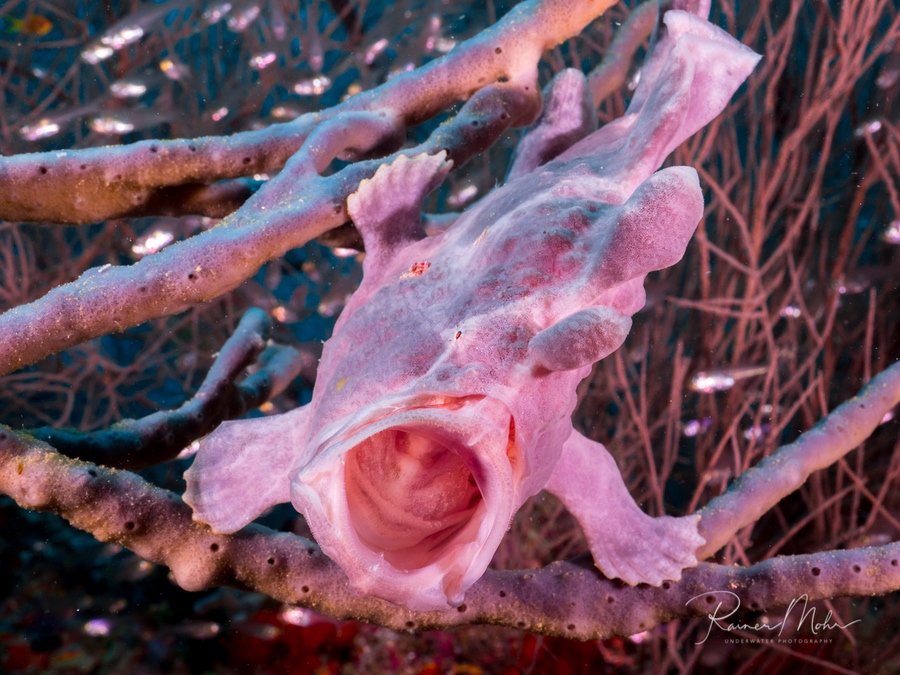
A pink frogfish clings to a black coral branch and displays its wide-open mouth. The rough, sponge-like skin texture and the perfect camouflage among the branches are fascinating.
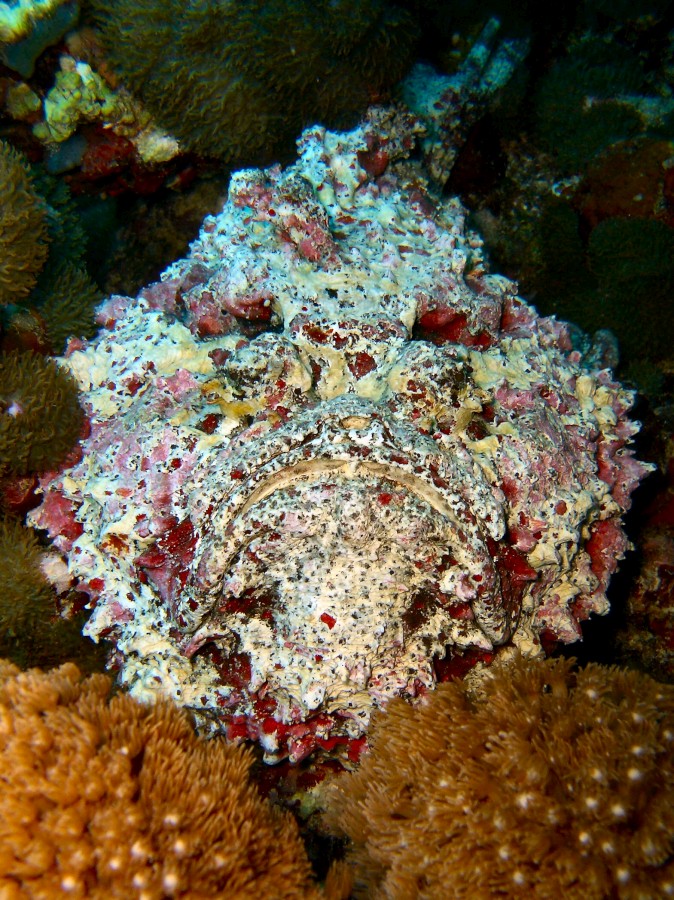
A perfectly camouflaged stonefish rests motionlessly on the reef floor, surrounded by colourful coral encrustations and sponges. The warty skin and irregular body shape make it nearly invisible in its surroundings β€” a true master of camouflage.
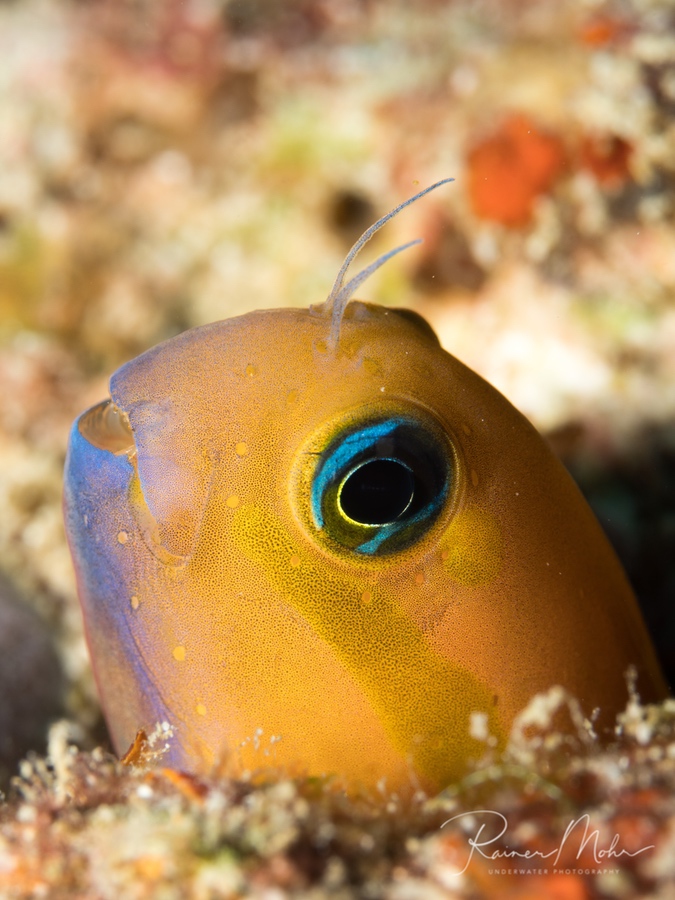
A blenny with a characteristic large eye and vivid yellow-orange colouration peeks out from its hiding place among corals and sediment. The striking turquoise-blue eye with black pupil and the small projection above the head are typical of this species.
A vivid red-and-white patterned longnose hawkfish rests on a richly structured gorgonian. The small fish displays the characteristic lattice pattern and typical elongated dorsal fin rays of its species.
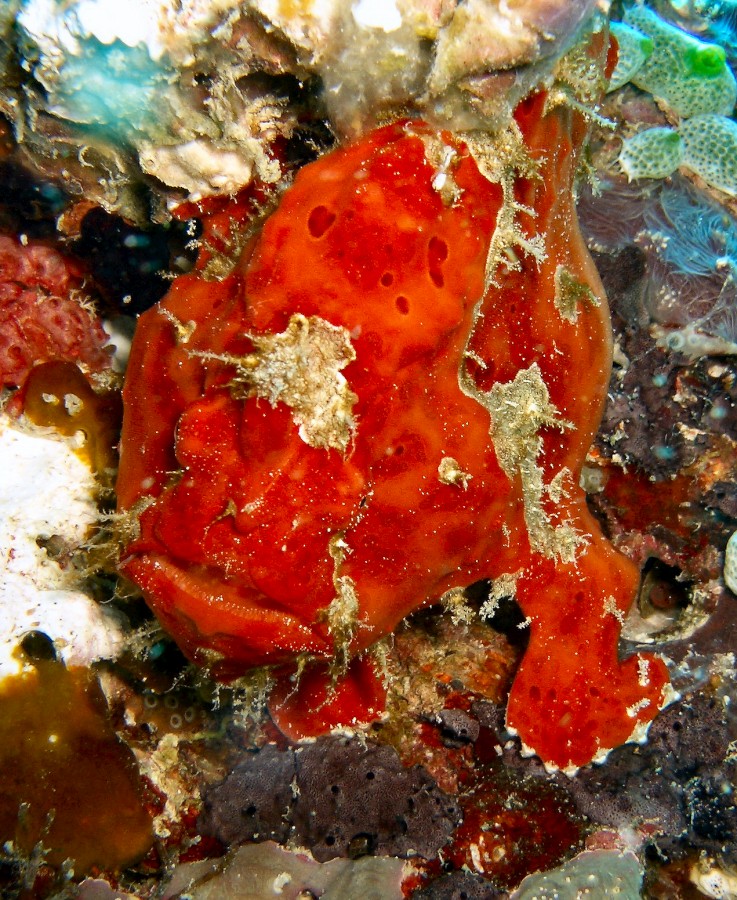
A vivid red frogfish sits well camouflaged among sponges and other marine organisms on the reef floor. The fish displays its characteristic warty skin and typical stocky body shape as it waits motionlessly for prey.
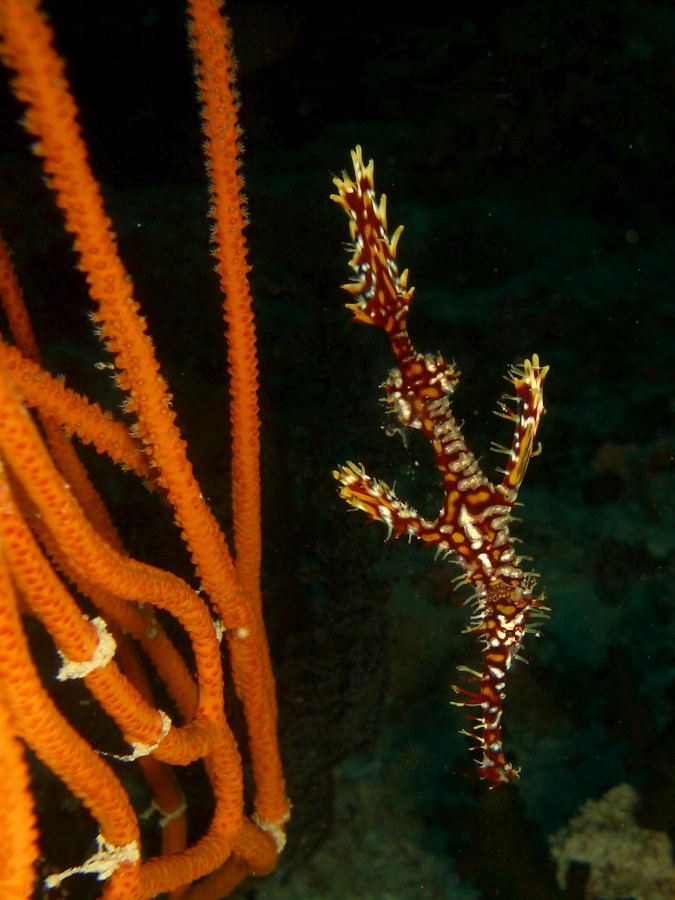
A ghost pipefish hangs vertically among the arms of an orange whip coral. The slender fish displays its typical upright swimming posture and blends perfectly among the coral branches with its red-and-white striped pattern.
A perfectly camouflaged tassled scorpionfish sits among colourful soft corals and sponges on the reef. Its brownish-yellow colouration and fleshy skin flaps blend almost completely with the surrounding orange and reddish corals.
A red-and-white striped longnose hawkfish sits in a gorgonian. The small reef fish displays its characteristic elongated body shape and striking striped pattern as it navigates among yellow sponges and orange corals.
A perfectly camouflaged tassled scorpionfish sits among corals, displaying its extraordinary concealment. Covered with skin flaps and protrusions, the fish becomes nearly invisible among the textured corals β€” an impressive example of adaptation and camouflage.
A vivid red-orange shrimp hides on a sea star.
A large red frogfish rests among corals on the reef. The animal displays the characteristic warty skin texture and vivid red colouration, with small algae traces visible on its surface.
A well-camouflaged Halimeda-Ghostpipefish sits among corals and sponges on the reef floor. Particularly striking is a bright yellow tube sponge that stands out clearly from the surrounding brown and reddish encrustation.
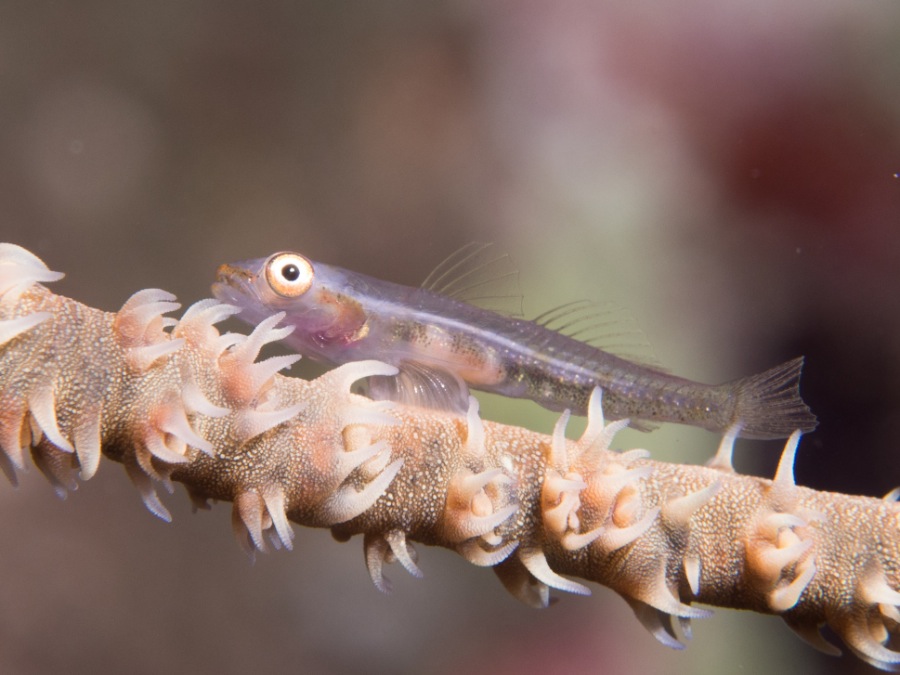
A transparent whip coral goby rests on its host coral. These small fish live in a symbiotic relationship with whip corals and are perfectly adapted to the colour and structure of their host, making them extremely well camouflaged.
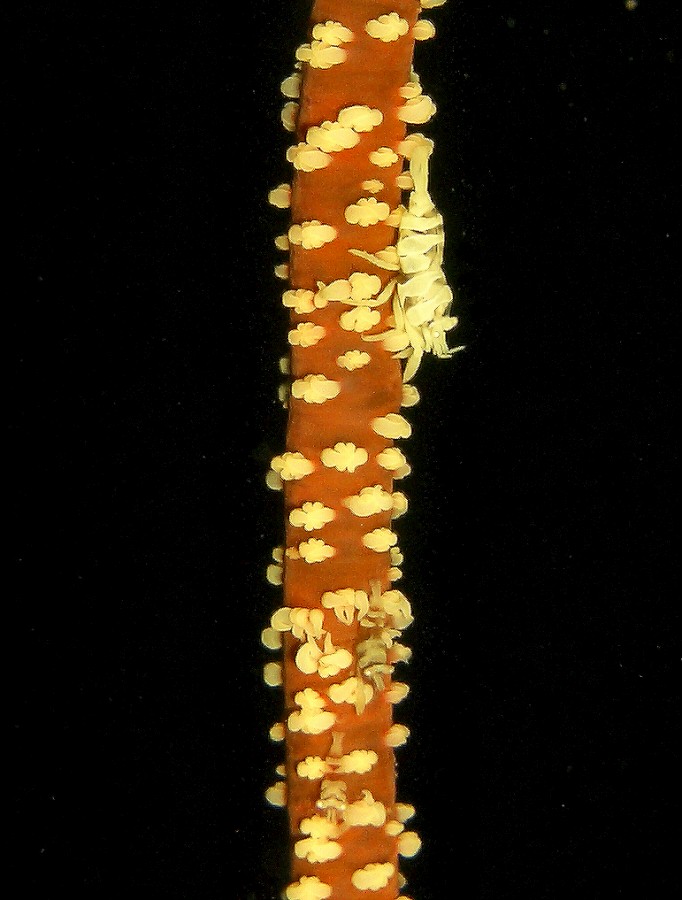
An orange whip coral trunk is densely covered with yellow coral polyps protruding like small flowers from the stem. A small whitish shrimp is well camouflaged among the polyps.
A common cuttlefish rests on a colourful coral reef, displaying its characteristic brown-and-white colouring with striking large eyes. The animal is perfectly camouflaged among the corals and the encrusted substrate.
The image shows the eye of a crocodilefish (Cymbacephalus beauforti).
The image shows a whip coral shrimp (Pontonides ankeri) resting on its host coral. These small shrimps live in a symbiotic relationship with whip corals and are perfectly adapted to the colour and structure of their host coral, providing extremely effective camouflage.
A small transparent goby sits on a wire coral.
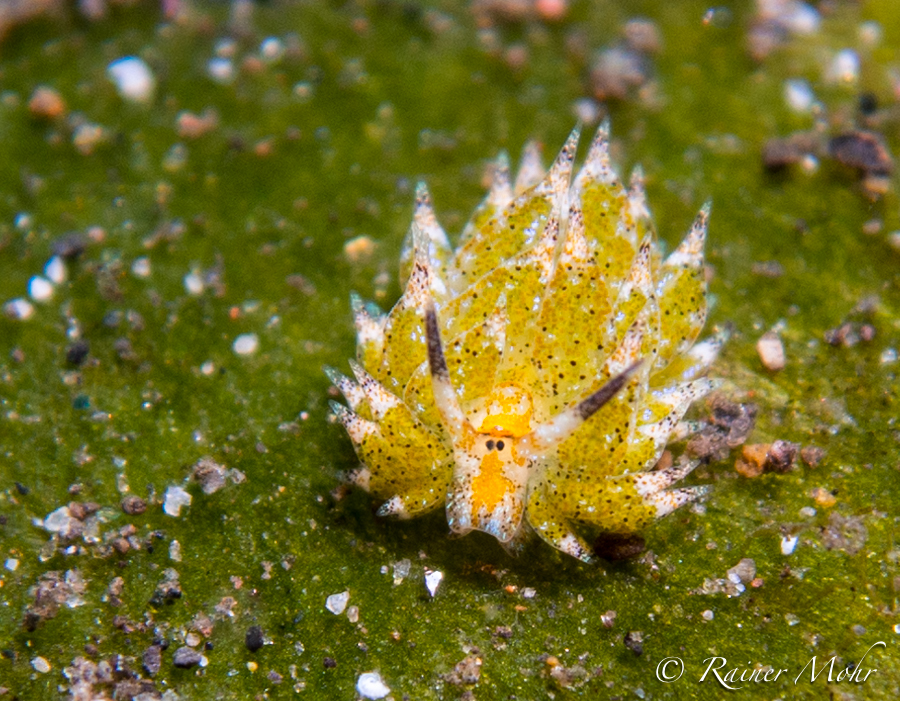
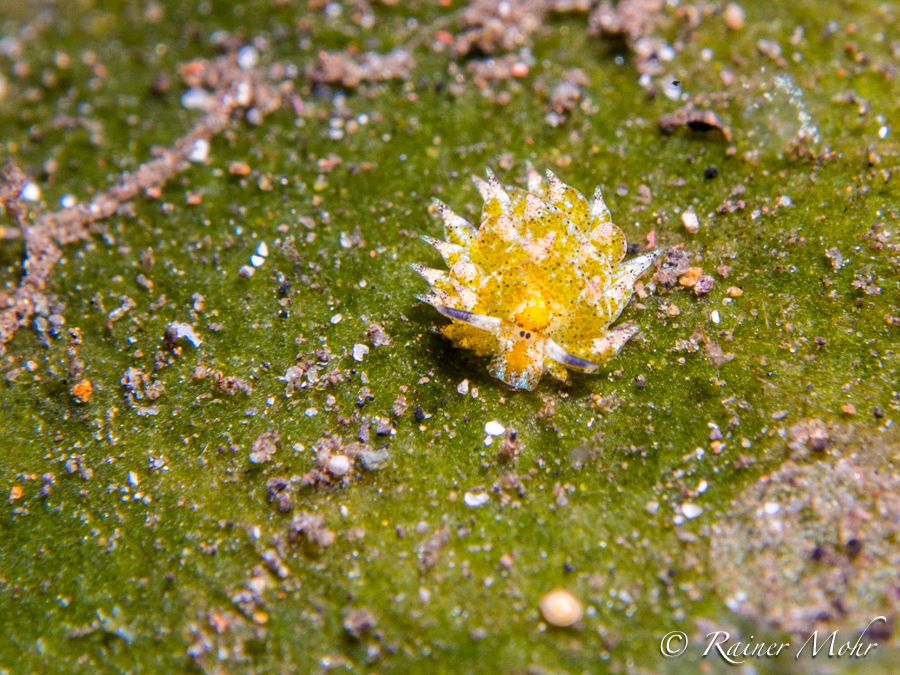
The image shows Costasiella kuroshimae, a tiny sea slug species also known as the "leaf sheep". They grow to only about one centimetre and have structures called cerata on their backs that give them a leaf-like appearance.
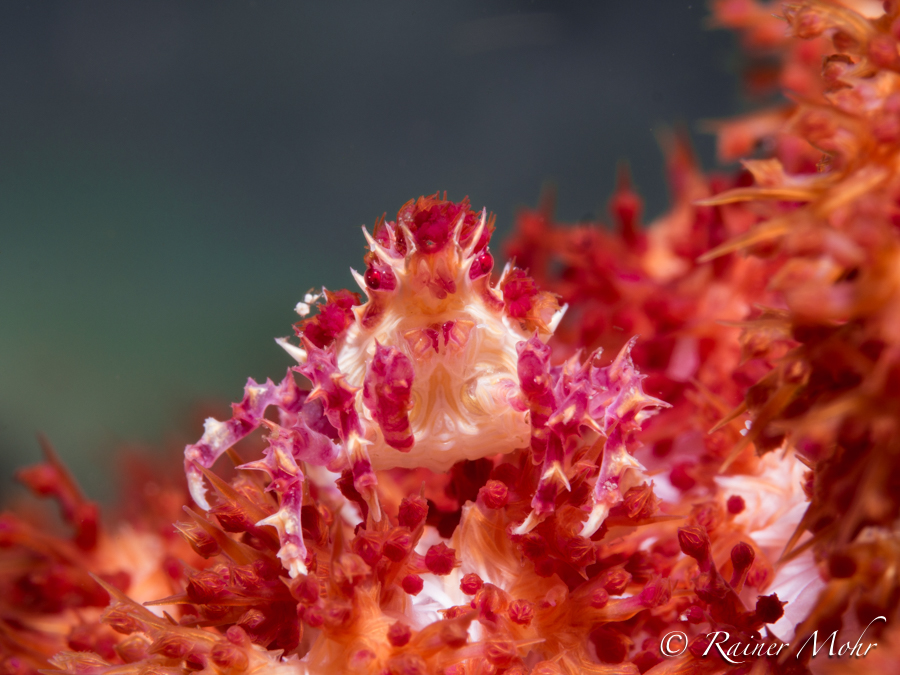
A fascinating macro shot shows a candy crab in perfect camouflage among colourful soft corals. The yellowish-transparent crab blends almost completely with its surrounding pink and orange branching structures.
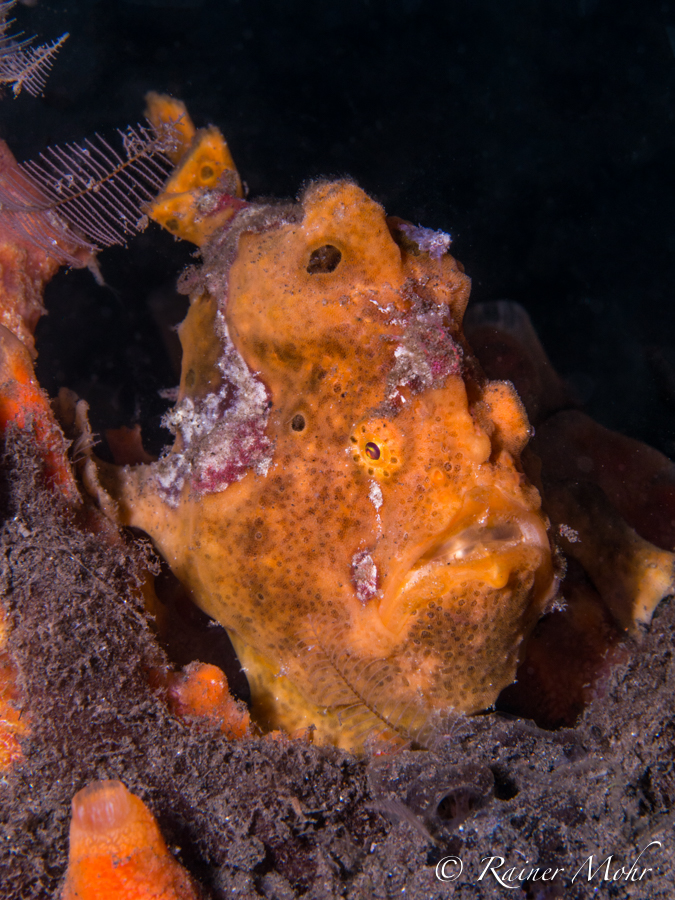
An orange-yellow frogfish (Antennariidae) sits camouflaged among sponges and coral growth on the seafloor. The small, rounded animal with its characteristic knobbly body shape and clearly visible eyes shows perfect adaptation to its environment.
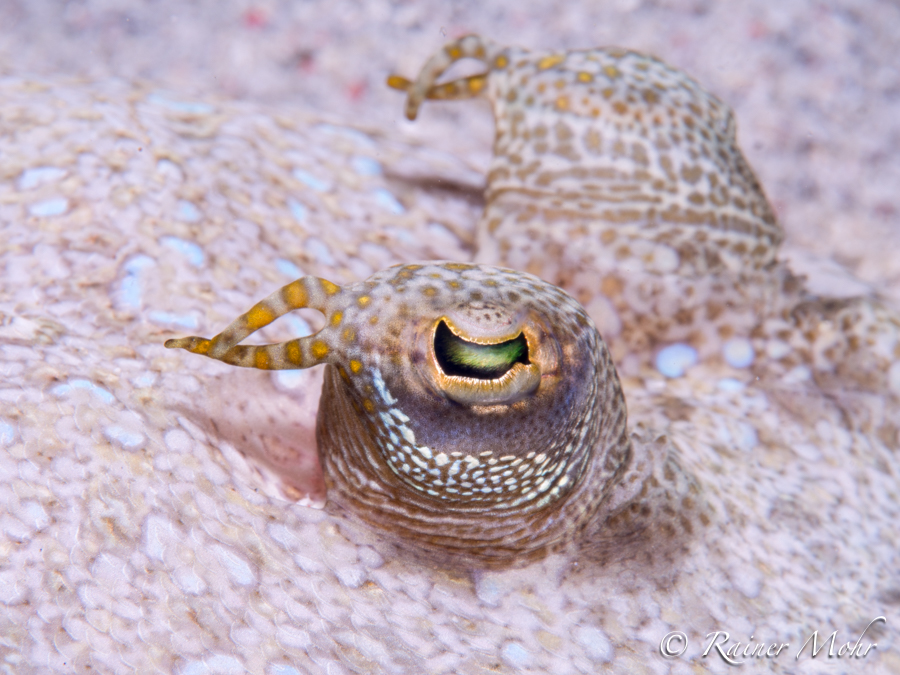
Close-up of the eye of a sole. The delicate iris fringes (lappets) and the perfect sand camouflage are visible in fine detail.
A fascinating macro shot shows a small crab that has hidden in a vivid pink sea feather. The transparent crab with its characteristic striped legs and claws uses the anemone for protection, while the whitish tentacles of the anemone float elegantly in the water.
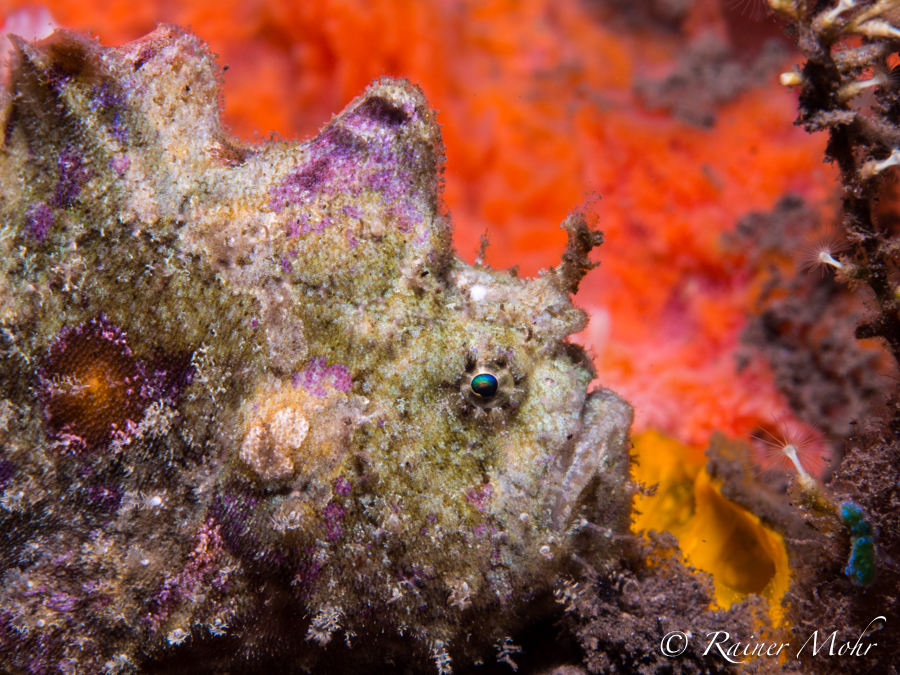
A perfectly camouflaged frogfish sits among colourful corals and sponges on the reef. The animal demonstrates its impressive ability to camouflage by mimicking the colour and texture of its surroundings, making it nearly invisible.
The image shows a whip coral goby (Bryaninops yongei) resting on a whip coral (Cirrhipathes anguina). The body is semi-transparent, allowing the fish to blend perfectly with the colour of the coral.
A juvenile red lionfish with its prey in its mouth.
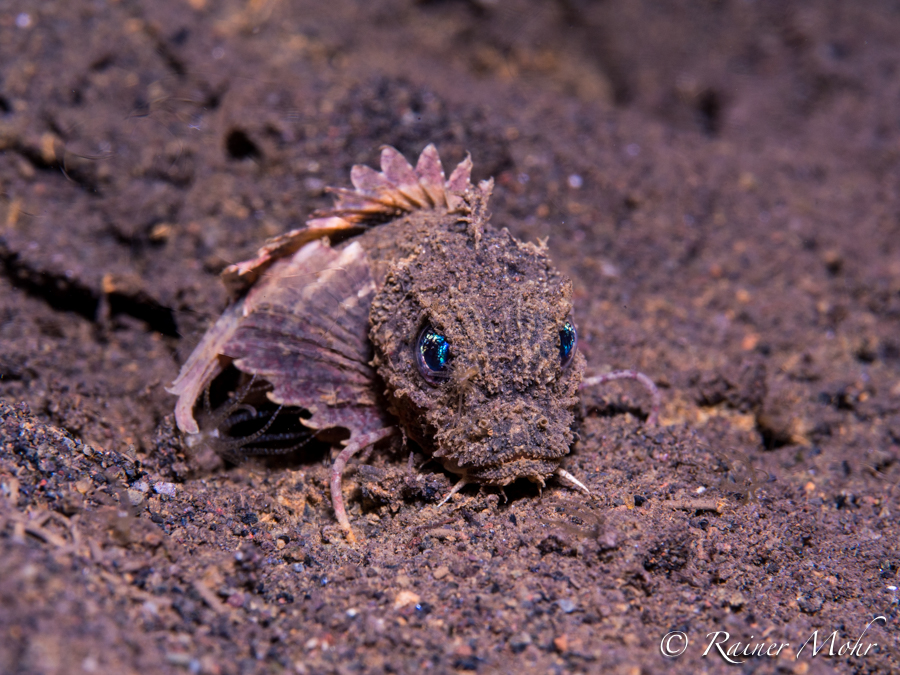
A juvenile scorpionfish on dark sandy ground.
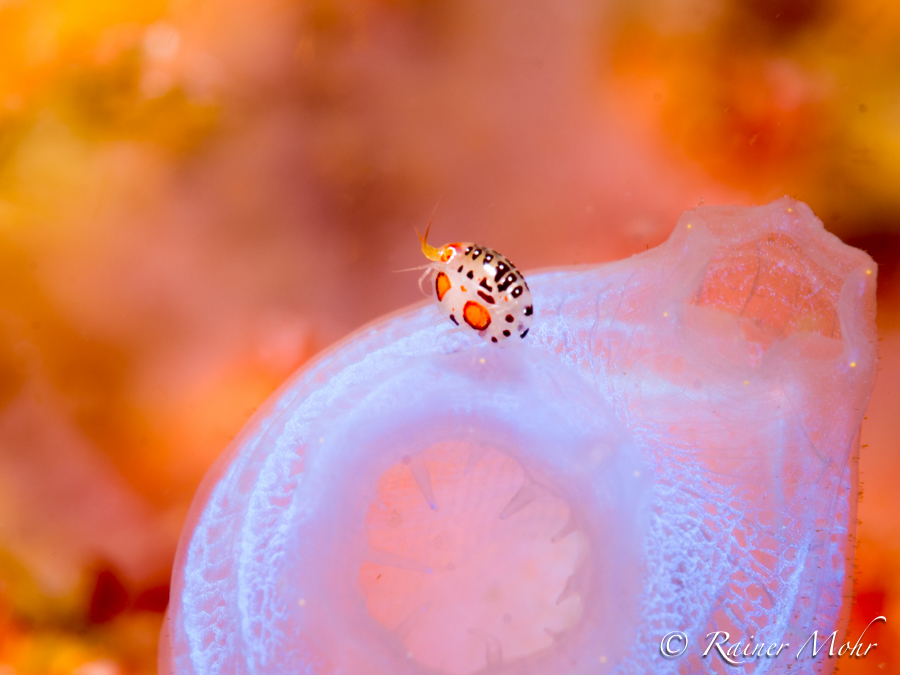
A small Ladybug amphipod with characteristic white base colouration and black and yellow-orange spots sits on a translucent sea squirt. The delicate structure of the host animal shows a glassy, almost transparent surface in pink-violet tones.
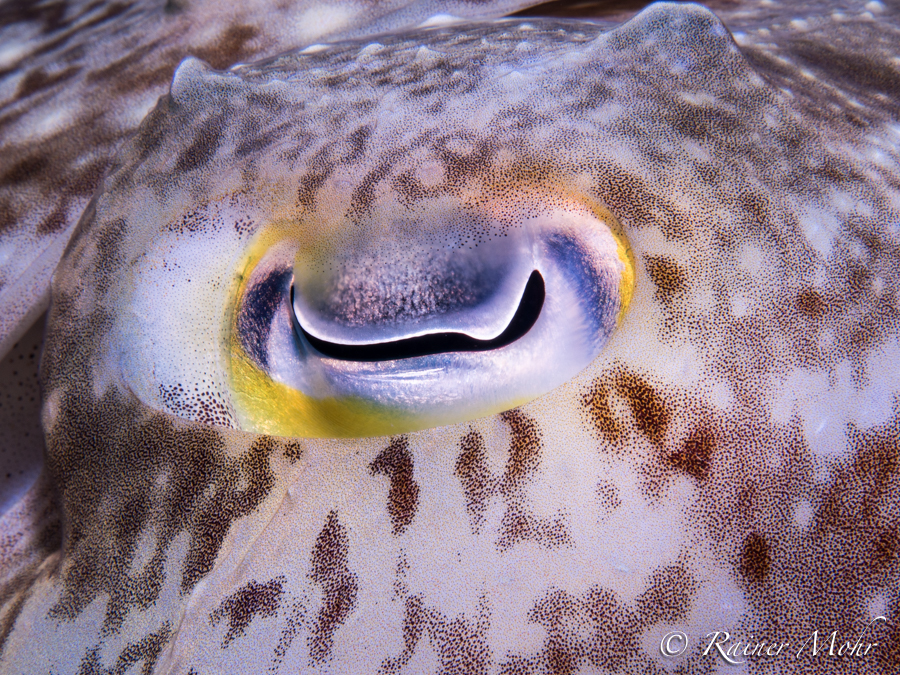
Close-up of the eye of a cuttlefish with its characteristic slit-shaped pupil. The detailed macro shot reveals the fine dotting and patterning of the skin and the distinctive pupil shape.
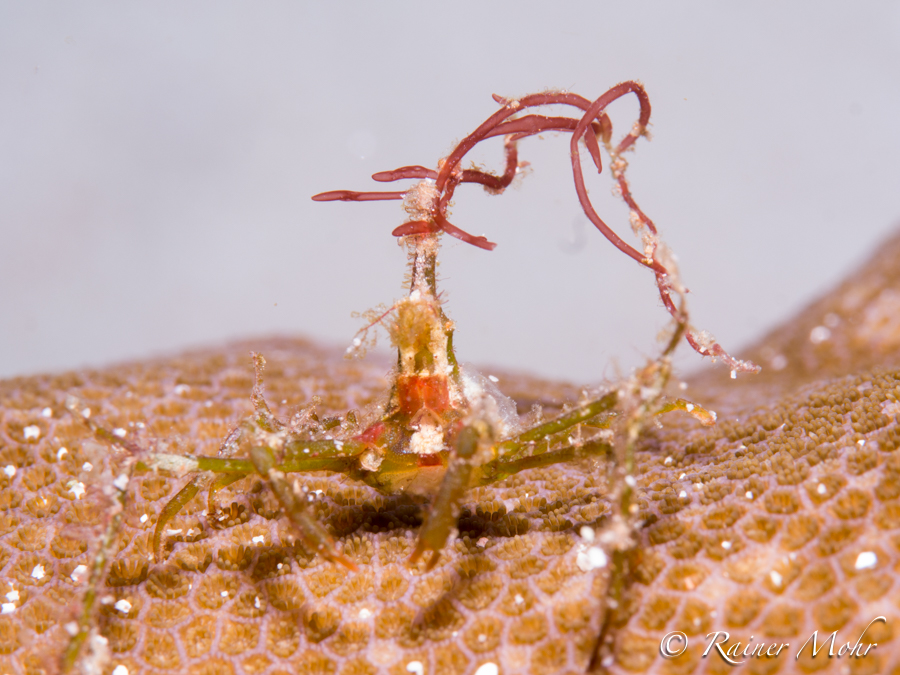
The image shows a common spider crab (Macropodia rostrata) on a sponge. This crab species is known for its extreme camouflage ability and often decorates itself with algae or sponges to resemble seagrass.
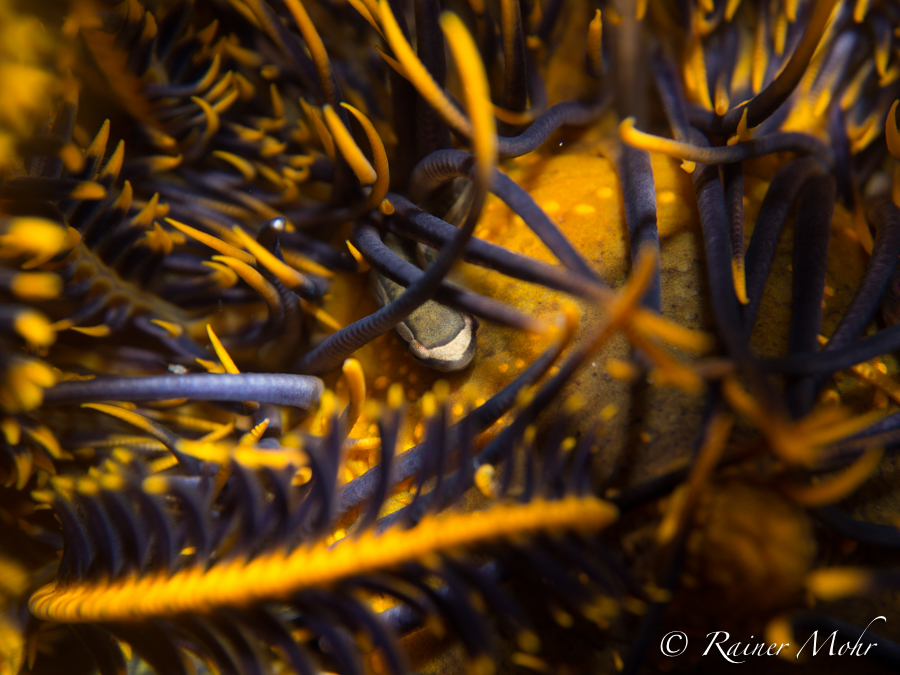
A tiny fish hides among the arms of a feather star.
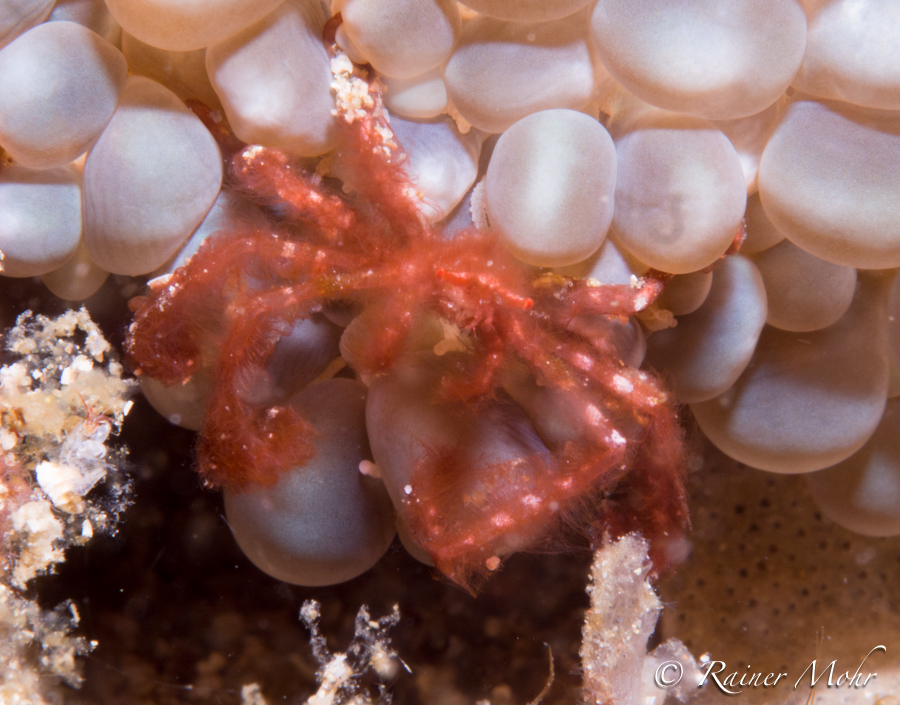
An orangutan crab sits on an anemone.
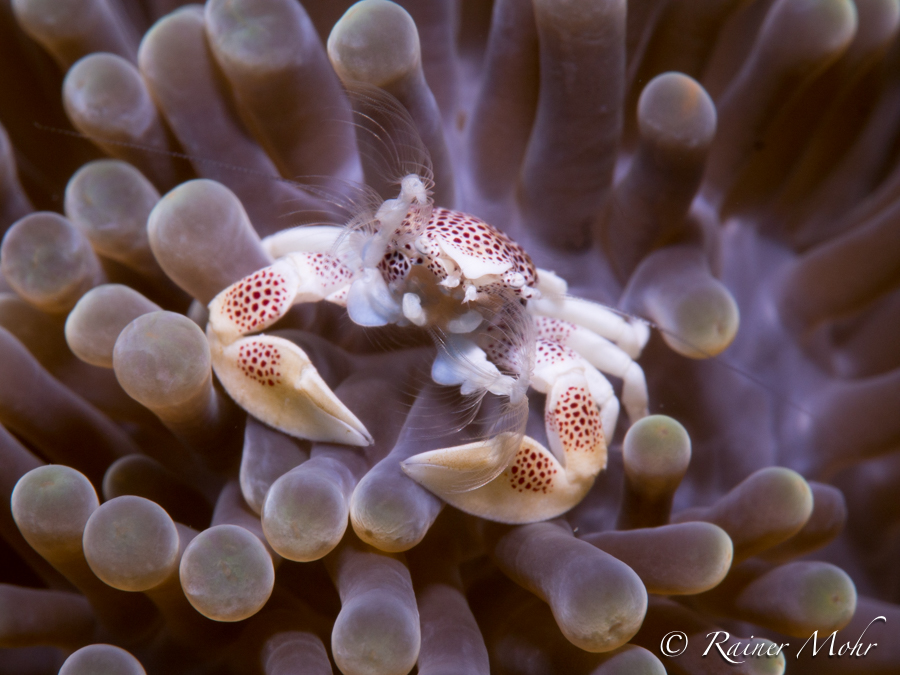
A porcelain crab with characteristic red spots on a white body lives in symbiosis among the tentacles of a sea anemone. The small crab uses the protective tentacles as its habitat and filters plankton from the water.
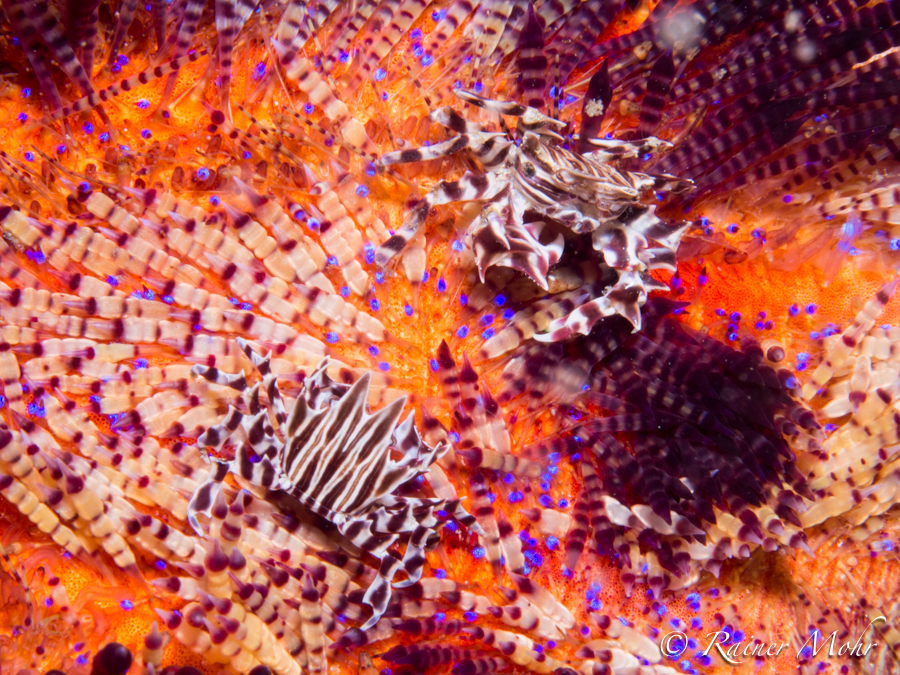
Two zebra crabs ride on a fire urchin. The red skin with the striking, vivid and highly varied spines of the sea urchin form the habitat of this crab species.
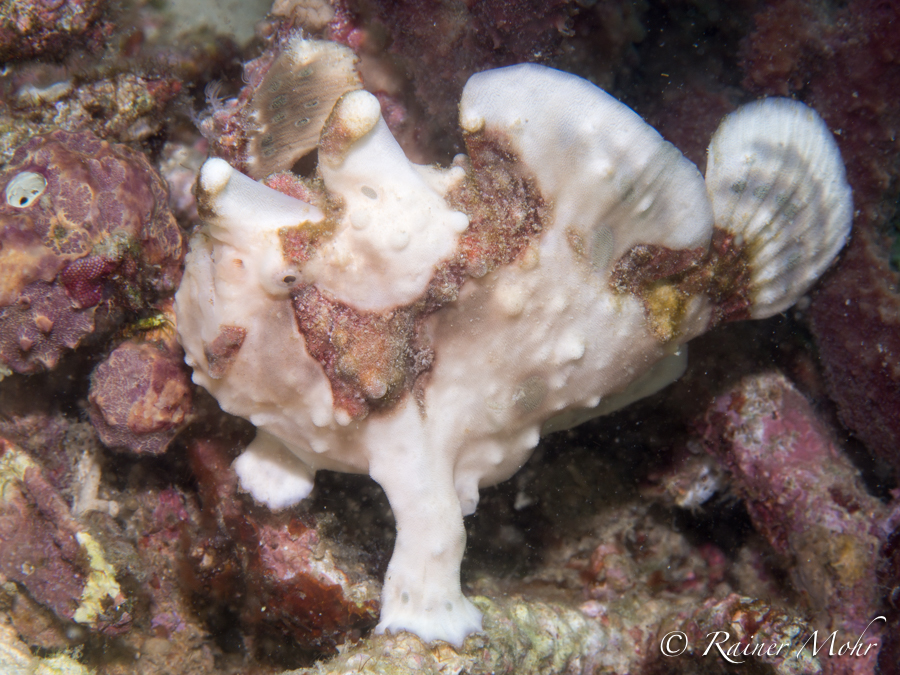
A whitish warty frogfish (Antennarius maculatus) rests on the encrusted reef floor. These fish have warty skin with variable colouration to perfectly adapt to their surroundings, such as sponges or corals, and wait for passing prey.
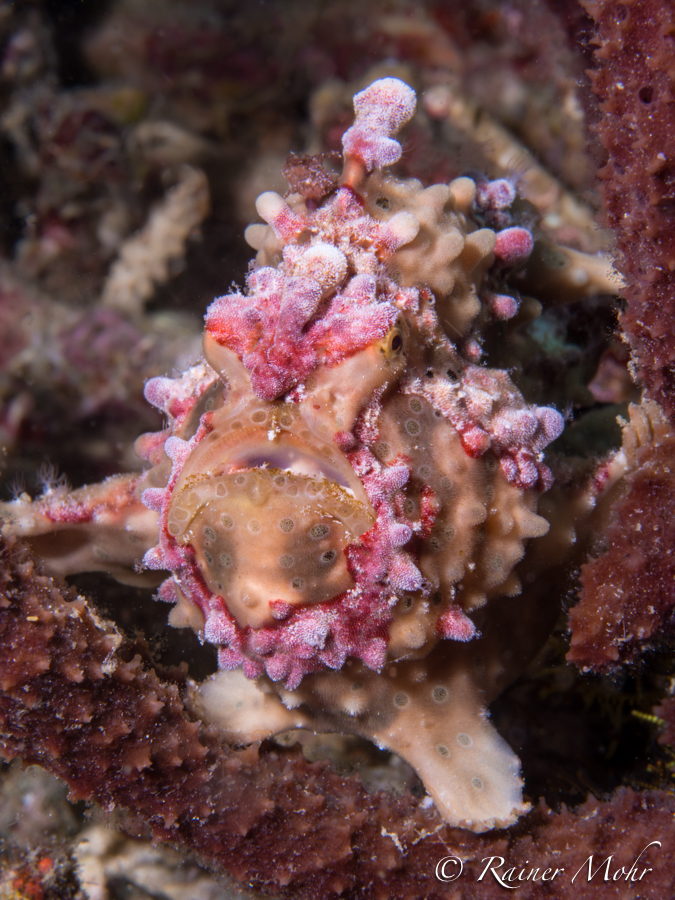
A colourful warty frogfish sits perfectly camouflaged on algae-covered reef substrate. The small anglerfish displays its characteristic warty skin protrusions in pink-violet tones, blending masterfully with its surroundings.
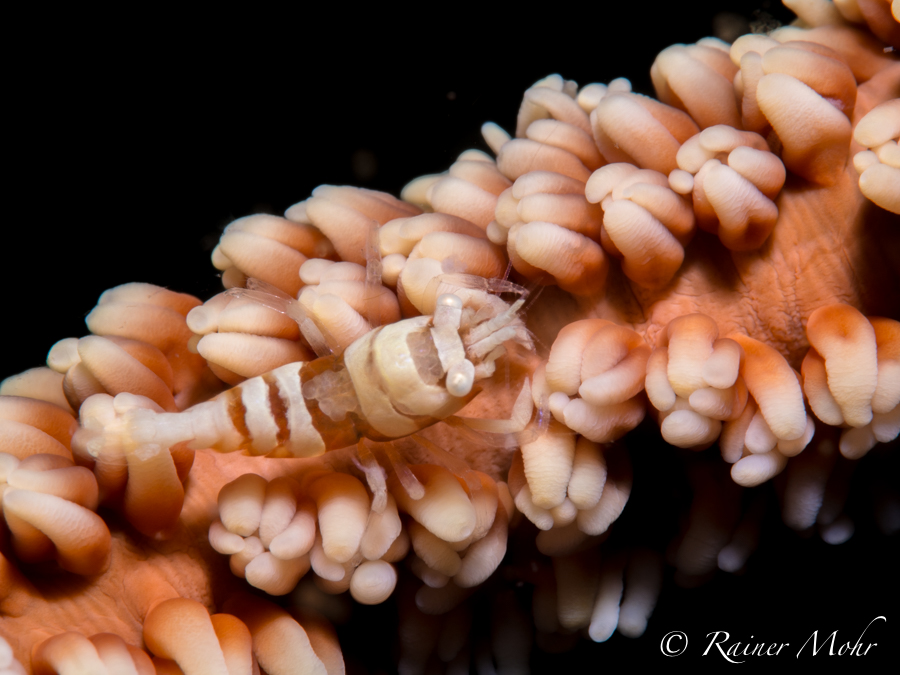
The image shows a whip coral shrimp (Pontonides ankeri or similar species) on a whip coral. It is a small shrimp that lives in a commensal relationship with whip corals.
A beautiful mandarinfish displays its characteristic vivid pattern with blue lines and orange rings on a brownish background. The small reef dweller sits among corals and shows its typical shy behaviour in its hiding place.
An orange-and-white striped wire coral crab hides among the tentacles of a whip coral. The symbiotic relationship shows the small crab seeking shelter in the coral while simultaneously feeding on plankton.
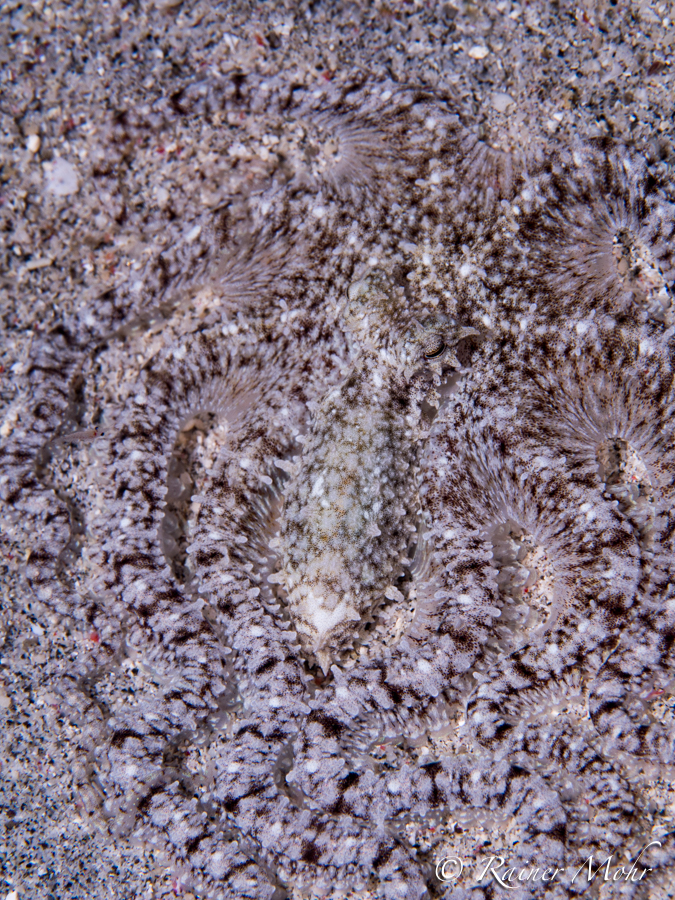
A masterfully camouflaged octopus lies motionlessly on the sandy seafloor. The body shape and perfect adaptation to the sediment colour make the animal nearly invisible β€” an impressive example of camouflage in the underwater world.
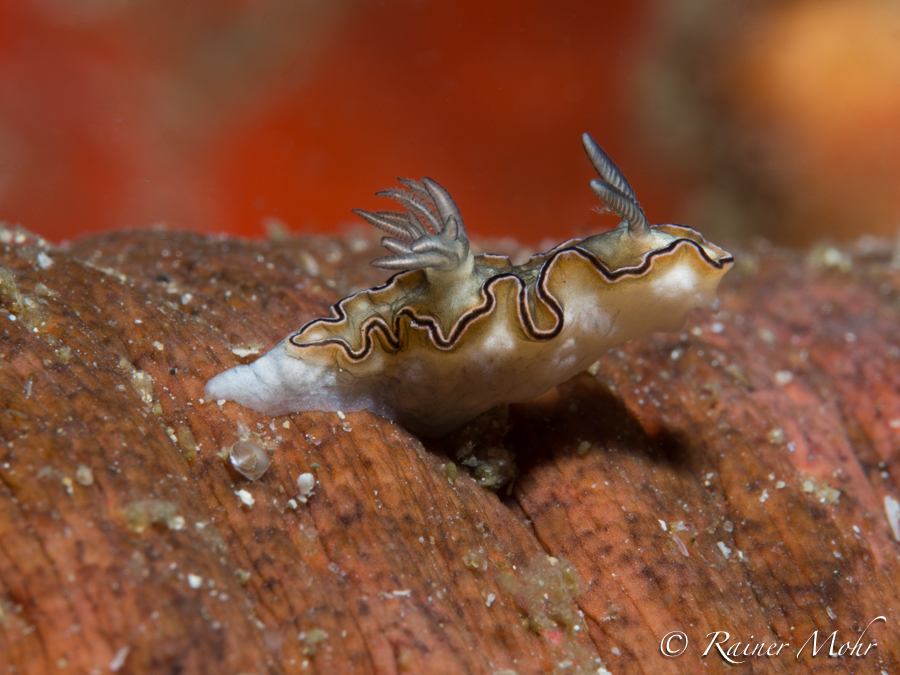
A small nudibranch crawls over a reddish-brown coral surface. The delicate nudibranch displays a translucent body with characteristic undulating body margins and feathered gill tufts at the rear end.
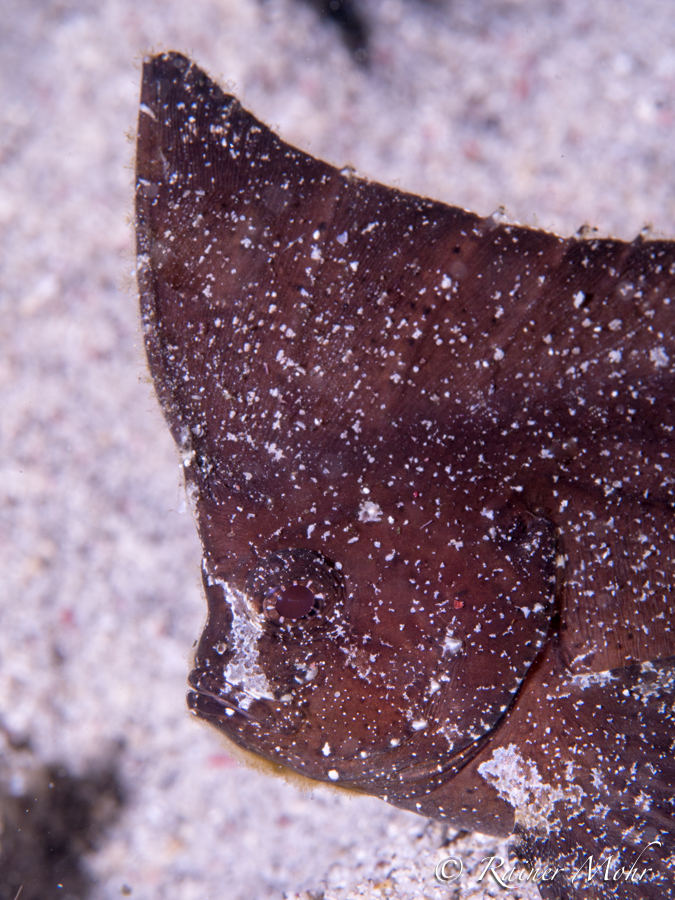
A dark cockatoo waspfish (Ablabys taenianotus) lies perfectly camouflaged on the sandy seafloor. The brown colouration with characteristic white dots and patches provides excellent camouflage in the sand.
The image shows Costasiella kuroshimae, a tiny sea slug species also known as the "leaf sheep". They grow to only about one centimetre and have structures called cerata on their backs that give them a leaf-like appearance.
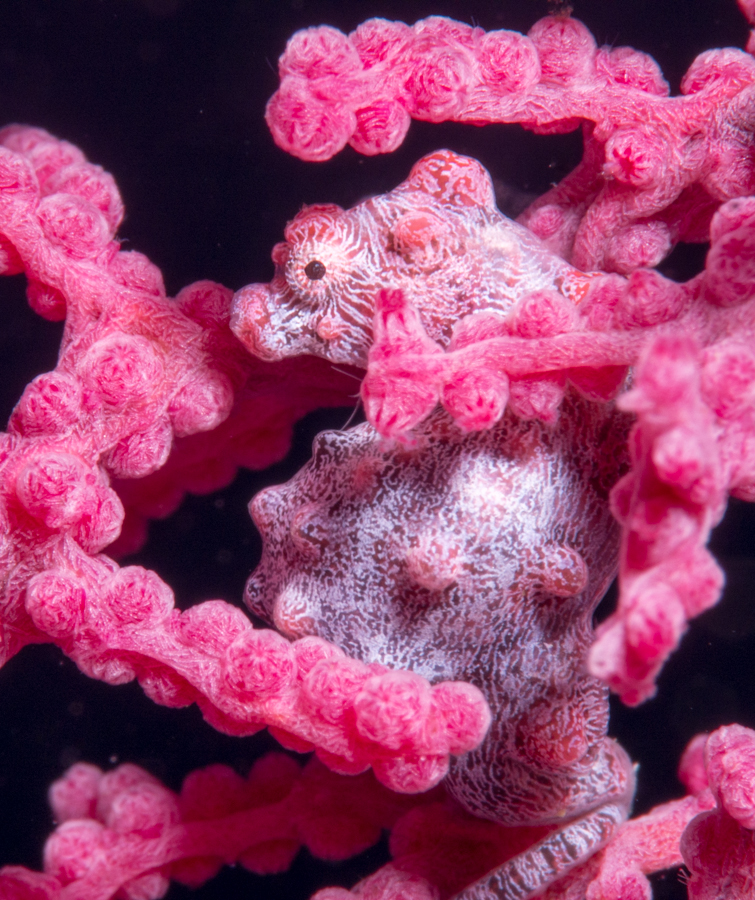
A dwarf seahorse hides perfectly camouflaged among the pink polyps of a soft coral. The tiny seahorse shows a remarkable adaptation to its surroundings and demonstrates its ability to blend into the coral structure.
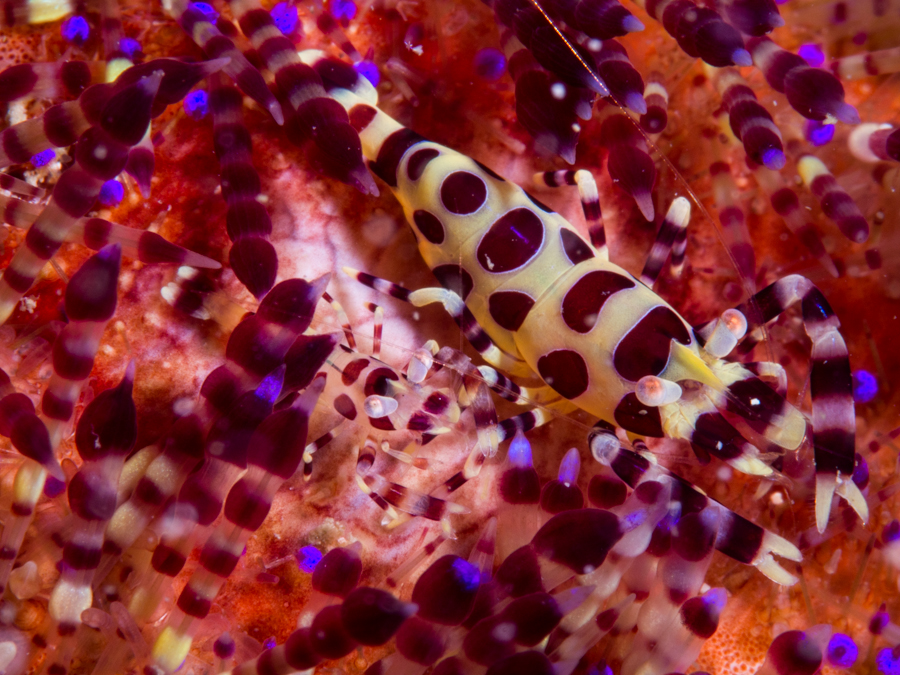
A perfectly camouflaged Coleman shrimp sits on a fire urchin.
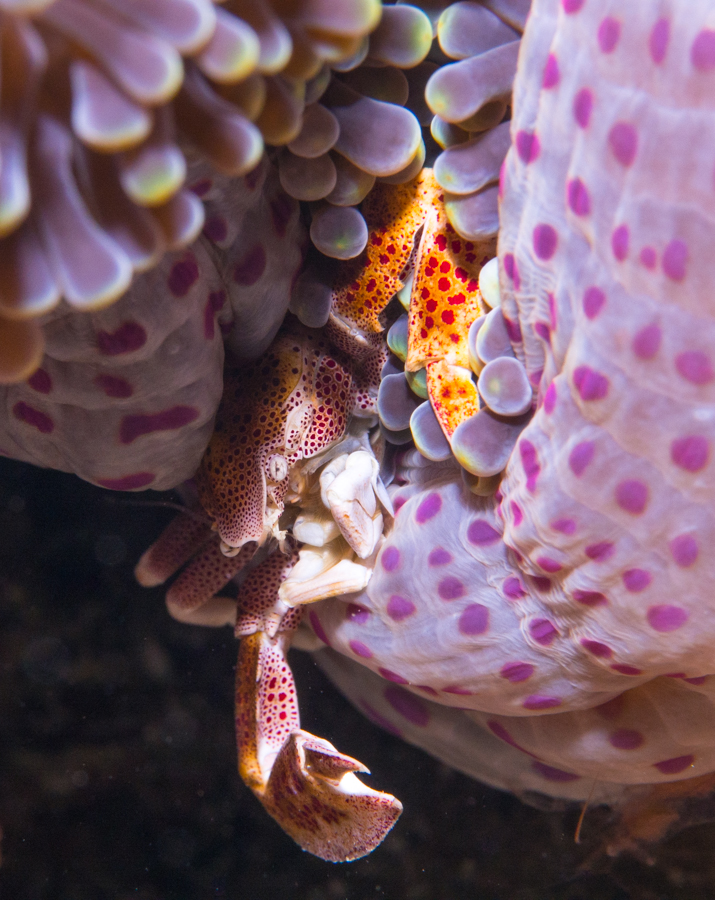
A porcelain crab hides among the tentacles of a large anemone. The delicate, spotted tentacles of the anemone envelop the small crab, which has entered a perfect symbiosis with its host, gaining protection from predators.
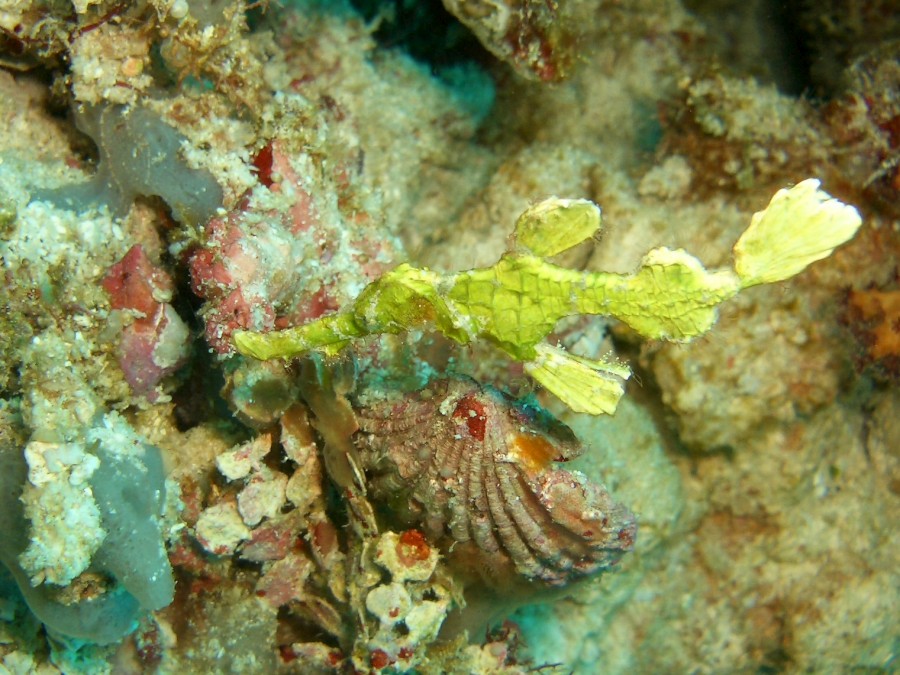
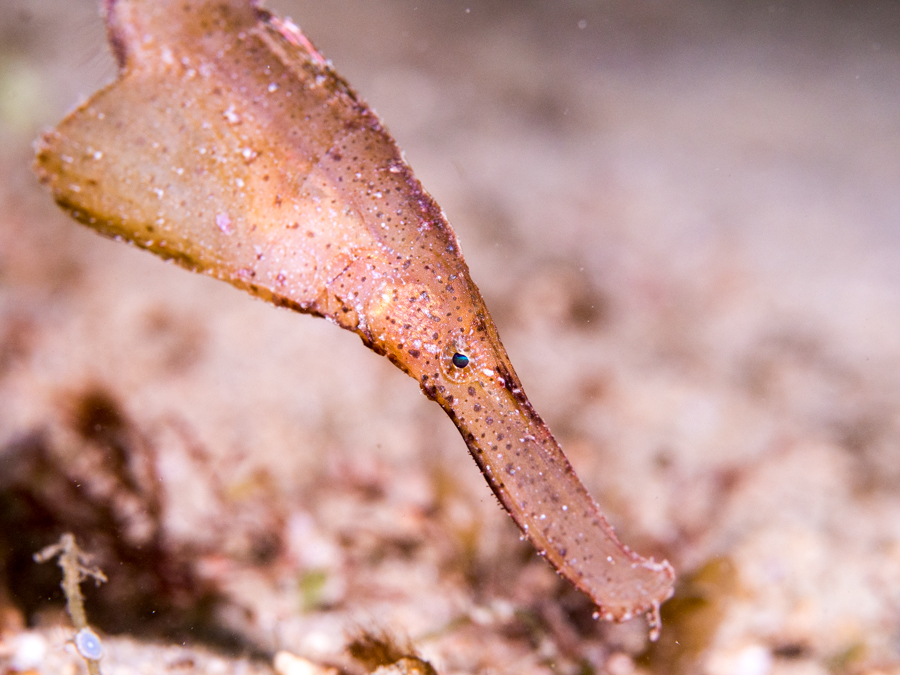
A robust ghost pipefish (Solenostomus cyanopterus) β€” a fish that is nearly indistinguishable from its surroundings thanks to its extraordinary camouflage. It mimics drifting debris, seagrass or aquatic plants to conceal itself from predators.
A vivid red-pink coloured Dragonet sits on sandy ground, displaying its characteristic large pectoral fins and typical frog-like head. The animal presents an intense red colouration with white spots and has its pectoral fins widely spread.
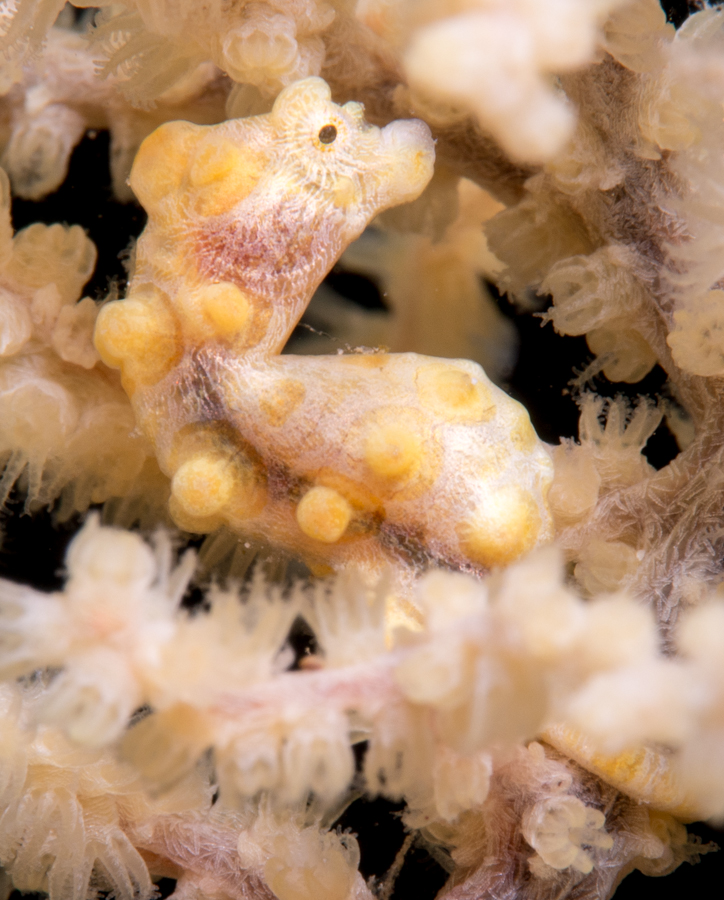
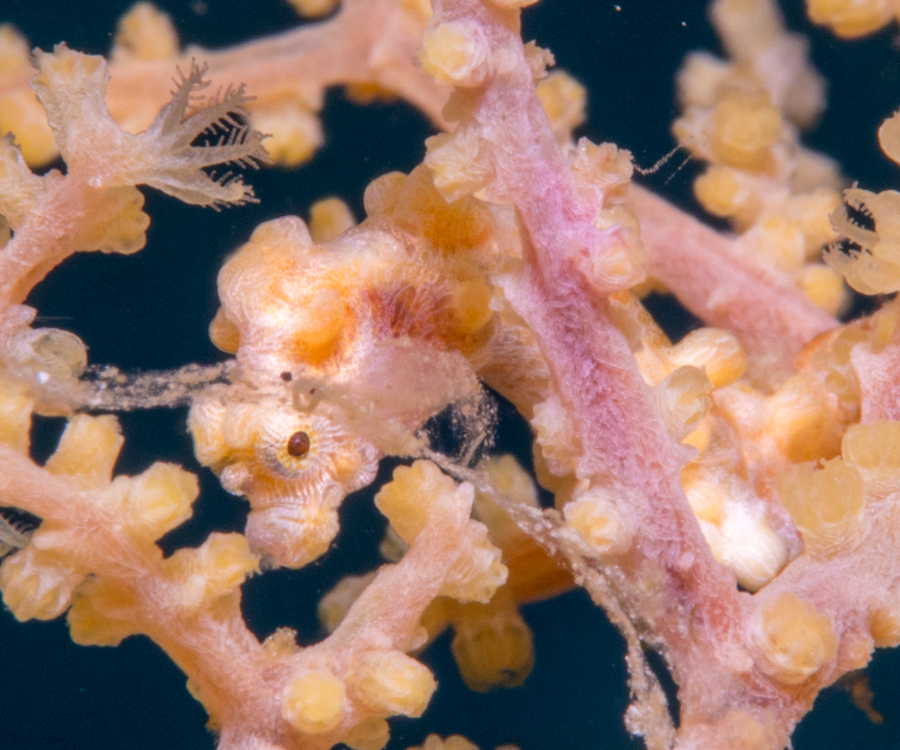
A pygmy seahorse hides perfectly camouflaged among the polyps of a gorgonian. The tiny animal displays the same yellowish-orange tones and knobbly skin projections as its host coral, demonstrating a remarkable adaptation to its habitat.
Portrait of a frogfish, likely a freckled frogfish (Antennatus nummifer). These fish perfectly match their colour and texture to their surroundings, such as sponges or corals. They are ambush predators that lure prey fish with a modified dorsal fin ray resembling a small lure.
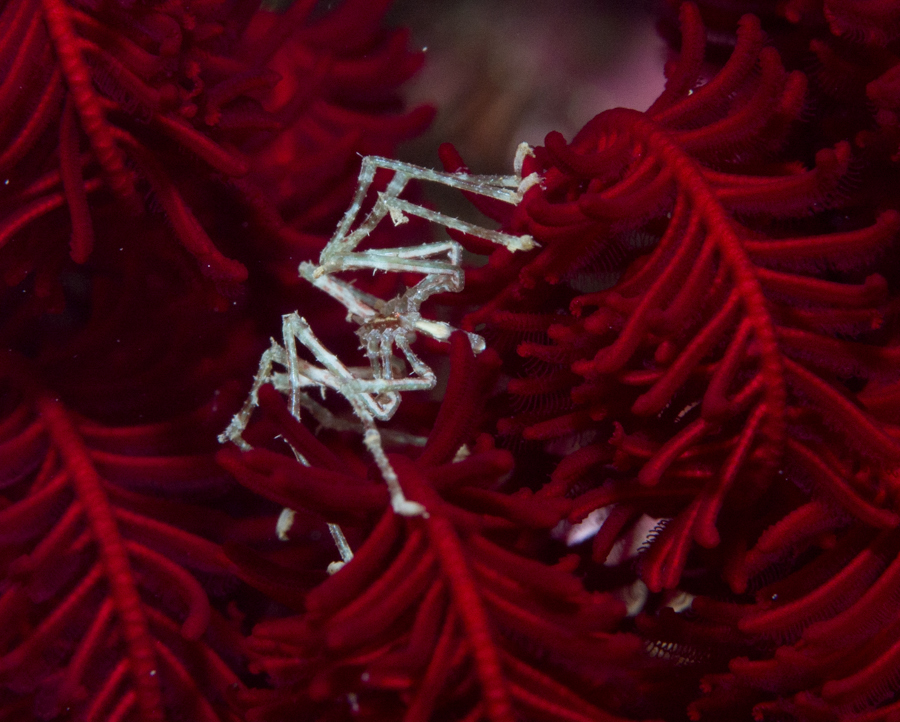
The image shows a sea spider (Pantopoda) on a red coral, also known as a pycnogonid.
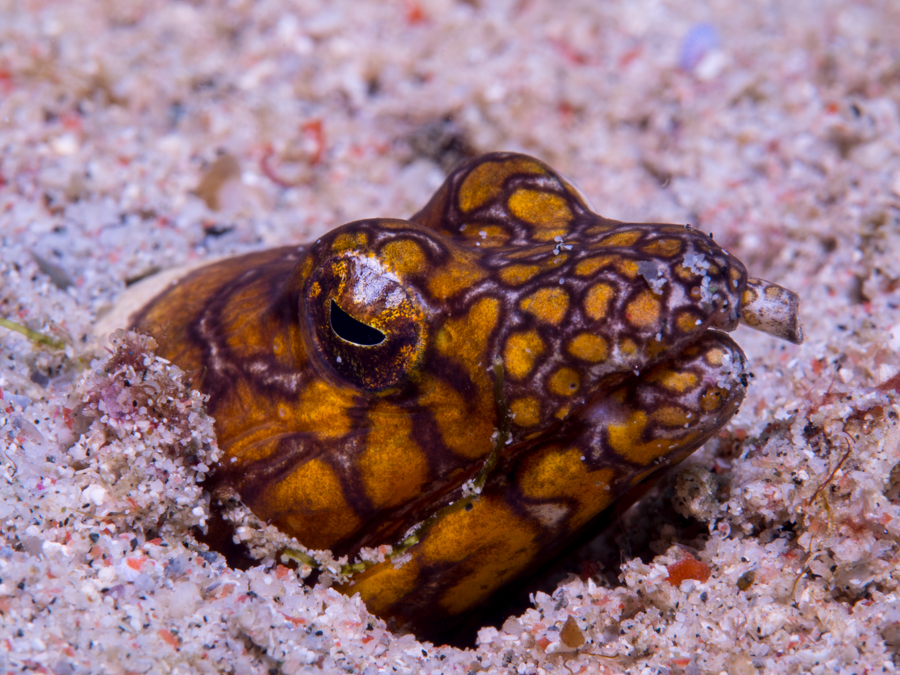
The image shows a Napoleon snake eel (Ophichthus bonaparti).
A garden eel with characteristic spotted pattern peers out of its sandy hiding place. The snake-like fish displays the typical behaviour of extending only its head from its tube in the sandy floor while the rest of its body remains hidden.
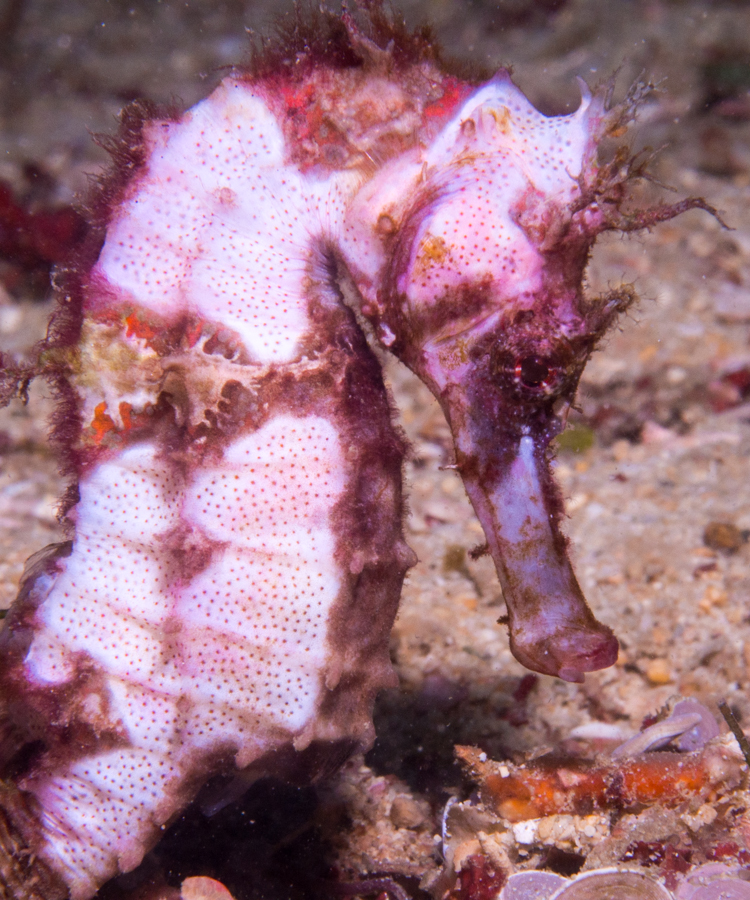
A seahorse in magnificent pink-violet colouration with characteristic red spots on a light background. The animals display the typical upright posture and are surrounded by growth, indicating perfect camouflage in their habitat.
A perfectly camouflaged pygmy seahorse hides among yellow host corals. The tiny animal uses its extraordinary camouflage ability, mimicking the colour and structure of the corals to become nearly invisible.
A beautiful seahorse with a pink-whitish base colouration and characteristic orange-red spot patterns clings with its prehensile tail to a coral. The detailed macro shot shows the typical behaviour of these fascinating fish, which like to anchor themselves to corals or other structures.
The image shows a ghost pipefish (likely a robust ghost pipefish, Solenostomus cyanopterus). These fish are masters of camouflage, imitating drifting seagrass or algae to hide from predators.
PAGES:  1   2