Tag: Shrimp
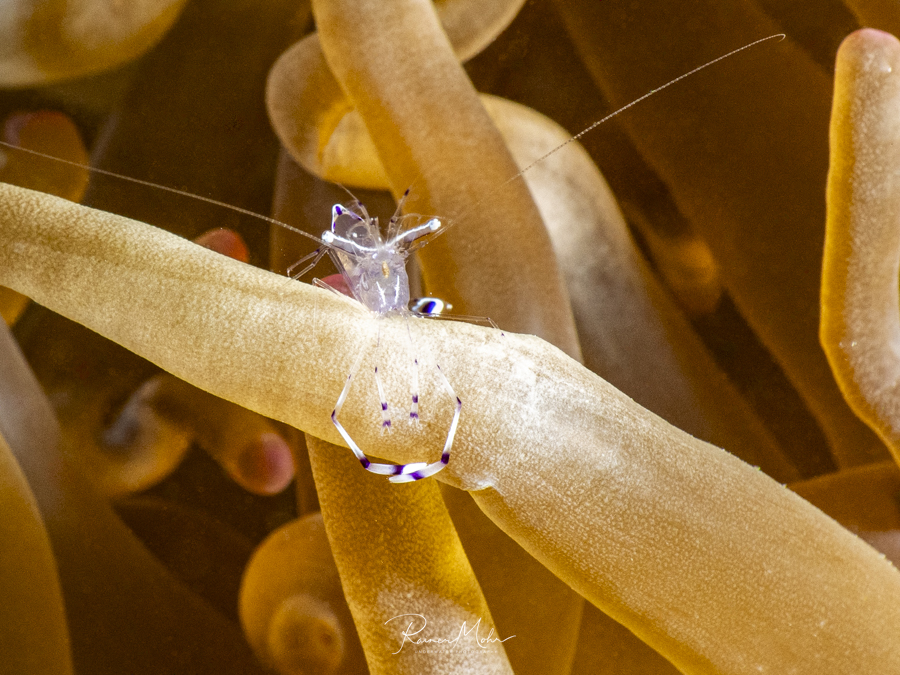
A tiny transparent anemone shrimp sits on an anemone tentacle. The almost transparent body shows fine violet-white markings on the legs and claws.
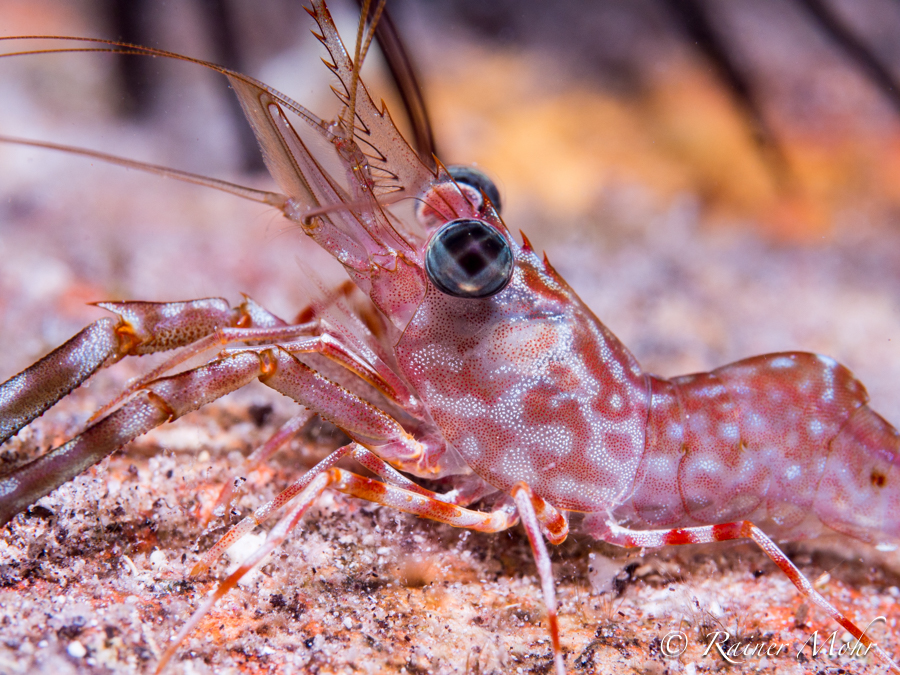
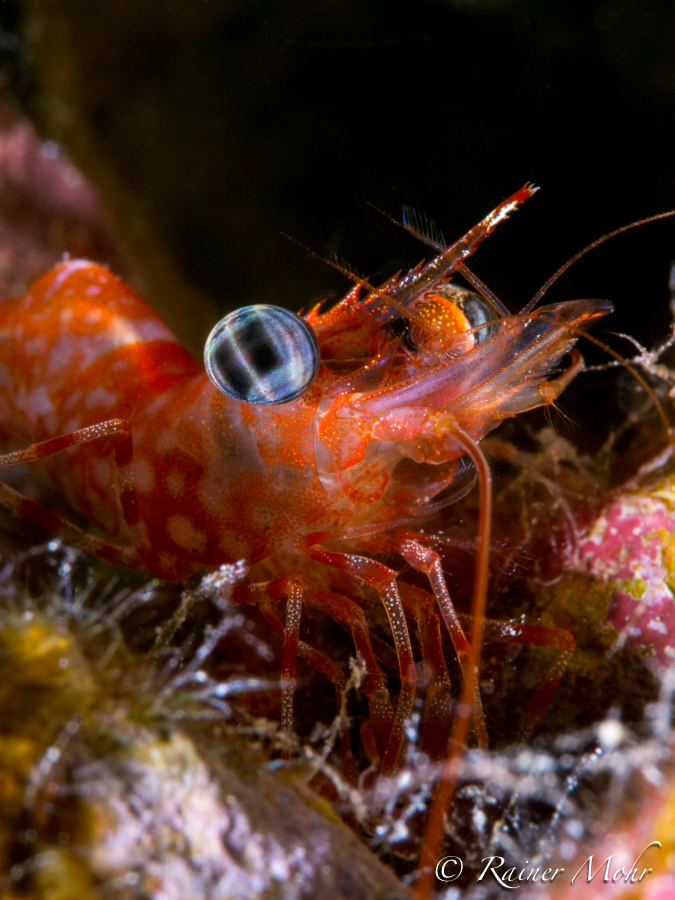
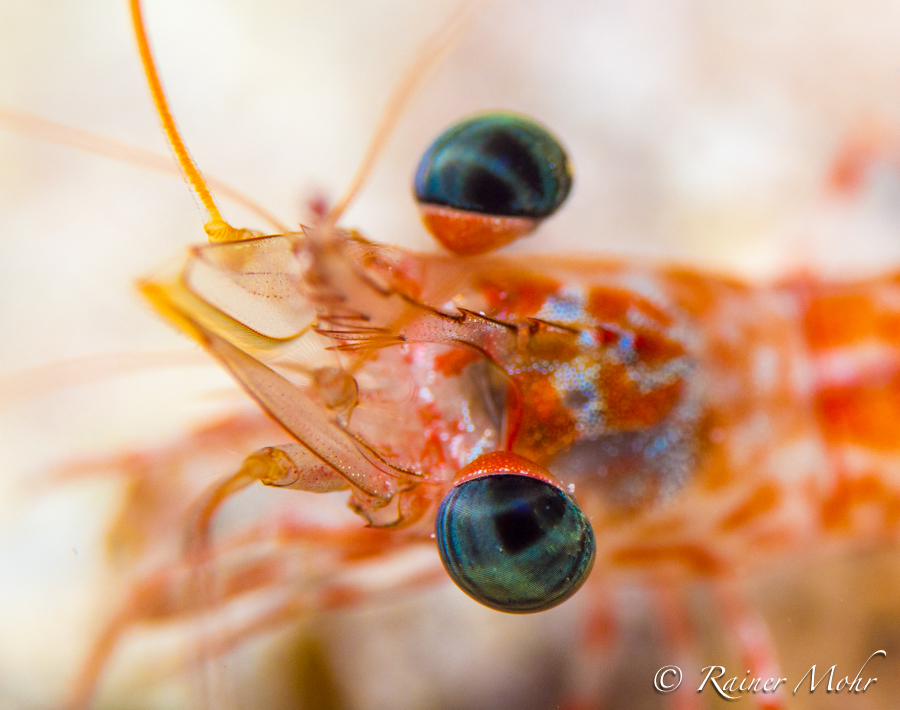
Super-macro shot of the eye of a hinge-beak shrimp (Rhynchocinetes durbanensis). The spherical compound eye shimmers greenish; the red body with white spots is visible in the background.
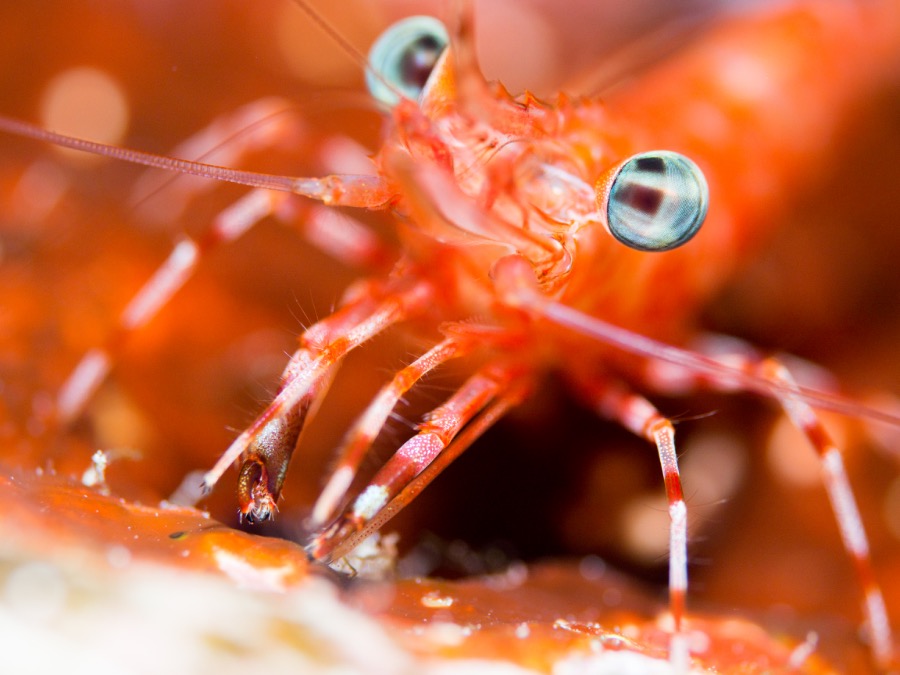
A vivid orange-red shrimp with striking turquoise eyes and long antennae in extreme close-up. The macro shot reveals the fine details of the shrimp with its transparent to reddish colouring and characteristic bulging eyes.
A shrimp species from the family Rhynchocinetidae (hinge-beak shrimps), possibly Cinetorhynchus reticulatus. Hinge-beak shrimps are found in tropical and subtropical seas worldwide and often live in reefs.
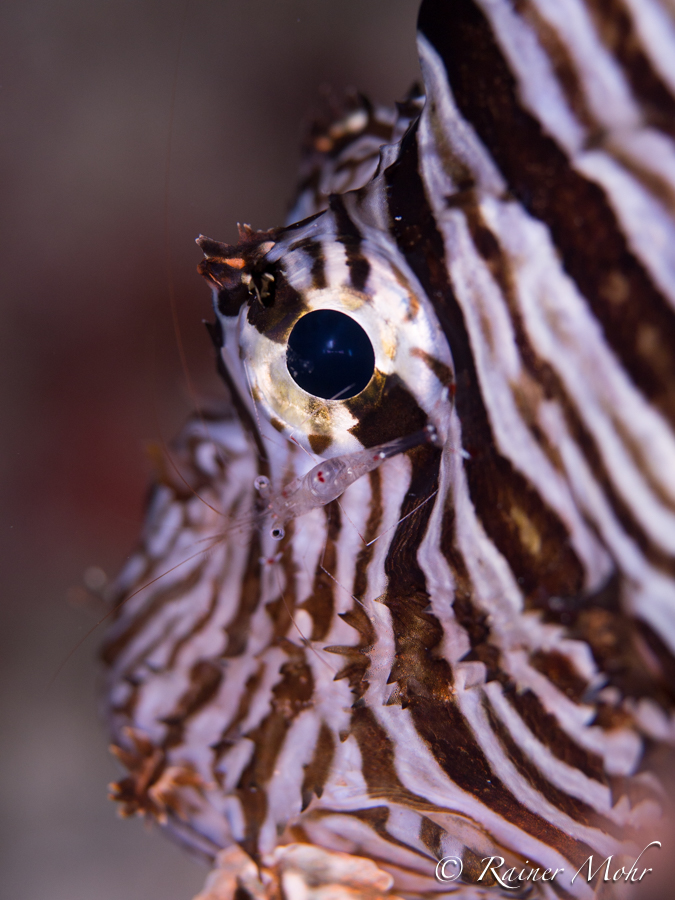
A close-up of a red lionfish shows the characteristic large, dark blue eye and the striking white and brown stripes. The venomous, fan-like pectoral fins are clearly visible, with the fine rays and typical striped pattern of the fish perfectly displayed. A small transparent shrimp sits below the eye.
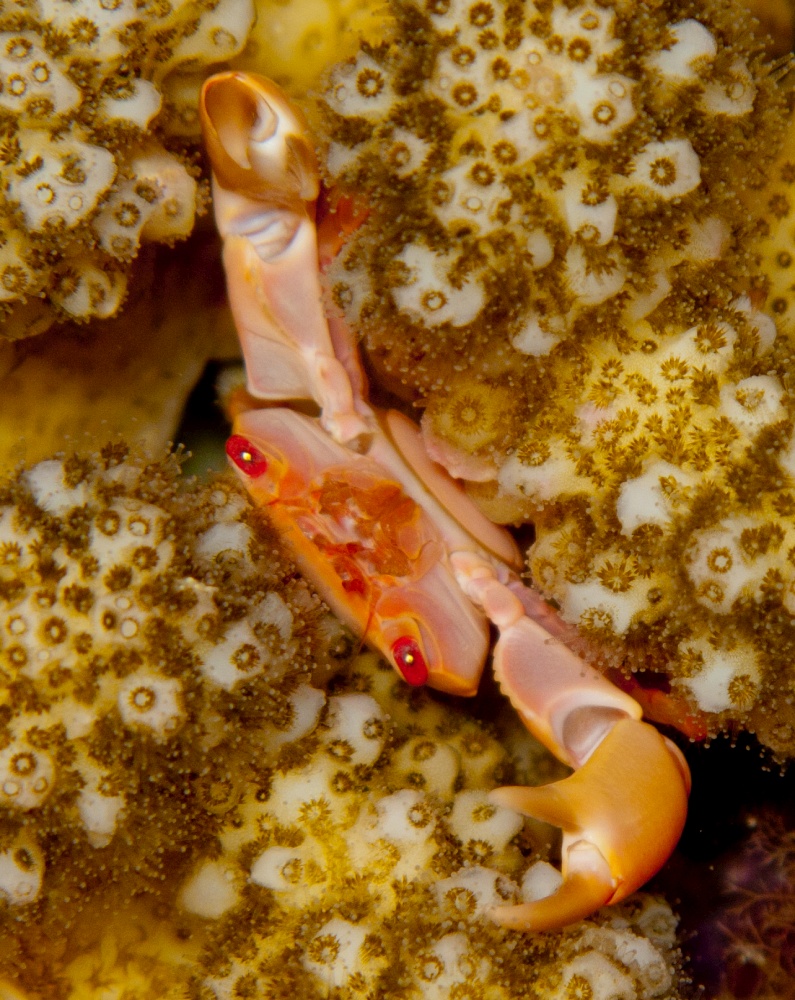
An orange crab with characteristic red eyes sits among the polyps of a stony coral. The small crustacean uses the coral reef as shelter and habitat.
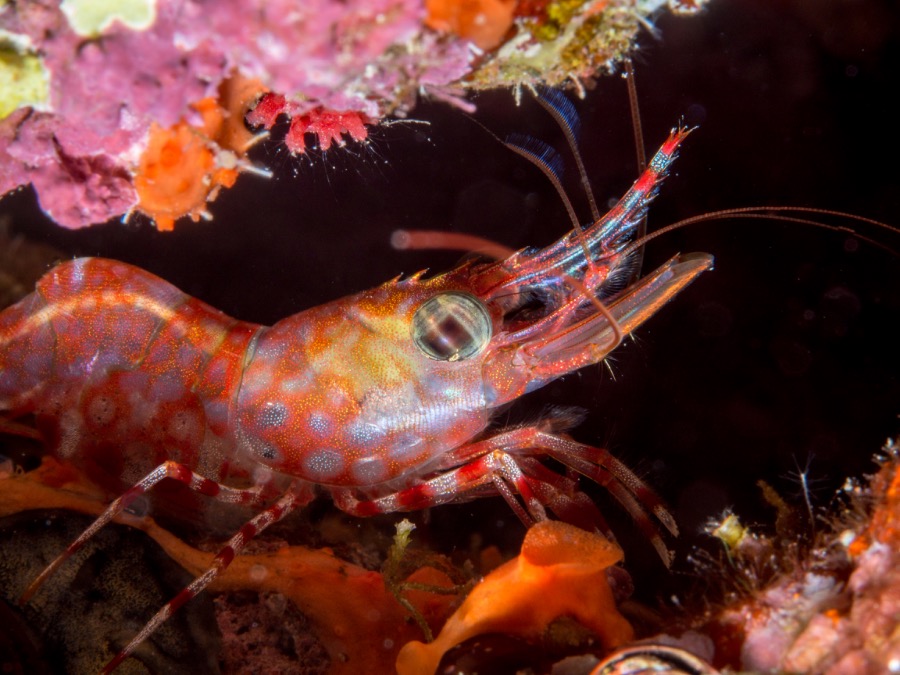
A red-orange shrimp with characteristic large, spherical eyes and long antennae sits among colourful corals and sponges. The transparent, reflective eyes and the detailed structure of the carapace are perfectly captured through macro photography.
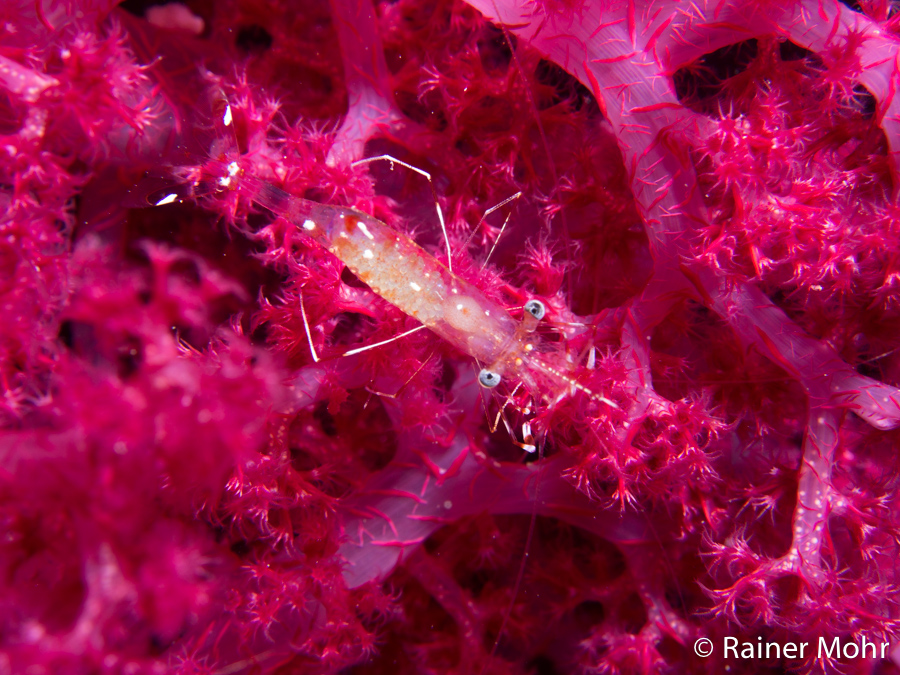
A tiny transparent shrimp sits among the vivid pink tentacles of a soft coral. The perfect camouflage and symbiotic relationship between shrimp and coral are clearly recognisable.
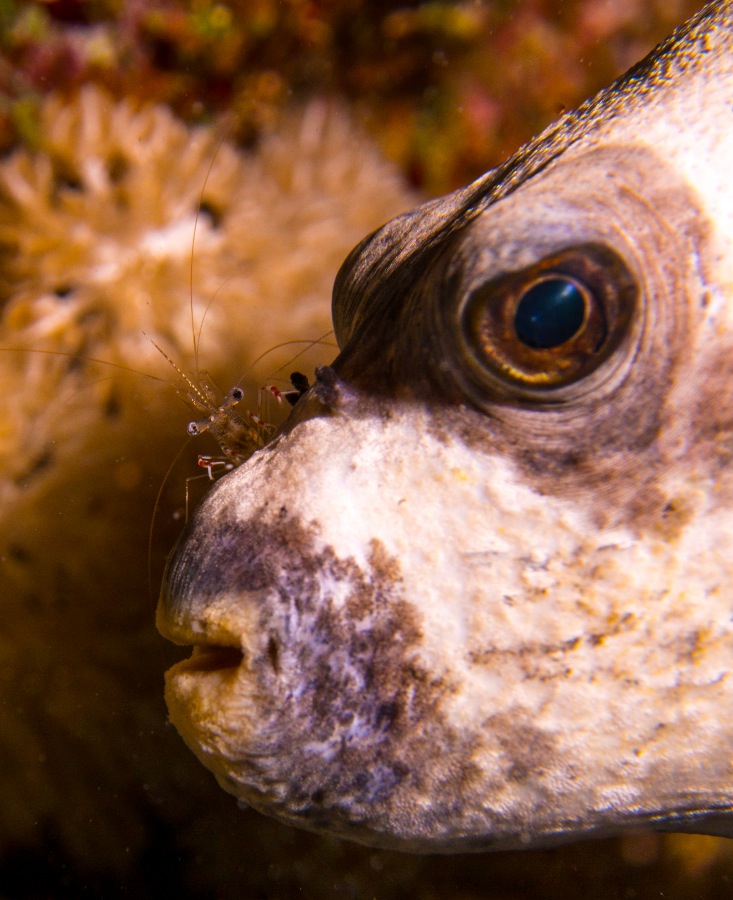
A close-up of a pufferfish shows the characteristic large blue eye and typical humped snout. On the fish's head a small transparent shrimp is visible, presumably performing cleaning work β€” a fascinating example of symbiosis on the reef.
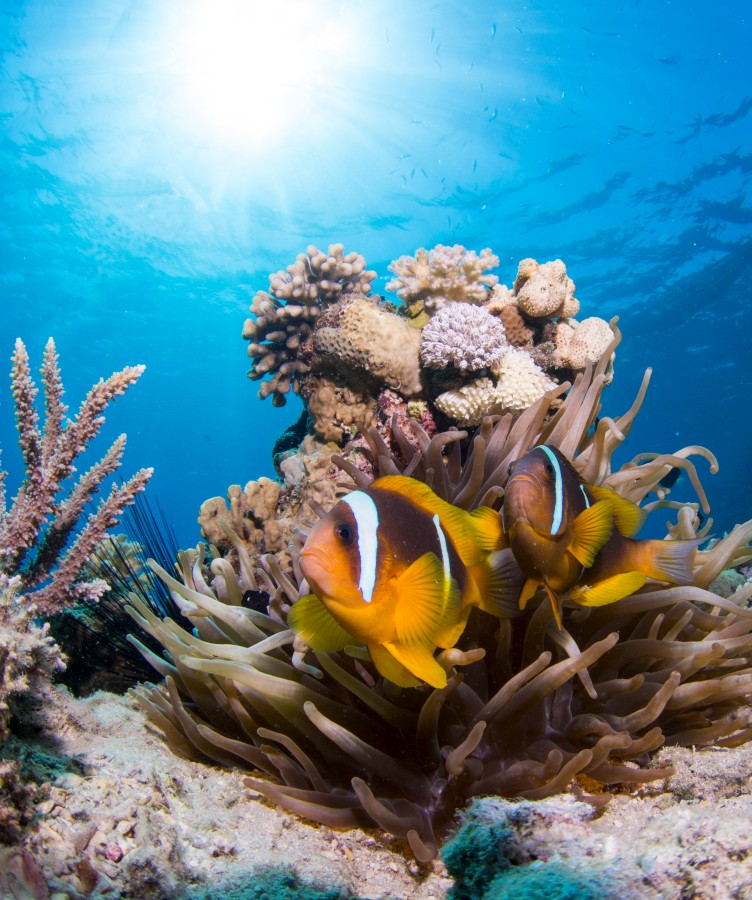
A vivid yellow-orange anemonefish lives in symbiosis with its host anemone in a colourful coral reef. The scene shows the classic symbiosis between clownfish and anemone, surrounded by various hard and soft corals under brilliant blue water.
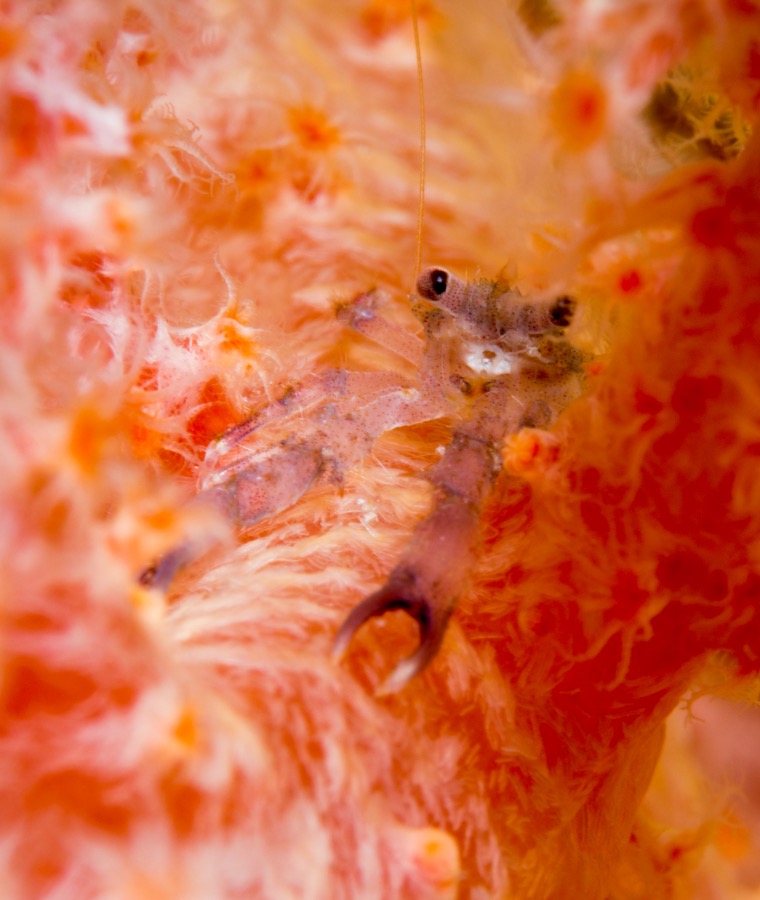
A tiny transparent crab with characteristic black eyes sits on an orange-red coral or sponge. The animal achieves perfect camouflage through its transparent body structure, blending harmoniously into the warm colours of its surroundings.
A vivid red emperor shrimp sits beside the mantle of a Spanish dancer nudibranch. The symbiosis between these two species is common β€” most Spanish dancers live together with this shrimp species.
A colourful shrimp with orange-red spots and a transparent body sits among colourful corals and sponges. The long antennae are clearly visible and the animal adopts the typical crouched posture of a reef-dwelling shrimp.
A colourful shrimp with striking large dark eyes and a transparent body with orange and reddish markings. The shrimp displays its characteristic long antennae and is seen in a typical pose with outstretched legs.
A small banded cleaner shrimp with a semi-transparent body and distinctive red antennae and bluish body areas is visible on a coral. The fine, transparent legs and antennae are clearly recognisable, highlighting the delicate structure of this cleaner shrimp.
Two peacock-eye anemone shrimps hide among the violet tentacles of a sea anemone. The characteristic symbiosis between shrimp and anemone is perfectly captured here, with the semi-transparent shrimps tending to the anemone.
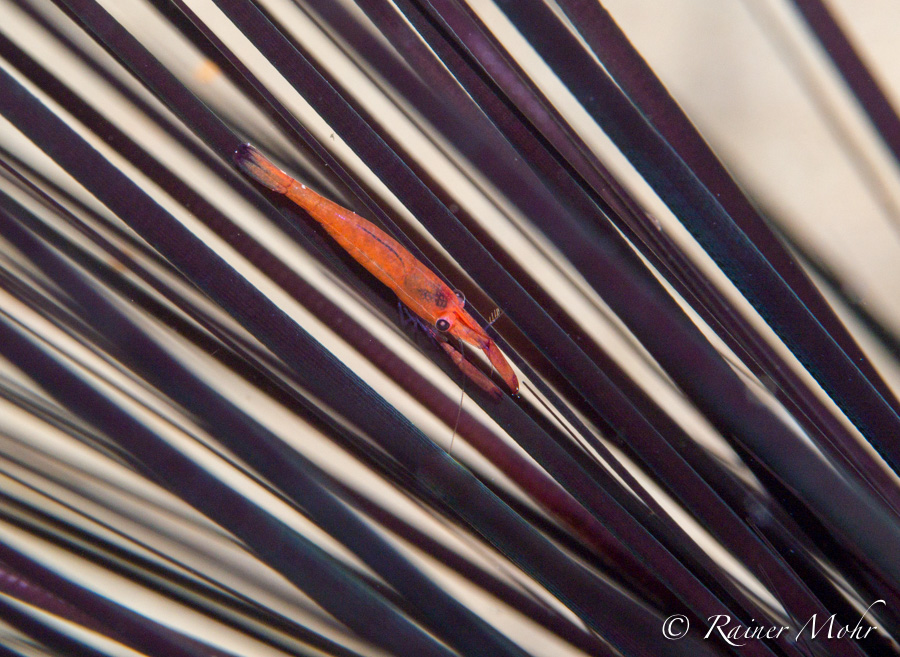
A small orange-red shrimp hides among the long dark spines of a sea urchin. The animal uses the spines as shelter and hiding place, its vivid orange colouring forming a beautiful contrast against the dark spines.
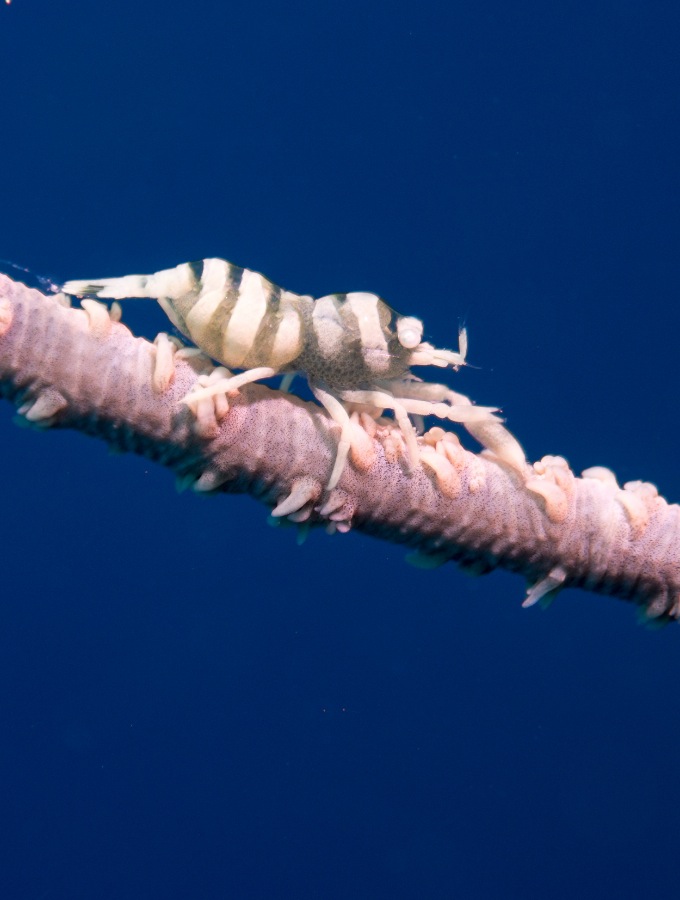
A whip coral shrimp (Pontonides ankeri) rests on its host coral. These small shrimps live in a symbiotic relationship with whip corals and are perfectly adapted to the colour and structure of their host, making them extremely well camouflaged.
A vivid red-orange shrimp hides on a sea star.
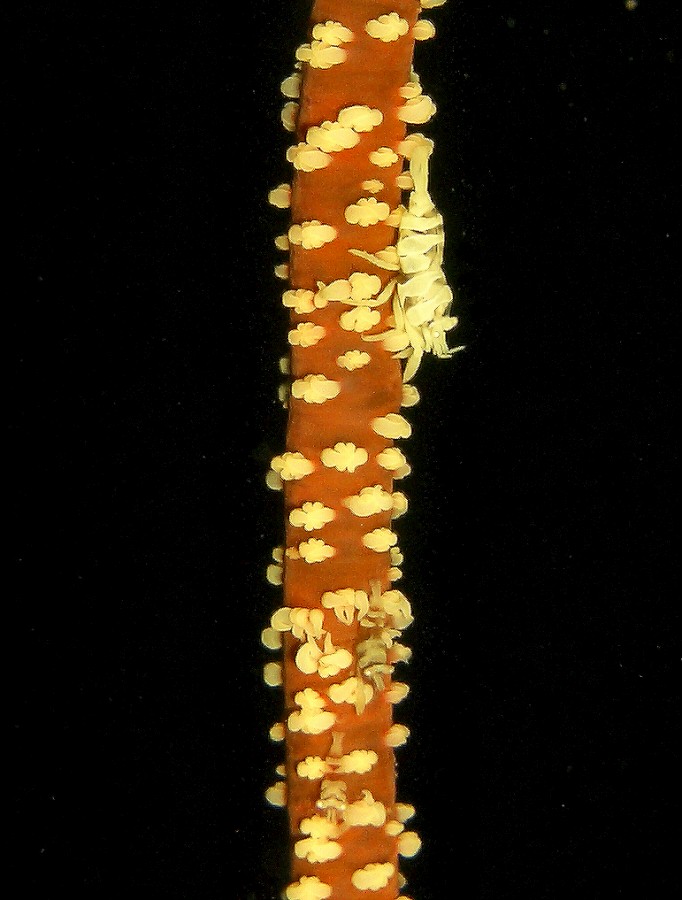
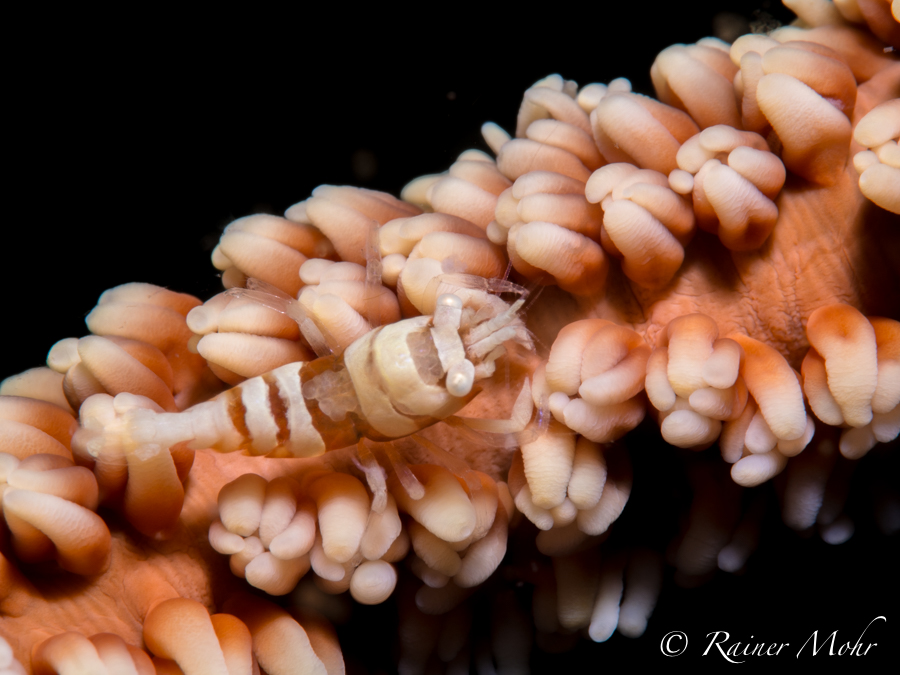
Two whip coral shrimps (Pontonides ankeri) rest on their host coral. These small shrimps live in a symbiotic relationship with whip corals and are perfectly adapted to the colour and structure of their host, making them extremely well camouflaged.
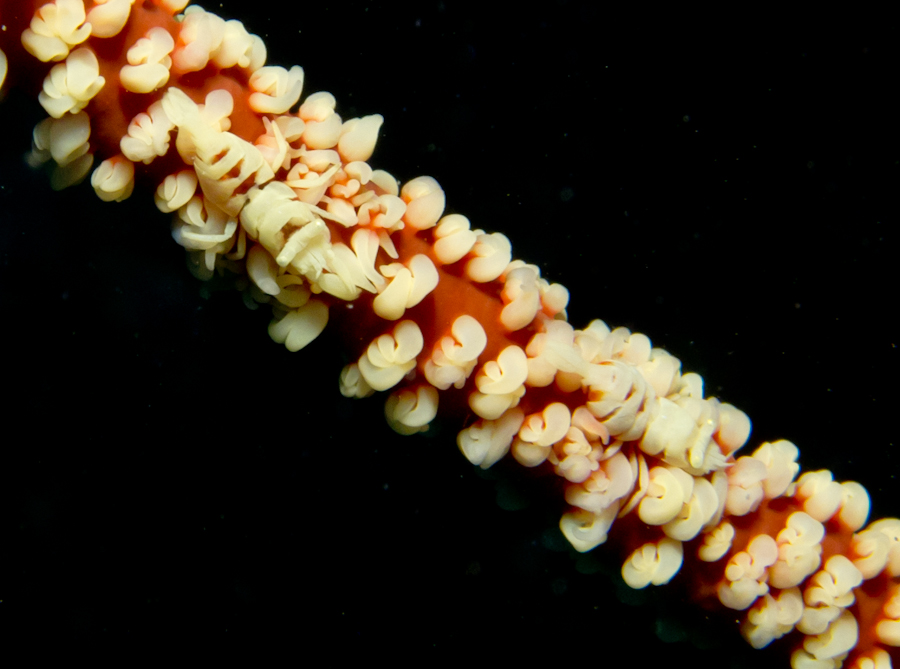
An orange whip coral trunk is densely covered with yellow coral polyps protruding like small flowers from the stem. A small whitish shrimp is well camouflaged among the polyps.
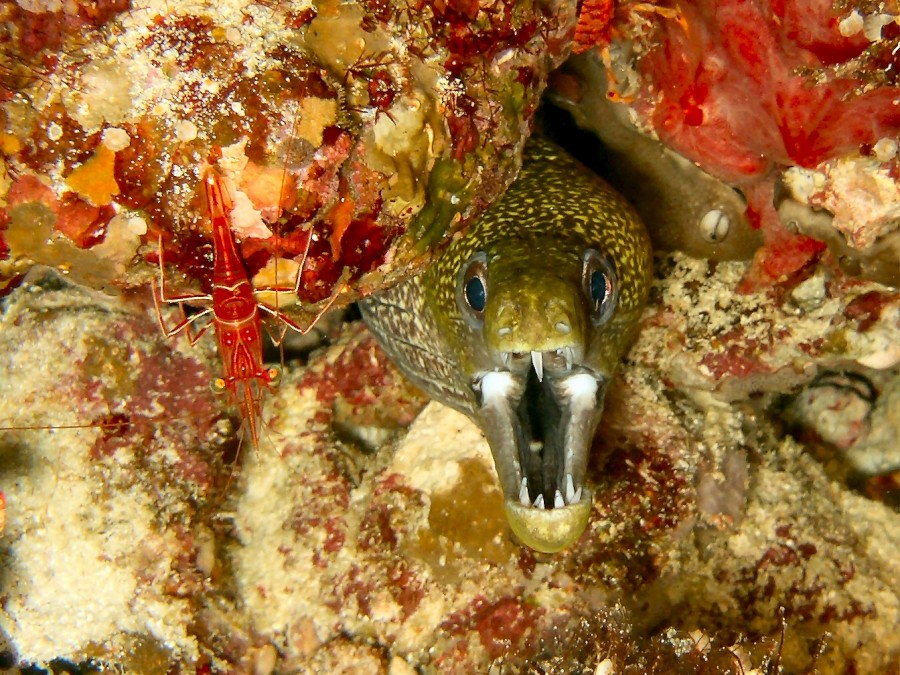
A moray eel with its mouth wide open and teeth visible lurks in a reef crevice. To the left of the frame, a vivid red shrimp is visible β€” possibly a cleaner shrimp in a symbiotic relationship with the moray.
The image shows a whip coral shrimp (Pontonides ankeri) resting on its host coral. These small shrimps live in a symbiotic relationship with whip corals and are perfectly adapted to the colour and structure of their host coral, providing extremely effective camouflage.
The image shows a whip coral shrimp (Pontonides ankeri or similar species) on a whip coral. It is a small shrimp that lives in a commensal relationship with whip corals.
The macro photo shows the delicate, feathery arms of a feather star in warm orange-golden tones. The fine pinnulae (lateral branches) are perfectly structured, showing the characteristic feathered anatomy of these echinoderms. Due to their structure they provide an ideal habitat for various symbionts, including the shrimp visible here.
A small reddish shrimp sits on an orange sponge or coral. The shrimp displays the characteristic long antennae and transparent body parts typical of many cleaner shrimps.
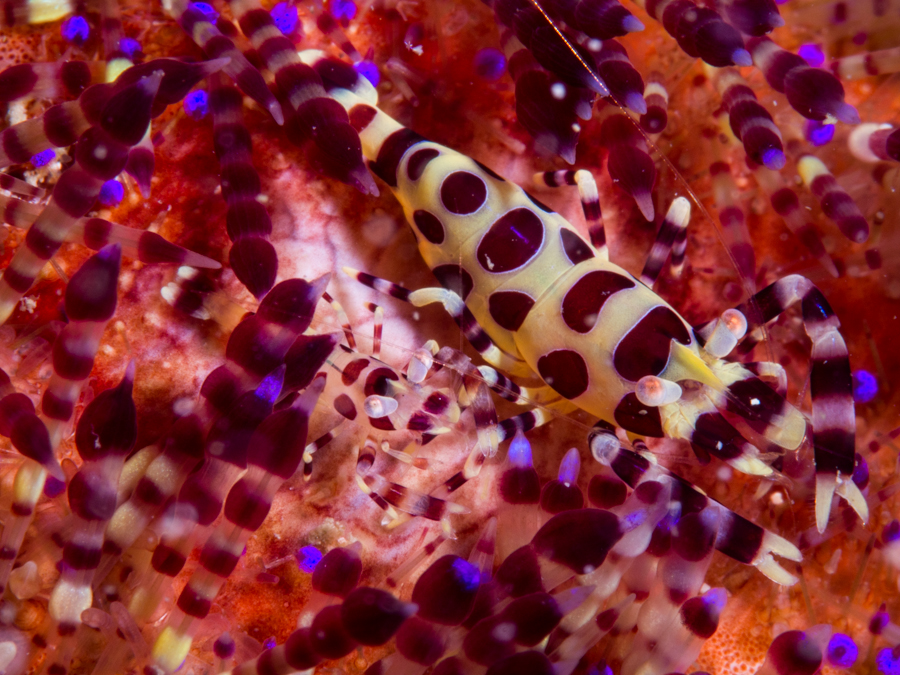
A perfectly camouflaged Coleman shrimp sits on a fire urchin.
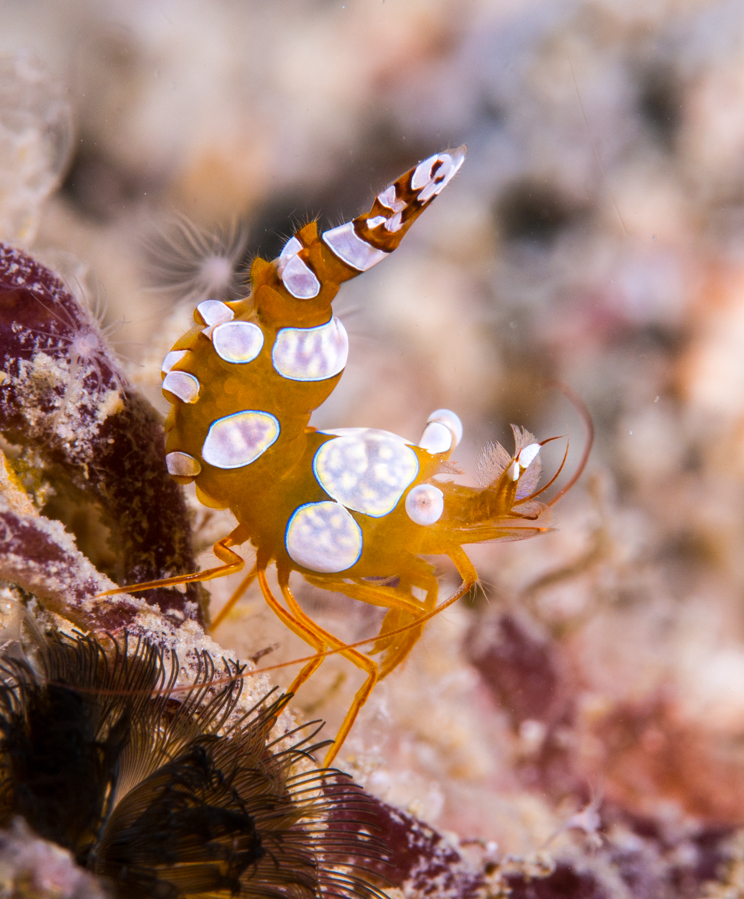
A beautiful sexy shrimp with its characteristic orange base colouration and white, violet-bordered spots sits near an anemone. The small shrimp displays its typical body posture with a slightly arched back.
A Tozeuma shrimp (Tozeuma armatum), also known as the slender shrimp or arrow shrimp.