Tag: Marine Growth

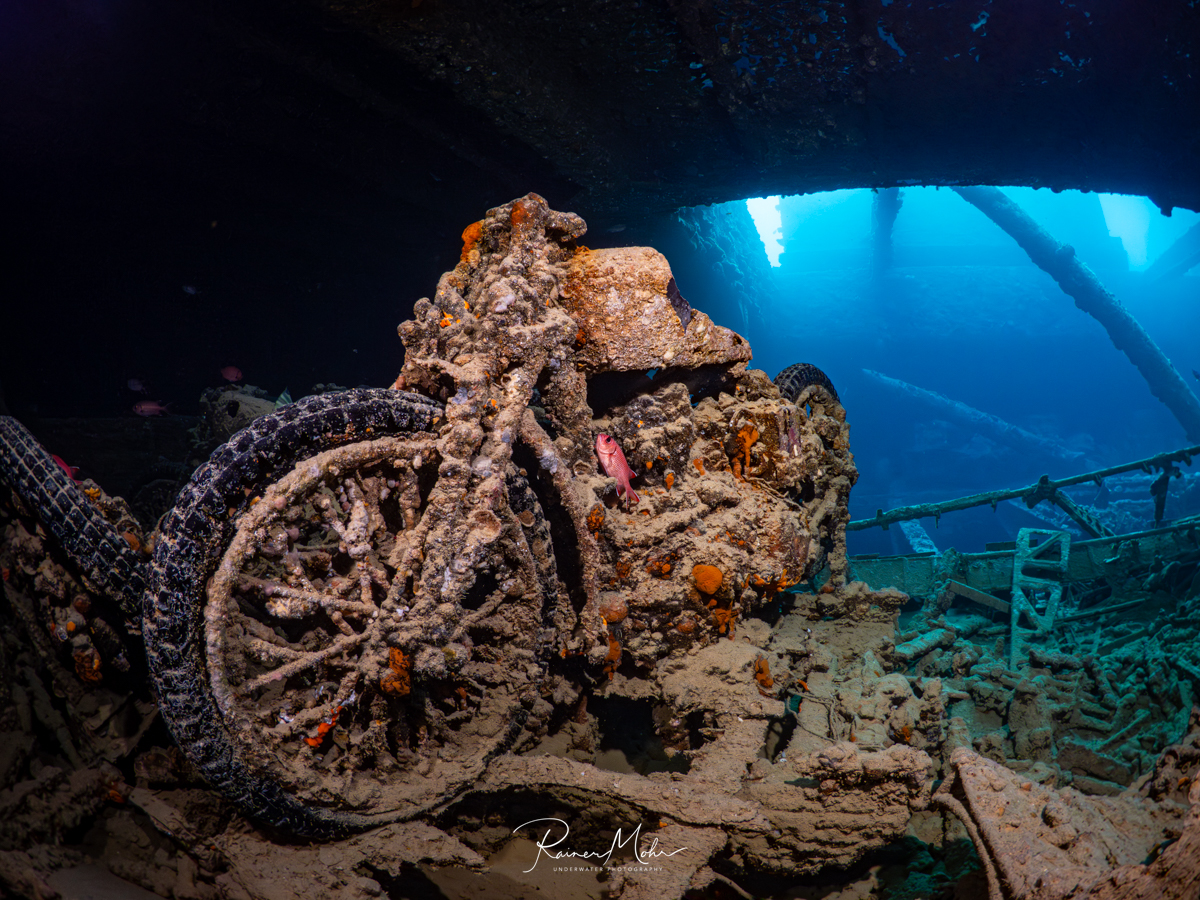
A growth-covered motorcycle in the cargo hold of the SS Thistlegorm, with bluish light from the wreck openings in the background.
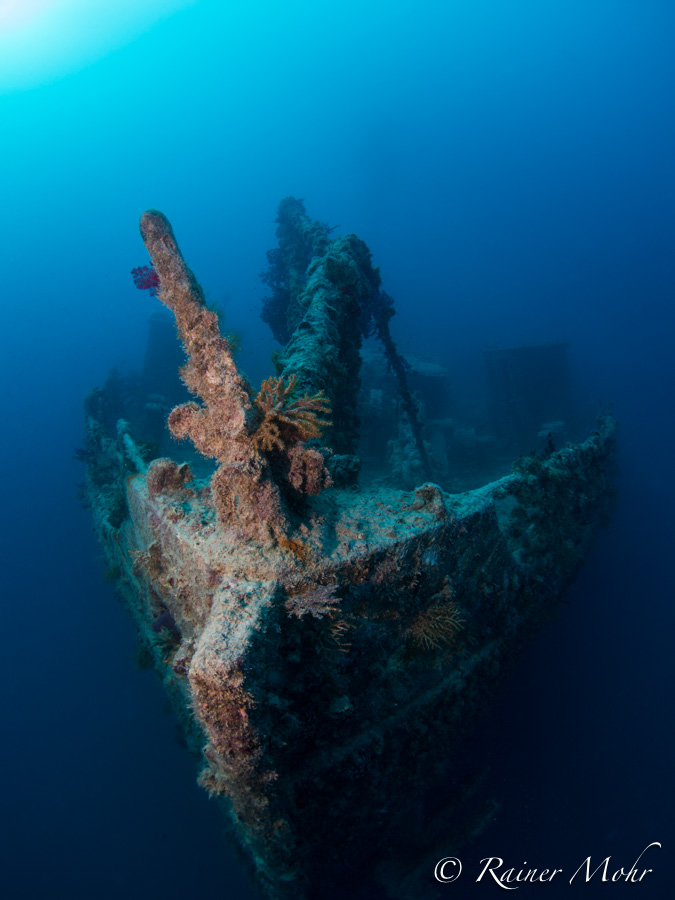
The wreck of the Rosalie Moller lies on the seabed, its bow and superstructure heavily encrusted with corals and other marine organisms. The metal structures are still clearly recognisable and have developed into an artificial reef providing habitat for various species.
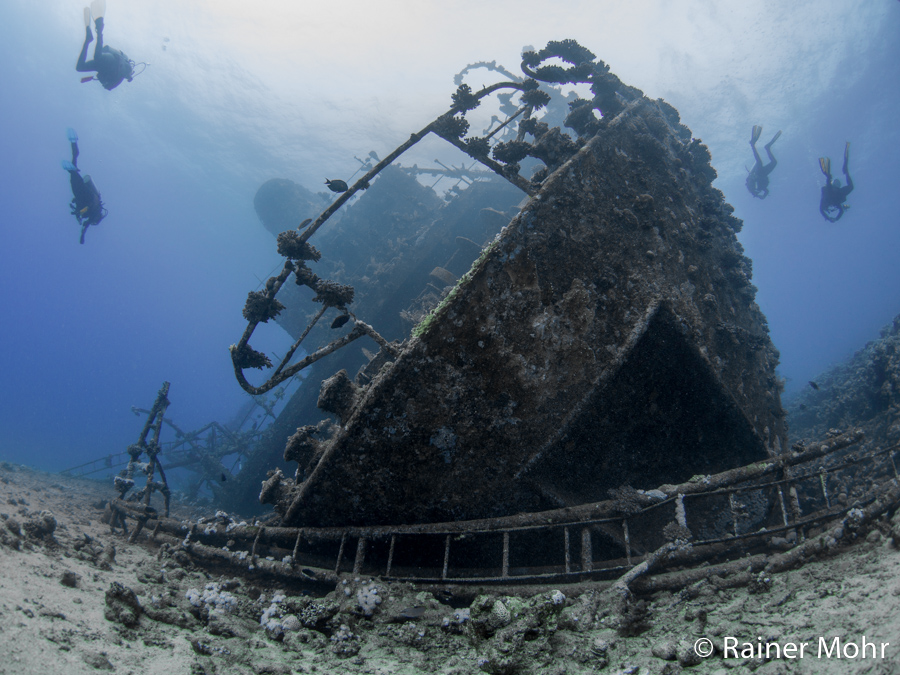
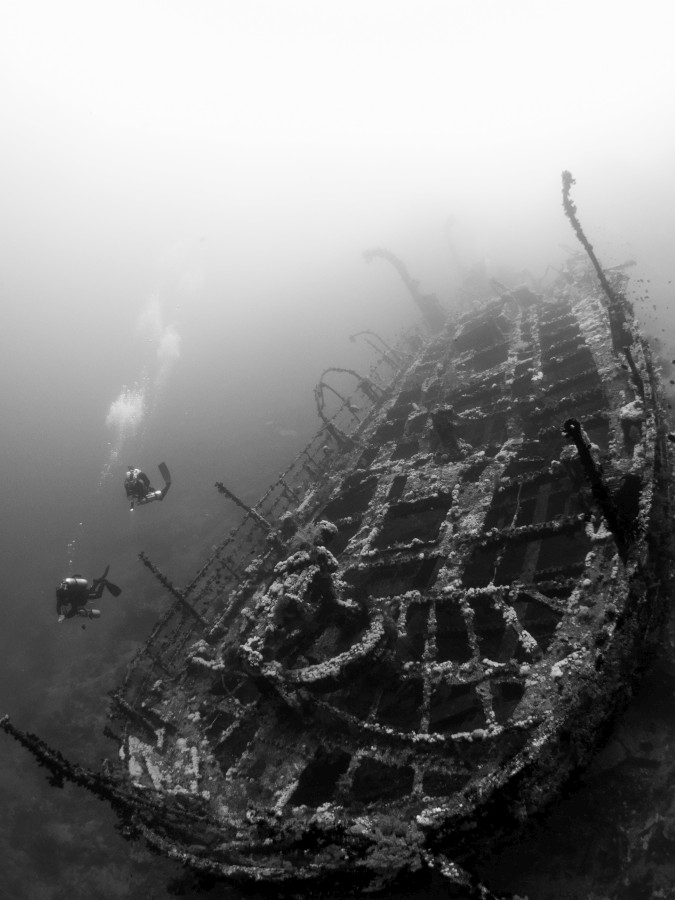
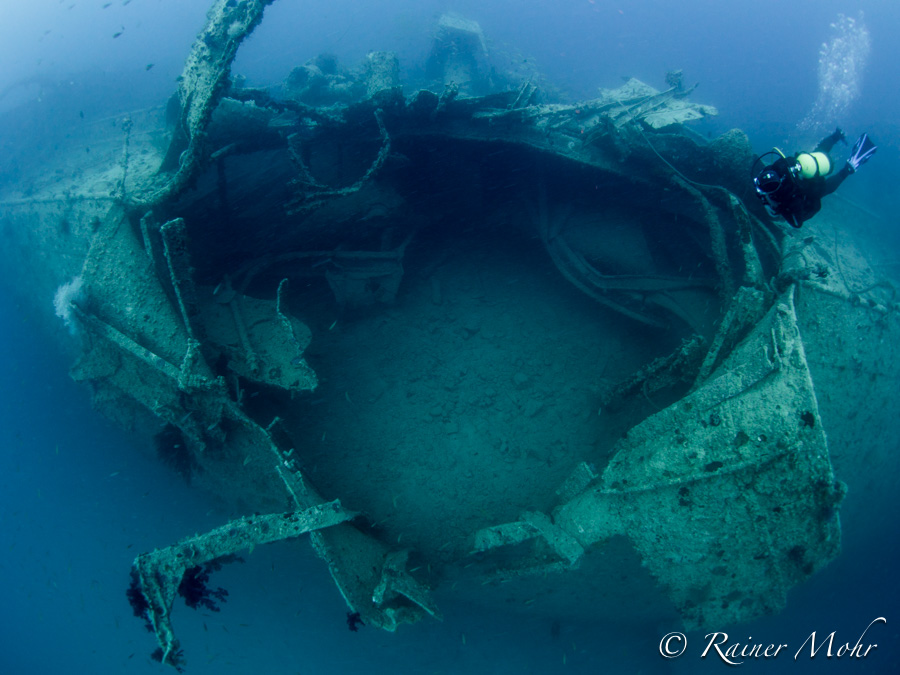
The wreck of the Giannis D at the Abu Nuhas reef in the Red Sea lies tilted on the seabed while several divers explore the imposing wreck. The ship is already heavily colonised by marine organisms and shows clear signs of corrosion, though the superstructure and railings remain recognisable.
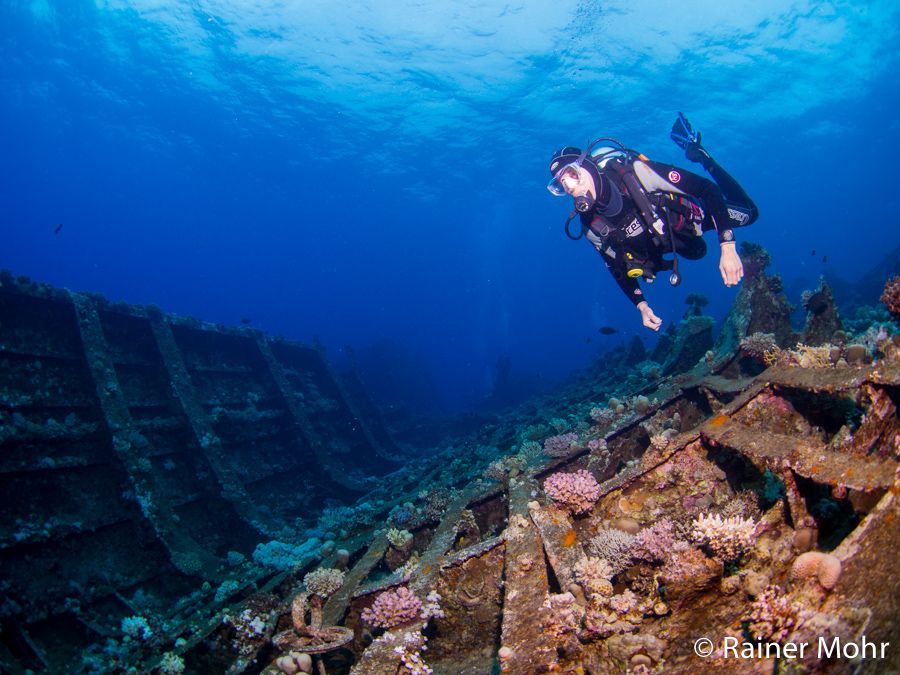
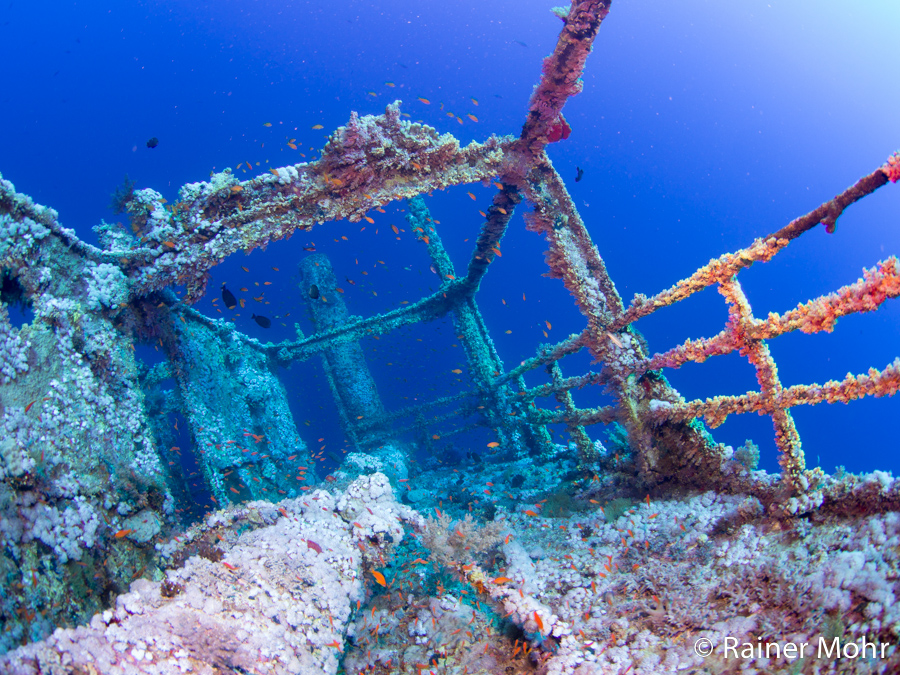
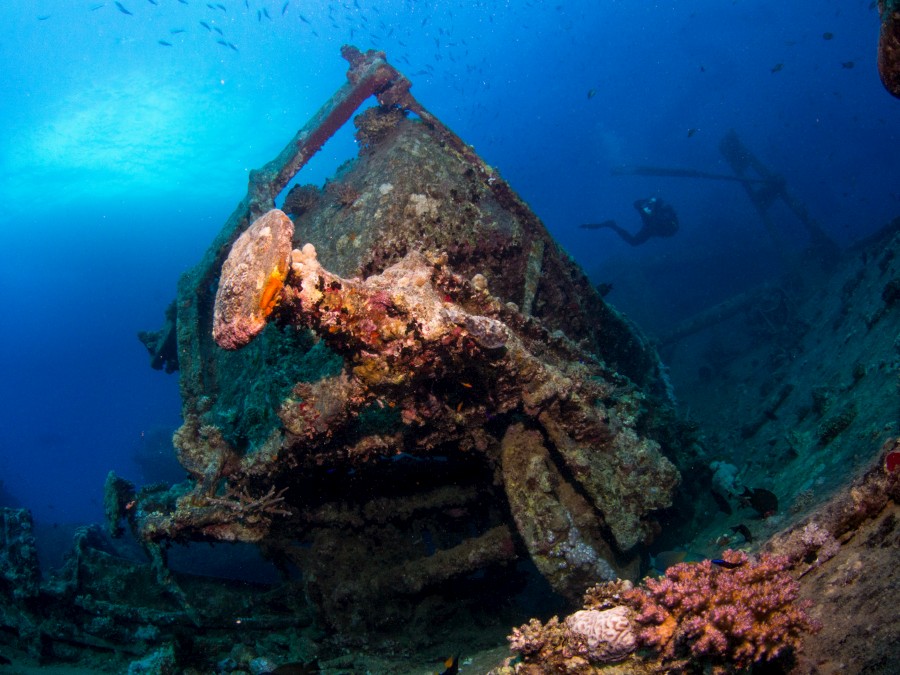
A diver explores the remains of a shipwreck already heavily encrusted with corals and marine organisms. The metal structures of the wreck are clearly recognisable and form an artificial reef colonised by colourful soft corals and other marine life.
A diver explores the anchor of the SS Thistlegorm wreck, encrusted with colourful corals and sponges. The metal structures are completely covered with marine growth, giving the wreck new colours in pink, orange and red.
A sunken shipwreck completely encrusted with colourful corals and marine organisms. The metal structures of the former ship are still clearly recognisable while small colourful reef fish swim around the artificial reef.
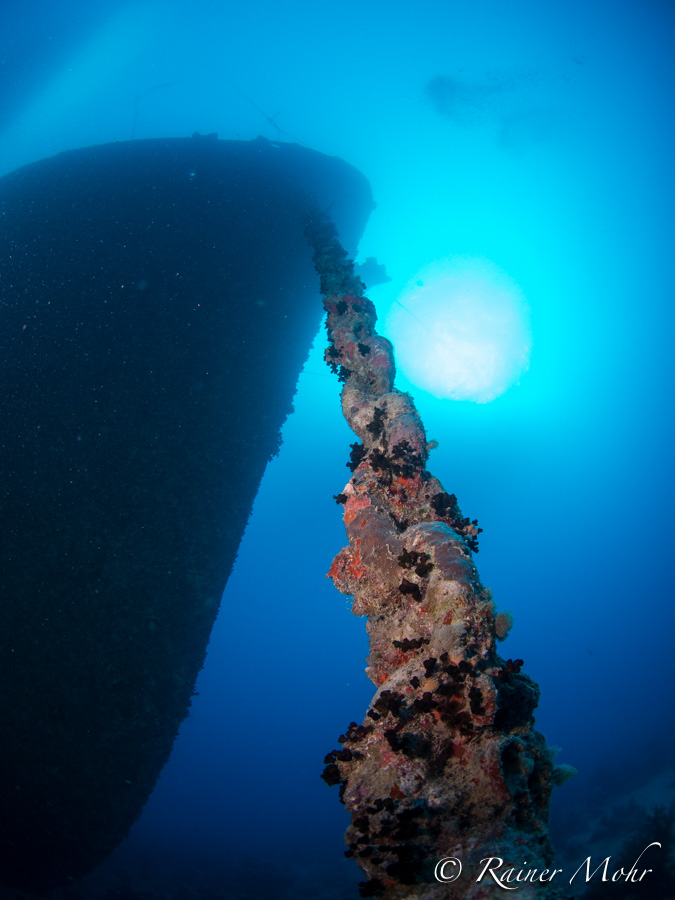
The anchor chain of the SS Thistlegorm descends from the bow into the depths, densely encrusted with colourful soft corals, sponges and other sessile organisms. The sun shines through the deep blue water, creating dramatic lighting around the coral-covered ship structure.
The wreck of the Giannis D lies on a sandy seabed at the Abu Nuhas reef, heavily encrusted with corals and marine organisms. Several divers explore the wreck in the blue depths while colourful corals in the foreground complete the underwater landscape.
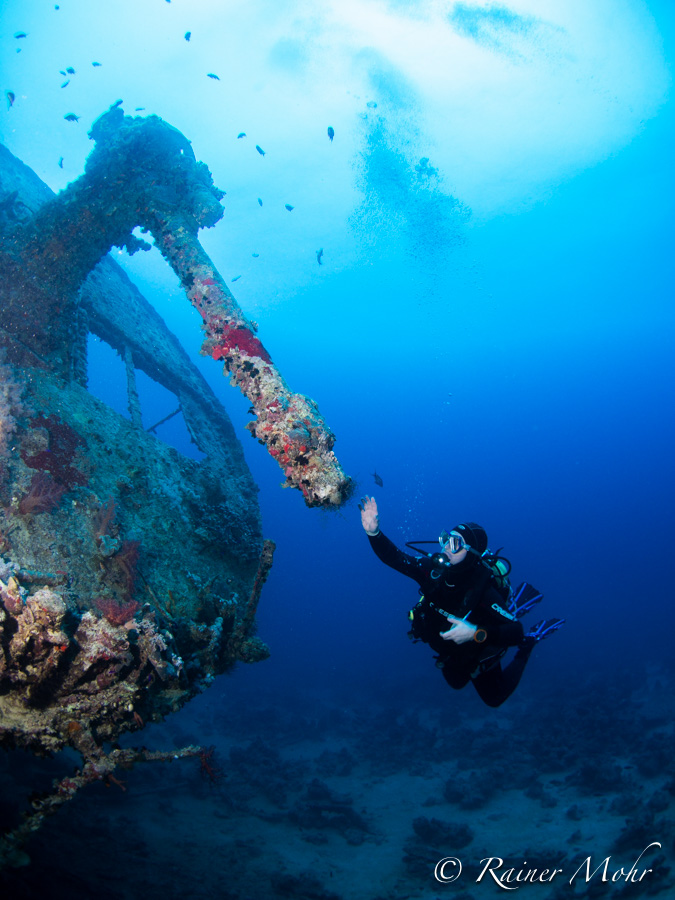
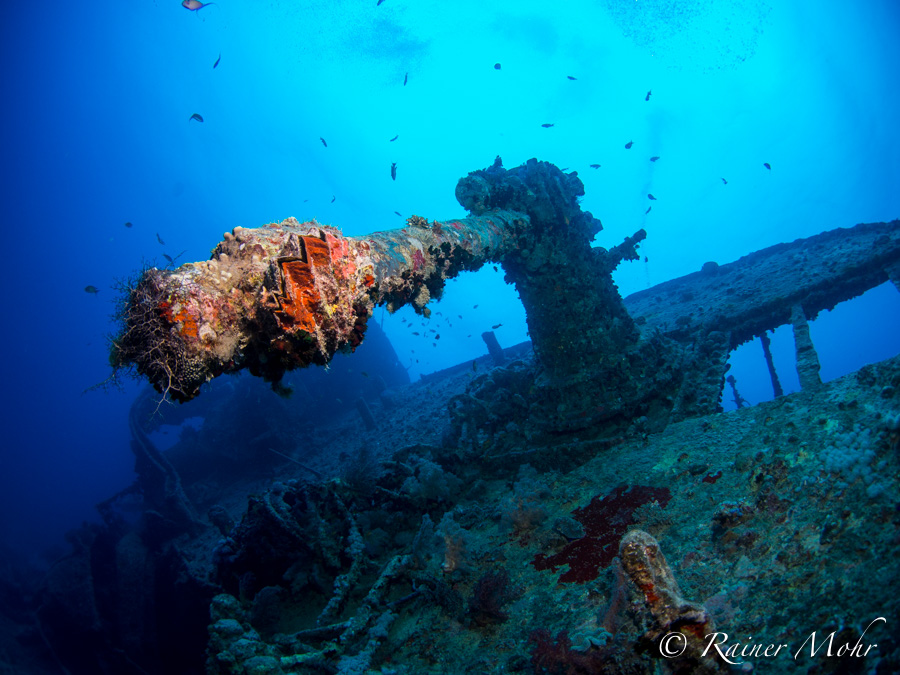
A diver explores the anti-aircraft gun of the SS Thistlegorm wreck in deep blue water. The metal structure is densely encrusted with corals, sponges and other marine organisms, while small reef fish swim around the wreck.
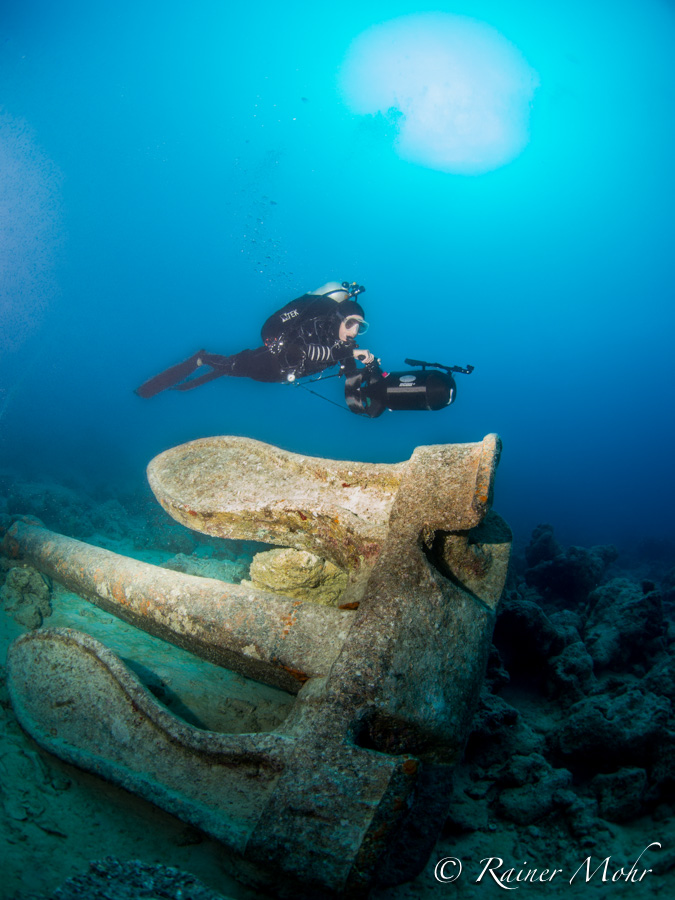
A female diver with a scooter explores the forward anchor of the SS Thistlegorm, lying about 25 metres in front of the wreck.
An impressive wreck lies on the seabed, heavily covered with corals and marine growth. Two divers explore the historic shipwreck in the hazy underwater landscape, with the silhouette of the wreck clearly recognisable with its characteristic superstructure and railing.
The image shows an impressive shipwreck on the seabed, whose gun barrel or cannon is heavily encrusted with colourful marine organisms. Red sponges and other sessile organisms have colonised the metal, creating a colourful contrast against the deep blue water.
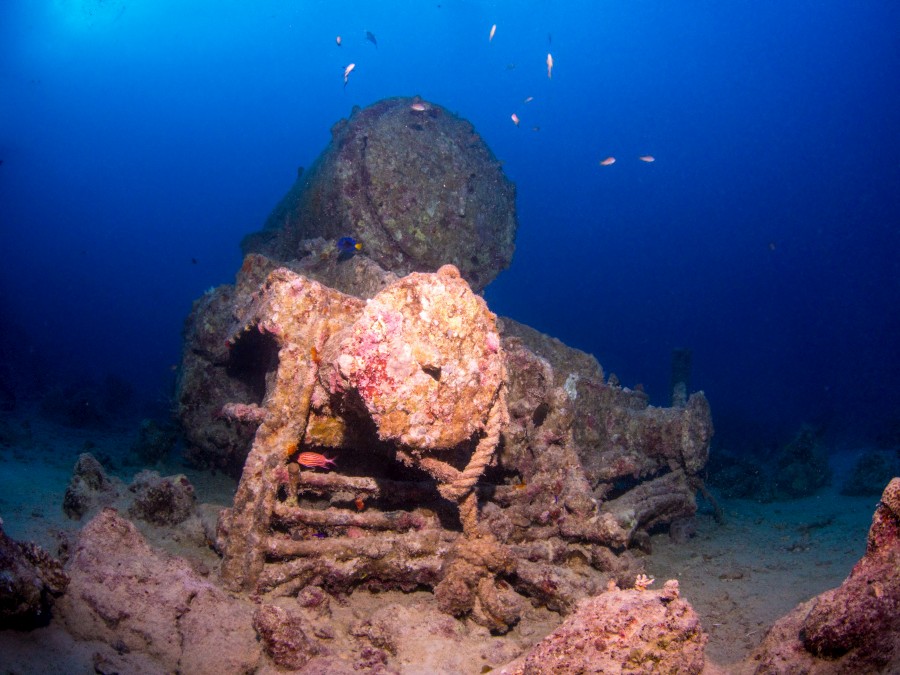
A sunken locomotive wreck lies on a sandy seabed, its metal structures heavily colonised by corals and marine organisms. The rusty remains have become an artificial reef populated by various marine life, while small fish hover in the blue water above.
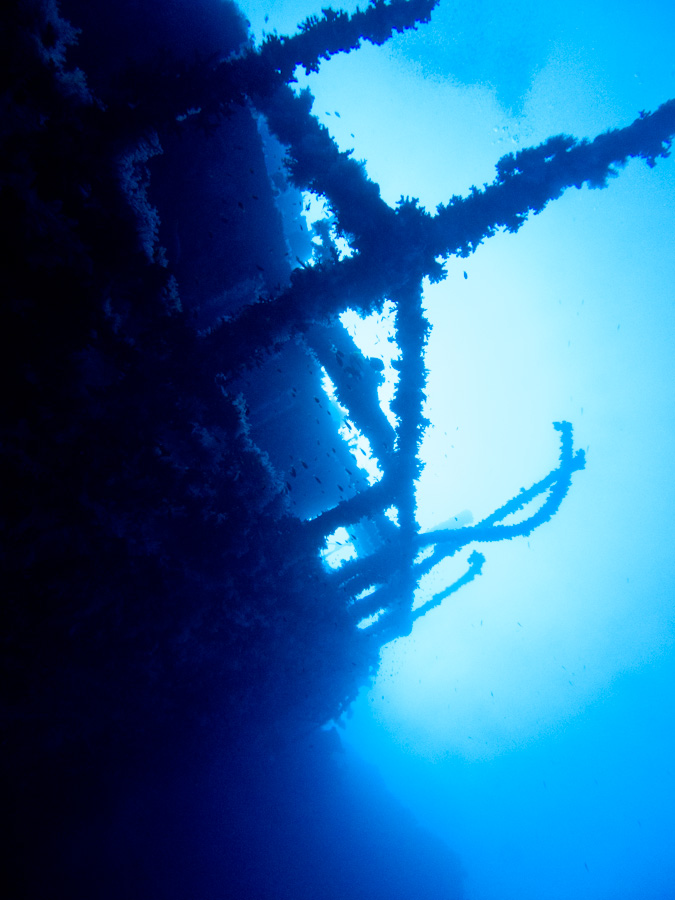
The dramatic silhouette of an encrusted shipwreck against blue water shows the superstructure and masts, completely overgrown with corals and other marine organisms.
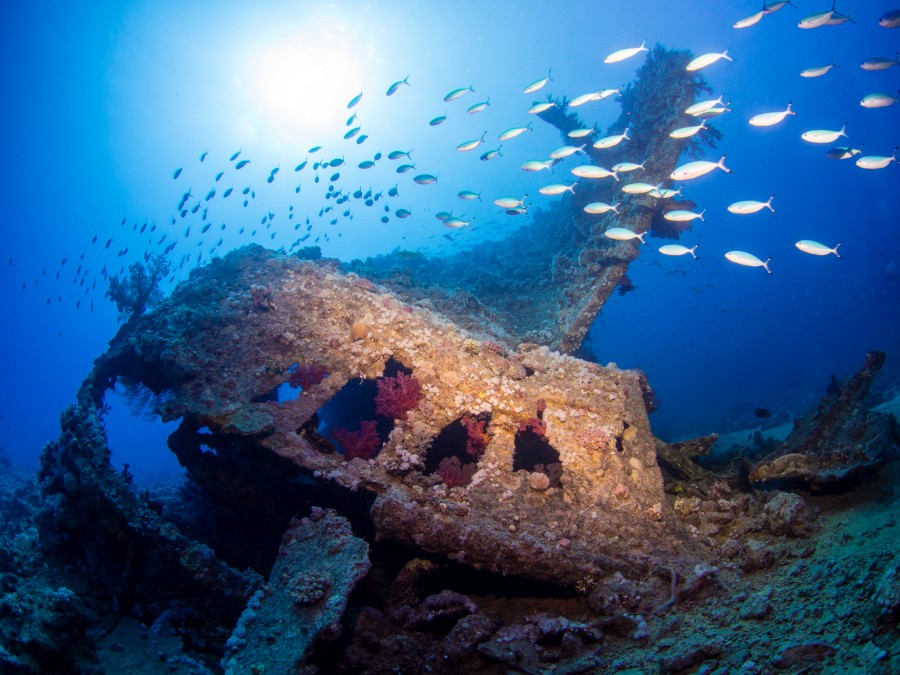
A heavily colonised wreck lies on the seabed, covered with corals and sponges in warm red and orange tones. Schools of small reef fish, including white and bluish species, swim around the wreck while the blue water is flooded with sunlight.
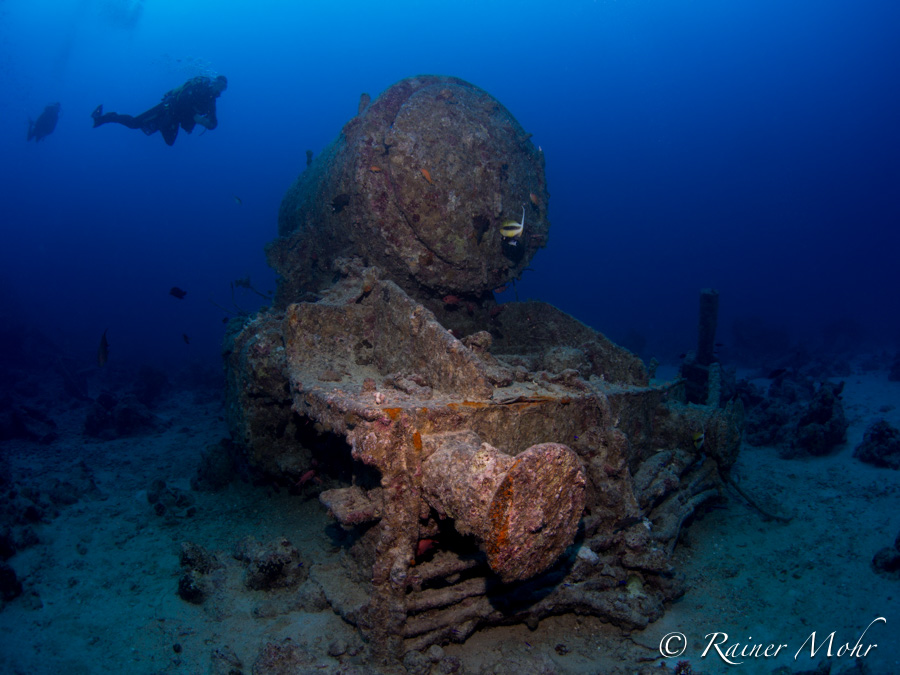
A locomotive lies on the seabed, colonised by marine organisms and covered with a patina. The locomotive was blasted from the deck of the SS Thistlegorm by the explosion following a bomb hit. In the blue water a diver hovers, exploring this majestic scene and capturing the peaceful atmosphere of this sunken locomotive.
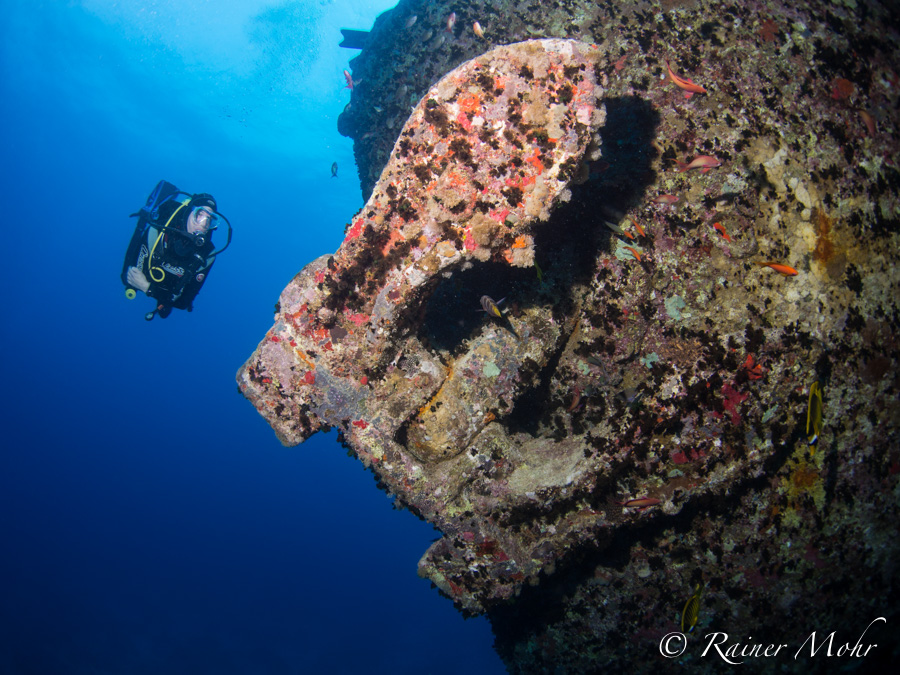
A diver explores the imposing bomb impact site of the Rosalie Moller wreck, which stands upright on the seabed. The massive structure with its superstructure is already colonised by marine organisms.
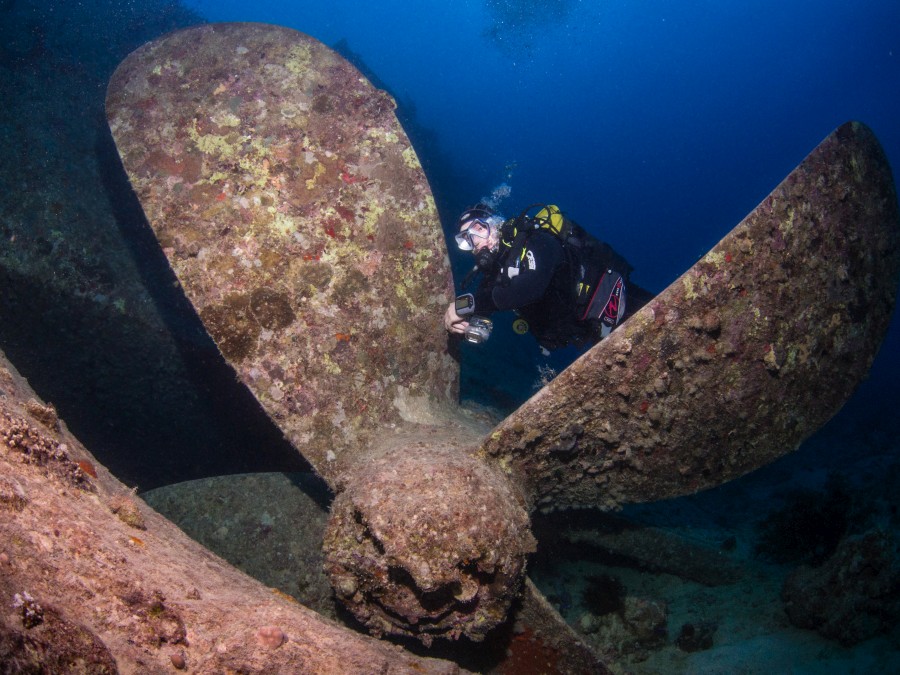
A diver explores the massive propeller of the SS Thistlegorm wreck. The rusty wreck parts are already heavily colonised by marine organisms and have formed an artificial habitat in the depths.
A diver explores a heavily colonised shipwreck on the seabed. The wreck is completely covered with colourful corals, sponges and other marine organisms, showing it has served as an artificial reef for some time.
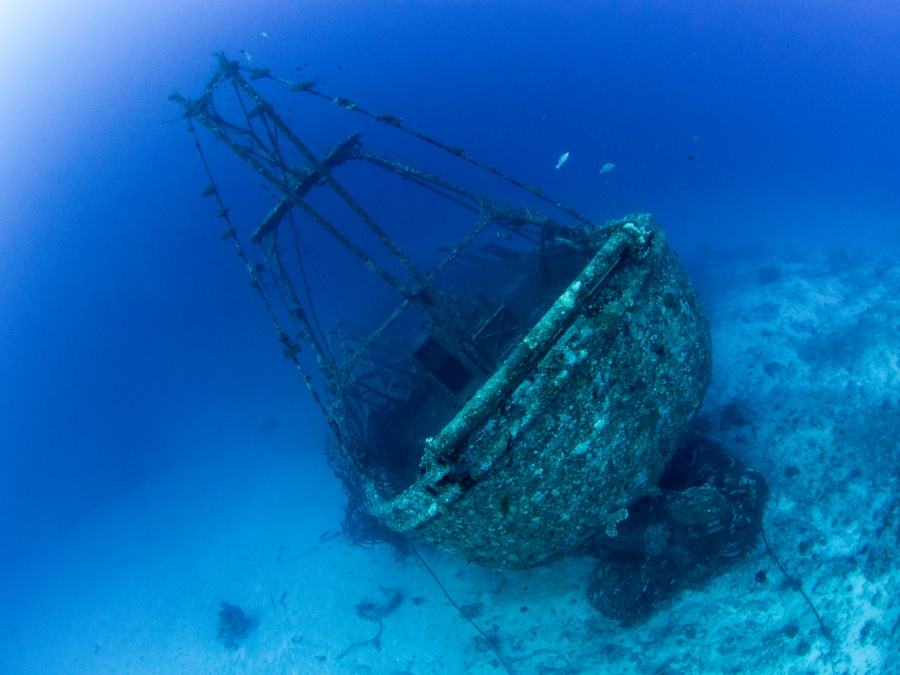
A heavily colonised shipwreck lies on the sandy seabed in deep blue water. The ship's hull and still-recognisable masts are completely covered with marine organisms, giving the wreck a greenish-turquoise appearance.
A crocodilefish lies on the deck of a sunken shipwreck that has become an artificial reef, encrusted with colourful soft corals and sponges. Various tropical reef fish swim in the blue water while the wreck structure is completely covered with marine growth.
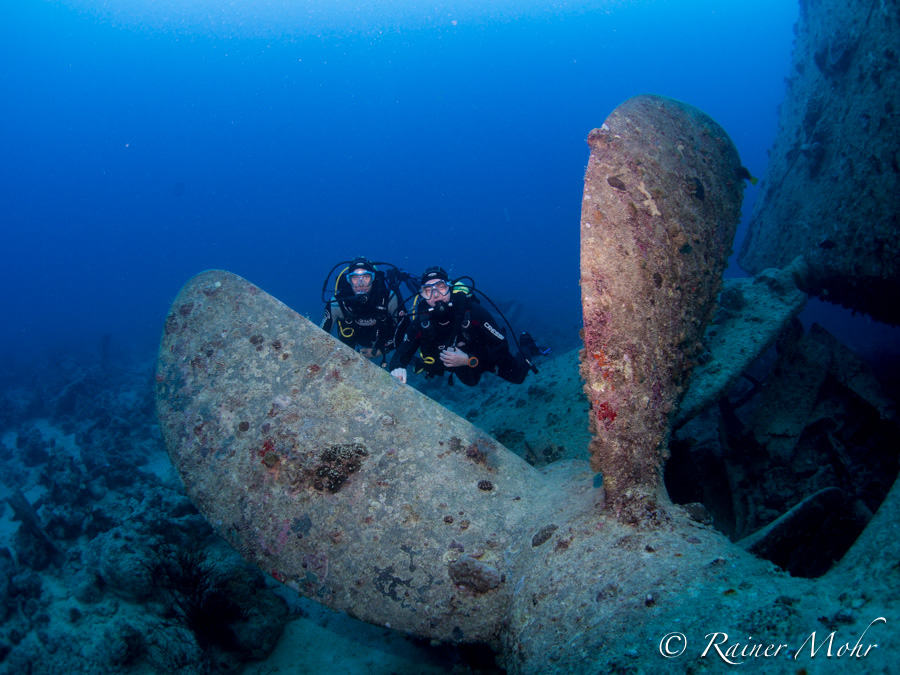
Two divers explore the ship's propeller of a large shipwreck in deep blue water. The metal parts of the wreck are heavily colonised by marine organisms and show clear signs of corrosion, indicating the age of the sunken vessel.
An imposing shipwreck rises from the depths, its superstructure completely colonised by marine organisms. Small schooling fish circle the historic wreck, which has become an artificial reef now providing habitat for diverse marine life.
A Railroad-car from a sunken shipwreck is completely overgrown with marine life and has become an artificial reef. Various sponges, corals and other marine organisms have colonised the metal, giving the wreck a vibrant, colourful appearance in vivid orange, pink and red tones.
A beautiful Chromodoris nudibranch with characteristic orange-brown body colouration with dark spots and a white mantle border crawls over encrusted reef rock. The gill tufts at the rear end are clearly visible, showing the typical form of this colourful sea slug.
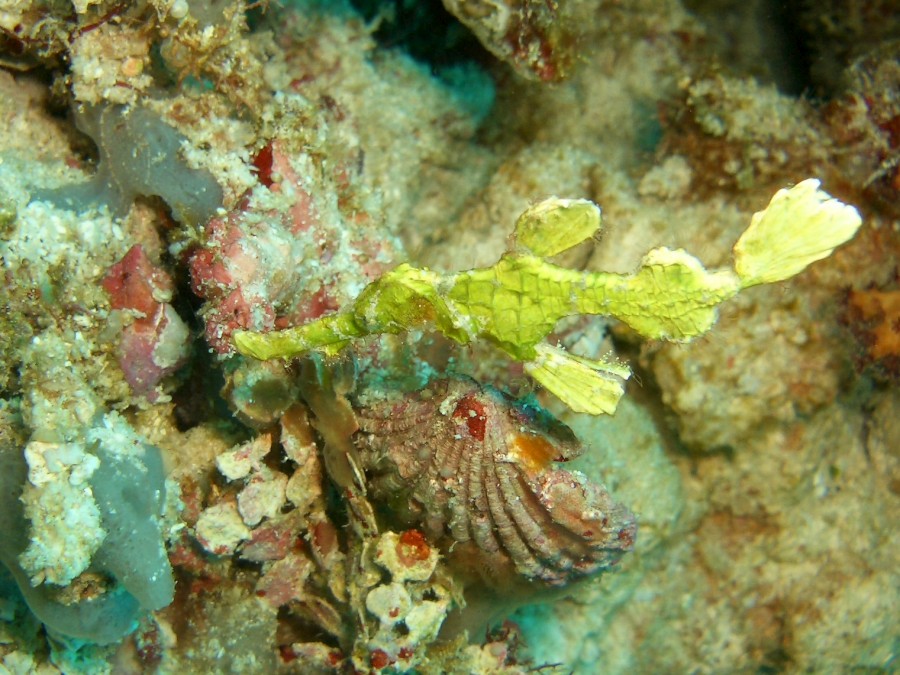
A well-camouflaged Halimeda-Ghostpipefish sits among corals and sponges on the reef floor. Particularly striking is a bright yellow tube sponge that stands out clearly from the surrounding brown and reddish encrustation.
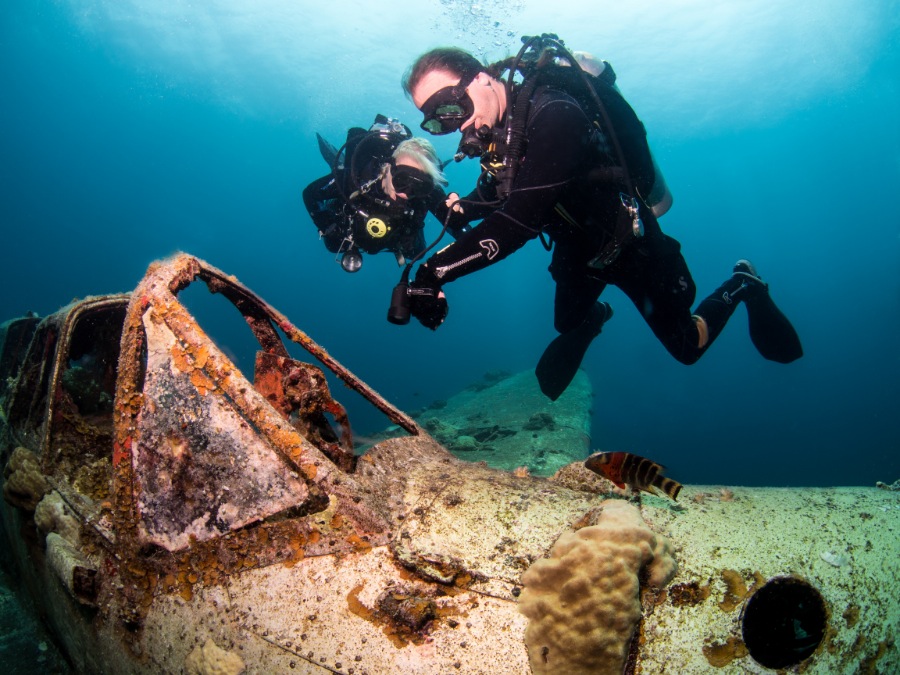
Two divers with cameras explore a heavily colonised wreck on the seabed. The aircraft wreck is covered with corals and other marine organisms and provides habitat for various reef animals visible among the rusty structures.
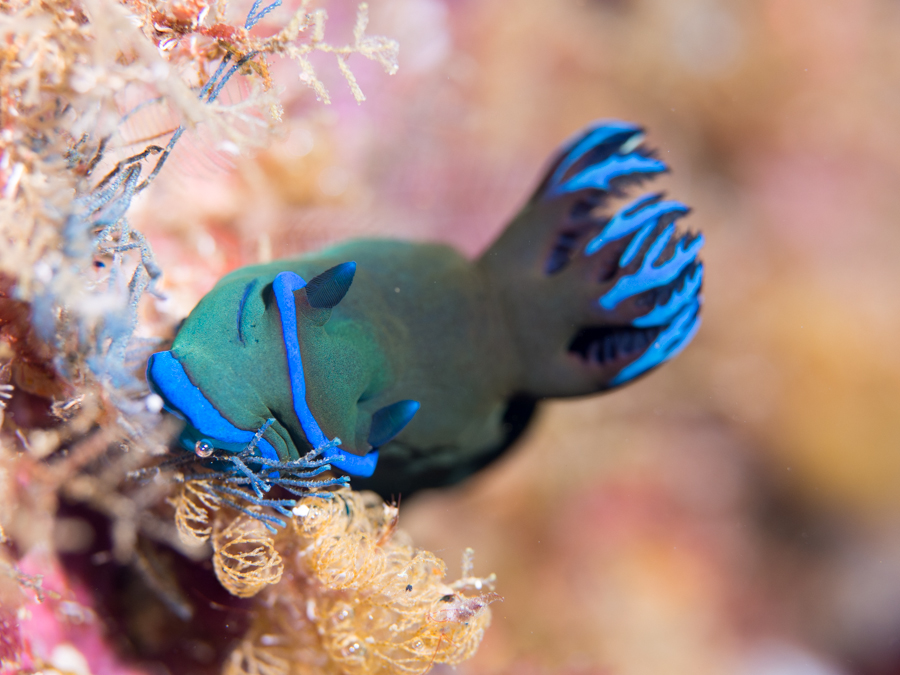
A Nembrotha nudibranch with a characteristic green body and vivid blue gills and rhinophores crawls over a reef surface covered with sponges and other organisms. The striking blue appendages contrast beautifully with the olive-green body of this colourful sea slug.
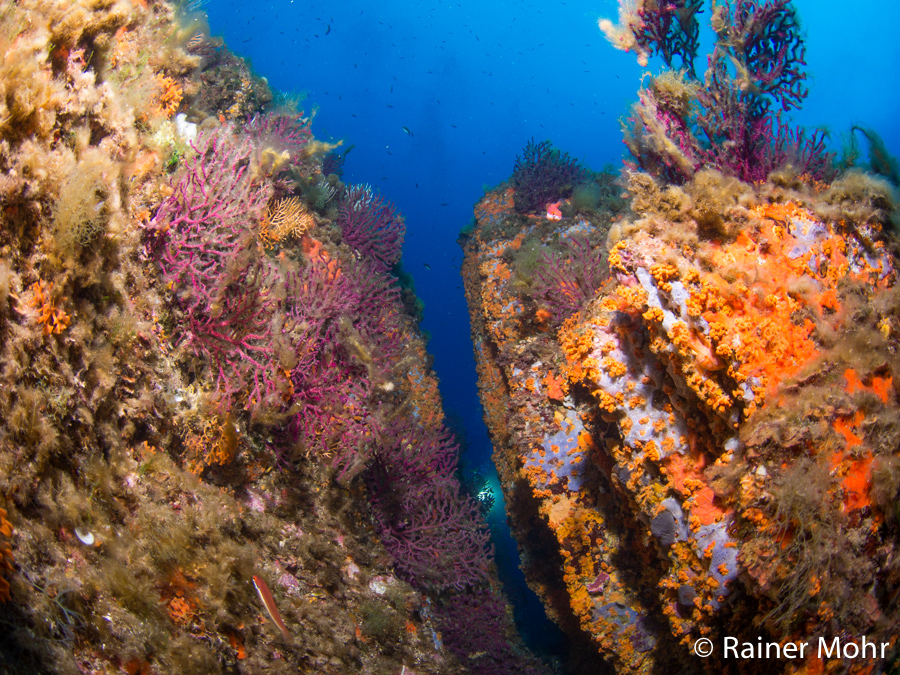
A colourful reef with lush growth of soft corals, sponges and other invertebrates. The reef is densely covered with violet, orange and yellow organisms, while the deep blue water is visible in the background.