Tag: Crustacean

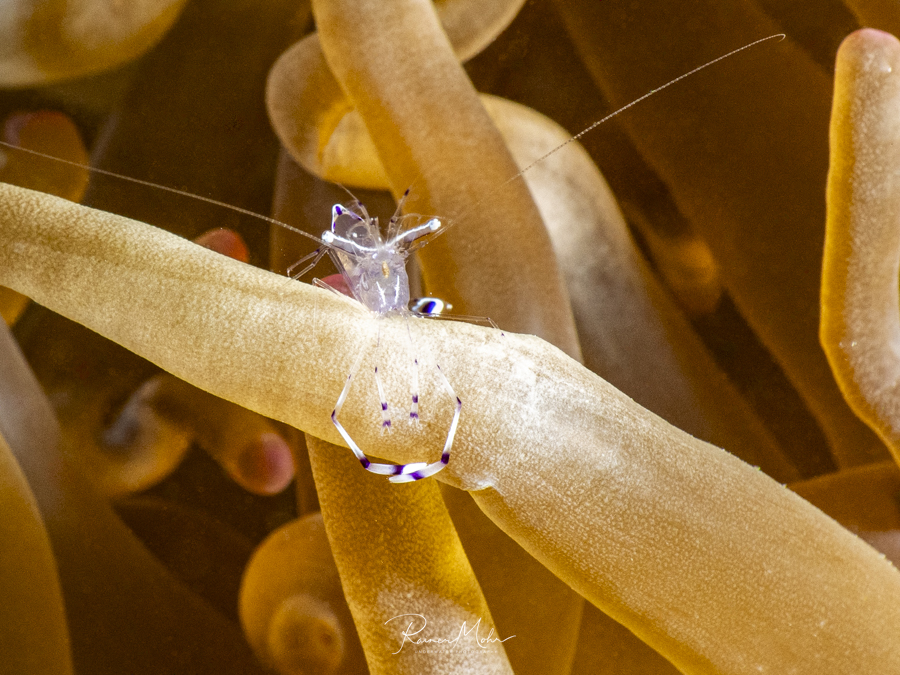
A tiny transparent anemone shrimp sits on an anemone tentacle. The almost transparent body shows fine violet-white markings on the legs and claws.
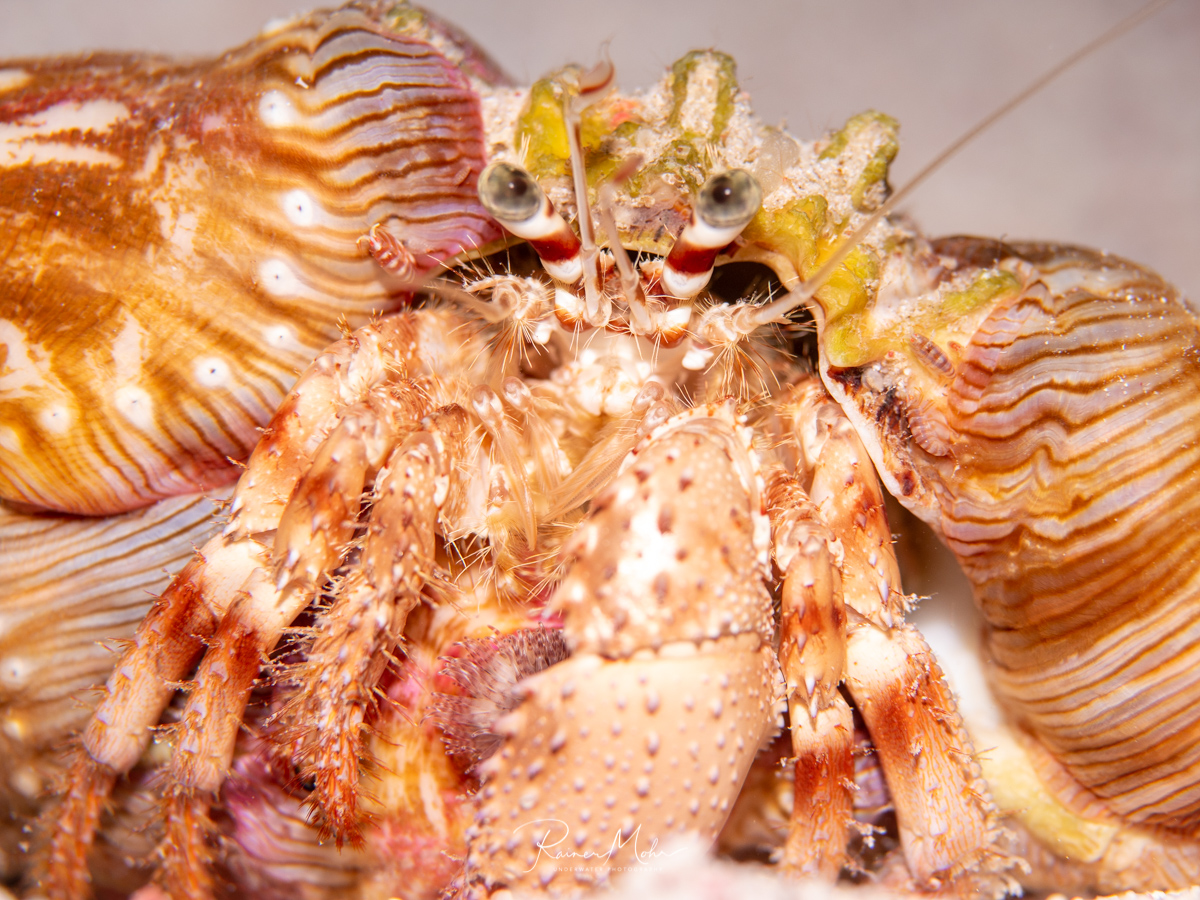
Macro portrait of an anemone hermit crab (Dardanus) in a striped snail shell. The hairy legs, stalked eyes and mouthparts are visible in detail.
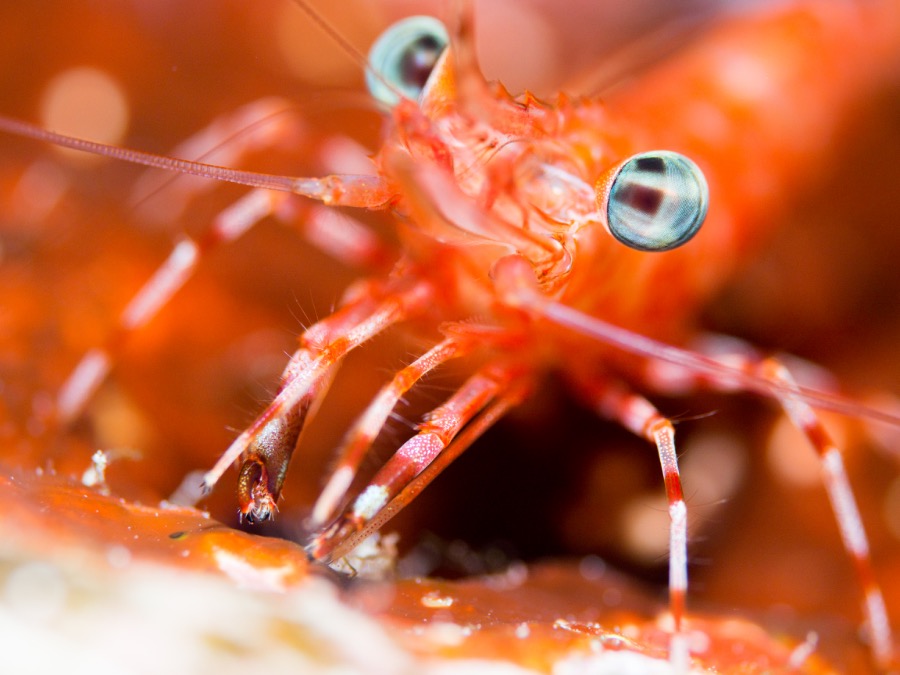
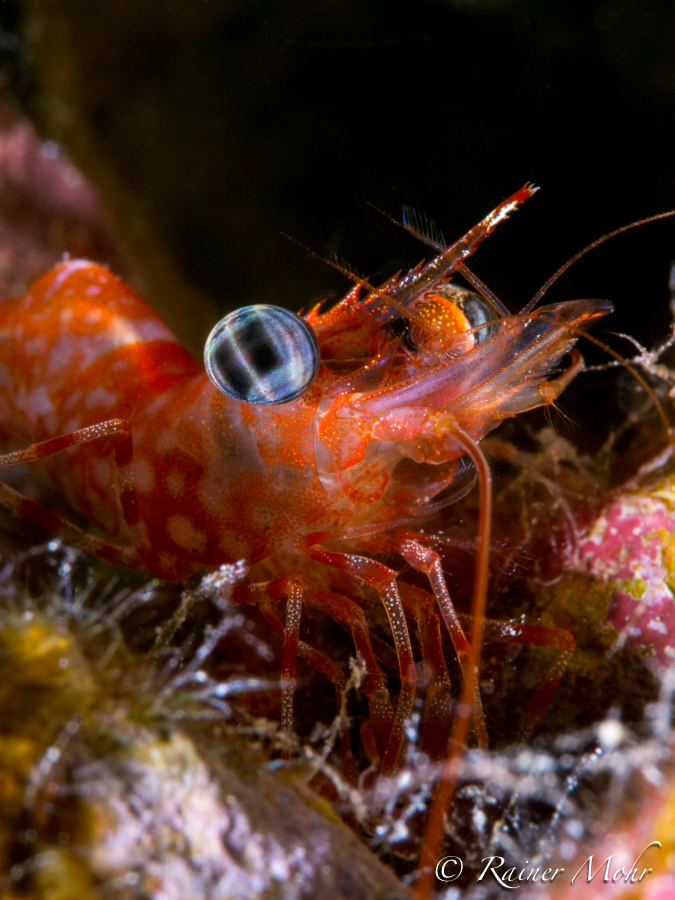
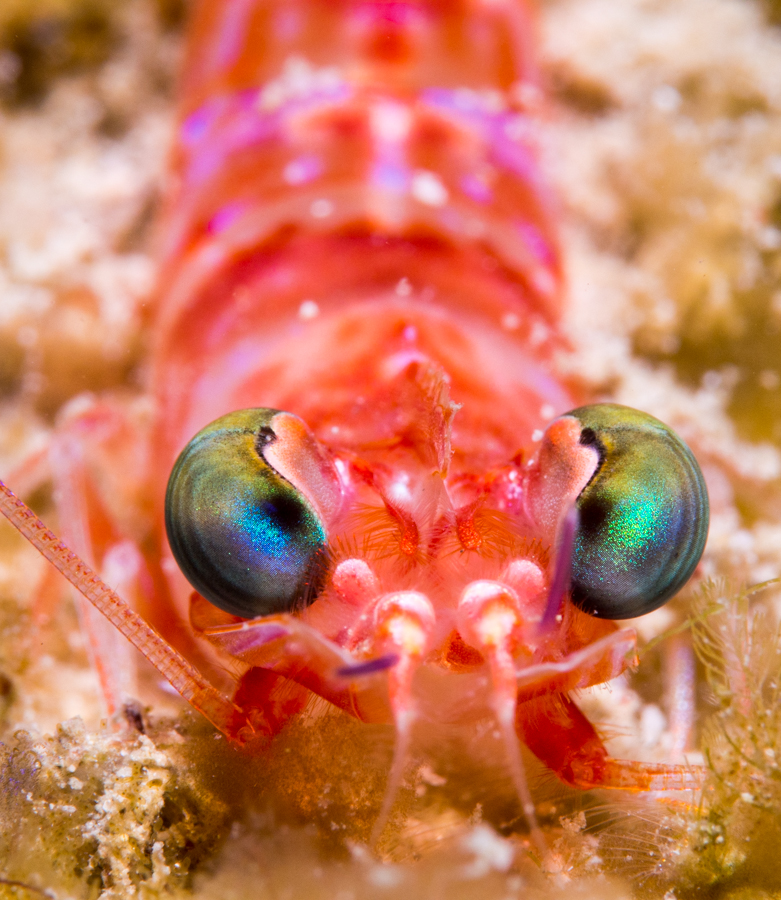
A vivid orange-red shrimp with striking turquoise eyes and long antennae in extreme close-up. The macro shot reveals the fine details of the shrimp with its transparent to reddish colouring and characteristic bulging eyes.
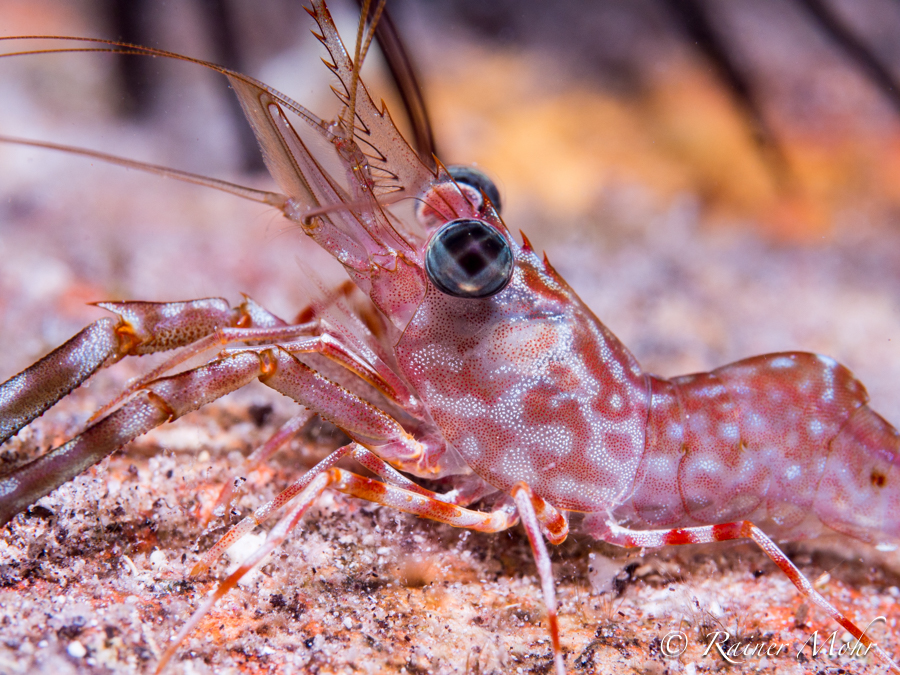
A shrimp species from the family Rhynchocinetidae (hinge-beak shrimps), possibly Cinetorhynchus reticulatus. Hinge-beak shrimps are found in tropical and subtropical seas worldwide and often live in reefs.
A red-orange shrimp with characteristic large, spherical eyes and long antennae sits among colourful corals and sponges. The transparent, reflective eyes and the detailed structure of the carapace are perfectly captured through macro photography.
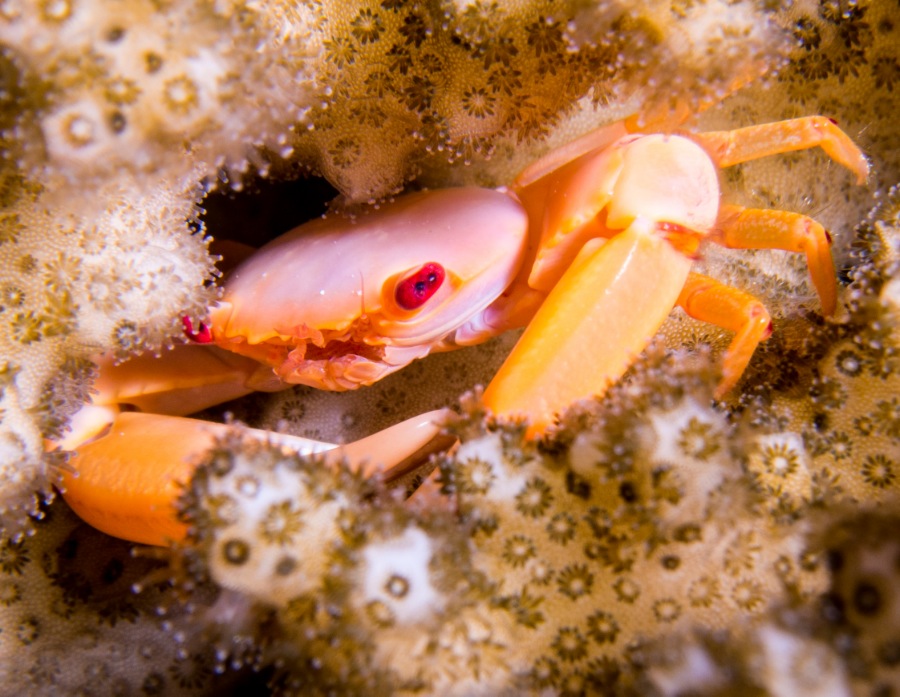
A small crab with vivid orange legs and a pink-whitish body with distinctive red eyes hides among corals. The crab displays perfect camouflage in its natural habitat among the structured coral polyps.
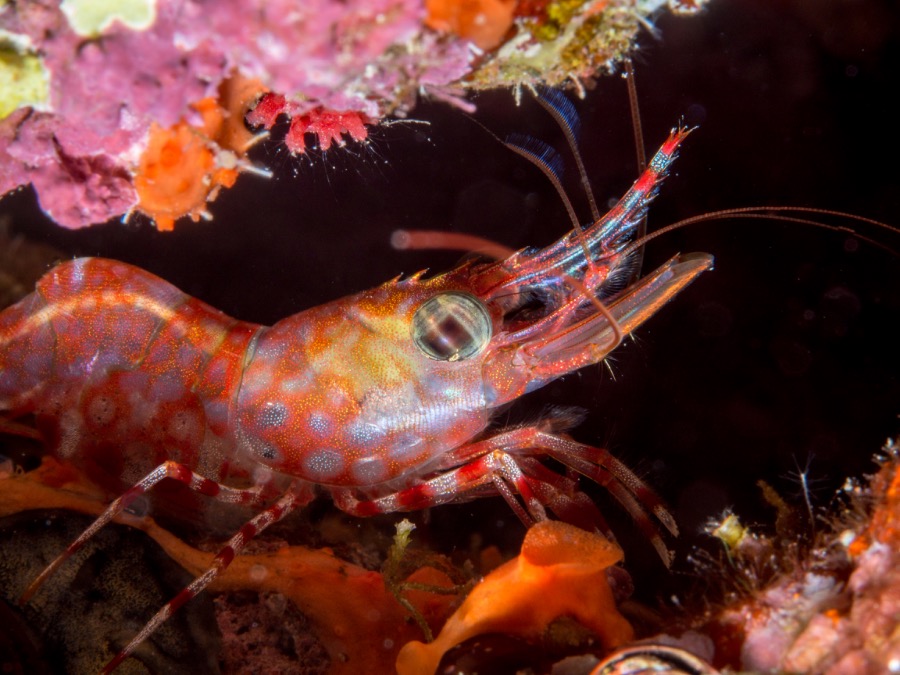
A colourful shrimp with orange-red spots and a transparent body sits among colourful corals and sponges. The long antennae are clearly visible and the animal adopts the typical crouched posture of a reef-dwelling shrimp.
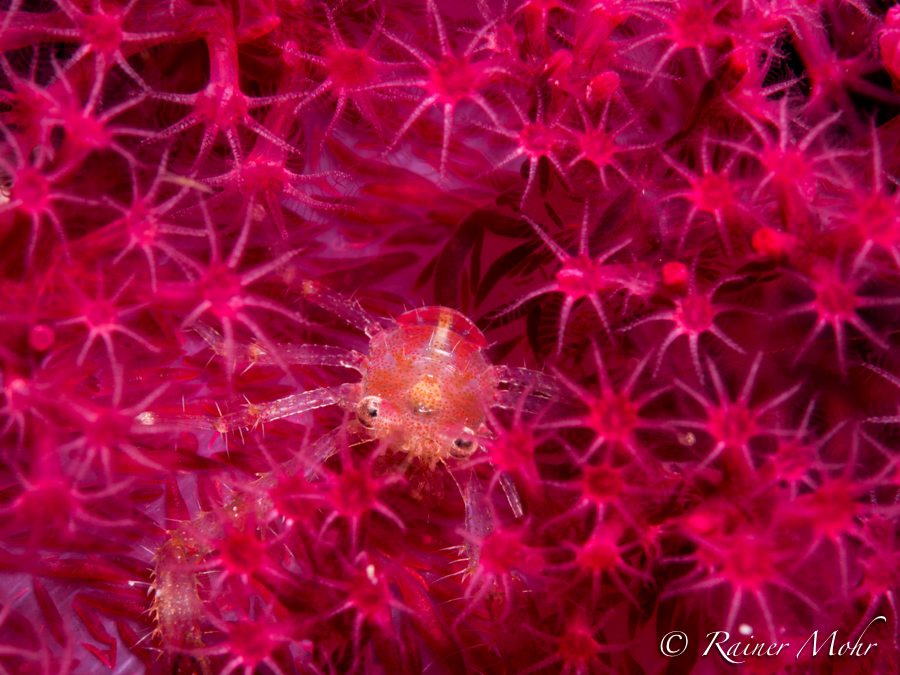
A tiny transparent shrimp with orange body details sits perfectly camouflaged among the vivid pink tentacles of a soft coral. Due to its transparent body structure and colour adaptation to its habitat, the shrimp is barely visible — a masterpiece of camouflage.
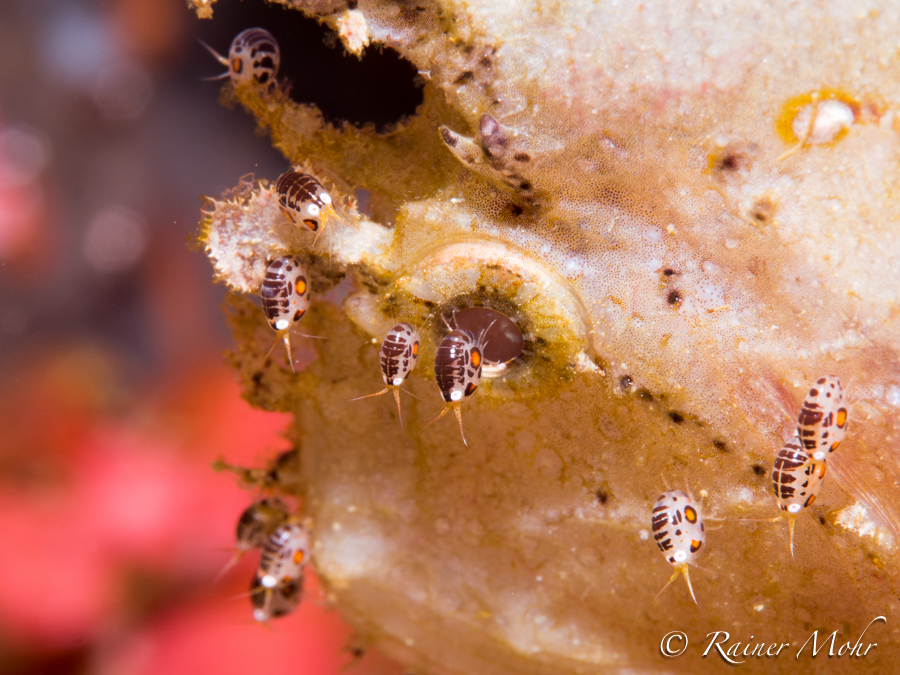
A group of small mysid shrimps moves across a tassled scorpionfish, with one sitting directly on its eye. The transparent crustaceans with their characteristic striped bodies and long antennae are seen in a typical setting.
Two sexy shrimps (Thor amboinensis) with characteristic white-and-blue spots on their brown carapace are visible on the sandy seafloor. The small crustaceans display their typical behaviour with their rocking tails and long antennae as they move through their natural environment.
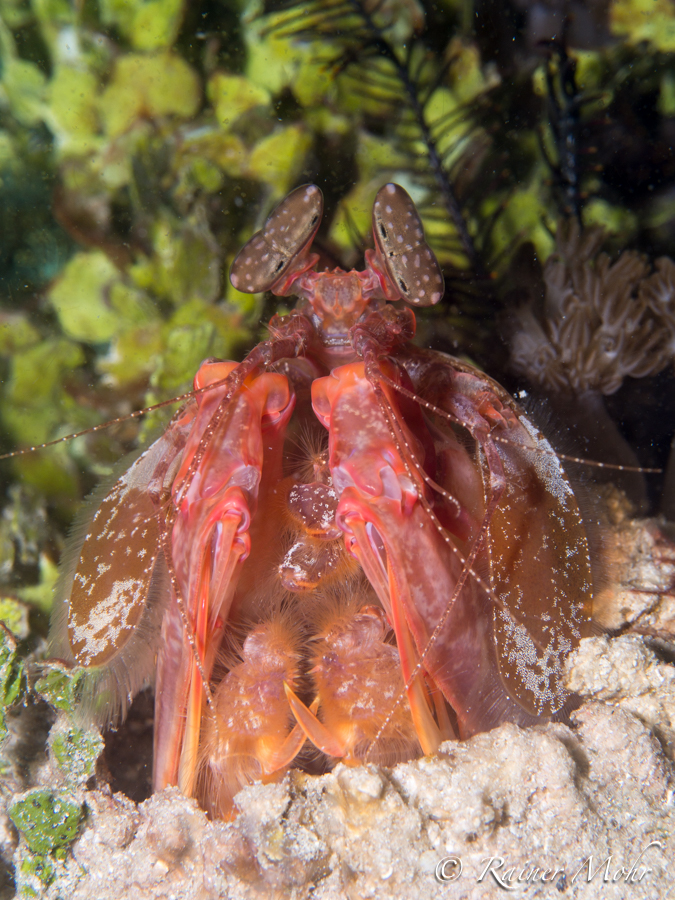
A spearing mantis shrimp sits in its sandy burrow, waiting in ambush for unwary passing prey. The striking compound eyes are clearly visible.
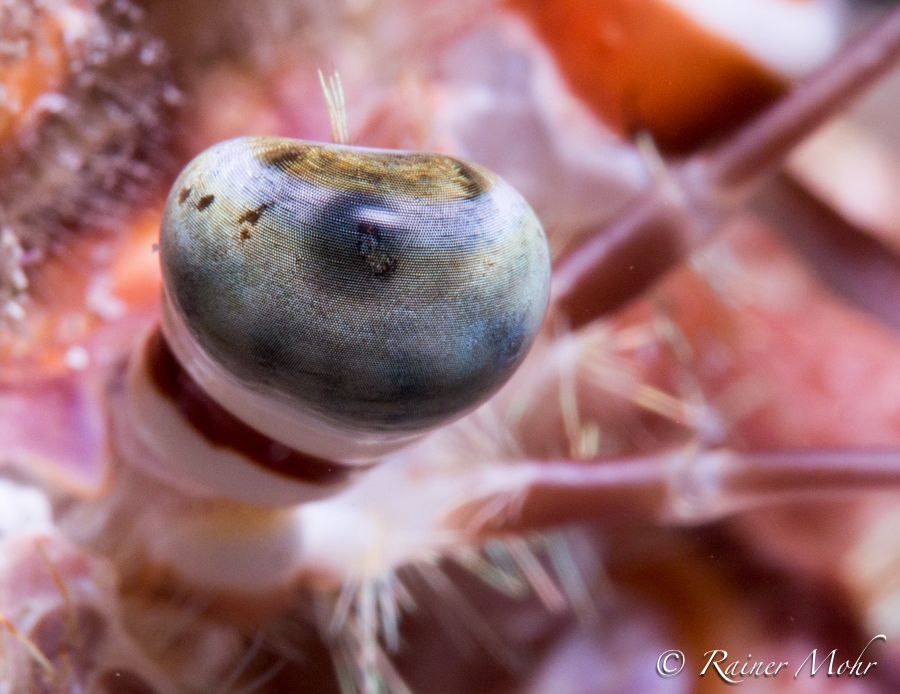
Super-macro shot of the compound eye of a crustacean.
A colourful shrimp displays its characteristic iridescent compound eyes and vivid red and pink body colouration. The animal sits in its sand burrow and looks directly into the camera, with the metallic-shimmering eyes particularly prominent.
A spearing mantis shrimp sits in its sand burrow, waiting in ambush for passing prey. The oval compound eyes are clearly recognisable.
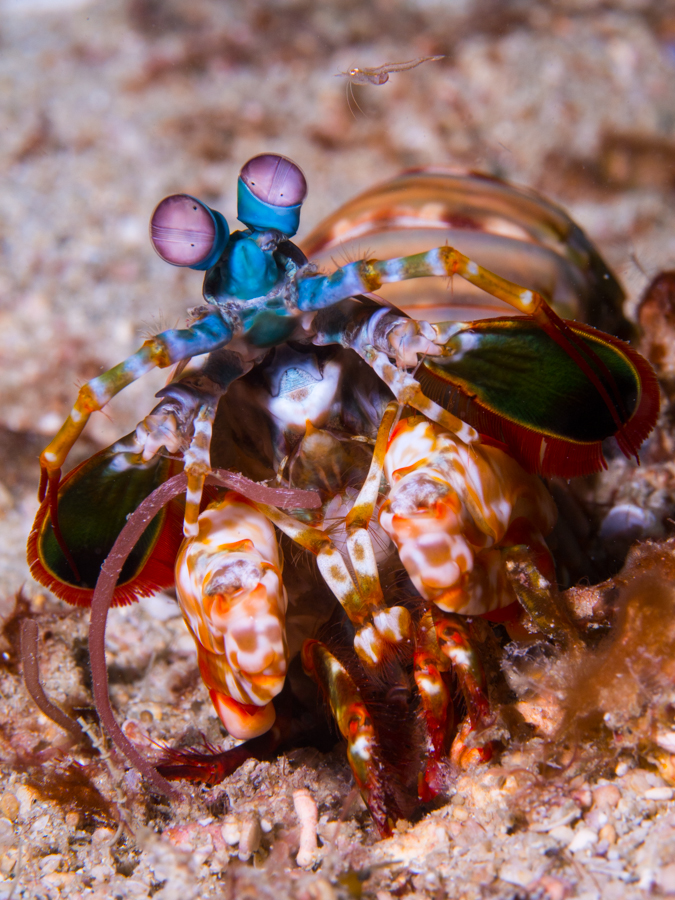
A magnificent mantis shrimp with characteristic turquoise-blue stalked eyes and vivid orange-red patterned raptorial claws sits on the sandy floor. The vivid colours and striking compound eyes make this predatory crustacean a spectacular photographic subject.
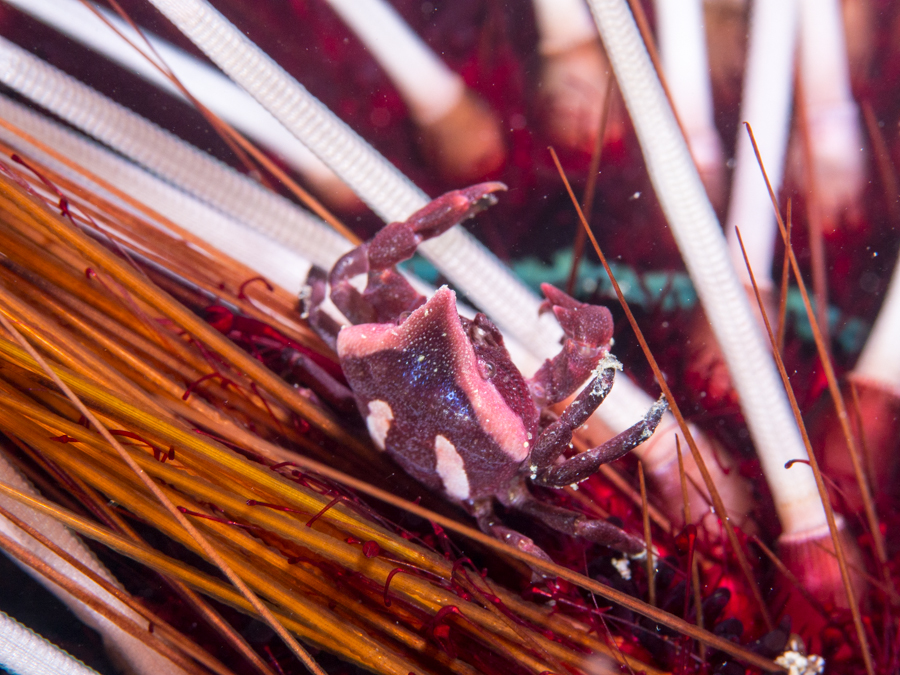
A small crab with characteristic claws sits among the long spines of a sea urchin. The reddish-brown colouration of the crab harmonises perfectly with the warm tones of the urchin spines, providing excellent camouflage.
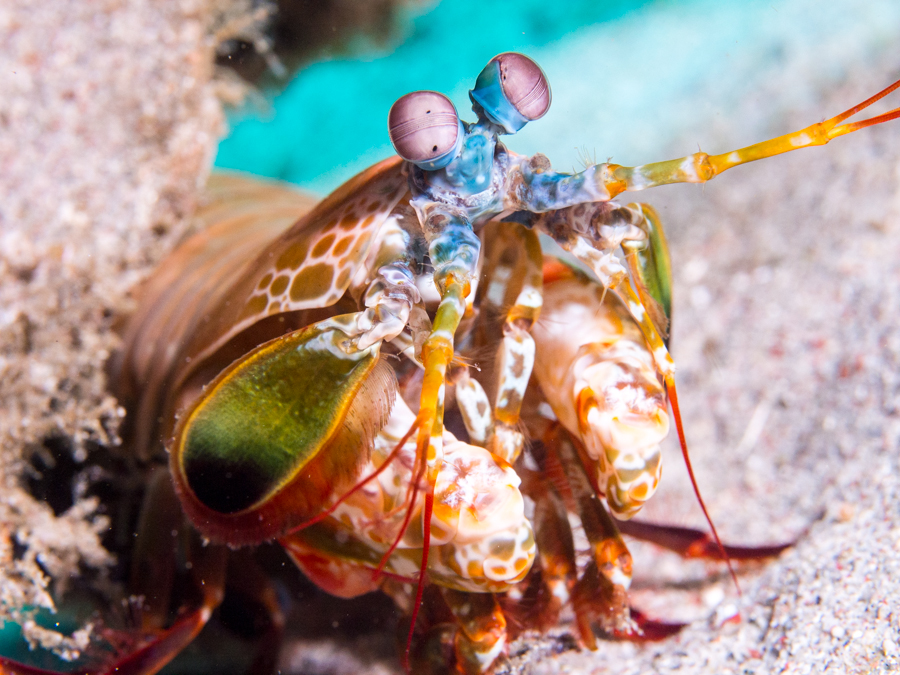
A mantis shrimp sits on sandy ground, displaying its characteristic large compound eyes and powerful raptorial limbs. The vivid colours with green, orange and red tones and the striking violet-pink eyes are clearly visible.